Review · AUSCHWITZ-BIRKENAU MEMORIAL TOURS
Krakow to Auschwitz Birkenau and Salt Mine 1 Day Tour
Two UNESCO sites, one brutally honest day.
I like how this tour packs Auschwitz-Birkenau and the Wieliczka Salt Mine into a single day with round-trip transfers from Krakow, so you do not lose precious sightseeing time. I also like the structure, guided time at both memorials, plus an expert guide for the salt mine so you do not wander underground like a lost tourist. The main drawback to plan for is the long day, very early pickup times, and the chance of waiting at the memorials before entry.
Once you get going, the experience lives or dies by the guides and mine guide explanations. Guides such as Daniel and Joanna are repeatedly noted for keeping things clear and respectful, while Justina gets credit for making the transfer portion smooth and easy to manage.
Logistics are practical, too: the tour runs in English and uses a mobile ticket, with a maximum group size of 30 travelers max. Still, you should be ready for the memorial-site reality, bag limits, temperature checks before start, and weather waits before you step inside.
Key things to know before you go

- Two UNESCO stops, one day plan: Auschwitz I plus Birkenau, then the Wieliczka Salt Mine.
- Early pickup is normal: exact times can be very early due to museum scheduling.
- Guided time matters: you get an experienced English-speaking guide across Auschwitz-Birkenau.
- 700 steps down at the salt mine: you return by elevator, so your legs get some relief.
- Small group flow: maximum 30 travelers, with help finding your way after each site.
- Memorial etiquette rules: bag size limits apply, and temperature screening happens before you depart.
Krakow to Auschwitz and the Salt Mine, built for tight schedules

This is the kind of day tour that works when Krakow is on your list, but your calendar is not cooperating. You are doing two major UNESCO World Heritage sites in one go, which is handy if you want to see the big historical sites without spending a whole extra day commuting.
What makes it more than a checklist is the pacing around each place. Auschwitz-Birkenau is emotionally heavy and very information-dense. Doing it with an English-speaking guide helps you understand what you are seeing instead of just walking past exhibits and guessing. Then the Wieliczka Salt Mine shifts the tone in a totally different way, with underground chambers, carved rock salt artwork, and old mining technology that tells another story about human effort.
The catch, and it is not small, is that this is a long day with early starts. The tour may run 11 to 12 hours on average, and can stretch from 10 to 12 hours depending on timing. You will also walk a lot. If you hate long days or you are traveling with limited stamina, you may find it mentally tiring even if you are physically okay.
More Krakow tours, salt mines, mountain days, and city experiences to compare
Getting there from Krakow: pickup times and transport comfort
Round-trip transfers are included, so you avoid the hassle of figuring out buses or arranging a one-off taxi to two distant sites. This is one of the best value points for the price, because the commuting leg is basically the biggest pain of this itinerary.
Here is what you must plan around: pickup times can be very early. Your exact pickup time is sent the day before after 5 pm, and it can depend on the memorial schedule. Expect that it may be as early as 3:00 to 4:00 AM in some cases. That early start is the tradeoff for getting in, guided, and out on a day plan.
Inside the vehicle, reviews hint at mixed comfort depending on which bus you get. Some people mention cramped seating if you end up on a smaller or more packed bus. Translation for you: bring a bit of patience, and dress for chilly early mornings even if Krakow looks mild during daylight hours.
Also note that the day ends in a different location than where you started. So think ahead. If you rely on walking back to your hotel, you might want a backup plan, like knowing where the end point drops you off relative to your lodging.
Auschwitz-Birkenau: how the guided Auschwitz I segment works

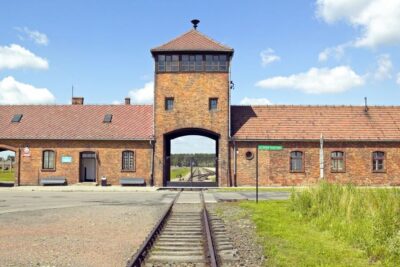
You start at the Panstwowe Muzeum Auschwitz-Birkenau, and your time is guided across the complex. The guided portion is set at about 3 hours with admission included, and the day itself is structured with time blocks for Auschwitz I and Auschwitz II.
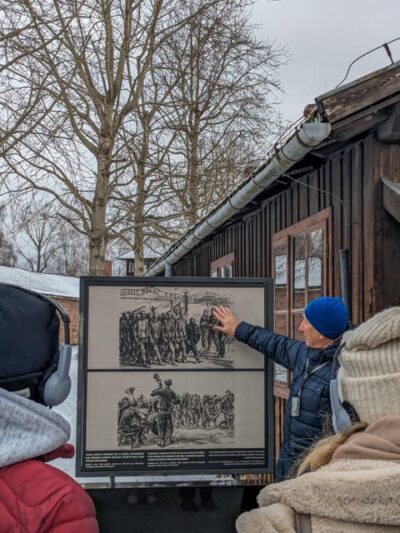
For Auschwitz I, plan for around 2 hours. This is the more museum-like section where the memorial site explains what happened and shows surviving structures and exhibits. The grounds spread over a huge area, so the guide matters here even more than usual. A good guide helps you connect the story points, understand why certain buildings remain, and avoid the common mistake of treating it like just another photo stop.
Emotionally, this part is tough. You are not touring in a neutral way. You are walking through a place designed to preserve memory of atrocities committed there. Even if you consider yourself prepared, you should still expect moments that feel heavy. The better approach is to treat it like a respectful, guided learning experience, not like a sightseeing circuit.
What I love about how this is set up is that you get structured time rather than a vague walk-through. That structure is what helps your brain process the material during a long day. You also get help managing the flow of entry so you do not spend all morning trying to find the correct group line.
The possible drawback is waiting time before entry. With many visitors, there can be a wait. If you are sensitive to cold or weather, layer up. Bring something warm even if you think your coat is enough for normal Krakow mornings.
Birkenau (Auschwitz II): what the shorter stop is really like

Your Birkenau time block is shorter, about 1 hour. That can sound quick on paper, but Birkenau is vast and open-air. You are seeing scale, layout, and remnants that are spread out across the site, so you are not just looking at a tight museum room.
This is where your guide’s communication quality matters. Some tours can have audio challenges in large areas, and if you struggle to hear, it can make the experience frustrating on top of emotional heaviness. For your planning: wear the right clothing for long outdoor time, and if you are hard of hearing, consider whether you will be comfortable in crowds and open spaces.
Even with the shorter duration, the value is in understanding what you see. The point of Birkenau is not to memorize every detail. It is to grasp the reality of how the camp functioned, how people were processed, and what remains today represent.
If you are the kind of person who really wants to slow down and absorb, this tour still gives you the core. But you may later want to return for more time at Birkenau or at Auschwitz I separately. Doing it in one day is efficient, not exhaustive.
Wieliczka Salt Mine: 700 steps down, chapels carved in salt
After Auschwitz-Birkenau, you head to the Wieliczka Salt Mine. This is the change of pace you need. You go from a memorial that tells human history in the harshest way, to a subterranean world built by mining over centuries.
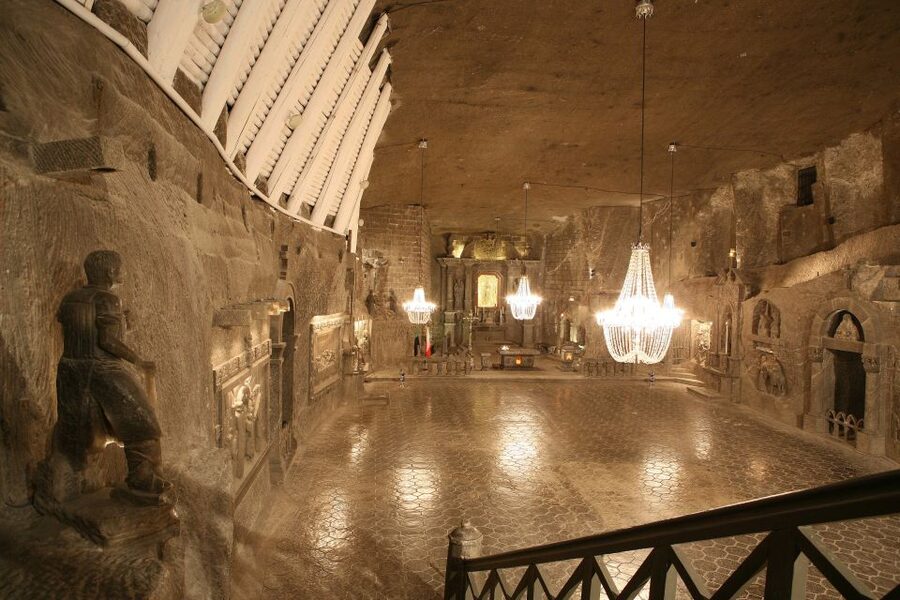
Your salt mine time is about 3 hours. You tour a 3 km stretch underground and you see attractions such as chapels, shafts, lakes, sculptures carved in rock salt, and mining technology used in earlier centuries. The mine has a lot of visual variety, so it stays interesting even when you are thinking about the emotional morning.
The physical part is real. The salt mine tour includes a staircase with 700 steps down to the mine levels. The good news is that once your tour ends, you return to the ground level by elevator. So your legs do the work going down, and you get help back up.
Practical note: you are going underground, so temperatures can feel cooler and damp. Wear layers you can tolerate for a longer indoor walk. Also, the stairs are not just a formality. If stairs are hard for you, you need to think hard before booking a one-day combo.
Why I think people like this stop so much: it tells a story of human effort and engineering, with stunning carvings and underground features that feel almost unreal at first. It is a different kind of learning, and that contrast is part of the tour’s appeal.
Lunch, breaks, and how to survive the long day

This is not a casual half-day outing. You are out roughly 11 to 12 hours, and in practice you should assume long waits can happen because museums manage entry slots.
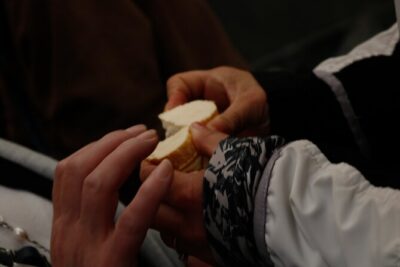
If you add the lunchbox option, lunchbox is included. The tour data says it comes as a lunchbox if you choose that option, and diet restrictions must be provided by 5 pm the day before. If you do not send restrictions, you receive a regular lunchbox that includes ham. Food and drinks are otherwise not included, so you may want to plan for extra snacks and water if that matters to you.
A helpful mindset is to treat food as logistics, not as a meal plan. Bring what you need to stay steady, especially with early pickup and outdoor waiting.
Breaks are built into the day in a way that helps you reset before entering each site, and there is usually time to manage yourself between stops. Still, there is a long stretch of travel and standing around before entry windows. If you want comfort, bring warm layers, and have something small and quiet to do during waiting time.
One other practical issue: bag limits. Auschwitz grounds restrict bag and backpack size to 30 x 20 x 10 cm, about 12 x 8 x 4 inches. You can leave belongings inside the vehicle, or use a luggage store at Auschwitz. This is one of those rules that can save you stress if you pack smart at home.
What the group size and timing really mean for your day
The tour caps at a maximum of 30 travelers. That matters because smaller groups move more smoothly through checkpoints and guided sessions, and it typically makes it easier for guides to keep you together.
Timing still rules everything. Your pickup is sent the day before after 5 pm and can be very early. Even if you choose a preferred time, entry depends on ticket and guide availability, and refunds for time changes are not possible. Translation: do not build fragile plans on the exact minute.
Also, this day includes fixed site time blocks: around 2 hours at Auschwitz I, around 1 hour at Auschwitz II, and around 3 hours at the salt mine. Those blocks are what keep the tour doable. The tradeoff is that you cannot slow down dramatically or linger too long at any one point.
If you want more breathing room, consider splitting Auschwitz and the salt mine into separate days. But if the salt mine dates do not line up, or you only have a single day to allocate, the one-day combo is still a solid option.
Price and value: is $314.42 worth it?
At $314.42 per person, this is not a budget outing. The value is in what is bundled.
You get:
- Round-trip transfers from Krakow via air-conditioned vehicle
- Admission ticket inclusion for Auschwitz-Birkenau and the salt mine
- An English-speaking guided experience at Auschwitz-Birkenau and a guide-led salt mine visit
- A mobile ticket
For many travelers, the cost is paying for time and structure. The Auschwitz-Birkenau experience is not something I would want to DIY with guesswork on entry timing and guided context. Add the salt mine, and suddenly you have two distant sites in one day. That commuting cost plus entrance tickets plus guided logistics is where the price adds up.
The best way to decide if it feels worth it for you is to ask one question: can you handle a long day with early pickup and a lot of walking and stairs? If yes, you get a lot of major sites in limited time. If no, you might be happier paying a bit more or rearranging your schedule to do this at a gentler pace.
Who should book this tour, and who should think twice
I think this tour fits best if:
- You have limited time in Krakow and want two UNESCO highlights in one day
- You want an English-speaking guide to frame what you are seeing at Auschwitz-Birkenau
- You are comfortable with long days and stair climbing, especially the 700 steps down at the salt mine
- You prefer guided structure over planning a complicated day yourself
I would think twice if:
- Very early mornings and long waiting times stress you out
- You struggle with stairs or long walking distances
- You need a slower pace to process emotionally heavy material
One more reality check: Auschwitz and Birkenau are not easy topics. The goal is respect and understanding. If you go with that mindset and come prepared to handle emotions, the tour can be a powerful, educational day.
Should you book this Auschwitz-Birkenau and Salt Mine combo?
If your priority is seeing Auschwitz-Birkenau and the Wieliczka Salt Mine while you have only one day in Krakow, I would book this. The biggest reasons are the guided help at Auschwitz, the inclusion of tickets, and the round-trip transfers that remove the hardest parts of the logistics.
Before you click book, do your prep work:
- Pack light to fit the Auschwitz bag size limit
- Dress for cold mornings and changing conditions
- Bring a plan for food and water since food and drinks are not included unless you select the lunchbox option
- Be realistic about a long day, with lots of walking and stairs
One final practical note: check the day’s confirmation details and be ready for temperature screening before you start. If you want flexibility, know that this experience offers free cancellation up to 24 hours in advance for a full refund.
If you want a high-impact day and you can handle the schedule, this combo makes a lot of sense. If you want a calmer pace and more time to process, consider splitting it across two days.
FAQ
How long is the Krakow to Auschwitz Birkenau and Salt Mine tour?
The tour duration is listed as about 11 to 12 hours on average, and it can take 10 to 12 hours depending on timing.
Are the admission tickets included for Auschwitz and the salt mine?
Yes. Admission tickets are included for Auschwitz-Birkenau and for the Wieliczka Salt Mine.
How much time do I spend at Auschwitz I and Auschwitz II?
The schedule lists about 2 hours at Auschwitz I and about 1 hour at Auschwitz II (Birkenau).
How many steps are involved in the Wieliczka Salt Mine?
The salt mine includes a staircase with 700 steps down. You return to ground level by elevator once the tour ends.
Is the tour offered in English?
Yes, the tour is offered in English.
What bag size is allowed at the Auschwitz museum grounds?
The maximum size allowed is 30 x 20 x 10 cm (about 12 x 8 x 4 inches). You can leave belongings inside the vehicle or in the luggage store in Auschwitz.
Is a lunchbox included, and what if I have dietary restrictions?
A lunchbox is included only if you choose that option. If you have diet restrictions, you must let the supplier know by 5 pm the day before. Otherwise, you will receive a regular lunchbox with ham. Food and drinks are otherwise not included.
How early can pickup be in Krakow?
Pickup time is confirmed the day before after 5 pm, and it may be very early, even 3:00 to 4:00 AM, depending on the museum schedule.
What happens if my temperature is above 37.5°C?
Before the start, the operator measures every participant’s temperature. The tour may refuse participation for customers with temperature over 37.5°C (99.5°F).
More 1-Day Tours in Krakow
More Tours in Krakow
More Tour Reviews in Krakow
Not for you? Here's more nearby things to do in Krakow we have reviewed
More Auschwitz-Birkenau Memorial Tours to consider.
★ 4.5From Krakow: Auschwitz-Birkenau Guided Tour & Hotel PickupFrom $2133,358 reviews
★ 4.5From Krakow: Auschwitz-Birkenau Guided Tour & Hotel PickupFrom $2129,340 reviews
★ 4.5Auschwitz Guided Tour with Optional Hotel PickupFrom $6915,280 reviews
★ 4.5Auschwitz-Birkenau Guided Tour with Pickup & LunchFrom $219,800 reviews
★ 4.5Auschwitz-Birkenau Guided Tour Pickup/Lunch OptionsFrom $2009,057 reviews
★ 4.7Auschwitz-Birkenau and Salt Mine Guided TourFrom $549,020 reviews
★ 5.0Krakow to Auschwitz Birkenau Guided Tour with Transfer and TicketFrom $368,197 reviews
★ 4.0From Krakow: Auschwitz Birkenau Tour with TransferFrom $216,134 reviews
Other ways to explore Krakow