
Review · KAZIMIERZ & JEWISH HERITAGE TOURS
Krakow: Schindler’s Factory & Ghetto Guided Tour
Schindler’s Factory makes history feel painfully close. You get skip-the-line entry and a top-notch guided visit that turns Oskar Schindler’s story into something you can actually follow, then the walk brings the Kraków ghetto back into focus. I especially like how the museum explains wartime life for Jewish and non-Jewish residents, not just one man’s biography.
One real drawback to know up front: the museum uses narrow, dim rooms and the whole experience moves at a 3-hour pace, so it is not ideal if you want to linger photo-by-photo and read everything slowly.
Key Highlights I Think You’ll Care About
- Skip-the-line admission to Schindler’s Factory so you spend time learning, not waiting
- A guided museum route through Kraków under Nazi occupation (1939 to 1945), not just the Schindler story
- Ghetto Walls and the fenced-in reality of confinement, marked in surviving traces
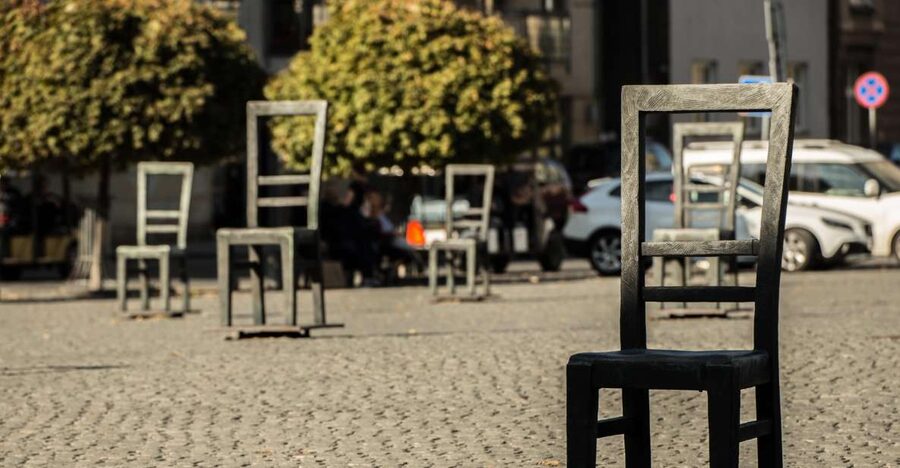
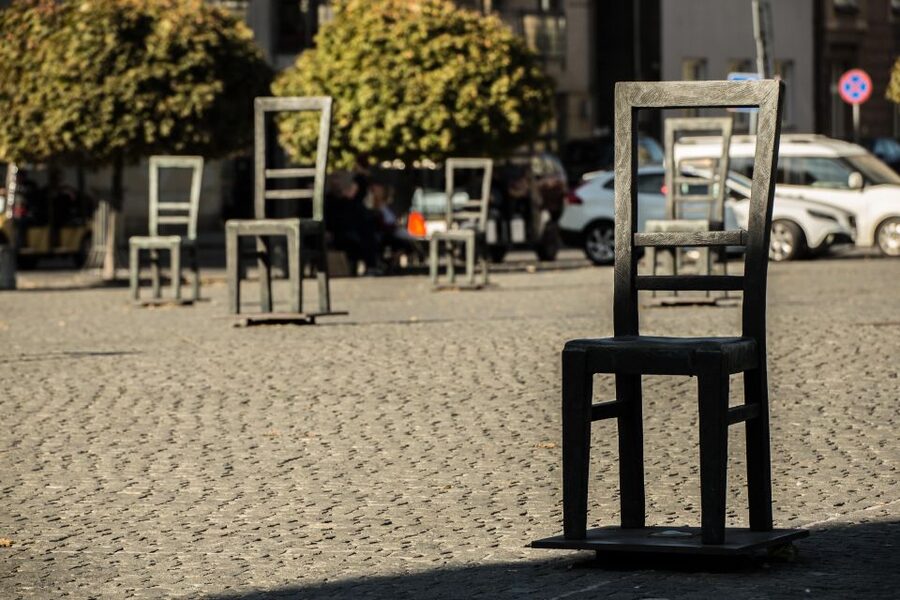
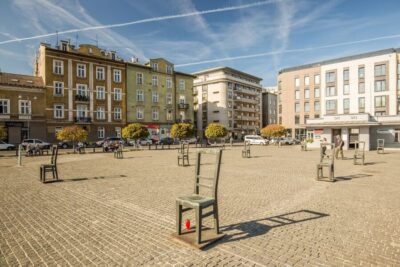
- Ghetto Heroes Square and the Chair Memorial, where each chair represents lives lost
- Under the Eagle Pharmacy and Tadeusz Pankiewicz, showing small acts of survival and help
- A tight schedule, with museum time plus a walking route through the ghetto area
Schindler’s Factory Entrance: What You’re Actually Touring
Schindler’s Enamel Factory Museum is one of Kraków’s most visited places for good reason. This tour gives you guided access to the museum housed in the former factory building tied to Oskar Schindler, and that matters, because without a guide it is easy to feel lost in the emotional and information-heavy rooms.
Two things I really like about starting here. First, you get the broad story first, with context for how Nazi occupation changed daily life. Second, you learn names and systems, not just facts, so when you step into the ghetto area afterward, it feels like the same story continuing.
Just manage expectations. A few people have pointed out that you are not getting a working industrial factory visit. The building is now a museum, and it does not include original machinery from the production floor. If you are thinking of uniforms, machines, and factory sounds, you might be a little disappointed at first. But if you are ready for a history and witness-centered museum, you will get a lot out of it.
You can also read our reviews of more guided tours in Krakow
The Museum Plan: Narrow Rooms, Strong Atmosphere, Clear Story
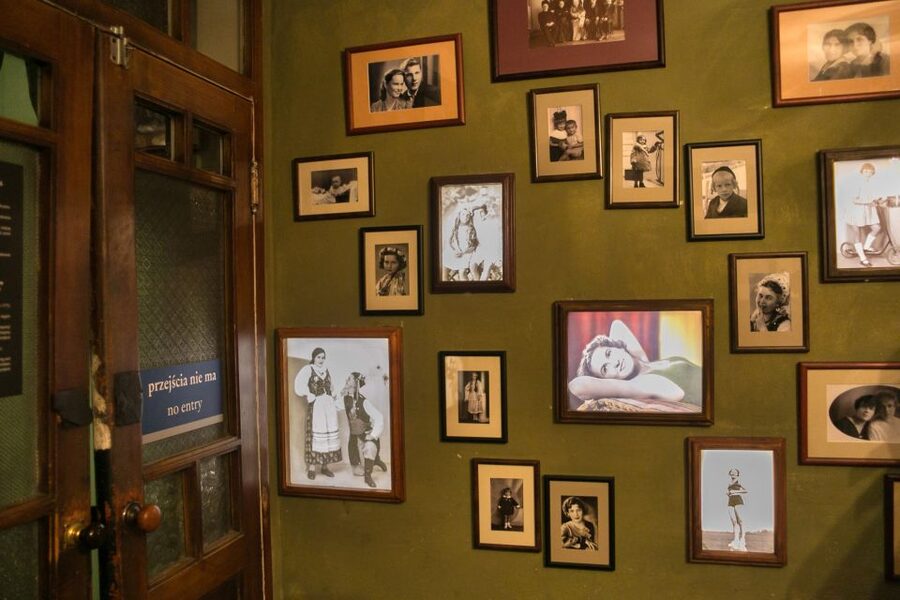
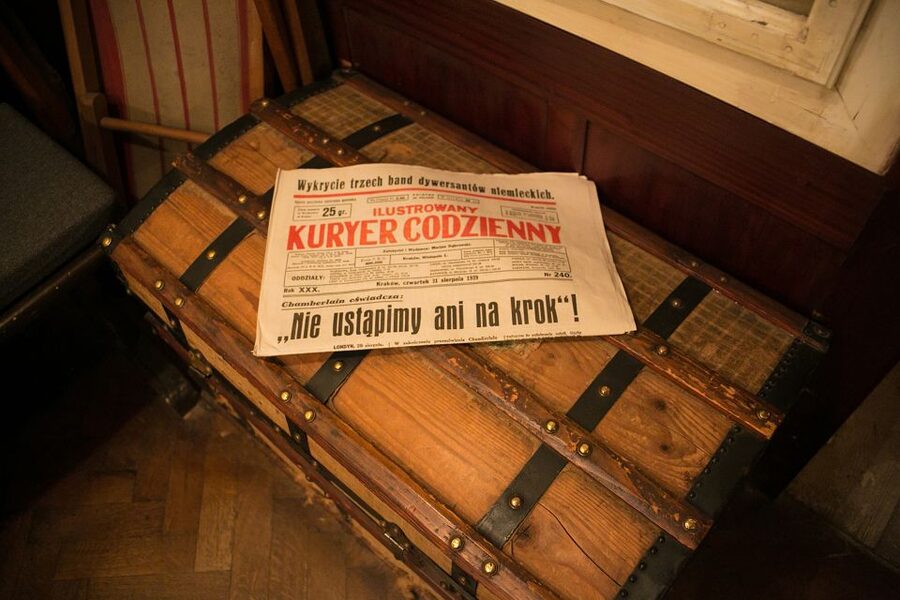
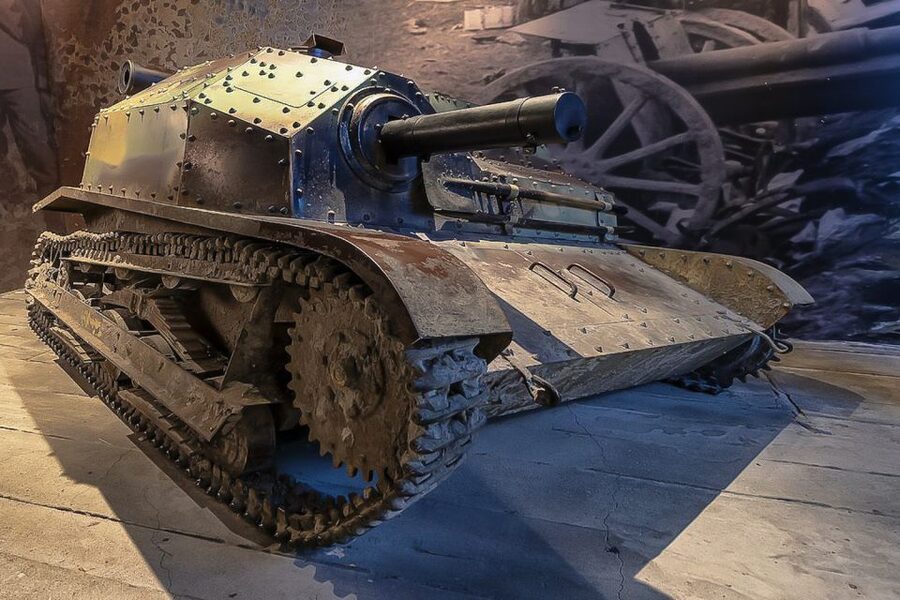
The museum visit is structured around an exhibition titled Kraków under Nazi Occupation, 1939 to 1945. You will see artifacts, photographs, and reconstructions, and you will move through a series of narrow, dimly lit rooms designed to make you feel confined. That design choice is not decoration. It is meant to mirror the fear and pressure that shaped life under Nazi rule.
What makes a guided route so helpful here is the sheer density of what you are seeing. The exhibition does not only explain Schindler. It focuses on how the war transformed Kraków and how Jewish and non-Jewish residents lived through persecution, restrictions, deportations, and loss. When a guide connects the dots, the museum stops feeling like a collection of isolated displays.
In practical terms, this museum can feel physically tight. Some rooms are small, so if your group is around 20 people, there may be moments when people squeeze past each other. That is not a reason to skip the tour. It is a reason to plan your mindset: come ready to listen, accept some crowding in small corridors, and keep your pace steady.
Oskar Schindler and His Workers: More Than One Biography
Yes, you will hear Oskar Schindler’s story. But what you will remember most is the scale and the moral pressure around it. Your guide explains how Schindler’s factory provided refuge to more than a thousand Jewish workers. That number is hard to hold in your head until you hear the surrounding context, which is exactly what the museum does.
The best guides also place Schindler in a wider picture. You do not get a standalone hero narrative. You get how persecution escalated, how deportations unfolded, and how Kraków’s Jewish community was destroyed. It is heavy material, and the guide’s tone is part of the value. Several guides on this tour have been praised for staying objective with the facts while still allowing the emotional reality to land.
Different guides have different styles, but names like Alexandra, Phil (sometimes listed as Fil), Joanna, Alice, Eva, Helena, and Anna have been mentioned in participant experiences. The consistent message is that the guide is not just reading labels. They explain why items and timelines matter.
The Break Point: How the Timing Fits a Short Day
This experience runs about 3 hours total. The museum part is typically the longest stretch, with walking to follow through the ghetto area. People have noted there is a short break in the middle that gives you time to reset, use the bathroom, and grab something warm if the weather is cold.
That break is more important than it sounds. The museum is emotional and informational. If you try to go straight from the museum into the ghetto streets without a breather, your brain gets overloaded. In winter especially, a quick pause can make the difference between absorbing the story and just surviving it.
Also, be aware that the tour does not promise extra time to linger in every room. Some participants wanted a slower pace for reading and photos. So if you love to study every label and memorial plaque, consider adding extra time on your own after the guided portion.
Walking Kraków’s Ghetto: Walls, Confinement, and What Survives
After the museum, the tour shifts outdoors into a walking route through the wartime Jewish ghetto area. Your first stop is the remains of the Ghetto Walls. Even when what you see is only partial, the location still communicates confinement. It is one thing to learn about restricted movement. It is another to stand where the separation was physically real.
As you walk, your guide points out key places and explains how residents lived under pressure. This matters because the ghetto was not just a historical label. It was a system that affected daily routines, choices, and survival.
One practical tip based on real-world experience: wear layers and comfortable shoes. You are moving between stops, and the museum rooms can leave you cold while outside temperatures can feel harsher. This is a tour that goes ahead in all weather, rain or shine, so dress for conditions, not for your preferences.

Ghetto Heroes Square and the Chair Memorial: A Quiet Shock
Ghetto Heroes Square is treated like the heart of the experience. Your guide leads you here to connect wartime events with what stands in the present.
This is where deportations to extermination camps took place, and today the square is marked by the Chair Memorial. The memorial uses symbolic chairs, with each chair representing lives lost. It is simple, but that simplicity is part of the impact. You are not staring at a scene to interpret. You are confronted with a space that asks you to remember individual human lives within a system designed to erase them.
If you are sensitive to emotional memorials, that is still part of why this tour is worth it. You leave with a clearer understanding of what the ghetto meant, beyond dates on a screen.
Under the Eagle Pharmacy: Small Courage, Real Help
Across the square is the Under the Eagle Pharmacy. This stop is one of the most human parts of the walk because it focuses on acts of help rather than only on destruction.
Your guide explains how Tadeusz Pankiewicz and his staff aided ghetto residents, preserving medicine and hope. That detail changes how you understand the period. It is not just suffering, it is also decision-making under extreme risk. Even a pharmacy stop can become a lesson in courage, networks, and survival strategies.
When a guide connects this story to the broader wartime system you learned inside the museum, it adds meaning to everything else. You see how help could exist while the larger machinery of oppression kept grinding forward.
What Guides Get Right Here (And Why It Matters)
This tour gets high praise for guide quality, and you can feel why once you walk into Schindler’s Factory. The museum contains lots of information and lots of emotional cues. A strong guide gives structure, so you do not get lost. Many participants have said guides answered questions well and stayed respectful while still conveying real emotional depth.
Phil (Fil) and Alexandra are two names that appear in participant accounts again and again. People have mentioned that guides used microphones or audio equipment, making it easier to listen even in narrow spaces. One participant even described the setup as a closed-loop audio system, which is the kind of practical detail you care about when rooms get quiet and voices get swallowed.
There is also a consistent theme: some guides keep the pace manageable but still fit a lot in. Others can feel rushed in small rooms if the group is large. So if you can choose, pick a time when you feel good physically. And if you are doing this in colder months, go prepared. Listening through narrow corridors while shivering is not the vibe.
Price and Value: Is $57 Worth It?
At around $57 per person for a 3-hour experience, you are paying for three things: expert guiding, skip-the-line museum admission, and a guided walking route that connects the museum to the ghetto on foot.
Without a guide, Schindler’s Factory can still be moved by and informative, but it is also easy to miss the connective tissue that makes the story hit harder. Skip-the-line access matters in a popular museum, because waiting time can eat your energy when you have a short stay in Kraków.
Is it expensive? It is not bargain-priced, but it is also not a long, multi-day tour. For many people, it lands in the sweet spot: you get two major parts of Kraków’s WWII memory in one go, with a guide doing the heavy lifting of explanation and context.
If you are on a tight schedule and you want a direct, guided route that links Schindler’s factory to the ghetto sites, this price usually feels fair. If you are the type who likes to read slowly and take your own time, you might do better spending extra hours at the museum first, then walking the ghetto afterward at your own pace. But if you want structure and meaning fast, this tour fits.
Logistics That Actually Affect Your Day
Your meeting point is outside Schindler’s Factory Museum, at the main entrance. Meet on the right-hand side, and your guide will hold an excursions.city sign.
Plan to arrive about 10 minutes early. Once the group departs, latecomers cannot join, and tickets cannot be refunded. This is one of those rules that feels harsh until you realize groups cannot be held up inside a timed museum entry.
Language is another key point. This tour runs in one language per group, with options including Italian, English, French, Spanish, and German. If you are bilingual, still pick the one you feel most comfortable listening to for emotional, history-heavy content.
One more time-sensitive note: the information says that from January 1, 2026, personalized tickets require names of all participants during booking, and entry may be denied without those names. If you are traveling after that date, double-check spelling when you book. It saves stress.
Times can be approximate and may shift due to museum and site scheduling, so do not pack a super tight connection right after.
Who Should Book This Tour
You should book if you want a focused introduction to Kraków under Nazi occupation, with Schindler’s factory as the anchor point and the ghetto sites as the follow-through. It is also a good fit if you value expert interpretation, because this experience depends on context, not just looking at plaques.
You might want to think twice if you get overwhelmed by emotionally heavy content or if you strongly prefer slow self-guided museum time. In that case, you can still visit the museum and ghetto area on your own, but you would be trading structure for freedom.
Also consider timing. One participant noted that in the evening/night it is dark and the surroundings are harder to see clearly. So if you care about visual context for the walking route, aim for a daylight start when you can.
Should You Book Schindler’s Factory and the Kraków Ghetto Guided Tour?
My take: if you are visiting Kraków for a short time and you want the clearest guided connection between Schindler’s factory and the wartime ghetto, this is an excellent use of your 3 hours. The museum’s design and the ghetto walk are powerful, and the guide is a big part of making the story coherent rather than just sad and scattered.
Book it if you want skip-the-line entry, an expert guide, and a walking route that hits the key memorial sites like Ghetto Heroes Square and the Chair Memorial, plus the Under the Eagle Pharmacy story with Tadeusz Pankiewicz. If you are planning your day anyway, schedule it when you are rested and able to focus, because this is the kind of tour that rewards attention and stays with you after you leave.
If you want my bottom line in one sentence: this is worth it when you want meaning, context, and a guided path through some of Kraków’s hardest history.
FAQ
Where do I meet the guide?
Meet in front of the main entrance to the Schindler’s Factory Museum, on the right-hand side. Your guide will be holding an excursions.city sign.
How long is the tour, and what does it include?
The tour lasts about 3 hours. It includes skip-the-line admission to Schindler’s Factory and a guided walking tour of the Kraków ghetto.
Do I need to buy tickets for Schindler’s Factory?
You do not need to handle separate museum entry, since skip-the-line admission to Schindler’s Factory is included with the tour.
Is hotel pickup or drop-off included?
No. Hotel pickup and drop-off are not included.
What languages are available for the live guide?
Live guided tours are available in Italian, English, French, Spanish, and German.
What should I do if I am late?
Arrive about 10 minutes early. If the group has already departed, latecomers cannot join and tickets cannot be refunded.
Is there any special entry requirement for 2026?
Yes. From January 1, 2026, personalized tickets require you to provide the names of all participants during booking, and entry may be denied if the names are missing.
Can I cancel and get a refund?
You can cancel up to 24 hours in advance for a full refund.
More Guided Tours in Krakow
More Tours in Krakow
More Tour Reviews in Krakow
Not for you? Here's more nearby things to do in Krakow we have reviewed







More Kazimierz & Jewish Heritage Tours to consider.
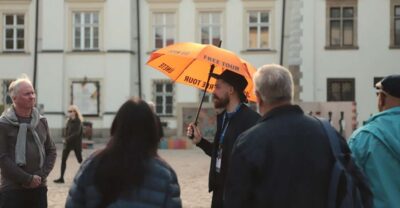 ★ 4.9Jewish Quarter and Former Ghetto TourFrom $191,441 reviews
 ★ 4.9Bike Tour of Old Town, Jewish Quarter and the GhettoFrom $371,155 reviews
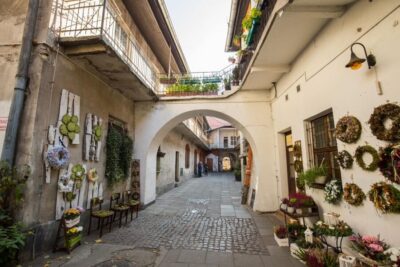 ★ 4.8Kazimierz Jewish Quarter Walking TourFrom $27571 reviews
 ★ 4.8Kazimierz, Schindler’s Factory & Ghetto Guided TourFrom $81460 reviews
 ★ 5.0Full Bike Tour – the Old Town, Jewish Qtr & the Ghetto NEW BIKESFrom $35437 reviews
 ★ 4.9Bike Tour of the Old Town, Kazimierz, and the GhettoFrom $26350 reviews
 ★ 4.6Jewish Ghetto Walking TourFrom $11349 reviews
 ★ 4.6Jewish Quarter and Ghetto Electric Golf Cart TourFrom $34348 reviews
Other ways to explore Krakow