Review · OLD TOWN & MAIN SQUARE TOURS
Krakow: Old Town, Jewish Kazimierz and Ghetto Sightseeing by Electric Golf Cart
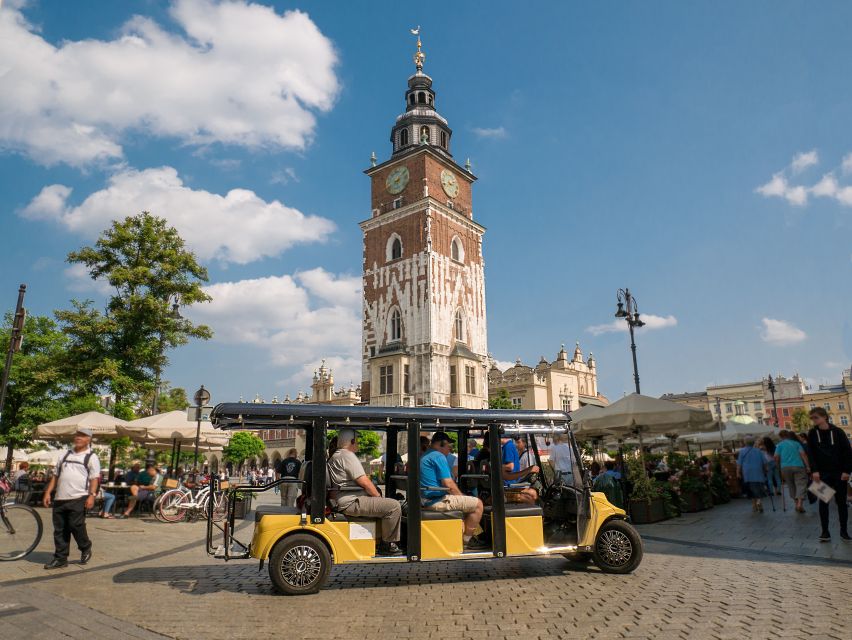
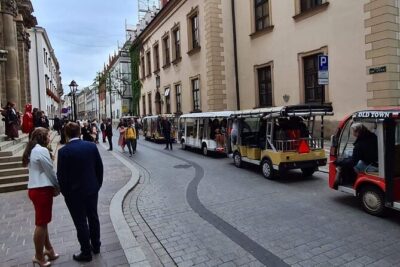
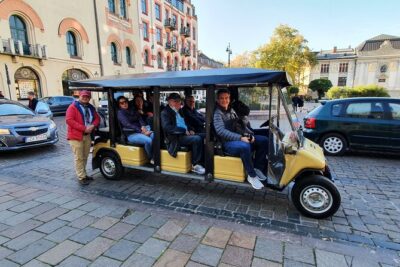
Krakow is best when you move fast. This electric golf cart ride is a smart way to see the big-name sights plus the Jewish quarter and ghetto area without spending your whole day stuck between long walks and crowds. Old Town landmarks and Kazimierz synagogue stops come in one smooth circuit. One thing to keep in mind is the stops can feel quick, so bring your photo plan and your patience.
I love that the format gives you big visual wins in just 2 hours 30 minutes, with an audio system that keeps the pace moving. I also like the small-group feel, with a maximum of 8 people, which makes it easier to ask questions and actually hear explanations. My only real caution: if you go later in the day, busy Old Town streets can make it harder to see details and you may want more time at key places.
Key Highlights You Will Really Feel on This Ride

- Electric golf cart efficiency for seeing a lot with minimal walking
- Small-group size (up to 8) that keeps the ride from feeling chaotic
- English audio plus a live guide vibe that helps you connect the dots fast
- Kazimierz synagogue focus, including stained glass and historic prayer spaces
- Ghetto-area stops that put history in specific locations you can stand on
Electric Golf Buggies, Old Town to Kazimierz in 2.5 Hours
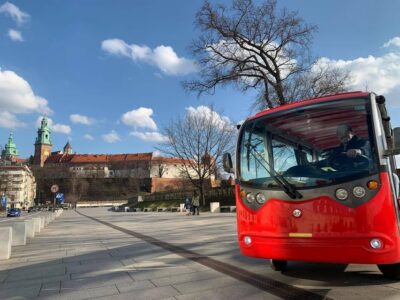
This is a time-saver, plain and simple. You cover major zones of Krakow in one connected route, so you are not spending your precious hours planning buses or backtracking on foot. The electric carts also make the day feel easier on your legs, which matters in an Old Town where the best viewpoints often come after a bit of walking.
The pacing works especially well if you are the kind of traveler who wants the highlights first and then comes back later for slower exploring. It also helps if you learn best through context, because the audio system guides you through what you are looking at and why it matters.
You can also read our reviews of more tours and experiences in Krakow.
Price and What You Get for About $56.47

At about $56.47 per person for around 2 hours 30 minutes, you are paying for three things: transportation in an eco-friendly cart, guided storytelling (with an audio system), and a route that links Old Town and Jewish sites in one go. In a city where distances can stack up quickly, that combination can be good value because it reduces the “time tax” of getting around.
Is it a bargain if you hate crowds? Not always. The route passes through popular streets, and if you expected long, slow museum-style stops, this may feel tight. But if you want an organized overview that gets you oriented fast, the price starts to make sense.
Also, the small group size up to 8 is a quiet plus. It is easier to hear your surroundings and less annoying when everyone is moving together.
Meeting Point, Timing, and the No-Big-Baggage Reality

Your tour starts at Mikołaja Zyblikiewicza 2, in Krakow’s center, and it ends at Mikołaja Kopernika 3. The key practical tip is to arrive on time and be ready to load. This tour starts at the specified time, and it is a group experience, so late arrivals can disrupt the flow.
You will be riding in vehicles that only have space for passengers to sit. That means you should not bring large baggage. If you are traveling with a big suitcase, you might prefer a locker situation first and then tour luggage-light.
The meeting point is near public transportation, which is helpful. You can usually build the day without stressful transfers.
Krakow Old Town First: Market Square and Cloth Hall
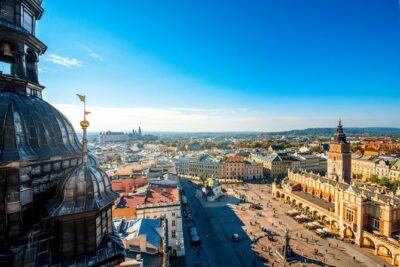
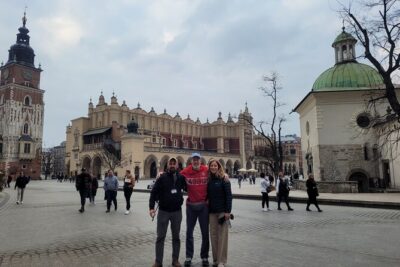
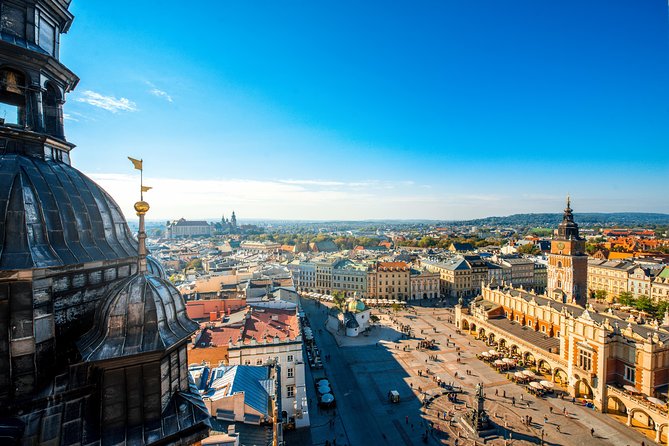
The day kicks off around Krakow’s historic heart, where you get a sense of scale immediately. You see the Market Square as the major public space, and it is easy to understand why it is described as one of the most important medieval market settings in Europe. Even from street level, it is the kind of place that makes your brain start mapping the city.
From there, the Cloth Hall (Sukiennice) is a standout. It is Krakow’s oldest commercial center, and you get a close look at Renaissance architecture that helps explain why this square mattered beyond local shopping. This is not just pretty buildings. It is a clue to how wealth and trade shaped the city over centuries.
Drawback to plan for: Market Square can get crowded, and carts parked near the sides can block your view at certain angles. If photos are a priority, you will likely want to move to the edges when others are loading or stepping off.
Town Hall Tower: Medieval Authority in One Structure

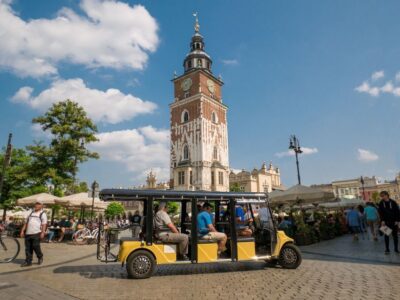
Next up is the Town Hall Tower, a vertical reminder that power used to live in stone. You get key details about it, including the tall climb implied by the description of hundreds of years on the Main Market Square. It is the remnant of the original city authorities’ seat, so it connects today’s sightseeing with the city’s early governance.
What makes this stop worthwhile is how it gives you a “north star” for understanding the Old Town layout. When you can anchor your mental map to a tower, the rest of the area starts to feel less random.
You should also expect short viewing time. If you want deep time at a single building, this cart format is not built for long, lingering waits.
St Mary’s Basilica, Veit Stoss, and the Starry Vaults
This is one of those stops that shifts your attention from street life to art and craftsmanship. You visit a central church with a high altar attributed to Veit Stoss, plus famous interior features described through the tour’s audio and guide talk. There is also mention of star-strewn murals by Jan Matejko covering the vaulting.
If you only glance at the exterior, you miss the real point. This stop helps you understand why Krakow is famous for more than postcard architecture. Inside is where the city’s artistic ambitions become physical.
Practical consideration: you may get limited time to enter, depending on timing and how the group moves. If you want photos inside, you will need to follow your guide’s rhythm and be ready to act quickly.
Juliusz Słowacki Theatre and the Barbican Shot-at-Myth Moment

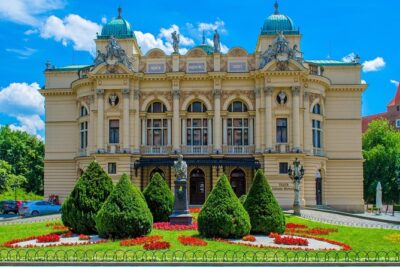
You will see the Juliusz Słowacki Theatre, which has operated continuously since 1893. Even if you are not a theater superfan, the building is a strong piece of European theatre architecture and a good example of how Krakow’s cultural life kept going through changing eras.
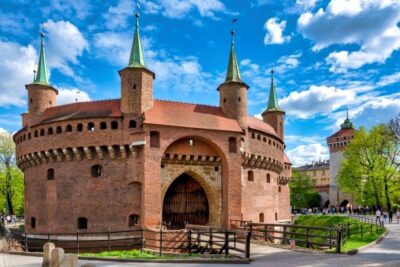
Then comes the Barbican, a pearl of medieval fortifications. This is where the story turns from beauty to defense. The famous legend shared with the stop is that the defenders repulsed attackers with a single shot, and it became part of local lore. Whether you treat it as myth, memory, or a mix, you still get the real value: you see a structure built to withstand violence, not just to impress.
Kazimierz: The Jewish Quarter Stops That Give Real Context
Once you roll into Kazimierz, you shift from general city sightseeing into a more specific story about Jewish life in Krakow. This area is known as a hub of Jewish culture for centuries, and it is now one of Krakow’s top drawcards for visitors because the streets connect directly to community history.
The route focuses on synagogues and key streets. That matters, because Kazimierz is not just a view. It is a place where the built environment is part of the narrative.
This is also where the tour format helps. You are moving between sites efficiently, so you are not guessing how far a particular synagogue is from the next. The audio and guide talk also keep the meaning attached to what you see.
Tempel Synagogue: Stained Glass and the Non-Orthodox Angle
The Tempel Synagogue is highlighted for two reasons. First, the stained glass windows are among the best preserved of their kind in Poland. Second, the synagogue is described as having a non-orthodox character, which helps you understand that Jewish life in Krakow was not one single uniform tradition.
That combination is why this stop works. It is aesthetic, but it is also interpretive. You are not just looking at an old building. You are learning how different Jewish communities expressed themselves through worship spaces.
Time tip: like other stops, it is worth being ready to enter or view quickly if the group schedule allows.
Szeroka Street: Why One Street Could Hold Four Synagogues
Szeroka Street is presented as the heart of Jewish Kazimierz. You get the striking historical detail that four synagogues used to stand on the street, something that was unheard of elsewhere in Europe. That fact instantly reframes Kazimierz. This was density of community, not just a tourist lane.
When you stand on Szeroka Street, it becomes easier to imagine daily life. It is also a practical moment for photos, because this street feels like a corridor of stories rather than a single monument stop.
Crowd caution: if other tours are stopping at the same time, you may have to step slightly aside to get a clear shot without carts blocking your line of view.
Remuh Synagogue: Modest Exterior, Main Prayer Place After Renovation
You will also visit one of the seven synagogues in Krakow, described as the smallest and contrasted by more modest decor. The tour’s information points out that after renovation completed in April 2016, it became a main site of prayer for members of the Jewish community in Krakow.
This stop is valuable for a simple reason: it shows the variety in synagogue architecture and community needs. The difference in decor is not just style. It signals how communities organized religious life.
Practical takeaway: if you are visiting during prayer or quiet hours, be ready to act respectfully and follow your guide’s guidance for entry or viewing.
St Joseph Church in Podgórze: A Different Krakow View
You also shift into Podgórze, where the parish church of St Joseph dominates the Podgórze Market Square. This is described as a distinctive, widely recognizable site of devotion that overlooks the area. The stop adds another layer to your day by connecting Krakow’s Old Town story with Podgórze’s local center.
This part helps you see that Krakow is not one single neighborhood identity. You are seeing how different districts developed and how their roles changed over time, including how Podgórze only became incorporated into Krakow in the 20th century.
The Ghetto Wall Fragment and the Plaque You Can Stand Beside
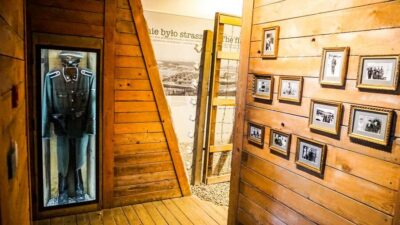
Now the tour becomes heavier, which is exactly what you should expect from a ghetto-focused circuit. You see a small fragment of the original wall around the former ghetto, preserved to this day with a plaque commemorating the fate of inhabitants.
This stop is important because it forces the history out of the abstract. You are looking at a surviving physical trace, not just reading about tragedy.
When you’re ready, let the plaques and the walls do the work. If you rush, it is easy to miss what you came to see.
Plac Zgody, Umschlagplatz, and the Deportation Turning Point
The story continues at Plac Zgody, described as designated Umschlagplatz under Nazi occupation, where Jews had to congregate to be deported. You are given the context that this was in 1941 when the area became the Krakow Ghetto.
This is the moment where your guide’s words matter most. The tour structure helps because you are not bouncing between far-away locations. You are staying within a tight geographic understanding of how the ghetto was processed and transported.
You will also hear about Tadeusz Pankiewicz, tied to taking over his father’s pharmacy and making history through that enterprise. The tour frames it within war chaos and personal tragedy, which is the kind of detail that turns a stop into a lasting memory.
How the Guides Change the Whole Day
The ride can only be as good as the storytelling. In this tour, guides like Radic and Filip W are repeatedly highlighted for being attentive, informative, and clear in English. Others, including Michael, Tom, and Peter, are also singled out for professionalism and for adding extra context beyond audio.
This matters because you will be moving between many sites. When the guide keeps things connected, each stop feels like a chapter, not a random photo stop.
Also, pay attention to how your guide handles short entries. Some tours allow you time to step inside cathedrals or monuments, but you may need to ask or be ready to move fast. A few guides are known for stopping to let people enter and take photos, which is a big deal if you want more than exterior views.
When This Tour Is Best, and When You Might Want More Time
This is ideal if you are time-tight, want a fast orientation, and still care about seeing Kazimierz and ghetto landmarks without hopping between multiple tickets and schedules. It is also a good fit if mobility is limited, because the electric carts reduce long walks and stair pushes.
It can feel less ideal if your priority is long, quiet time at one museum-like site. Some stops are brief, and you might wish you had more time at certain buildings. If you are the kind of person who needs 30 to 45 minutes in a church to absorb every detail, you might find the pacing a bit rushed.
One smart move: pick an earlier time slot. Later in the day, Old Town congestion can make it harder to see and take photos, and you may feel like you are competing with other carts for visibility.
Should You Book This Electric Golf Cart Tour?
Book it if you want a strong overview that connects Old Town, Kazimierz synagogues, and ghetto-area sites in one half-day style experience. The small group size, electric cart format, and English audio system make it easier to understand what you are seeing without getting lost.
Skip it or adjust expectations if you are chasing slow, deep time at fewer locations. This is built to cover a lot, so treat it as your orientation day, then plan follow-up visits where you want more minutes.
If your goal is to get your bearings fast, learn the key stories, and still have energy left for evening wandering, this tour fits the bill.
FAQ
How long is the tour?
The tour runs for about 2 hours 30 minutes.
What is included in the price?
It includes sightseeing in Kraków in an eco-vehicle with an audio system.
Is the tour offered in English?
Yes, it is offered in English.
What is the group size limit?
The tour has a maximum of 8 travelers.
Where does the tour start and end?
It starts at Mikołaja Zyblikiewicza 2, 31-029 Kraków, and ends at Mikołaja Kopernika 3, 31-034 Kraków.
Can I bring large baggage?
It’s advised that you do not bring large baggage, because the vehicles only have room for passengers to sit.
More Tour Reviews in Krakow
Not for you? Here's more nearby things to do in Krakow we have reviewed
More Old Town & Main Square Tours to consider.
★ 5.0Old Town Krakow & Wawel Castle Walking TourFrom $261,508 reviews
★ 4.9Bike Tour of Old Town, Jewish Quarter and the GhettoFrom $371,155 reviews
★ 4.8The Old Town Walking TourFrom $19794 reviews
★ 4.7Old Town Guided Segway TourFrom $55756 reviews
★ 4.8Old Town & Wawel Castle Walking Tour in EnglishFrom $26532 reviews
★ 4.5Krakow Old Town Guided Walking TourFrom $33438 reviews
★ 5.0Full Bike Tour – the Old Town, Jewish Qtr & the Ghetto NEW BIKESFrom $35437 reviews
★ 5.0Krakow Old Town Segway Tour 2hr with Training, Safety Gear, GuideFrom $57435 reviews