Review · KRAKOW
The best view of Krakow from Golf Cars
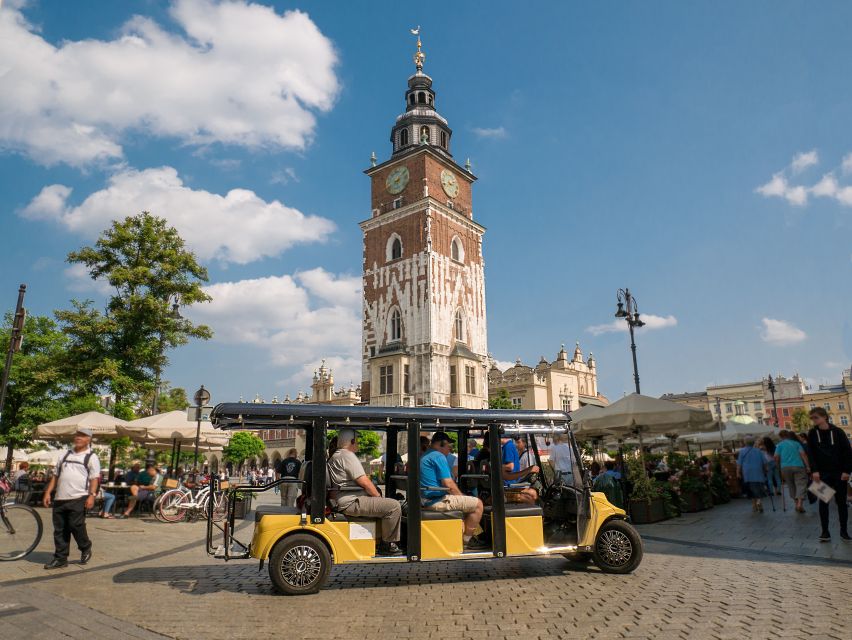
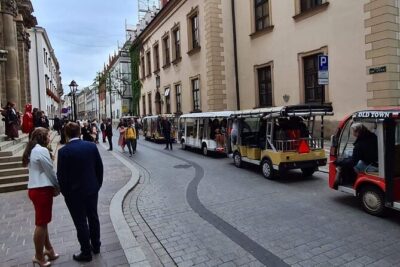
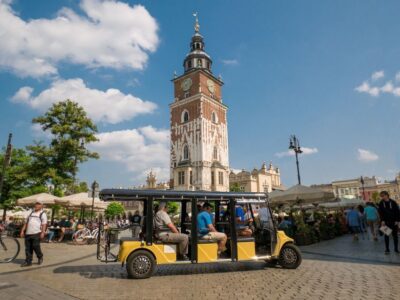
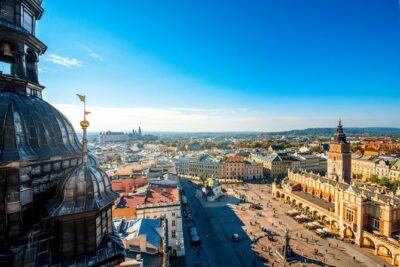
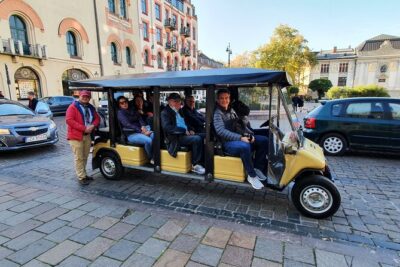
Krakow looks different from a golf cart. In about two hours, you roll past the Old Town and into Kazimierz, with an audio guide in 26 languages so you do not just see things, you understand them. I like how this format turns a quick city day into a focused route, with enough motion to cover ground and enough stop time to actually look.
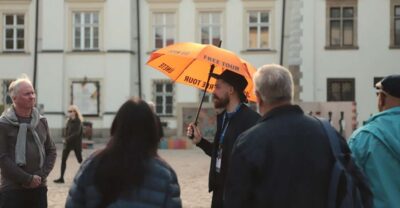
I also like the human touch. The driver and guide, Michal Urban, are part of the appeal, with clear explanations and a relaxed pace that makes it easy to ask questions, even if you are not Polish-speaking. Plus, you get photos during the tour, which is handy when the best photo spots are only a minute away.
One caution before you book: timing and show-ups matter. A small number of past customers reported that carts did not arrive as expected, which is the kind of problem you do not want on your first day in Krakow. If you do book, I would treat this like any shared-vehicle activity, keep your confirmation handy, and have a backup plan for later that day if anything goes sideways.
Key things I’d watch for before you ride

- Small group of up to 7 keeps the route feeling personal, not like a cattle herd
- Audio guide in 26 languages means you can follow along even when you are outside the big-ticket sights
- Covers for cold or rainy days help you keep going in shoulder season weather
- Short stop times (often 5 to 10 minutes) are great for orientation, less ideal if you want long museum browsing
- Some synagogue and museum entries are not included so you may need extra time and cash for add-ons
- A few reliability complaints mean it is worth confirming details close to departure
Why this golf cart tour is a smart way to see Krakow fast

There are two kinds of sightseeing days. The first is slow, meandering, and you barely leave the first neighborhood. The second is efficient, where you want to see the major districts and key landmarks before dinner.
This electric golf cart tour fits the second kind of day well. You ride between clusters of sights in a way that feels much closer to a moving walking tour than a full bus tour. The best part for your legs and your mood is that you get transport help on the stretches between viewpoints, so you spend more time looking and less time waiting for the next stop.
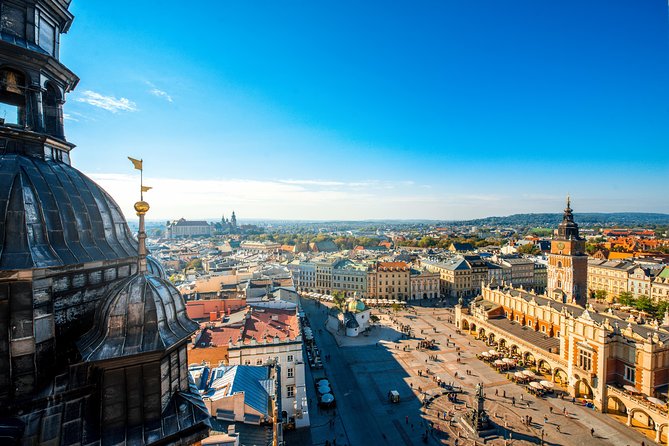
You also get an itinerary that blends the postcard side of Krakow with the parts many first-timers skip. You hit Old Town landmarks, then you shift into Kazimierz and the Jewish quarter, including ghetto-era memorial points. For me, that combination is the value: you get city orientation plus cultural context in the same two-hour window.
You can also read our reviews of more tours and experiences in Krakow.
Meeting at plac Jana Matejki 2, then getting rolling in a small group

The tour starts at plac Jana Matejki 2. You end back at the same meeting point, so you do not have to figure out transit after.
You should plan for the ride to feel like a loop, not a straight line. That matters because it affects how you experience the views. You go from one “look here” moment to the next, and the cart lets you turn quickly as you cross from one historic pocket to another.
The group size is capped at seven travelers, which is a big deal for this style of sightseeing. With fewer people, guides can handle questions without slowing the whole bus down. You are also more likely to get closer to the curb or viewpoint when you stop, which helps if you are trying to photograph Wawel-area angles or details around the Jewish quarter streets.
Pickup is offered, and the tour uses a mobile ticket. That means you are not stuck with printed tickets or last-minute guesswork at the tram stop.
Old Town in motion, from a 1498 gate to Krakow Castle

Your first segment sets the tone: you are seeing the historical structure of Krakow, not just random buildings.
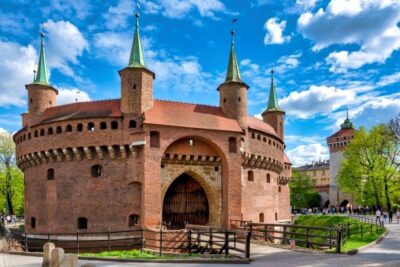
One early highlight is that classic historic gateway built around 1498, used as an entry into the Old Town. Even if you only see it briefly from the street, it gives you a mental map fast. Krakow’s Old Town feels like a layered puzzle, and the gateway acts like one of the first pieces.
Then you visit the Grunwald Monument, an important symbol of Polish national pride that commemorates the Battle of Grunwald, a major medieval conflict involving Poland and Lithuania. This is one of those stops where the cart helps, because the monument area is easier to approach without turning your day into a long walk.
Next comes the big city park that encircles the Old Town, tied to where medieval city walls stood until the early 19th century. This is not a “one photo and done” stop. If you look around during the ride, you can start to see how the city’s form shaped daily life and movement.
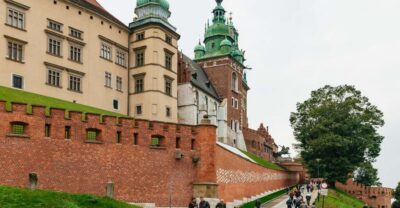
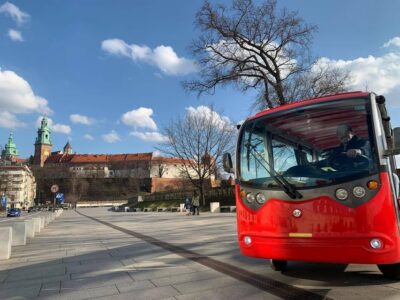
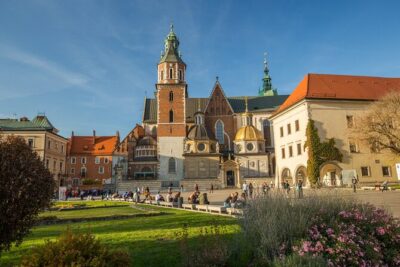
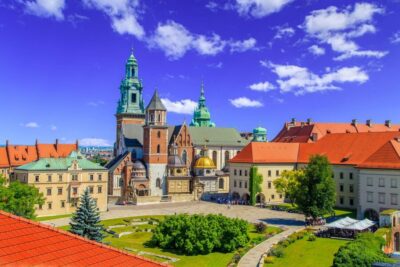
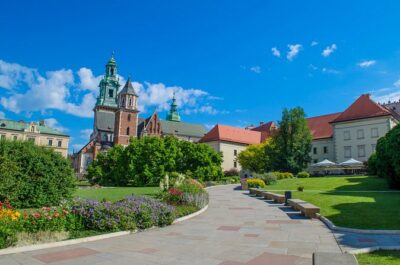
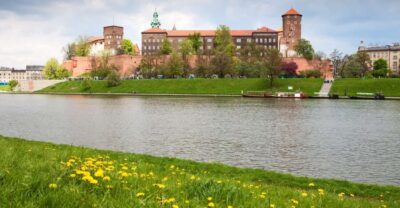
The main anchor is Krakow Castle, which served as the residence of Polish kings and is now one of the country’s premier art museums. It is also part of a UNESCO World Heritage designation through the Historic Centre of Krakow. The cart ride gives you a practical advantage here: you can appreciate the castle setting while staying time-efficient, without rushing through the rest of the city.
Wawel Dragon and hill-area churches: quick stops with real photo power
When the tour reaches the Wawel hill area, it leans into Polish folklore and iconic architecture.
You get to see the Monument of the Wawel Dragon, a famous dragon figure tied to Polish legend, with the story’s lair placed at the cave area near the foot of Wawel Hill by the Vistula River. This is a free stop and lasts around 10 minutes. For me, the trick with a stop like this is to treat it as a orientation anchor. In a short window, it ties together the river, the hill, and the legend, so your photos feel more meaningful than random.
Nearby, you visit the Bernardine Church at the foot of Wawel Hill. The present building is from the second half of the 17th century, and the route lists a baroque church period of 1719 to 1728. Expect to see it as a brief street-level moment rather than a long interior visit, since the tour rhythm is built around motion and photo stops.
The overall benefit of this hill segment is timing. Wawel area sights are dense, and a golf cart helps you keep your momentum. The downside is you do not get long to sit, go deep inside, or explore side streets on your own. If you love detailed church interiors, you may want to plan a separate walk later.
Church on the Rock and the park edge: where the route feels human
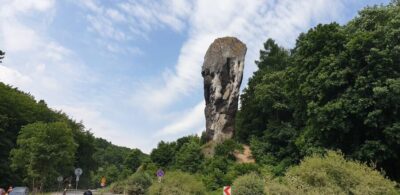
One of the most interesting religious stops is the Church on the Rock, Kosciol na Skalce. The shrine has roots reaching back to 1472 with a monastic community of Pauline Fathers, and it later received baroque decor in the 18th century.
This stop is listed as free and around 10 minutes. With that kind of time, you are not going to soak up every artistic detail, but you can still notice the site’s dramatic “set on the rock” placement and understand why it is famous. Again, the cart format is key: you can fit this into your day without burning time crossing the whole area on foot.
The park segment earlier also matters here. The route uses the Old Town’s surrounding greenery and former wall line as a kind of visual buffer. It keeps the day from turning into a straight line of stone and church facades. Even just a few minutes with the park in view helps you reset, which makes the later Kazimierz segment feel less rushed.
Kazimierz: synagogues, squares, and the streets that tell the story

This is the part that most strongly differentiates the tour from a basic highlights circuit. You move from Old Town to Kazimierz and the Jewish quarter, and you do it with a route that includes squares, bridges, and ghetto-era memorial points.
You start this shift at Wolnica Square, part of the old market square in Kazimierz. The tour notes context about this area as a historic center for the Jewish city, and mentions the Okrąglak market hall, built as a roofed market space in the late 19th century. Even with short stop time, squares like this help you understand the social geography of the district.
Then you cross the Father Bernatek Footbridge, a short 5-minute free stop over the Vistula that links Kazimierz and Podgorze. This is a classic “move and look” moment. You get a quick perspective across the river and a natural sense of how the districts connect, which is hard to recreate if you only view each neighborhood from one side.
Next, you visit the Corpus Christi Church. The stop is listed at about 10 minutes and free. It is described as Gothic with Polish Baroque interior elements, founded by King Casimir III the Great in 1335. The way the tour frames it is useful: it shows you the shift between architectural styles in one place, without you needing to be an architectural expert on day one.
From there, the itinerary moves through the synagogue area and Jewish-quarter street life. The tour includes a visit to Tempel Synagogue, also called the Progressive Synagogue and referenced as Tempel, built in the 1860s. The listing specifically notes that admission is not included for that stop. The route also includes details about earlier synagogue foundations, a devastating period during German occupation, and the broader layout of the square and synagogue sequence in the Jewish city. With only a few minutes here, you mainly take in the outside and the immediate context.
Szeroka Street then becomes the street-level heart of the Jewish district. This is listed as free and about 10 minutes. It is one of those stops where you can actually feel the neighborhood scale even without entry tickets. You can look at the street width, the building fronts, and the way the area feels like it was built for community life.
You also pass Remuh Synagogue, listed as free with admission not included. This stop is about 10 minutes. Even if you do not go in, knowing that the complex is tied to mid-16th-century sacred art and remains a center of religious life makes your exterior viewing more than just photos. It also gives you a reason to return later for a longer visit, if the topic interests you.
Plac Bohaterow Getta and ghetto memory points: meaningful, brief, and sobering

The final Kazimierz-focused segment shifts into ghetto-era remembrance with stops like Plac Bohaterow Getta. This is a short free visit, about 5 minutes, but it is packed with references.
The tour mentions the Kraków Ghetto as one of five major metropolitan Jewish ghettos created by Nazi Germany. It also points out the pharmacy in the ghetto, described as the only pharmacy in the ghetto area, with a museum inside. It further references a fragment of the ghetto wall on Lwowska street, and notes where the entry gate to the ghetto was located during 1941 to 1943, at the beginning of Limanowskiego Street, diverging from Podgórze Market Square.
The practical way to handle this part is to keep your expectations realistic. This is not a deep-dive memorial day in just two hours. It is, however, a strong framework for understanding where the district’s history sits in the map. If you want more depth after the tour, you can use these points to guide where you go next on your own.
The route ends with a quick stop at the Church of St. Joseph at Podgorski Square, listed as free and about 5 minutes. That final moment gives a sense of return to present-day Krakow after the heavier ghetto remembrance points.
What you get for the money, and what you still need to budget
Price is listed at about $103.03 per group for up to 7 people. That is where the value math gets interesting.
If you book with a full cart group of 7, you are effectively paying roughly $15 per person for a guided electric-cart orientation plus an audio guide system. If you book as a smaller group, your per-person cost rises, and then you should compare it to the cost of similar guided walking tours and transit time. In other words, this is most cost-effective when you share.
Included items are also straightforward:
- Guided tour in an electric golf car
- Audio guide system in 26 languages
- English-speaking driver
- Photos during the tour
Not included is food and drinks, and some entrance fees are not included for certain synagogue and museum stops. That is important because a sightseeing plan depends on how you want to spend your time. If you want interiors, you may need to add your own ticket purchases or accept that your tour time is mostly exterior and context-based.
The tour duration is about 2 hours, and the itinerary is built as a sequence of short stops. That makes it excellent for getting your bearings on a first or second day. It is less ideal for travelers who want to spend 45 minutes inside multiple museums.
Weather, timing, and a small but real reliability risk
The tour notes that it works on cold or rainy days because vehicles have special covers. You should also know it requires good weather. If it is canceled due to poor weather, you are offered a different date or a full refund.
There is also a minimum number of travelers requirement. If the minimum is not met, the tour can be canceled and you are offered another date or a full refund.
This all makes weather planning important, but it also helps explain why it may be popular. You are more likely to have a smooth experience if you choose a date where the forecast does not look chaotic.
Now, the part I would not ignore: a couple of reviews reported carts not showing up. I cannot prove what happened in any individual case, but you should treat it as a real risk category. Bring the confirmation, arrive a few minutes early at plac Jana Matejki 2, and keep your phone charged in case you need help contacting the operator.
Who this tour is perfect for, and who should skip it
This is best for you if:
- You want an efficient overview of Old Town and Kazimierz without doing a long walking day
- You like getting context while you look, thanks to the 26-language audio guide
- You travel with a small group and can share the per-cart cost
- You want a first-day orientation that still includes ghetto-era memorial points
Skip or consider alternatives if:
- You plan to spend lots of time inside synagogues and museums during this same window
- You strongly prefer fully guided time inside major churches or ticketed attractions
- You cannot risk a missed start on a tight schedule, given the reported cart arrival issues
My booking advice: should you ride this golf cart tour?
I think this tour is a good buy if you want smart coverage and clear explanations in a short time. The small group size, the audio guide in 26 languages, and the fact that you reach Kazimierz with less walking are practical wins. I also like the mix of sights, from the Wawel Dragon area to Church on the Rock, then into synagogue and ghetto memory points.
My main hesitation is reliability. Because a few people reported carts not arriving, I suggest you choose your day carefully and keep a calm plan B. If your schedule is flexible and you want a guided city orientation that moves you faster than walking, this is worth booking. If your day is tight and you cannot handle disruption, you may want to keep your expectations grounded or pick a different format with stricter turnout patterns.
FAQ
How long is the Krakow sightseeing tour by electric golf cart?
It runs for about 2 hours.
How many people are in a group?
The tour is a small group with a maximum of seven travelers.
Where does the tour start and where does it end?
It starts at plac Jana Matejki 2 in Kraków and ends back at the same meeting point.
Is pickup included?
Pickup is offered.
What languages are available for the audio guide?
The audio guide system is available in 26 languages, and you receive the audio guide in your language.
What is included in the tour price?
Included are the guided tour in an electric golf car, an audio guide system, an English-speaking driver, and photos taken during the tour.
Are entrance tickets included for all stops?
Not all stops include admission. Some stops list admission ticket not included, and others are listed as free, so it depends on the specific site you want to enter.
FAQ
Can I cancel for a full refund?
Yes, free cancellation is available up to 24 hours before the experience starts for a full refund. If you cancel later than that, the amount you paid will not be refunded.
What happens if the tour is canceled due to weather?
If it is canceled due to poor weather, you are offered a different date or a full refund.