Review · AUSCHWITZ-BIRKENAU MEMORIAL TOURS
Kraków: Auschwitz-Birkenau & Salt Mine Full-Day Guided Tour
A day that hits hard. This full-day guided trip pairs Auschwitz-Birkenau with the spellbinding Wieliczka Salt Mine, and I like that it is structured with English-speaking museum guides, headsets, and an air-conditioned ride. What I love most is the focus on what you are seeing, not just the highlights, plus the chance to see preserved camp sections and then switch gears underground in Wieliczka. One drawback to plan for up front: it is a long day with an early start, and the Auschwitz portion is solemn and somber.
I also like the way the day balances guided time with breathing room. You get time to move, use the facilities, and grab lunch during a scheduled break, but you are still spending real time on guided interpretation in both places. If you are sensitive to cold, mornings can feel extra sharp, and you will spend time outside before you settle into museums and the mine.
Finally, this is not the day trip for everyone. The tour is not suitable for people with mobility impairments or wheelchair users, and the salt mine involves descending a lot of stairs, plus cool underground temperatures.
Quick hits you will care about

- Skip the ticket line so the morning starts moving fast
- Headsets included to hear the English guide clearly at busy sites
- Auschwitz-Birkenau with museum educators walking you through Auschwitz I and Birkenau
- Wieliczka Salt Mine descent with about 800 steps and a depth of 135 meters
- Lunch built in, plus time to explore before the longer guided mine route
- Air-conditioned minibus transport to keep the long day manageable
Auschwitz-Birkenau First, Wieliczka Second: The Pace You Need

This is a high-impact day, so I recommend you treat it like a schedule, not a casual sightseeing loop. The tour runs roughly 11 hours, and the timing matters because you are visiting two very different places with two very different moods. Auschwitz-Birkenau is heavy and emotionally demanding. Wieliczka is visually astonishing in a completely different way, and it gives your brain a place to rest after the museum part.
I like that the day is built around guided time in both locations, with live English guidance at Auschwitz and again at the salt mine. The guides you follow are museum-based, including an English-speaking live guide provided by the Auschwitz-Birkenau Museum and another in the Salt Mine, so you are not piecing together explanations from audio apps and street signs.
The main practical consideration is fatigue. Early pick-ups are common, and you could be leaving Krakow as early as around 5:00 AM to 10:00 AM. In one recent booking, people reported leaving around 5:15 AM, which means you will want to be ready the night before, not scrambling in the morning.
You can also read our reviews of more guided tours in Krakow
Before You Go: ID, Bag Size, and Dress Code That Actually Matters

This tour is well-run, but museum rules are real rules. Bring a passport or ID card. If the name on your booking does not match your name on your ID exactly, entrance can be refused, so double-check the spelling before you show up.
Bags are also a make-or-break detail. You are not permitted to enter the museum with large bags or backpacks. The maximum size permitted is 20 x 30 centimeters, so pack light. If you are the type who brings everything “just in case,” this is your moment to edit down.
Dress matters in a very practical way. Items not allowed include short skirts and sleeveless shirts. For the mine and the bus ride, comfort counts, but keep it respectful and within the rules so you do not lose time at security.
And yes, there are typical no-go items: no weapons or sharp objects, no smoking, and no oversize luggage. Pets are also not allowed. If you want to carry snacks, the tour data only says food and drinks are not included, so plan on buying or bringing what you will eat during your lunch and break times.
Entering Auschwitz I: What the Preserved Sections Help You Understand

The day begins at the Auschwitz-Birkenau Museum with a guided visit led by an English-speaking museum educator. Expect the guide to frame Auschwitz-Birkenau as a system, not just a site. The camp was founded in 1940 by Nazi Germany and became the largest concentration camp operated by the Nazis. The tour focuses on how victims were held and murdered, including references to gas chambers, and the guide helps you connect what you see to the broader historical context.
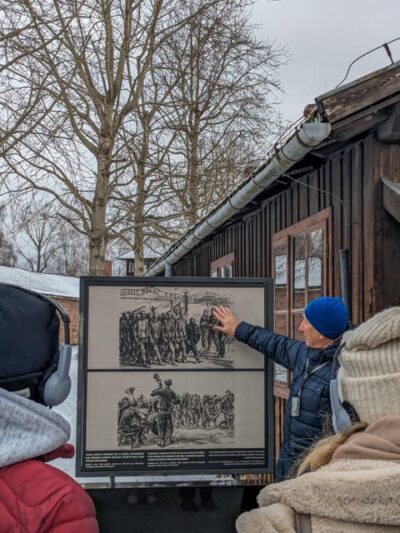
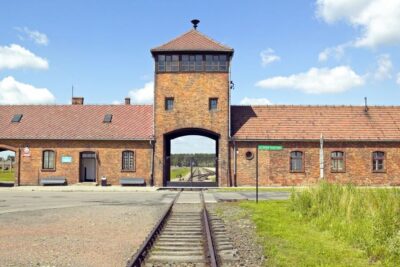
Your route starts with the gate inscription Arbeit macht frei as you enter Auschwitz I. From there, the guide takes you through preserved parts of the site and explains what each section means. One of the strongest values of doing it with a trained educator is that the preserved layout can feel confusing if you are reading it alone. With a guide, you get help with orientation and interpretation.
I also like that the experience is structured, with a short break after Auschwitz I. The schedule includes time to regroup before moving on. That matters because Auschwitz I can take a lot out of you mentally, and a brief pause keeps the group functioning for what comes next.
Auschwitz II Birkenau: Seeing the Scale of the Final Solution

After the first camp, you move to Auschwitz II-Birkenau, where mass killings took place as part of the Nazi Final Solution to the Jewish Question. The guided visit here is shorter than Auschwitz I, but it still packs a lot of meaning into the time.
This is the part where the scale hits. Birkenau is where you can really see how the system was set up for mass imprisonment and killing. The guide’s job is to help you connect the physical spaces to the human reality, including where prisoners were held and how the camp was used.
One thing I appreciate about this format is that it keeps you from wandering. At Birkenau, it would be easy to get lost in photography and lose your place in the story. With a museum guide leading the route, you stay aligned with what matters most.
Expect the overall tone to be solemn and somber. Keep your pace steady, and if you need a moment, take it. The schedule moves, but you do not need to sprint through everything.
The Ride, the Lunch Break, and Timing for a Long Day

Between the Auschwitz portion and the salt mine, you transfer by coach for about 1.5 hours. That sounds like a simple logistics line item, but in real life it is your recovery window. Use the ride to refuel with water and a small snack if you brought one, because you will not have long to settle down once the day shifts underground.
Lunch is built into the day. Before entering the Salt Mine, you get a 1 hour lunch break. Food and drinks are not included, so plan on either bringing something or purchasing as the day allows. Some participants have mentioned ordering a lunch package that felt reasonably priced and convenient, but you should still expect to pay for meals yourself, since food is not listed as included.
Then, once you arrive at Wieliczka, there is also free time of about 1 hour. That free time is useful for two reasons. First, you can grab anything you missed during lunch. Second, you can use the time to get comfortable with the site flow before the longer guided mine portion.
More Krakow tours, salt mines, mountain days, and city experiences to compare
Wieliczka Salt Mine: 800 Steps, 135 Meters Down, 2 Km of Chambers

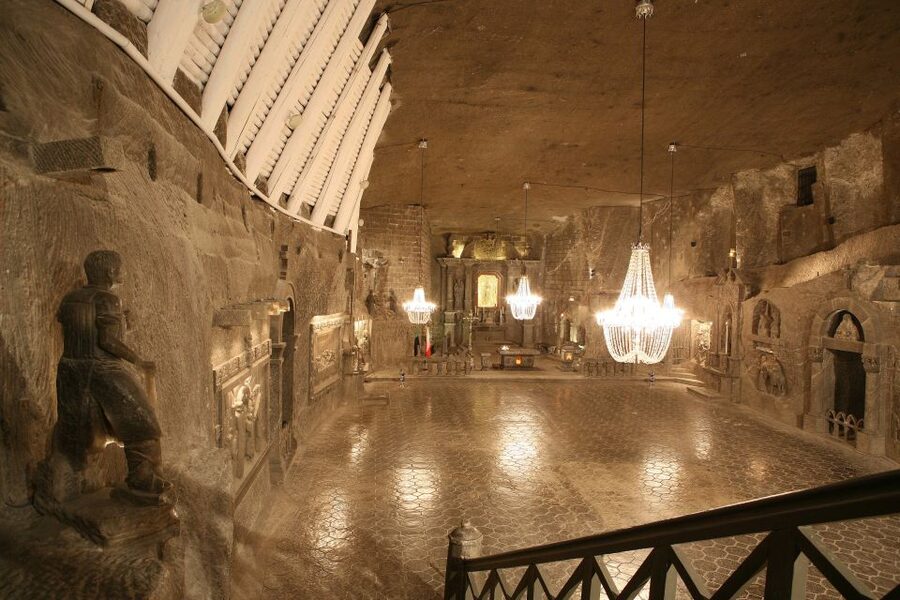
Now for the contrast. Wieliczka Salt Mine is one of Poland’s official national Historic Monuments and is designated a UNESCO World Heritage Site. This is the kind of stop where the words underground art museum do not feel like marketing fluff. You are literally walking through chambers where people carved their way into salt.
The mine part starts with a big physical moment: you descend about 800 steps to reach a depth of 135 meters. Your body feels the change right away. Expect cooler temperature once you are down. If you run warm, you will still likely want layers.
The walking route is around 2 kilometers through different chambers, and you are moving at a museum pace, not a sprint. What makes Wieliczka so memorable is that it is not just salt walls. The mines feature dozens of statues and four chapels carved out of rock salt by miners, plus additional carvings made by contemporary artists. The combination of old craft and newer additions gives you plenty to look at, and it also helps explain why the mine has such cultural weight.
One practical note: you get a guided tour of the mine after the free time. The guided portion is about 2.5 hours. That is long enough to cover the key chambers and carvings without rushing, so arrive ready to walk, listen, and take photos when the guide pauses the group.
How the Tour Works Day-of: Guides, Headsets, and Group Flow

This tour is guided in multiple ways. At Auschwitz, you have an English-speaking live guide provided by the Auschwitz-Birkenau Museum, plus a headset system. At the salt mine, you have another English-speaking live guide, and you again get headsets to hear clearly.
That headset detail sounds small, but it matters at both sites. Auschwitz is crowded and busy. Wieliczka changes acoustics underground. Headsets help you follow the guide even when you are not close to the person speaking.
The transport is also part of the experience quality. You ride in an air-conditioned minibus or coach, and that is a big deal when you leave early. One thing to keep in mind is comfort: some people have found the bus legroom tight. If you are tall or have stiff knees, plan for it, and try to sit in a comfortable spot when you board.
Group flow is the other big piece. The schedule includes short breaks, a lunch break, and both guided and free time blocks. That structure keeps you from spending the entire day in a line, and it gives you a chance to reset before you enter a different atmosphere.
Value in Plain Numbers: Is $27 a Fair Deal?

At $27 per person, this tour can feel like a bargain, especially because you are bundling two major destinations into one day. You are paying for hotel pickup and drop-off, professional tour leadership and a driver, insurance, headsets, and English-language museum guides at both Auschwitz and the salt mine.
Food and drinks are not included, so you will likely spend extra on meals. Still, the big costs you avoid are travel coordination and entrance-time management. The tour also includes the benefit of skipping the ticket line.
What makes the value feel real is not just the price tag. It is that you get guided interpretation in both places. For Auschwitz, interpretation is essential because a self-guided pass can easily turn into confusion. For the salt mine, a guide helps you understand what you are seeing in a way that a quick walk-through cannot.
If you are comparing options, focus on what is included: English museum guides, headsets, and pickup and drop-off. If those pieces are missing from another deal, the cheaper price might not be the better bargain.
Who This Tour Fits Best (and Who Should Skip It)

This is best for you if you want a single, organized day that hits both a major historical site and a major underground cultural site. If you like learning with a real educator, this format is a strong match. The tour is designed for English-speaking visitors and uses guided context at every major step.
It also fits well for short visits. If you have limited time in Krakow and want one full day that covers the must-do destinations, this is a good way to do it.
But you should skip it if you have mobility limits. The tour is not suitable for people with mobility impairments or wheelchair users, and the salt mine involves descending many steps. Even if you can walk, you should be comfortable with a lot of stairwork and underground walking.
If you are prone to anxiety in crowded or somber settings, give yourself permission to take short moments during the schedule. You do not need to push through discomfort to prove something. This day is heavy enough without extra stress.
Should You Book This Auschwitz and Salt Mine Day Trip?
I would book this tour if you want a guided Auschwitz-Birkenau visit from museum educators and you also want the Wieliczka Salt Mine experience in the same day with proper guidance. The combination is powerful, and the tour structure helps you manage the emotional weight and the physical demands without turning the day into chaos.
I would think twice if you hate early mornings or you cannot handle stairs, even for a short time. The day starts early and moves fast, and the mine descent includes about 800 steps to 135 meters down.
If you are ready for a respectful, guided, full day that mixes solemn history with an astonishing underground art world, this is a strong value. Just pack a small bag, bring your ID, wear something within the rules, and give yourself grace on a long day.
FAQ
How long is the Kraków Auschwitz-Birkenau and Wieliczka Salt Mine full-day tour?
The tour lasts about 11 hours, which is listed as 690 minutes.
What is included in the price?
The included items are hotel pickup and drop-off, English-speaking live guide(s) provided by the Auschwitz-Birkenau Museum and in the Salt Mine, a professional tour leader and driver, insurance, and headsets.
Is food included on the tour?
No. Food and drinks are not included, though the schedule includes a lunch break of 1 hour before entering the salt mine.
What time does pickup usually start in Kraków?
Pickup can start at various times, with the usual start time between 5:00 AM and 10:00 AM. The exact start time is communicated by email the day before.
Does the tour skip the ticket line?
Yes, it includes skipping the ticket line.
Are there bag restrictions for Auschwitz?
Yes. You are not permitted to enter the museum with large bags or backpacks. The maximum size permitted is 20 x 30 centimeters.
What identification do I need to bring?
Bring a passport or ID card.
What clothing items are not allowed?
Short skirts and sleeveless shirts are not allowed, along with other restrictions like smoking in the vehicle and alcohol and drugs.
Is the tour wheelchair accessible?
No. The tour is not suitable for people with mobility impairments and wheelchair users.
More Guided Tours in Krakow
More Tours in Krakow
More Tour Reviews in Krakow
Not for you? Here's more nearby things to do in Krakow we have reviewed
More Auschwitz-Birkenau Memorial Tours to consider.
★ 4.5From Krakow: Auschwitz-Birkenau Guided Tour & Hotel PickupFrom $2133,358 reviews
★ 4.5From Krakow: Auschwitz-Birkenau Guided Tour & Hotel PickupFrom $2129,340 reviews
★ 4.5Auschwitz Guided Tour with Optional Hotel PickupFrom $6915,280 reviews
★ 4.5Auschwitz-Birkenau Guided Tour with Pickup & LunchFrom $219,800 reviews
★ 4.5Auschwitz-Birkenau Guided Tour Pickup/Lunch OptionsFrom $2009,057 reviews
★ 4.7Auschwitz-Birkenau and Salt Mine Guided TourFrom $549,020 reviews
★ 5.0Krakow to Auschwitz Birkenau Guided Tour with Transfer and TicketFrom $368,197 reviews
★ 4.0From Krakow: Auschwitz Birkenau Tour with TransferFrom $216,134 reviews
Other ways to explore Krakow