Review · KRAKOW GOLF CART & ELECTRIC CAR TOURS
Krakow: Extended City Sightseeing Tour – Eco Buggy Golf Cart
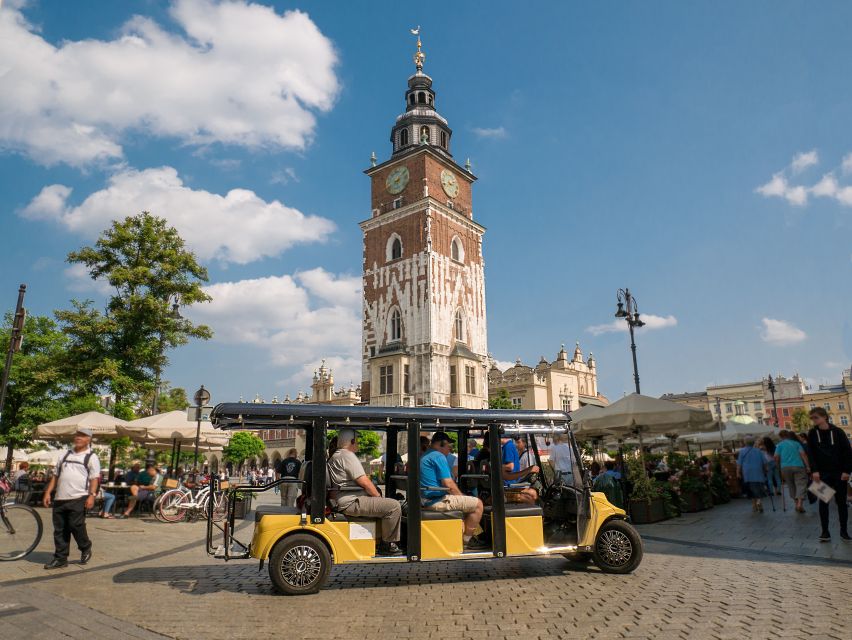
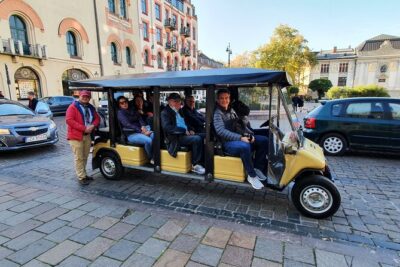
Krakow feels huge, until you ride it. This eco golf cart tour strings together the Old Town, Kazimierz, and Podgorze in one smooth 135 minute circuit. You’ll get a multilanguage audio guide plus human help from the driver, so you can actually follow what you’re seeing.
What I like most is the pace. I love that you can sit back for the drive, then hop off at key spots for photos and quick looks, instead of doing a full day of walking. I also love the quality of the narration, from the clear headphones to the way guides like Olivia, Oliwia, Jacob, Jakob, Philippe, and Conrad add extra context. One drawback: it is a lot in a short time, so you will not get the slow, lingering experience you might want if you love detailed museum-style pacing.
Key highlights at a glance

- Three districts in one loop: Old Town, Kazimierz, and Podgorze in about 2 hours.
- Headphones in many languages so you can follow without guessing.
- Stop-and-look moments at squares and churches, with a few chances to get off the cart.
- Photo-friendly guidance near major memorial areas, plus extra help when you need it.
- Good value timing when you have limited time in Krakow.
Eco Buggy comfort and the real meaning of the route

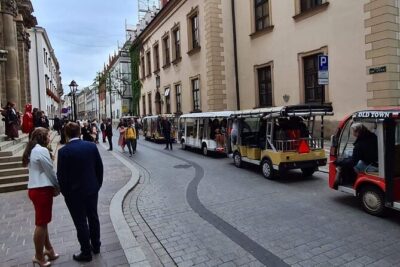
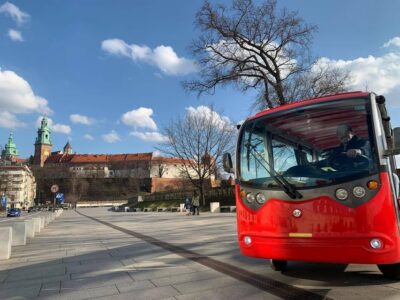
This is the kind of Krakow tour that helps you get your bearings fast. The ride is in a golf cart style vehicle, designed for comfort in traffic and for moving between spots that would take you forever on foot. The route also matters. Instead of only hitting the most obvious tourist center, you get a deliberate triangle of neighborhoods that shapes how Krakow works: the old core, Kazimierz, and then Podgorze.
You also have a practical advantage: you’ll be following an audio guide while you roll past major landmarks. The audio system supports a long list of languages, and the booking info also notes the driver can speak English and Polish. In the real world, that combination helps a lot. If you’re the type who wants to understand, you’ll get it. If you’re the type who just wants a clean overview and a few memorable stops, you’ll still be happy.
Group size is another piece of the comfort puzzle. The vehicles are designed for up to 13 passengers, with each row able to hold up to 3 people. Seating is assigned by the driver, so you should not count on sitting right next to your travel partner the whole time. That said, for a 135 minute tour, it usually works fine, and most people are focused on listening and looking rather than close seating.
Finally, expect a rhythm change when the narration switches between districts. Old Town is scenic and civic. Kazimierz brings religious architecture and community landmarks. Podgorze shifts to memorial geography and remembrance sites. If you want one smooth “story arc” of Krakow, this route is built for it.
You can also read our reviews of more city tours in Krakow
From meeting point to Old Town icons: quick orientation without the long walk

You start at the front of a Zabka shop, with parking described as a kiss and ride area. The meeting point is easy to find, but I still recommend arriving early. Even with clean organization, carts and groups can bunch up depending on traffic and timing.
Once you’re on board, the Old Town segment gives you classic “main character” Krakow scenery. You’ll pass Krakow Planty, which is the ring of green space around the old city center. It’s a big deal because Planty acts like a boundary you can feel. You see how the medieval core transitions into the city that grew after the walls came down. Then the tour hits the kind of landmark cluster that usually takes you a long time to line up yourself.
Here are the highlights you’ll roll by during this phase, and what they’re for:
- Church of St. Cross: a marker early in the story, helpful for understanding the church-and-street layout that defines this area.
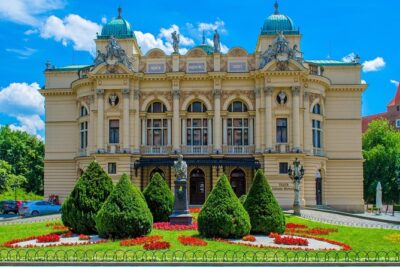
- Słowacki Theater: a cultural stop that makes Krakow feel like a living city, not just a collection of old buildings.
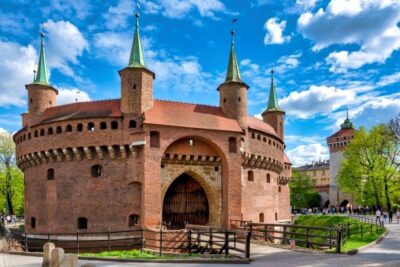
- Former city walls and Barbican: these are the fortification leftovers that explain why the old city looked the way it did. The Barbican is a standout structure even from the street.
- Jan Matejko Square: another geography anchor that helps you visualize where you are in relation to the old defenses.
- Church of St. Florian: a beautiful reminder that Krakow’s identity is deeply tied to its religious architecture.
- Sławkowska Street and Czartoryski Museum: you get that classic “walkable but wide” Old Town street feel, plus a glimpse of the city’s museum culture.
- St. John’s Street and Church: another church stop that keeps the architectural thread going.
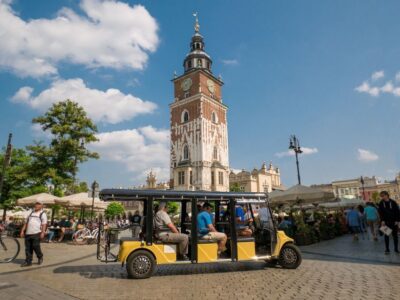
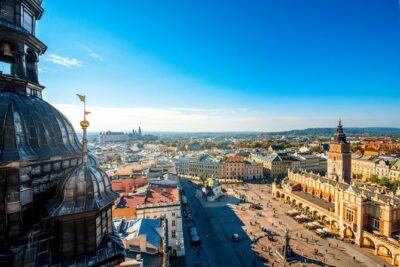
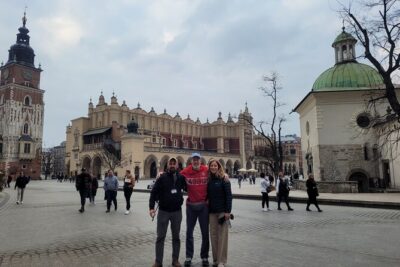
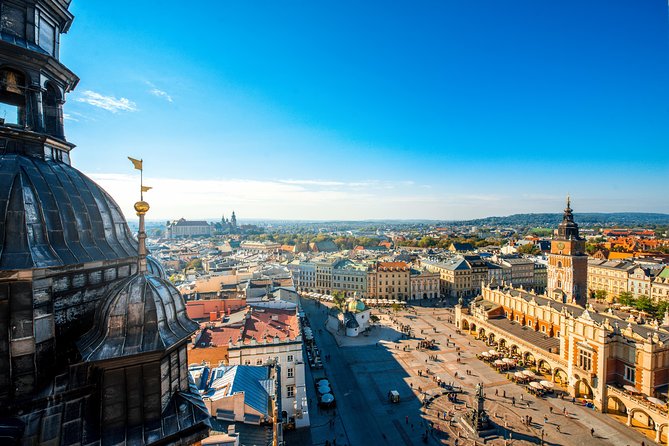
- Main Square: yes, it’s the obvious one, and yes, it still matters. Seeing it from the cart perspective helps you understand scale and layout faster than you would if you were already lost in crowds.
- Plac Szczepański: a practical pause point for atmosphere and city views.
- Palace of Art: a cultural landmark that breaks up the religious rhythm.
- St. Anne’s Church, Town Hall, and Franciscan Church: these stops turn the tour into a quick architecture sampler. You won’t remember every detail, but you will remember the shapes and the feeling of Old Town.
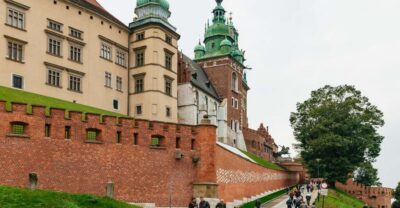
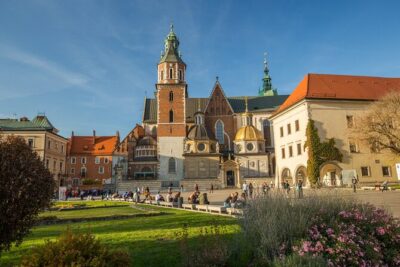
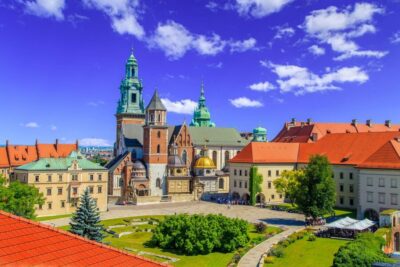
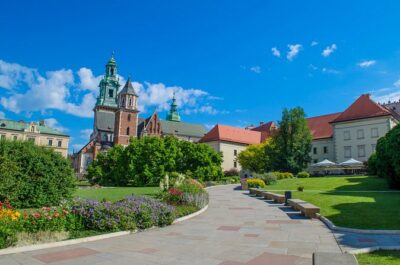
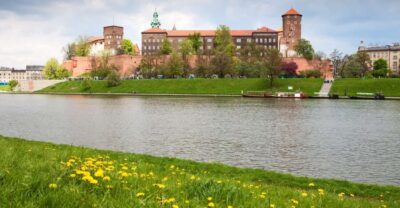
- Wawel Castle: the big one. It’s not just a pretty backdrop. It anchors the royal story and makes the city feel older, in a physical way.
The big value here is not that you see every exact building. It’s that you see the structure. You connect the dots between streets, walls, squares, and major institutions. That makes your later self-guided walks better, because you’ll know what you’re aiming at.
Kazimierz: why the Jewish Quarter stops matter, not just the names

Kazimierz is the district where Krakow becomes more than “pretty Old Town.” It’s where the tour’s attention shifts to community landmarks and synagogue history. Even though you’re riding, the cart perspective helps. Kazimierz has a layout that rewards orientation. From the road, you can spot how streets funnel between places, and you understand why these neighborhoods clustered where they did.
As you move into Kazimierz, the tour includes:
- Skałka Church: a spiritual stop that also signals you’re entering a different Krakow chapter.
- Church of St. Catherine: another architecture touchpoint that keeps the walking-style street logic moving.
- Wolnica Square and Jewish City Hall: these help you locate the civic life of the community, not just the sacred buildings.
- Tempel Synagogue, Kupa Synagogue, and Isaac Synagogue: you’ll recognize the sequence of major synagogue landmarks. Even when you do not go inside, seeing them in context gives you a map in your head.
- Ciemna Street: this is one of those short street stretches that makes the neighborhood feel real, not staged.
- Old Synagogue and Popper Synagogue: more key landmarks that reinforce the area’s religious geography.
- Family House of Helena Rubinstein: this adds a modern layer, showing how people and identity moved through time in the same streets.
- Remuh Synagogue and old cemetery: a sensitive stop that helps you understand that this area is not only history, it’s memory anchored in place.
- Memorial Stone of the Nissembaum Family Foundation: a direct reminder that remembrance is built into the landscape here.
- Old Jewish Shops: this gives you the everyday angle. It’s not all formal buildings. There were streets of commerce and life.
I especially like how the tour frames Kazimierz as an ecosystem. The stops are not random. They cover sacred sites, civic places, street fabric, and commemorative markers. That balance is what makes the district land emotionally, and it’s also what makes the audio feel more than a list of facts.
In the reviews, people praised the way drivers and guides added extra stories on top of the audio. You might hear extra context from guides such as Philippe or Conrad, and that can turn the ride from passive listening into active understanding. One extra detail worth noting, because it shows the tour’s polish: some audio sessions include background music, and one group mentioned hearing Vivaldi during parts of the narration.
Podgorze and the former ghetto area: remembering what the streets hold
This is the part of the tour that needs a calmer mindset. Podgorze and the former ghetto area are handled through a set of memorial and location stops, plus descriptions that connect the geography to the human story.
After Kazimierz, you’ll head toward:
- Former Ghetto description (as part of the narrated route)
- Ghetto Heroes Square: one of the most direct memorial markers in the area.
- Pharmacy under the Eagle, linked in the route to Tadeusz Pankiewicz: this stop adds a specific name to the story.
- Oskar Schindler’s history: the route connects the location to the wider narrative around Schindler.
- Life in Ghetto description: this helps you understand the daily reality behind the physical remnants.
- Ghetto Wall: the wall is the kind of sight that stops conversation. It puts the story into a single hard visual.
- Church of St. Joseph: a final anchor that closes the district loop.
What I appreciate is that the tour does not try to turn tragedy into entertainment. The structure is clear: locations, names, and narrative descriptions that fit the streets you’re seeing. It’s also why the audio format works well here. You can control your attention. If a stop feels heavy, you can listen at your own pace while you’re still moving.
In one review, the guide helped with a photo near the Schindler area gates. That kind of practical, respectful support matters. It means you get the shot you want without feeling rushed.
One consideration: because the tour is time-limited, you will not linger for long periods at each memorial site. That can be a positive if you want a broad map in one day. If you’re the kind of traveler who needs long quiet time at memorials, plan a separate block of time after this tour for a slower visit.
How the audio guide and driver commentary work in practice

This is not just audio played over a speaker. You wear headphones, and the system is presented in a multilanguage setup. The list of available languages is long, so chances are good you can listen in your own language. Even if you choose English, you can still appreciate how the narration lines up with the route you’re taking.
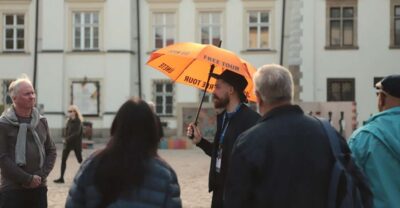
The driver role also matters. Many people singled out their guides for being friendly, funny, and strong at explaining connections. Guides named Olivia and Oliwia were praised for being informative and helpful. Jacob and Jakob were praised for adding oral commentary that supported the audio narration. Philippe and Conrad were mentioned for their clear style and the extra context they offered.
That combination is useful because it solves a common problem in city audio tours: the audio tells you what something is, but it does not always tell you why you should care. The best guides bridge that gap with quick stories and signposting.
Also, the tour is described as having experienced drivers. Some riders mentioned feeling safe even with heavy traffic. That matters in Krakow because you may be moving through busy intersections while listening. A smooth ride helps you focus on the story instead of white-knuckling the handlebars, so to speak.
Stop-and-hop moments: where it pays off and where it won’t

A consistent theme in the feedback is that the tour gives you multiple opportunities to get off the cart. That’s a smart compromise. You still get the big picture from the ride, but you can also step into the air around major churches and squares.
In practical terms, those off-cart moments are most helpful for:
- Photos at big landmarks like Main Square and the Wawel area
- Quick visual checks at synagogue architecture points
- Short breaks that keep your day from turning into one long march
But it also means you should keep your expectations balanced. You are not getting a guided walk inside every stop. Some landmarks are approached from outside, and the real value is in the route and narration rather than long entry time at each building.
Also watch for small operational issues. One review mentioned a buggy arrival delay by about 10 minutes. Another mentioned a seat belt issue. Those are not common across every account, but they are a reminder to arrive a few minutes early and to do a quick seat check once you’re seated.
Price and value: why $13 can beat a pricier plan
At around $13 per person for a 135 minute extended tour, the value is the whole point. In most cities, once you pay for separate district guides, you spend far more just to cover similar ground. Here you’re buying one organized loop that includes transportation plus a multilingual audio system.
The best value logic is simple: Krakow is spread out enough that you lose time if you rely only on foot movement between Old Town, Kazimierz, and Podgorze. The cart reduces that time cost. For people doing multiple activities in one day, that matters. One example from the feedback: someone did Auschwitz earlier and then used this tour to rest their feet while still seeing major Krakow sights in the afternoon, including in rainy weather.
This tour also feels like a good deal because it’s not purely mechanical. People praised how guides added extra facts on top of the audio. When you get that human layer, your money goes to understanding, not just motion.
Who should book this tour, and who should skip it

This tour fits you if:
- You want a district overview that helps you plan the rest of your stay.
- You like hearing context while you ride, using headphones in your preferred language.
- You want an easier day physically, especially if you do not want a full walking marathon.
- You’re visiting for a short time and want to hit Old Town plus the key Jewish heritage areas plus Podgorze.
You might skip it or pair it with something else if:
- You want long stays inside buildings and museums during the tour window.
- You need a slower, quieter approach for memorial sites, with time for reflection.
- You prefer purely self-guided wandering with no set route.
If you do book, I’d place it early in your trip. That’s when it’s most useful for orienting you for the days after.
Should you book this Krakow eco buggy tour?

Yes, if you want to see a lot of Krakow without burning your legs, and if you care about understanding what you’re seeing as you go. The combination of eco cart transport, multilingual audio, and driver commentary is exactly what makes this plan work.
If you have limited time, or you’re mixing Krakow sightseeing with a heavy day elsewhere, this tour gives you a smart reset. Just go in with the right mindset: you’re getting a strong overview, with a few helpful get-off-and-look moments, not a slow, deep dive into every single site.
FAQ
How long is the Krakow extended city sightseeing tour?
The tour lasts 135 minutes, about 2 hours plus travel time between stops.
What’s the price per person?
The price is listed as $13 per person.
Where do I meet the group?
The meeting point is in front of the Zabka shop, at the parking kiss and ride area.
What is included in the tour?
It includes pickup from the meeting point, care from the driver, the audio guided tour, and a multilanguage audio guide system.
Is the tour wheelchair accessible?
Yes, the tour is listed as wheelchair accessible.
What is not included?
Food and drinks are not included.
More City Tours in Krakow
More Tours in Krakow
More Tour Reviews in Krakow
Not for you? Here's more nearby things to do in Krakow we have reviewed
More Krakow Golf Cart & Electric Car Tours to consider.
★ 4.5City Sightseeing Tour by Electric Golf CartFrom $133,264 reviews
★ 4.7City Sightseeing Tour Eco Electric Buggy Golf CartFrom $133,143 reviews
★ 4.4Electric Car Sightseeing TourFrom $25450 reviews
★ 4.6Jewish Quarter and Ghetto Electric Golf Cart TourFrom $34348 reviews
★ 4.5City Sightseeing Tour Eco Electric Buggy Golf CartFrom $28311 reviews
★ 5.0Krakow Grand City Tour by golf cart – All 3 districtsFrom $27311 reviews
★ 4.9City Tour by Electric Golf CartFrom $36310 reviews
★ 4.6City Tour of 3 Districts by Electric CarFrom $107217 reviews
Other ways to explore Krakow