Krakow: Old Town – Kazimierz – Ghetto by Electric Golf Cart

Review · OLD TOWN & MAIN SQUARE TOURS

Krakow: Old Town – Kazimierz – Ghetto by Electric Golf Cart

4.9 · 5 reviews 2h 30m From $41 Operated by FHU PATART PATRYK TLAŁKA · Bookable on GetYourGuide
Book on GetYourGuide →

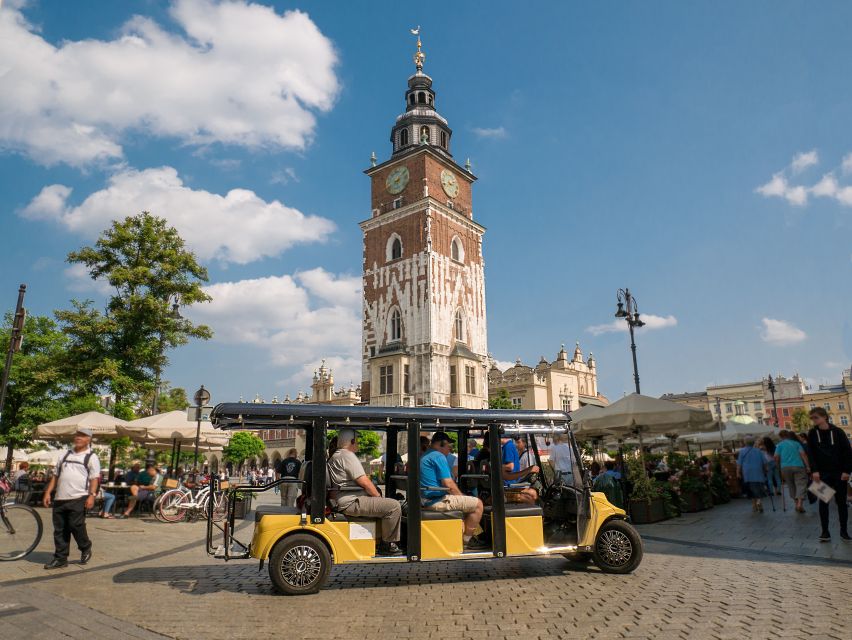
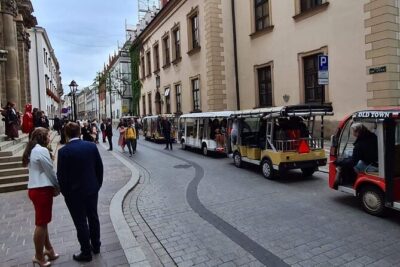
Three districts. One electric ride. This tour gives you an easy overview of Krakow, with Old Town highlights plus the Jewish Quarter storyline, all explained by a live guide and audio system. I also like the angle you get from an electric golf cart, you cover a lot without feeling like you are sprinting. The one drawback is the trip has strict rules and eligibility limits, including no bags and careful age limits, so you have to check if it fits you.

If you want to meet people without forcing conversation, the group format helps. You choose Polish or English for the audioguide, and the live driver and guide keep the flow so you spend more time looking at places and less time figuring out where to go next.

Plan to pack light and stay hydrated. You cannot smoke in the vehicle, and alcohol and drugs are not allowed, so bring a small bottle of water and keep everything simple.

Key Things I’d Optimize for on This Krakow Golf Cart Tour

Krakow: Old Town - Kazimierz - Ghetto by Electric Golf Cart - Key Things I’d Optimize for on This Krakow Golf Cart Tour

  • Old Town to Kazimierz to Podgorze, stitched together in one 150-minute loop
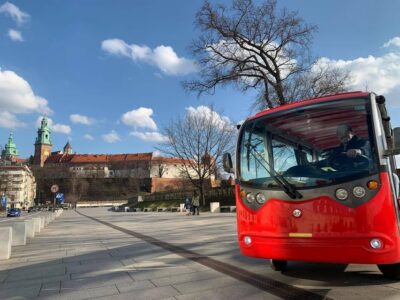
  • Electric golf cart perspective, great for seeing the big landmarks without exhausting walks
  • Live guide plus audio guide, so you are not stuck reading a screen
  • A focused language setup, Polish or English for the audioguide
  • A stop list that tracks the story, from churches and squares to synagogues and ghetto sites

Why Krakow Looks Different From a Golf Cart

Krakow: Old Town - Kazimierz - Ghetto by Electric Golf Cart - Why Krakow Looks Different From a Golf Cart
Krakow has a way of making you feel like you are seeing everything at once. Streets crisscross, squares open up suddenly, and major sights can be close together but still hard to connect in your head. That is where this electric golf cart format helps.

From the cart, you get a steady, front-row view of how the city is laid out. You are not constantly recalculating directions, and you are not forced into long stretches on foot to stitch together “the main sights.” The ride also keeps you in a good rhythm: look, listen, and move on.

I also like that the tour is built around three connected areas, not random checkpoints. Old Town sets the stage, Kazimierz brings the Jewish Krakow story into focus, and Podgorze directs you into the former ghetto area. The audioguide and live guide turn those locations into a clear sequence, so you leave with a mental map instead of just photos.

One more practical upside: group tours can sometimes feel slow. Here, 150 minutes is short enough to stay energetic, while still long enough to cover a lot of ground. If you only have a day, this is a strong way to get bearings before you choose what to revisit in more detail later.

You can also read our reviews of more tours and experiences in Krakow.

Old Town Route: Squares, Fortifications, and the Wawel View

Krakow: Old Town - Kazimierz - Ghetto by Electric Golf Cart - Old Town Route: Squares, Fortifications, and the Wawel View
Old Town is your orientation chapter. You start with Krakow’s “how this city grew and why it matters” framing, then you move through famous landmarks that explain what you are looking at as you go.

The itinerary begins with a history of Krakow overview, then you pass Krakow Planty, the green belt around the center. Even if you have seen “old city rings” in other places, this one is useful because it shows you where the medieval footprint sits relative to the modern streets.

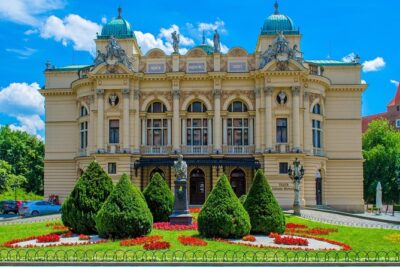
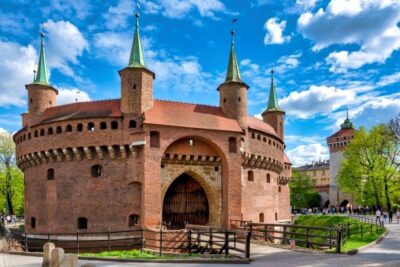
Next you get a religious and civic sweep: Church of St. Cross, Słowacki Theater, and then defensive architecture like former city walls and the Barbican. Fortifications can be hard to picture from ground level, so the cart perspective helps you connect the dots between structures you might otherwise treat as separate curiosities.

Then comes a cluster that feels like classic Krakow strolling landmarks: Jan Matejko Square, Church of St. Florian, and Sławkowska Street. The tour also pauses at Czartoryski Museum, then continues through St. John’s Street and Church, and into the big civic heart at Main Square.

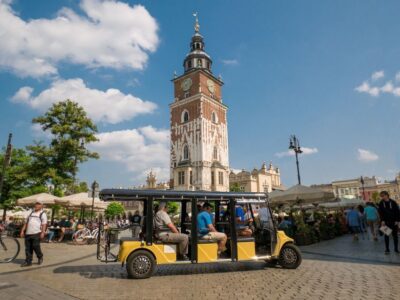
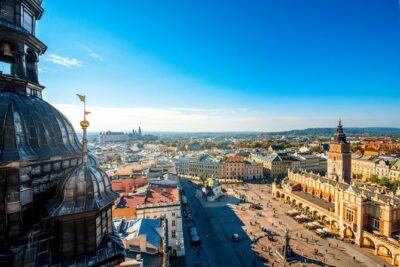
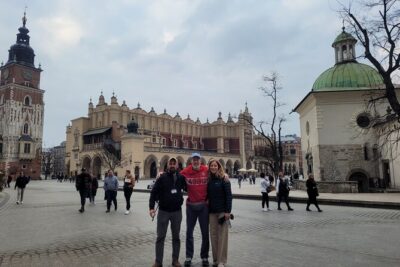
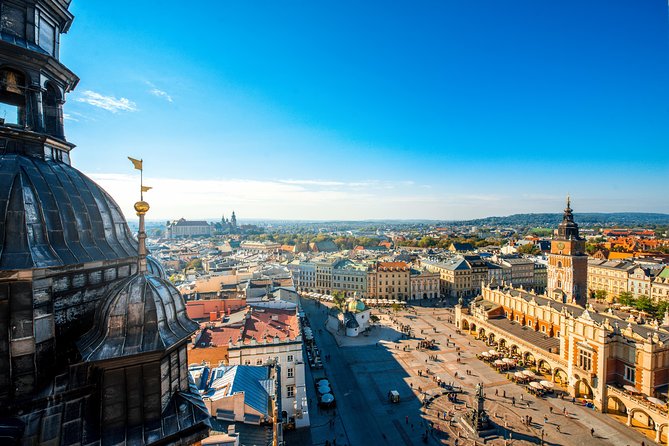
Main Square is the kind of place where your photos look great but your brain needs help. A guide and audioguide narration does that work for you: instead of walking around guessing what you should notice first, you know what questions to ask as you look.

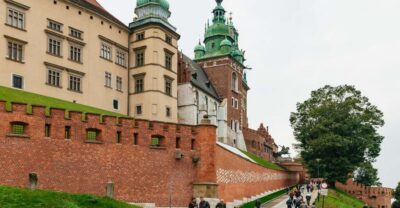
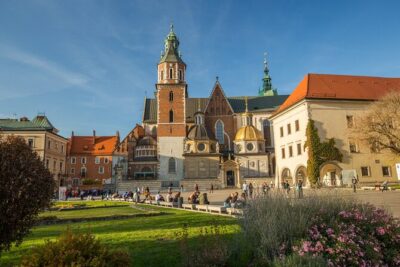
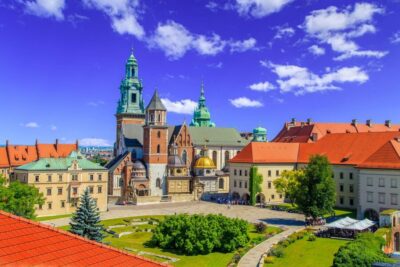
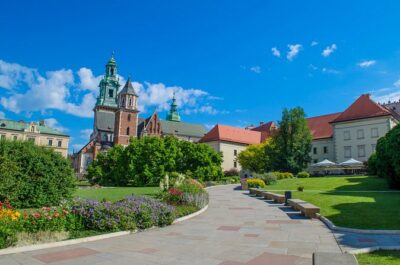
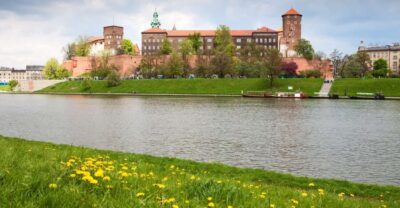
After that, you hit Plac Szczepański, Palace of Art, and St. Anne’s Church, then move to the civic center again with Town Hall and the Franciscan Church. You end this Old Town stretch with Wawel Castle. Even if you plan to revisit later, this first pass is valuable because it links Wawel to the city’s broader layout, not just as an isolated “big sight.”

Possible drawback in Old Town: the stops pack a lot of landmark variety into a short time. If you prefer long, slow time in one place, you may want to use this segment mainly for orientation. Think of it as your Krakow map and vocabulary builder, not your final stop.

Kazimierz: Jewish Krakow in Synagogues, Streets, and Squares

Krakow: Old Town - Kazimierz - Ghetto by Electric Golf Cart - Kazimierz: Jewish Krakow in Synagogues, Streets, and Squares
Kazimierz is the emotional and cultural center of this tour. The narration shifts from “how the city works” to “how the community lived,” with the audioguide guiding you through a long list of Jewish sites and streets.

You start with a Jewish Quarter description, then head to Skałka Church and Church of St. Catherine. After that you enter the street and square rhythm that makes Kazimierz feel like a neighborhood, not a museum district. Wolnica Square is a key stop, and it is tied to Jewish City Hall in the route.

From there, you move through multiple synagogue experiences that are named right on the itinerary: Church of Corpus Christi, then Tempel Synagogue, Kupa Synagogue, and Isaac Synagogue. You also go through Ciemna Street, then onto Old Synagogue and Popper Synagogue.

These named stops matter because they give you specific anchors. Instead of “we saw some synagogues,” you can remember which ones were included and what story the guide was telling while you passed them. That makes it easier to pick one or two places to revisit later if anything grabbed you.

The route also includes Family House of Helena Rubinstein and then Remuh Synagogue and old cemetery. You then reach the Memorial Stone of the Nissembaum Family Foundation and pass Old Jewish Shops.

I like how this section balances sacred places and everyday textures. Kazimierz is not only about major buildings, it is about a street-level feeling of community. Even from a cart, having named locations in sequence helps you understand Kazimierz as a lived geography.

One consideration: the material here is heavier than a typical sightseeing tour. The former ghetto portion comes next, so you may feel the tone shift as you move along the route. If you want a gentler pacing, you can decide on your own how long you spend when you pause at each stop, and you can take breaks when your body needs it.

Podgorze and the Former Ghetto Area: Ghetto Heroes and Schindler Connections

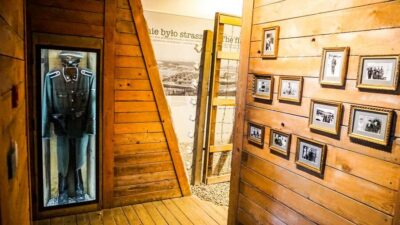
Podgorze is the part of the tour that asks you to slow down mentally. The itinerary is explicit about this, with a Former Ghetto description and a series of stops that track themes: memory, resistance, and how people survived under confinement.

You arrive at Ghetto Heroes Square first. Squares can sound like light sightseeing, but in this context it is about remembrance, so it works best when you let the narration set the tone rather than treating each stop like a photo op.

Next is Pharmacy under the Eagle, tied to the residence of Tadeusz Pankiewicz, followed by Oskar Schindler’s history. The route then points to Life in Ghetto as another narrated element. That gives you a bigger picture of what the area represents beyond a single famous name.

After that, you reach the physical reminders: Ghetto Wall. Seeing a wall as part of a moving route can feel strange at first, but that is exactly why narration helps. The guide and audioguide keep you from turning it into a generic “historic structure” and instead treat it as a boundary that shaped lives.

The Podgorze segment ends at Church of St. Joseph, giving you a final point of reference before you head back out with the tour’s overall story still fresh.

Possible drawback here: because this section is built around specific memorial and historical references, you might want to take a moment to absorb rather than rushing. If you are prone to taking lots of photos quickly, I’d suggest slowing your camera pace during Podgorze. Let the facts land first.

How the 150-Minute Timing Works in Real Life

This is a 150-minute tour, which is a sweet spot for first-time Krakow visitors. It is long enough to cover Old Town landmarks, make it through Kazimierz, and still reach Podgorze, but short enough that you are not stuck on a full-day schedule.

You meet at the Kiss&Ride parking opposite the Żabka store. I like meeting points that are simple and recognizable, and this one is described clearly enough to find without turning it into a scavenger hunt.

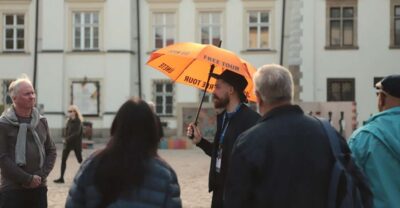
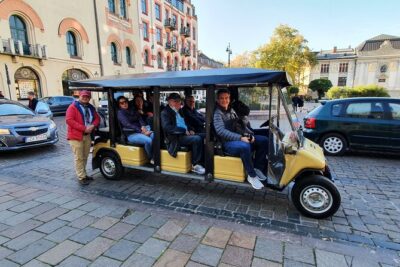
The format also matters. You have a live tour guide plus an audio guide system, and the driver is listed as Polish and English. That setup is helpful when you want consistent commentary without losing the freedom that comes with a vehicle tour. In practice, the cart does the moving, and the guide narration gives you the structure.

You will see a lot of named buildings and streets, including multiple churches, theaters, museum stops, and several synagogues. Don’t expect “sit down and read forever” time at each place. The goal is overview and context, then you can decide later what deserves your second visit.

A smart move before you go: think about what you want to learn from the trip. If you want history context, this tour does that in a guided sequence. If you want the “best viewpoints,” you may need to plan a follow-up walk the next day. The golf cart gives angles and direction, but the city is still a city, and Krakow rewards a second, slower look.

Price and Value for a $41 Electric Cart Tour

At about $41 per person for 150 minutes, this tour is priced like a practical orientation experience, not a budget bus. The value comes from three things you are actually getting, not just transportation.

First, you get a live guide, not only audio. That matters because questions and tone change depending on the area you are in. Second, the tour uses an audio guide system, which helps you stay in your preferred language setup. Third, the vehicle is electric, so you can cover a dense central route with less hassle than lining up multiple taxis or piecing together tram or bus stops.

If your goal is to see Old Town plus Kazimierz plus Podgorze in one day, buying separate tours or self-guiding with a map can cost more in time and mental effort. This tour helps you compress decisions. You get a coherent sequence, so the rest of your Krakow days become easier planning.

Who benefits most on price value is you if:

  • you have limited time and want the major areas connected
  • you are new to Krakow and want a structured starting point
  • you prefer guided storytelling over solo navigation

If you already know Krakow very well, or you want deep time in one museum or one synagogue, you may feel the pace is too fast for your taste. But for a first look, the price feels fair because it buys organization and coverage.

Guides, Group Energy, and the Quality Signal

Small details can predict tour quality. In the feedback tied to this experience, guide names like Radar and Natalie show up with praise for friendliness and competence. That same theme appears in comments that highlight how helpful the guide was for making sense of the city quickly.

There is also a human element: the tour is group-based, so you get a chance to meet new people on the ride and at stops. If you are traveling solo, that group dynamic can be a relief. Instead of finding everything alone, you have a built-in “people around me” setting while still being able to focus on the sights.

For me, that is part of the value. Krakow can be confusing on the first day because the city has layers. A good guide makes those layers feel ordered, not overwhelming.

Who This Tour Fits Best

This is a great fit if you want:

  • a smooth, structured overview of Old Town, Kazimierz, and the former ghetto area
  • a Polish or English experience that keeps you oriented
  • a vehicle-based sightseeing plan that reduces navigation stress

It is less ideal if you want long museum time, deep silence, or lots of walking. This tour is about the drive-and-explain rhythm.

It is also not suitable for certain ages, and the rules list a wide range of exclusions, including children under 2 and many other age brackets. If you are traveling with kids, with older adults, or if you are unsure about height or seating fit, check eligibility carefully before you commit.

Finally, because bags are not allowed, it suits people who travel light.

Should You Book This Krakow Old Town, Kazimierz, Ghetto Cart Tour?

Yes, if you want the most organized first-day Krakow experience you can get in 150 minutes, with live guidance plus audio in Polish or English. The electrified cart format makes it easier to see the arc of the city, from Old Town through Kazimierz to Podgorze, without turning your day into a logistics test.

No, if you are the type who hates any pace that feels schedule-based, or if you need to bring a bag, or if the tour rules do not match your age or mobility situation. In those cases, you may do better with a self-guided plan or a tour that allows more time at fewer stops.

If you are trying to choose one “getting my bearings in Krakow” activity, this is a strong contender.

FAQ

How long is the Krakow Old Town, Kazimierz, Ghetto tour?

The tour lasts 150 minutes.

How much does the tour cost?

The price is $41 per person.

Which parts of Krakow does the tour cover?

It covers three districts: Old Town, Kazimierz (the Jewish district), and Podgorze (the former ghetto area).

Where do I meet for the tour?

Meet at the Kiss&Ride parking opposite the Żabka store.

What is included in the ticket?

You get a live tour guide, an electric vehicle (golf cart) tour, and an audio guide.

What languages are available?

The tour is available in Polish and English.

What should I bring with me?

Bring water.

Are there rules about smoking or alcohol?

Smoking is not allowed in the vehicle. Alcohol and drugs are also not allowed, including alcoholic drinks in the vehicle.

Is the tour suitable for children or older travelers?

The activity lists strict age limits, including that it is not suitable for children under 2 years, and it also excludes many other age brackets. Check the exact suitability list for your age before booking.