Review · KRAKOW GOLF CART & ELECTRIC CAR TOURS
Krakow: Regular Extended City Sightseeing Tour By Golf Cart
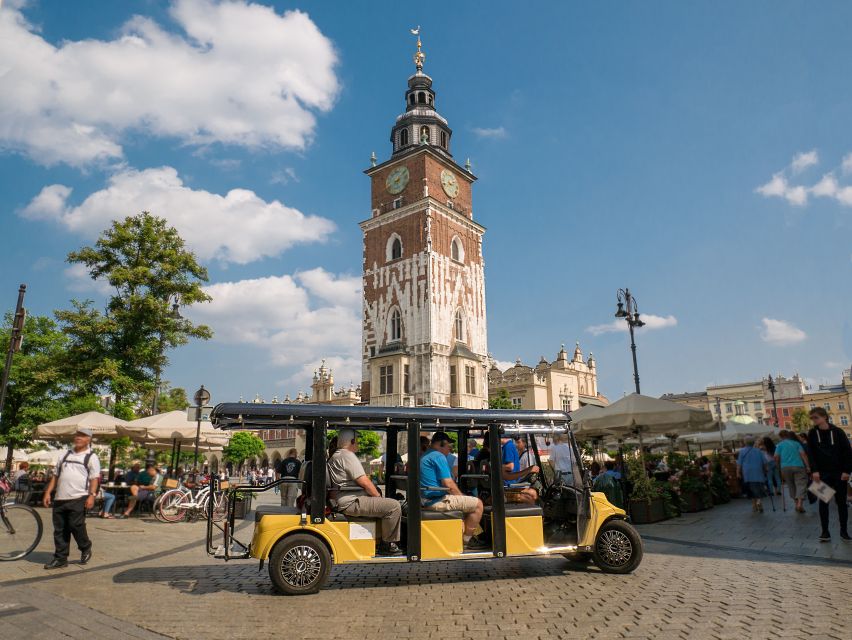
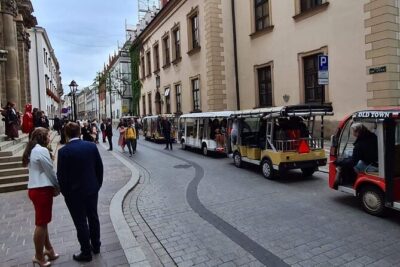
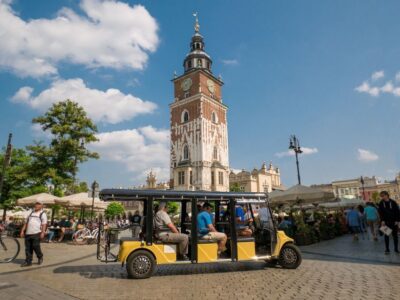
Three Krakow districts, one golf cart ride. This 135-minute tour strings together Old Town, Kazimierz, and Podgorze with an audioguide in your language, so you feel oriented fast. I also love the way you get a car-based viewpoint that saves your legs, and how the driver support helps the whole group keep moving. One catch: the cart roof can limit views of tall building facades, so for photos you may need to step or angle your camera.
What really makes it work is the human touch plus the tech. A live guide in Polish or English pairs with the audioguide system, and on this route, that matters. In my mind, the best version of this tour is when the driver, like Jakub, adds extra context on top of what you hear through the headphones. The likely drawback if you are picky about photo angles is simple: if your cart blocks the view, some tall landmarks can look better from the street than from inside the cart.
Key Points I’d Plan Around

- Old Town to Kazimierz to Podgorze in one smooth loop, built for “see it all” timing
- Multi-language audioguides with a big menu of languages, plus live guidance in English or Polish
- Driver-led experience where the driver can add extra color beyond the audio
- A lot of named stops, including Wawel Castle area, synagogues in Kazimierz, and ghetto-related sites in Podgorze
- Comfort for your feet compared with doing the same route on foot
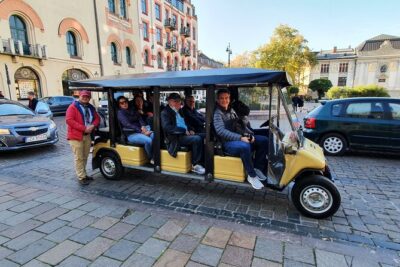
- Seating is assigned in the up-to-13 passenger carts, so you might not sit together
Why a Golf Cart Tour Helps You Enjoy Krakow More

Krakow is the kind of city that begs you to walk. Cobblestones are charming, until your feet start bargaining with your brain. This tour is a smart compromise. You still get a guided route through major districts, but the golf cart does the heavy lifting so you can focus on what you’re seeing and listening to.
You also get a format that feels social without being awkward. It is a group trip, so you can meet people, swap quick travel tips, and keep the energy up. The driver assigns seating, and the cart holds up to 13 passengers, with rows that can fit up to three people. That detail matters if you are traveling with friends or family, because you cannot count on sitting side by side.
The other big plus is language flexibility. You get an audioguide system with many available languages, and the live guide supports Polish and English. So even if you do not know much Polish, you can follow along and connect names with places.
You can also read our reviews of more city tours in Krakow
Getting Oriented Fast: From Planty to the Old Town Core

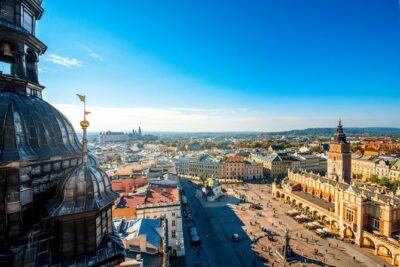
The route is designed to get you oriented in the Old Town first, then shift your perspective as you move into Kazimierz and Podgorze. The Old Town segment includes several landmarks that act like anchors. You are not just passing by, you are learning what they mean.
Here is how the start tends to land in real life:
- Krakow Planty: This is part of the city’s ring of greenery that sits where older fortifications once were. Hearing the explanation while you glide past helps you understand why Krakow’s center feels like a defined pocket.
- Church of St. Cross and Church of St. Florian: These show up as classic Krakow church landmarks, and they help you learn the city’s repeating patterns of towers, facades, and sacred squares.
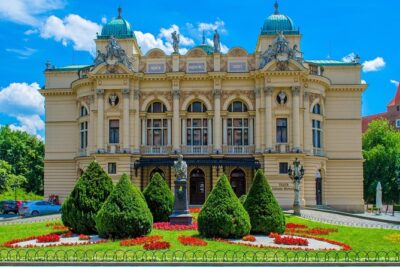
- Słowacki Theater: A cultural stop that gives you more than religious architecture, so the Old Town feels like a lived-in city, not a museum hallway.
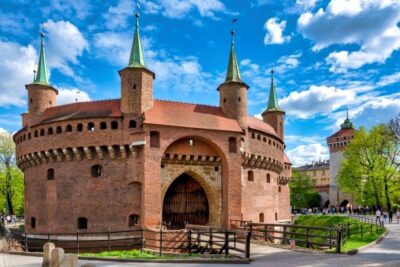
- Former city walls and Barbican: Even if you are not an architecture person, these stops explain how defense shaped the layout. When you hear it in your language, the map in your head starts clicking.
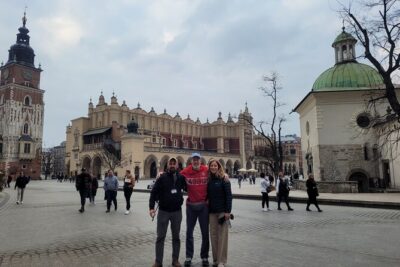
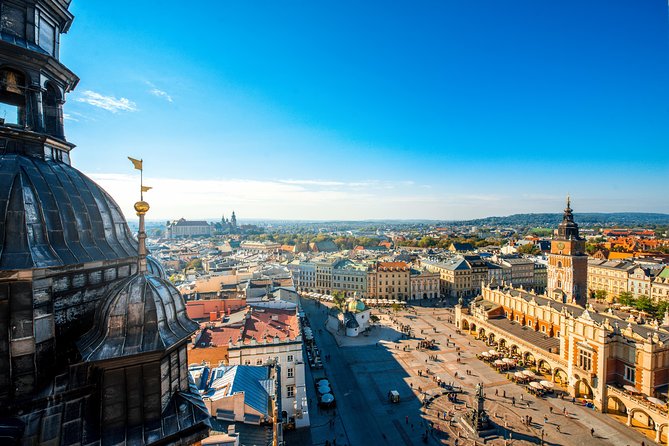
Then you move toward the areas where you will most likely want to walk later on your own. Jan Matejko Square and Main Square (Rynek Główny) are the kind of places you want to recognize instantly. From the cart, you can place them in your mental model, and then decide whether you want to linger outside the tour time window.
A practical note: because the cart can limit what you see through the roof, some tall facades may not look perfect from your seat. That does not ruin the tour, it just means you should plan for one or two extra photo moments where you angle out or step closer to a vantage point. Chris from the UK made this point clearly after noting that he sometimes needed to take a photo from outside the cart for his wife to see the full building.
Main Square Magic, plus the Streets Around It

Once the tour reaches the Old Town center, it keeps feeding you details that help you understand what you are looking at.
Some of the stops in this zone include Plac Szczepański, St. Anne’s Church, and the Town Hall. You will also hear about streets like Sławkowska Street and St. John’s Street and Church. These names matter because they connect the big squares to smaller corridors you might explore later.
Czartoryski Museum and Palace of Art are also on the route. Even if you do not enter museums during the cart tour, the audioguide context is useful. It tells you what to look for if you decide to return later.
And yes, there is a religious and cultural rhythm here. That is not an accident. The route keeps showing you Krakow’s “anchors,” so when you walk on your own, you can find your way back without needing to stare at your phone all the time.
Wawel Area: Where the City’s Big Story Changes Tone
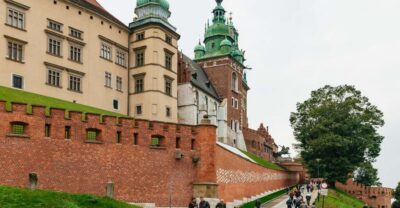
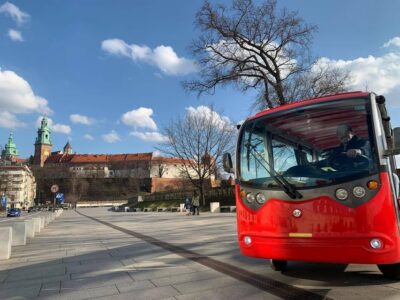
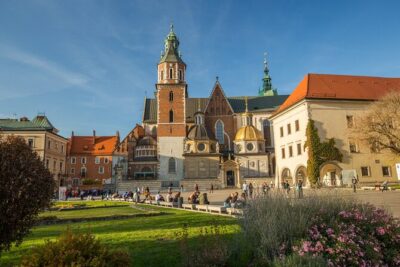
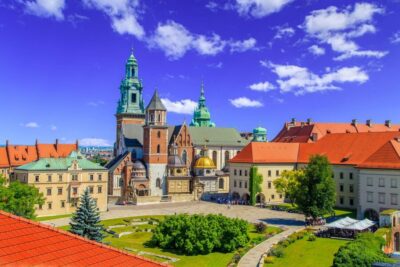
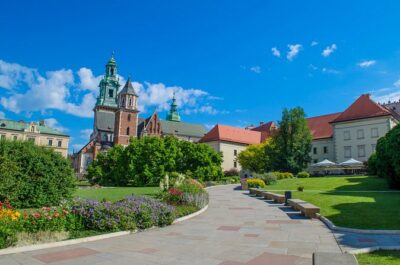
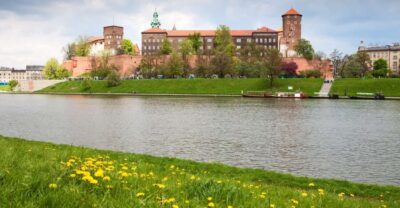
At some point, the Old Town story naturally rises into something more monumental: the Wawel Castle area. Wawel is not just a stop, it is an emotional turning point in the route. You hear it described as a central part of Krakow’s identity, and seeing it from the cart gives you the context before you decide how much time you want to spend on foot later.
A golf cart view is a bit like getting the chapter title before the full book. If you have limited time in Krakow, that is exactly what you want. If you want deeper detail, you can treat this tour as the first pass, then plan a follow-up walk.
The Kazimierz Shift: Jewish Krakow in Real Street Sequence
Then the tour changes districts, and the vibe changes with it. Kazimierz, the Jewish district, is one of the most important parts of Krakow to understand respectfully. The format helps because you are not only hearing about history in a single static stop. You are getting a street-by-street progression that mirrors how neighborhoods actually connect.
As you roll into Kazimierz, the audioguide highlights the district’s landmarks, including Skałka Church and Church of St. Catherine. Then you reach places tied closely to community life and worship, like Wolnica Square and several synagogues.
On the route, you should expect named stops such as:
- Tempel Synagogue
- Kupa Synagogue
- Isaac Synagogue
- Old Synagogue
- Remuh Synagogue and old cemetery
This is where the language aspect becomes more than a convenience. When you can follow the narration, you are better at understanding why each building matters and how the neighborhood’s layout supports the story. Even the street names, like Sławkowska Street earlier and Ciemna Street here, help you connect where you are with what you are hearing.
The tour also includes Wolnica Square, Old Jewish Shops, and Family House of Helena Rubinstein. Those choices keep the narration from becoming only memorial or only architectural. You get a sense that people lived here, shopped here, and built a community that changed over time.
If you care about Jewish history in a serious way, I like that this segment is not rushed into one generic highlight. It is spread across multiple stops so you can form a clearer mental picture.
Podgorze and the Former Ghetto Route: What to Watch For
Next comes Podgorze, with a focus on the former ghetto area. This part of the route includes the kind of stops that benefit from calm attention. You are moving through history tied to suffering, so you want to keep your own expectations sensible.
The route includes key points such as:
- Former Ghetto description
- Ghetto Heroes Square
- Pharmacy under the Eagle, also described as the residence of Tadeusz Pankiewicz
- Oskar Schindler sites, including history related to him
- Life in Ghetto description
- Ghetto Wall
- Church of St. Joseph
Seeing this from a cart does not replace standing in the space and reading the surroundings yourself. But for many visitors, it is exactly the right first layer of understanding, because the audio keeps the story chronological.
The big advantage here is structure. The narration can keep you from getting lost in facts and names. The cart also keeps you moving, so you cover a wider area in the 135 minutes without having to sprint between separate points.
One practical consideration: if you are someone who likes to slow down for photos and short reflections, build in a little patience. Some of the most important stops are the ones where you may want a few extra moments. The cart timing is designed for coverage, not lingering.
The Stop List Matters: How the Route Feels in Real Time
It is easy to get lost in a long list of stop names, so I prefer thinking of the tour as three interconnected arcs:
- Old Town arc: Fortifications, squares, major churches, and landmark institutions. You learn the city’s spine.
- Kazimierz arc: Community life, worship spaces, and neighborhood streets. You learn the local identity shift.
- Podgorze arc: Hard history and specific memorial-related points. You learn the darker chapter in a guided order.
Along the way, you see a mix of:
- Squares and theaters (Słowacki Theater)
- Church landmarks (St. Florian, St. Anne’s, and others on the route)
- Museums or cultural palaces (Czartoryski Museum, Palace of Art)
- Synagogues and cemetery-related stops in Kazimierz
- Ghetto-related memorial points, including Ghetto Heroes Square and Ghetto Wall
If you like tours that feel like a guided reading of place names, this will suit you. If you want fewer stops and more time per stop, you might find the coverage a bit fast. The good news is the cart tour gives you a solid baseline, so you can decide what deserves a second visit.
Audio Guides and Live Polish or English: How to Get the Most Out of It
This tour uses a multi-language audioguide system, with options including English, Chinese, French, German, Spanish, Italian, Japanese, Korean, Turkish, and many others. The point is simple: you should be able to follow comfortably in the language you choose.
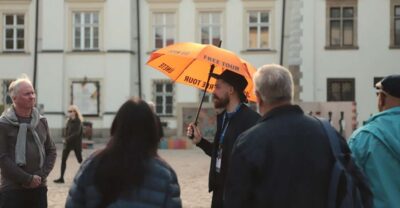
Just as important, you also have live guiding in Polish and English. The result is a better balance than audioguides alone. The live guide can adjust pacing and add context when something is easy to misunderstand from audio alone.
I especially like that the experience can be driver-led and conversational. In one example, Jakub, who served as a guide and driver, paired audioguide content with additional tidbits and interesting facts. That is the kind of “extra” that makes a tour feel alive instead of mechanical.
Photo Angles and the Cart Roof Issue
If you care about photos, plan smart. The carts are covered, which helps weather and comfort. It also means you might not always see tall buildings clearly from your seat.
Chris noted that because he could not see through the roof and many facades are tall, some pictures needed an extra step, like shooting from outside the cart to include the full view. His workaround was practical and quick.
So if you want great photos of towers and top portions, go with this mindset:
- Take the easy wide shots from the cart as you pass.
- Then grab a couple of “full facade” shots by positioning yourself better at the stops.
- Keep your expectations aligned with a mobile tour.
Comfort, Group Size, and Seating Assignments
Let’s talk practicals. The vehicle can carry up to 13 passengers. Each row can fit up to three people. The company does not guarantee you will sit next to each other, because the driver assigns seating.
That matters for couples who want constant chatting time, and for families traveling with kids. Still, it does not ruin the experience. The tour’s real rhythm is audio plus driver narration, so being separated is less of a deal than it would be on a tour where you are constantly expected to navigate together.
The upside is that the cart format keeps you together enough to hear everything, and the driver is there to manage the flow. “Full care of driver” is included, which you can feel in how smoothly the route runs.
Also, the tour is wheelchair accessible, which is a real advantage compared with many Old Town walking routes.
What’s Included, What You Bring, and How to Prepare
This experience includes pick up from the meeting point, driver care, and the audioguided system. It also includes the multilanguage audio options.
Food and drinks are not included. So bring water. Pack a small snack if you know you get hungry. Also wear comfortable shoes. Even with the cart, you will likely do some short walking at stops, and Krakow’s surfaces can test your soles.
One more note: the tour rules clearly forbid pets, weapons or sharp objects, oversize luggage, and smoking, plus smoking indoors. Alcohol and drugs are not allowed in the vehicle, and even red wine is listed as not allowed. If you are thinking of bringing anything extra, keep it simple and practical.
Price and Value for $55 Per Person
At $55 per person for about 135 minutes, the value depends on how you use it. This price can feel fair because you are covering multiple districts that often require separate planning.
You are paying for:
- Guided structure across Old Town, Kazimierz, and Podgorze
- Audioguide in many languages
- Live support in Polish or English
- Transport by golf cart, which saves time and foot pain
If you have limited time in Krakow, the cost starts to make sense fast. You can use the tour to learn what matters, then choose a few places to return to on your own when you have more time. If you already know the history well and you want a slow, deep museum day, you might prefer a different format.
Should You Book This Krakow Golf Cart Tour?
I think you should book if you want a fast, organized way to understand Krakow’s main districts, especially if you want your history delivered in your language. The combination of live guiding in English or Polish plus multi-language audioguides makes it easy to follow without guessing. I also like that the route covers not just the postcard Old Town, but also Kazimierz and the former ghetto area in a structured sequence.
Hold off if you hate group tours, or if you are extremely photo-focused and need perfect sightlines from every angle. The cart roof can limit views of tall facades, and you may need to take a second photo from outside the cart when you stop.
If you are on the fence, treat it like a smart “first pass” tour. Use it to build your bearings, then decide what you want to revisit with a slower pace.
More City Tours in Krakow
More Tours in Krakow
More Tour Reviews in Krakow
Not for you? Here's more nearby things to do in Krakow we have reviewed
More Krakow Golf Cart & Electric Car Tours to consider.
★ 4.5City Sightseeing Tour by Electric Golf CartFrom $133,264 reviews
★ 4.7City Sightseeing Tour Eco Electric Buggy Golf CartFrom $133,143 reviews
★ 4.7Extended City Sightseeing Tour – Eco Buggy Golf CartFrom $13794 reviews
★ 4.4Electric Car Sightseeing TourFrom $25450 reviews
★ 4.6Jewish Quarter and Ghetto Electric Golf Cart TourFrom $34348 reviews
★ 4.5City Sightseeing Tour Eco Electric Buggy Golf CartFrom $28311 reviews
★ 5.0Krakow Grand City Tour by golf cart – All 3 districtsFrom $27311 reviews
★ 4.9City Tour by Electric Golf CartFrom $36310 reviews
Other ways to explore Krakow