
Review · OLD TOWN & MAIN SQUARE TOURS
Kraków: Old Town & Wawel Castle Walking Tour in English
Krakow history walks right up to you. This 2h 30m English guided walk threads together UNESCO Old Town landmarks and Wawel Castle stories, from royal power to the Dragon. It’s a tight route that helps you read the city instead of just passing it.
Two things I really like: the guide-led storytelling (often funny, always pointed) and the smart “why it matters” context at each stop. I also appreciate that the tour includes courtyards at Collegium Maius and the Wawel Royal Palace, so you get history up close without being trapped in a museum line.
One consideration: it is a walking tour, so you’ll need comfortable shoes and you may feel the pace if you stop to linger a lot. The focus is on key sights and narration, not a slow sit-down tour.
Key things that make this Krakow tour worth your time
- Big UNESCO payoff without wasting time: You see the preserved core that made Krakow an early UNESCO listing
- Royal Route highlights in one loop: St. Mary’s Basilica, Main Market Square, and Wawel Hill all connect into one story
- Top-notch guides, lots of laughs: I liked the energy from guides such as Big Tom, Mitchell (Magic), Maciek, Chris, Lucy, and Victoria
- Courtyard access, not just outdoor photos: Collegium Maius and Wawel Royal Palace courtyards are part of the walk
- Legends with real city context: The Wawel Dragon slot helps you understand how folklore became local identity
- A guided break is possible: Some tours include a short coffee and bathroom pause, which helps on a longer walk
Where the tour starts in Krakow, and why that spot matters
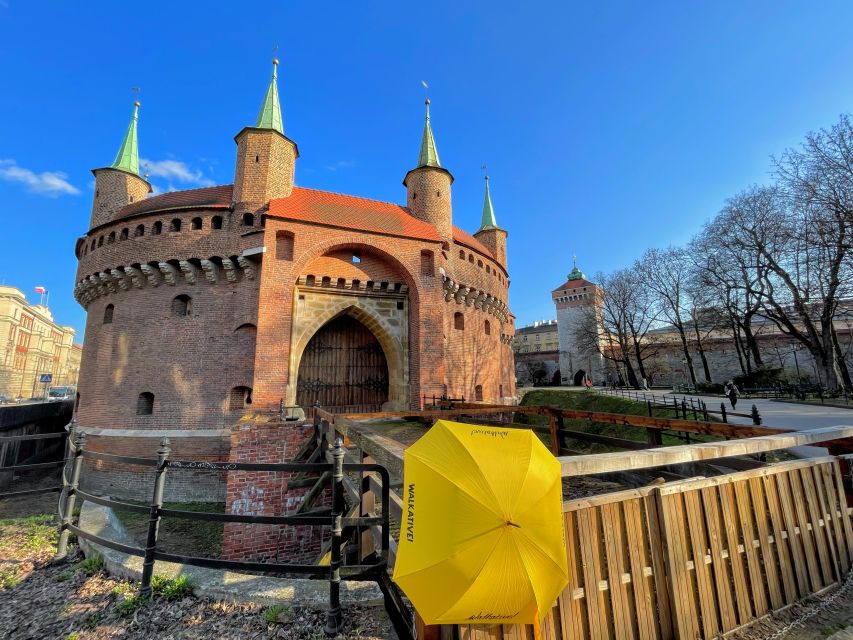
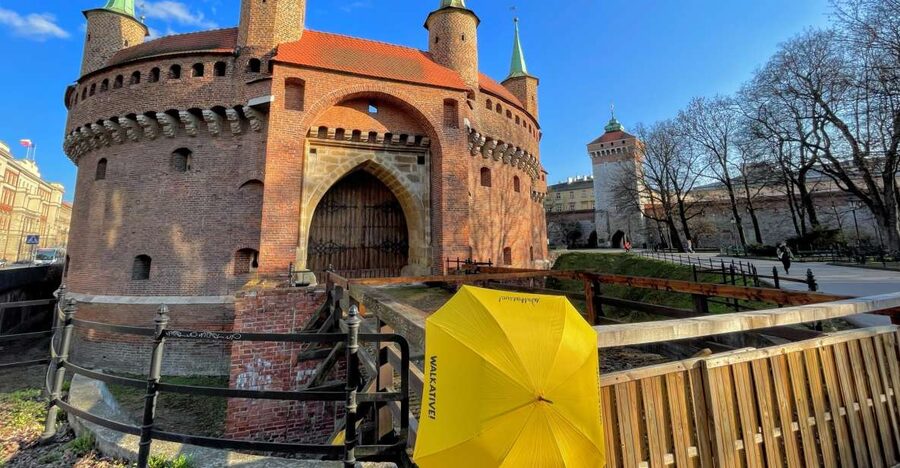
You meet in a small space between the Barbican and St. Florian’s Gate, right where the medieval city used to funnel people in. It’s a good starting position because it sets the tone: Krakow wasn’t built to be a postcard, it was built to manage traffic, protect wealth, and control entrances.
Within minutes, your guide usually starts translating the city for you. You begin seeing the layout as a system: gates, walls, squares, and royal buildings all link up like chapters.
You can also read our reviews of more walking tours in Krakow

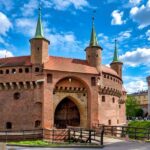
The Barbican and medieval walls: Krakow’s survival story in stone
The first chunk of the walk is about the city’s defensive skeleton, including the medieval walls and the Barbican. This is one of those areas where a guide really helps, because the architecture looks dramatic, but the logic is what makes it memorable.
Krakow’s Old Town core is famous for being so well preserved, and starting with the defensive layer helps you understand why. When you can picture how people entered the city, you understand why the Royal Route feel so important once you reach the palace and church sites later.
Main Market Square and Cloth Hall: the city’s power center, explained
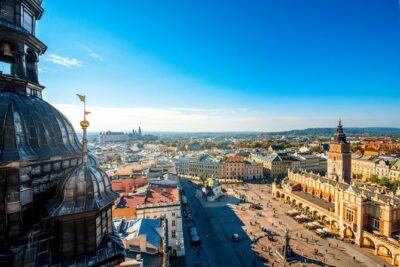
Next comes Main Market Square and the Cloth Hall, which are basically the headline attractions of Krakow’s Old Town. This is where you should expect the tour to switch from “what you’re looking at” to “who mattered and why.”
In a place like Krakow, the square is not just a big open room for selfies. It was tied to trade and civic life, and your guide’s job is to connect the buildings around you to that role. When someone points out how the square functioned day-to-day, the architecture clicks into place fast.
Also, this is a natural moment to check your footing and pace. The square can feel crowded, and you’ll want to stay close enough to hear the guide, not drift off chasing views.
St. Mary’s Basilica and the trumpeter detail that people remember
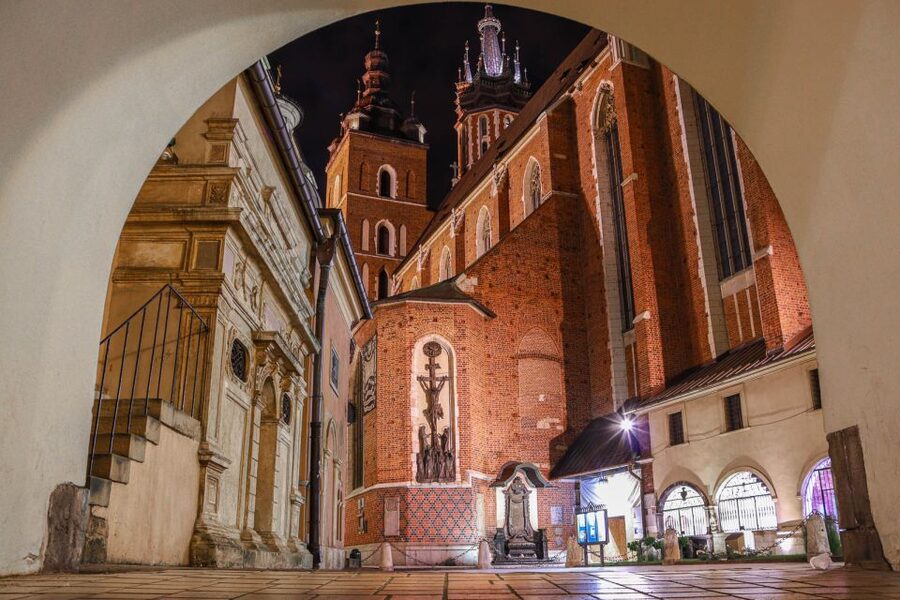
St. Mary’s Basilica is one of the stops that gets folded into Krakow’s identity, and the tour leans into that with the famous trumpeter associated with the church. Even if you’ve seen Gothic churches before, the guide frames what makes this one special in local storytelling.
Think of this stop as a bridge between art and folklore. Your guide uses the church as a way to talk about how everyday people experienced the city, not just royalty and diplomats.
If you’re into details, ask questions here. The trumpeter bit is often where guides get playful, and that’s usually a sign you’re getting more than a list of facts.
Collegium Maius courtyards: university roots in Central-Eastern Europe
The tour includes the courtyards of Collegium Maius, highlighted as the oldest building of the oldest university in central-eastern Europe. This is a smart addition because it broadens the story beyond kings and battlefields.
You’re not only seeing architecture. You’re stepping into the kind of place where ideas moved through the city. The walk also ties into Krakow’s role as a cultural hub, where artists, scholars, and leaders gathered, and even connects to the idea that Copernicus walked these streets.
One practical note: if you want to ask about the university story, this is the best moment. Your guide has momentum, and you’ll get more connected explanations here than at the purely scenic stops.

The Archbishop Palace and John Paul II papal window: politics made personal
At the Archbishop Palace, the tour points out the John Paul II papal window. This isn’t just an odd architectural feature to photograph. It’s a reminder that political and religious power were visibly staged in public life.
Your guide uses this stop to connect Krakow to broader Central-European history. The architecture becomes a “stage set,” and suddenly you’re not staring at stone, you’re picturing how events were witnessed by ordinary people nearby.
This is also a good place to slow down slightly, because the story can get more layered. If you want to fully track the timeline, give yourself a few extra seconds to listen.
Wawel Hill, Cathedral, and the castle courtyard: the royal seat, plus limits
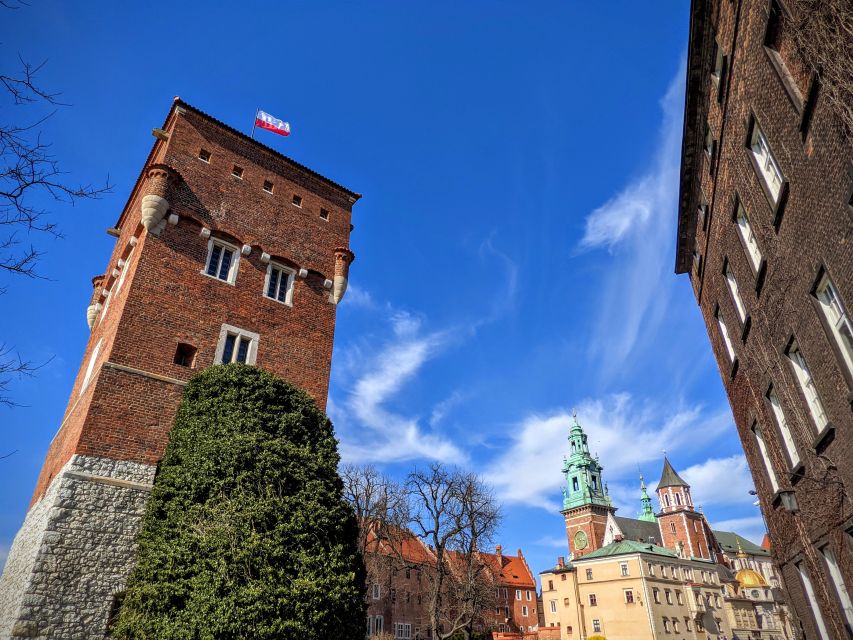
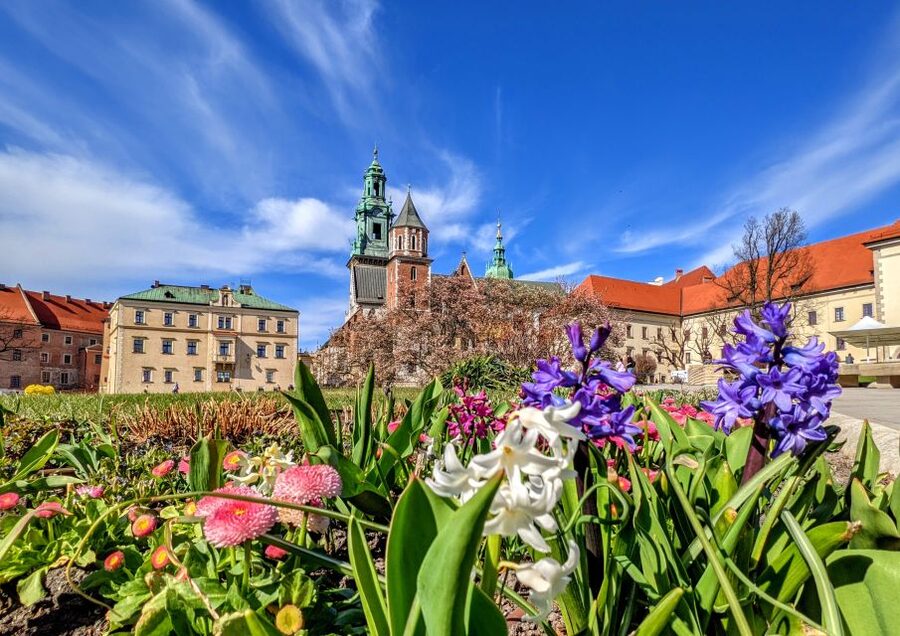
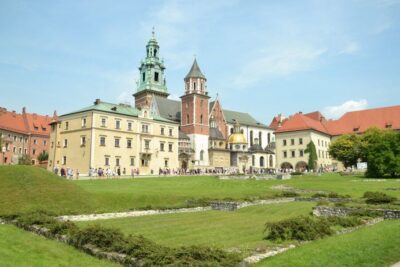
The big finish is Wawel Hill, including the Cathedral and the castle courtyard. This is the portion of the tour where you see why Krakow was the royal center, and why so many stories orbit this hill.
You do get courtyard access at the Wawel Royal Palace, which is a meaningful compromise if you do not want to sit through lengthy indoor exhibits. But keep expectations clear: this walking tour is focused on key exterior and courtyard areas, not a full inside-the-castle marathon.
One of the more common wishes from people doing short tours is to see more interiors. If that matters to you, pair this tour with at least one separate visit on another day where you can go at your own speed.
The Wawel Dragon: a legend that turns into local identity
Then you’ll hit the Wawel Dragon stop, where folklore becomes part of how the city introduces itself. This legend works well in a guided walking route because it gives you a human entry point into a royal setting.
When the dragon story comes after Cathedral and courtyard views, it doesn’t feel random. It helps you see how Krakow balanced power and myth, how people used stories to make meaning, and how those meanings survived into modern tourism.
If you’re traveling with kids or anyone who gets bored by timelines, this is usually the part that refreshes attention.
How the 150 minutes actually plays out on your feet
This is a 150-minute walk, so it’s not one of those “quick hits” that barely gets you started. It’s long enough for real context, but short enough that you can still use the rest of the day for other sights.
In real life, pace depends on the group and how quickly everyone can move together. One small risk is that if you fall behind, you can miss bits of the story while the group has already moved on. If you need to step aside for photos, try to keep yourself within a close listening distance.
Comfort-wise, plan for lots of outdoor walking on uneven Old Town streets. Also, some tours include a short break in the middle, like a quick coffee and bathroom pause, which can make the second half feel much easier.
English guide quality is the whole product here
This tour lives or dies by the guide. The good news is the pattern in the experiences shared is strong: guides bring energy, keep the crowd engaged, and mix humor with facts.
I noticed names popping up in people’s praise like Big Tom, Mitchell (Magic), Tom, Chris, Maciek, Mati, Pavol, Victoria, Lucy, and Jacek. The consistent theme is clear communication plus storytelling style that makes the history easier to hold in your head.
It also helps that the tour is structured as a thoroughly constructed narrative. That means you’re not just getting stop-by-stop facts, you’re getting a chain of meaning.
Bring curiosity with you. If there’s a topic you care about, this is the kind of tour where you can ask, and the guide usually knows how to answer without turning it into a lecture.
Price and value: $26 for a guided UNESCO hit
At $26 per person for about 2.5 hours, you’re paying for a compact route with big-name landmarks and a live English storyteller. That price feels especially reasonable when you consider you’re covering UNESCO-listed Old Town sights and multiple major stops without having to figure out the order yourself.
There’s also an important twist. When you book this, you join a general pay as you wish tour. In that case, the amount you pay covers the reservation fee and the guide’s payment.
So, what does that mean for you? It means you should treat the guide as the core value. If you love the experience, tipping in the pay-as-you-wish spirit is how you reward what you’re getting.
You should also know what’s not included. Hotel pickup and drop-off are not part of this. Snacks are not included either, so plan to eat before and maybe carry water if you’re sensitive to long walks.
Who should book this Krakow Old Town and Wawel tour
I think this tour is a great fit if you:
- Want a first-time Krakow introduction with major sights in one loop
- Like history told through buildings, legends, and daily life, not just dates
- Prefer short guided walking with context, rather than reading alone while you wander
- Have limited time and want the UNESCO core and royal hill covered efficiently
It’s less ideal if your main goal is to spend lots of time inside major interiors. This route focuses heavily on outdoor sightlines and courtyard access, so if you want deep museum time, you’ll likely want a separate ticket afterward.
Also, if you are slow-moving due to mobility limits, the tour is listed as wheelchair accessible, but the narration is still paced for a moving group. If that’s you, choose a starting time when you’re comfortable with slower participation, and plan to stay close to the guide.
Should you book this Krakow Old Town and Wawel Castle walking tour?
Yes, I’d book it if you want your time in Krakow to feel organized and meaningful. This is the kind of tour that turns the Old Town from a set of famous buildings into a connected story, and it does it in just 2h 30m.
I’d especially consider it on your first couple of days in town, because the guide can help you understand what to prioritize later. Even people who do the tour on a later day still get a lot out of the “reading the city” skill, but going earlier gives you more freedom for follow-up plans.
The best reason to book is simple: you get a UNESCO-heavy route plus strong guide performance, often funny, always story-driven. For $26, that’s a practical way to get your bearings fast and leave Krakow knowing what you saw.
FAQ
How long is the Kraków Old Town & Wawel Castle walking tour?
The tour lasts about 150 minutes.
Where is the meeting point?
You meet in a small space between the Barbican and St. Florian’s Gate, the medieval entrance to the city.
Is the tour in English?
Yes, the tour is guided in English by a live local guide.
What sites are included in the tour?
You’ll see medieval city walls and the Barbican, Main Market Square and the Cloth Hall, St. Mary’s church with its famous trumpeter, Collegium Maius (including its courtyards), the Archbishop Palace and John Paul II papal window, Wawel Hill (including the Cathedral and the castle courtyard), the Wawel Dragon, and more.
What is included versus not included?
Included: an expert local tour guide, a thoroughly constructed narrative, and visits to the courtyards of Collegium Maius and Wawel Royal Palace. Not included: hotel pickup and drop-off, and snacks.
Is the tour wheelchair accessible?
The tour is listed as wheelchair accessible.
More Walking Tours in Krakow

More Tours in Krakow

More Tour Reviews in Krakow
Not for you? Here's more nearby things to do in Krakow we have reviewed







More Old Town & Main Square Tours to consider.
 ★ 5.0Old Town Krakow & Wawel Castle Walking TourFrom $261,508 reviews
 ★ 4.9Bike Tour of Old Town, Jewish Quarter and the GhettoFrom $371,155 reviews
 ★ 4.8The Old Town Walking TourFrom $19794 reviews
 ★ 4.7Old Town Guided Segway TourFrom $55756 reviews
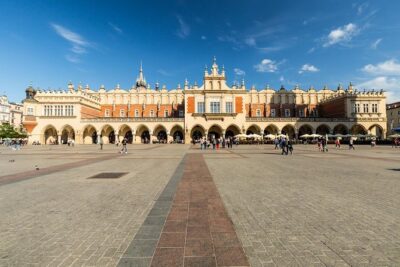 ★ 4.5Krakow Old Town Guided Walking TourFrom $33438 reviews
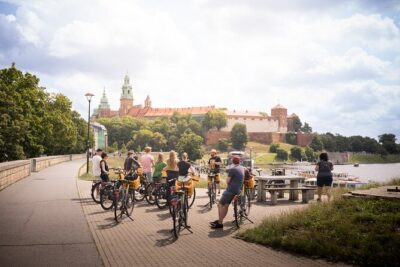 ★ 5.0Full Bike Tour – the Old Town, Jewish Qtr & the Ghetto NEW BIKESFrom $35437 reviews
 ★ 5.0Krakow Old Town Segway Tour 2hr with Training, Safety Gear, GuideFrom $57435 reviews
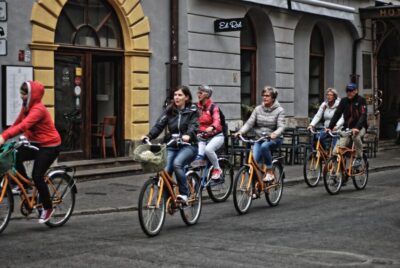 ★ 4.9Bike Tour of the Old Town, Kazimierz, and the GhettoFrom $26350 reviews
Other ways to explore Krakow