
Review · COMMUNISM & NOWA HUTA TOURS
Nowa Huta Tour Krakow: Ideal Communist City Small Group Walk
Communist Krakow is best read on foot. This small-group walk through Nowa Huta turns street corners into clues, so you can spot how ideology shows up in the built environment. I especially like the mix of architecture reading and real, everyday stops, plus the conversation-friendly pace of a small group. One possible drawback, plan ahead if alcohol tasting is not your thing.
You start in central Krakow and ride a tram out to the former communist district, then spend the afternoon walking through the big spaces and the leftovers of a grand plan. I love that the route includes the Central Square, the former Lenin monument area, and a real Russian tank left after the war, because those are visual anchors for understanding the era. And yes, you end with a sense of what the neighborhood became after Communism, not just how it was designed.
Guides such as Anna and Barbara are highlighted for turning details into stories you can actually remember, and the tour language is English. I also like that a ticket supports local conservation, heritage, and culture. If you are expecting a purely political lecture, you might find the walking pace and hands-on stops feel more experiential than classroom-style.
Key things you will like about the Nowa Huta tour
- Soviet city planning made readable: you walk the ideology, not just hear about it.
- Central Square and WWII-era landmarks: big “designed for a purpose” spaces, now repurposed.
- Lenin monument spot plus a vodka tasting: contrasts between the old story and the current one.
- A real Russian tank and defense planning ideas: a tangible leftover, paired with architecture concepts.
- Lord’s Ark church built by residents: a freedom symbol told through what people physically made.
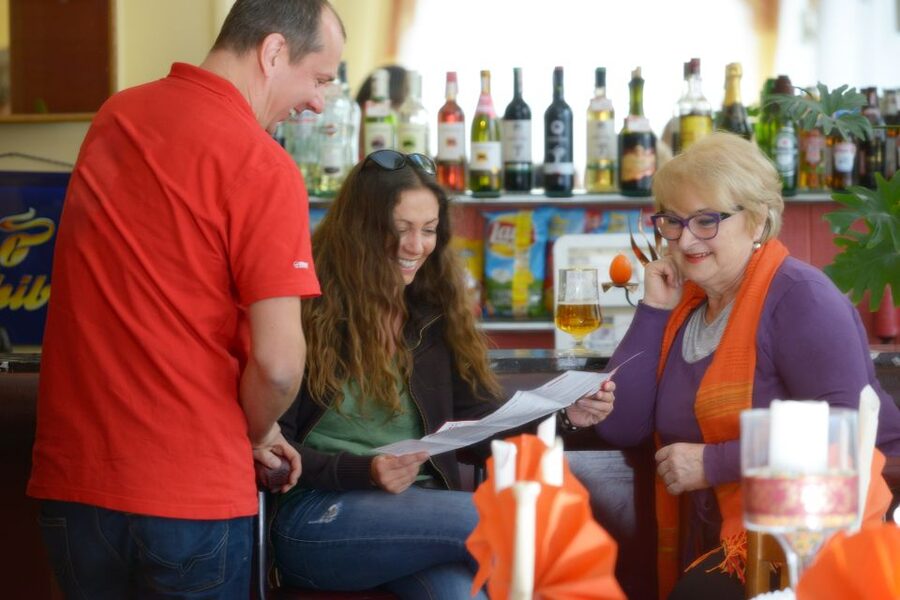
- A food stop that fits the neighborhood: zapiekanka plus a café moment in modern Nowa Huta.
Why Nowa Huta feels like a living exhibit

Nowa Huta works because it is not frozen behind glass. The district is built around a communist ideal, and it shows up in how the streets, squares, and landmarks were planned. This tour helps you read those choices like a map of values, then compare them to what locals did afterward.
What makes this tour especially useful is the way it moves between “big idea” places and small daily-life stops. You do not only see planned monuments. You also hit the market, a local bar moment, and a neighborhood café to get the feel of Nowa Huta as it is now.
I like that you also learn how the city changed after the fall of Communism, because that is the part most people skip. The district becomes an anti-communist hub, which is a simple phrase, but on the ground it feels complicated in a real way.
You can also read our reviews of more walking tours in Krakow
Meeting point on Dluga Street, then a tram to the district
You meet at 1 Dluga Street (ul. Dluga 1), on the corner of Dluga and Basztowa, at the entrance of the bookshop Pod Globusem. Your guide holds a Krakow Urban Tours sign, so you can spot your group without playing detective for too long.
From there, the tour uses public transport, specifically a tram to the communist district and back. That matters because it keeps the experience grounded in how people actually get around, not how a coach drops you off and disappears.
The tour lasts about 4 hours, which is a sweet spot for this kind of neighborhood walk. It is long enough to see multiple high-impact landmarks, but short enough that you are not stuck in one place all afternoon.
Plac Centralny: reading ideology in Krakow’s enormous central space
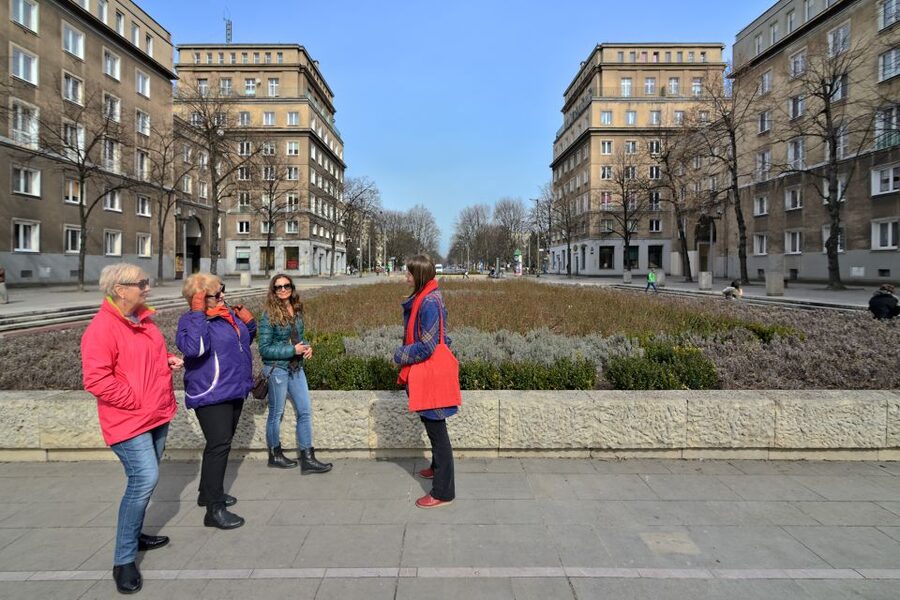
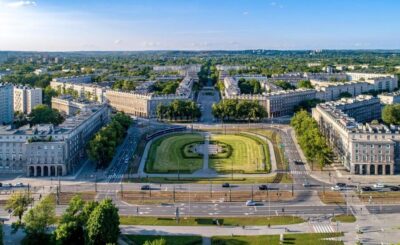
Your first “wow” moment is the Central Square, Plac Centralny. It is described as enormous, and that scale is exactly what you should pay attention to. Big squares in planned cities are not neutral. They are designed to create a sense of order, authority, and public ceremony.
The tour then guides you through a major landmark planned right after WWII that now feels like a museum today. You will see multiple architectural styles and ideas from the past, which is a helpful clue that the communist “one plan fits all” approach did not survive intact.
When you stand in spaces like this, try to notice what the design pushes you to do. Do the open areas make crowds feel natural? Do the buildings create a sense of hierarchy? This tour gives you context for those questions, so you can stop guessing and start understanding.
The Lenin monument spot, then vodka the way people did it
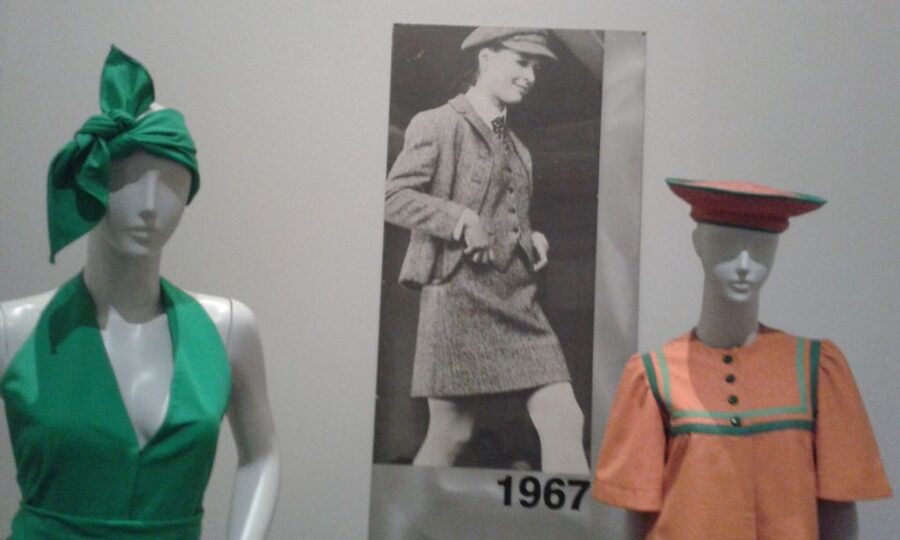
Next comes one of the most direct historical contrasts: the spot where a huge monument of Lenin used to stand. Even if the monument itself is gone, the location still matters, because monuments are meant to anchor an ideology in a physical place.
After that, you visit a communist-era style restaurant or bar setting for a vodka tasting, described as a shot of vodka. I like that the experience includes this “everyday practice” element, because it shows the culture of the time, not just the official symbols.
A practical consideration: the vodka shot is part of the included experience. If you do not drink, you can still enjoy the historical context, but you might want to be ready with how you want to handle the tasting moment.
Soviet leftovers you can photograph: the Russian tank and defense planning ideas
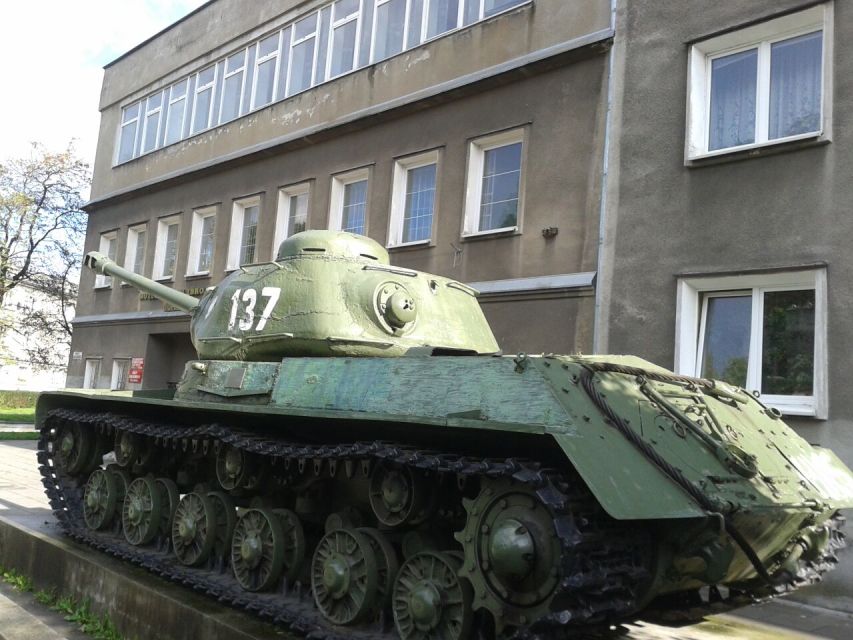
A few steps into the story, you get to see a real Russian tank left after the war. That kind of object turns abstract history into something you can look at from different angles, and it is an easy photo moment too.
Right alongside this, the tour explains a huge protection system invented by the communist architects. Even without getting lost in technical details, you can use this stop to understand the mindset behind the planning. It was a city designed with fear, control, and safety considerations built into the architecture.
If you like history that you can point to, this section is built for you. You see the physical artifact, then you get the architectural concept that helped produce it.
You can also read our reviews of more city tours in Krakow
The market stop: groceries, clothes, and social life
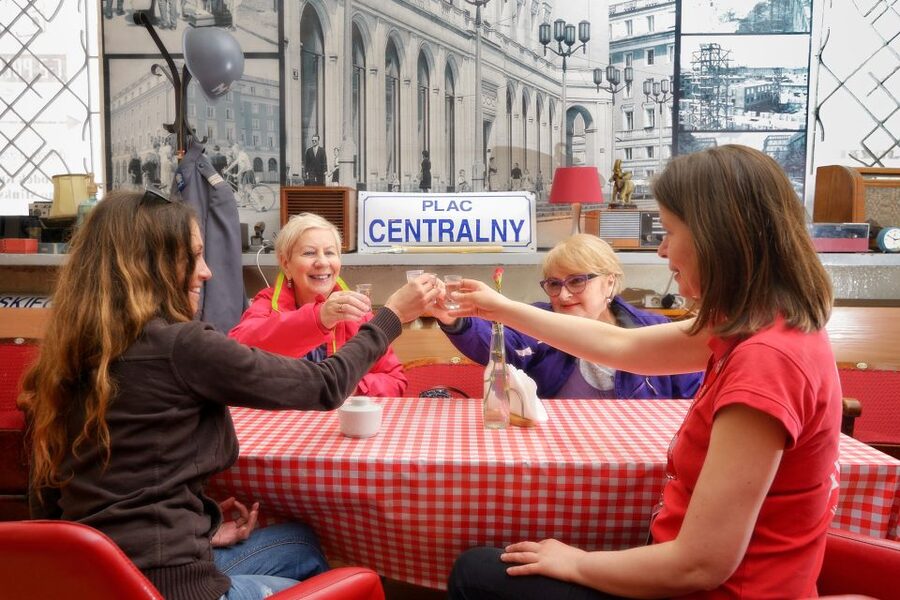
One of the best “why this tour works” moments is the market. You explore where locals spend time socializing, buying groceries, selling clothes, and sharing homemade sweets.
This is not presented as a cultural performance. It is a real place people use, and that is the key difference. It gives you a baseline for what daily life actually looked like, and what it still looks like now.
If you enjoy people-watching, this stop is a gift. Even if you do not buy anything, you will likely notice how the market functions as a community hub, not just a shopping area.
Zapiekanka snack: a simple taste of the communist era
You will snack on zapiekanka, described as a typical communist treat, and you try it in a local bar setting. It is one of those foods that helps history feel normal. Instead of only thinking about ideology, you taste something everyday that people likely associated with their own routines.
When you order or eat, focus on what the tour is doing: connecting architecture and politics to ordinary habits. Even if you just take a few bites, it adds texture to everything else you saw that day.
Tip: eat at a comfortable pace. You will be moving after this stop, and a steady energy level makes the rest of the walk much easier.
Lord’s Ark church: freedom symbolism built by residents
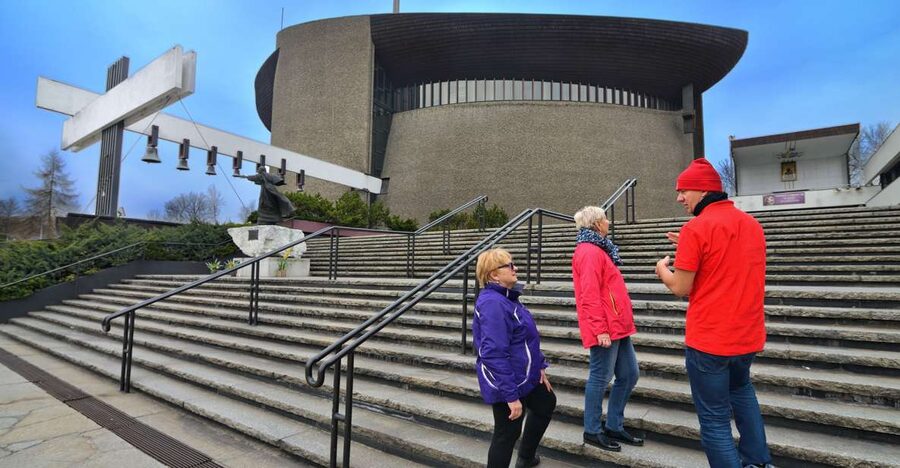
The last major landmark is the church known as the Lord’s Ark. The tour frames it as a symbol of the long fight for freedom and democracy, and that theme is where the stop becomes more than sightseeing.
What makes it especially meaningful is how it was built. The church’s architecture is highlighted as being built by residents completely by hand. You are not only looking at a building, you are seeing an idea of agency, people choosing to create something with their own effort.
If the earlier parts of the tour focus on what planners imposed, this stop flips the story. It shows what communities could build when they pushed back.
When you are there, take a slow walk around the area and let your mind switch from “planned city” to “planned resistance.” That mental shift is what makes Lord’s Ark land.
The communist museum stop and the bunker element
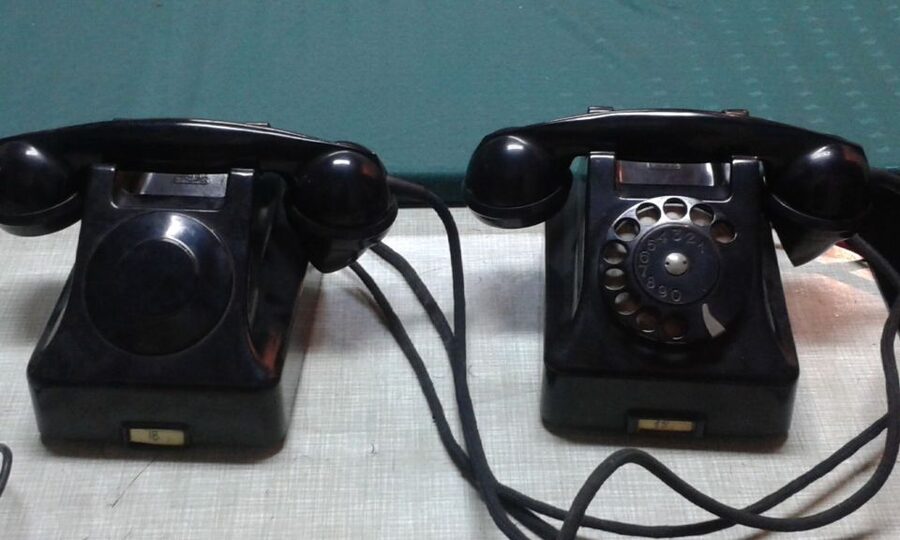
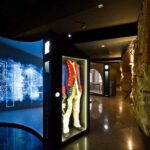
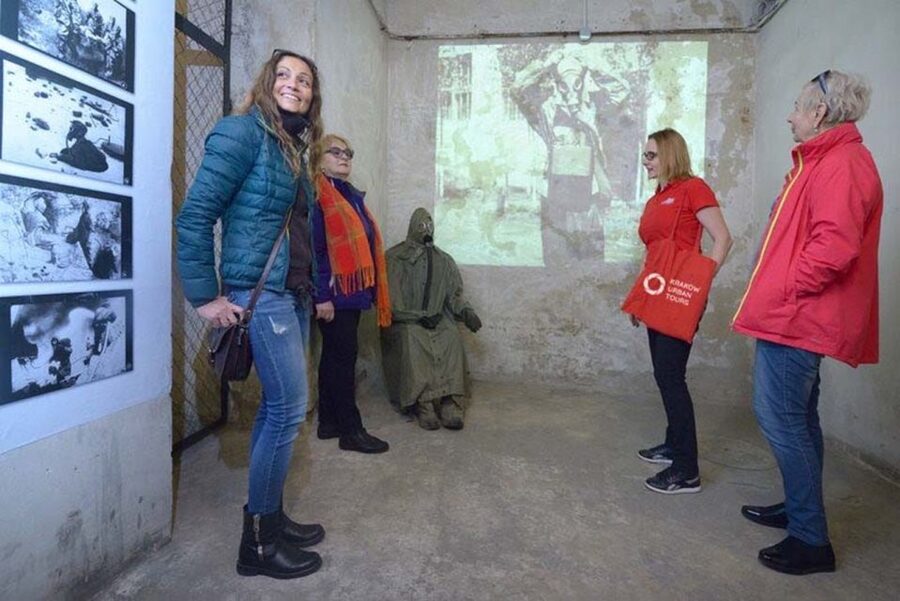
Part of the tour includes an entrance ticket to a communist museum, and there is also a bunker element mentioned as a highlight. This is a smart inclusion because museums can sometimes feel distant, but bunkers add physical context to what people feared and prepared for.
If you are traveling with kids, or if you just like hands-on learning, this part tends to be a favorite. It also helps explain the logic behind the defense ideas discussed earlier, because it brings the concept into a built environment you can walk through.
I like that you are given a ticket, not just a quick glance. It makes the museum time feel like a real stop, not an optional detour.
A guided story with human names: Anna and Barbara’s style
The best tours do more than list sights. They make the place understandable, and the tour highlights guides like Anna and Barbara for being enthusiastic and knowledgeable in a way that brings the district to life.
That matters for Nowa Huta because so much of the meaning is “in between.” You need help connecting what you see, why it was planned, and what people did after.
Also, the small-group format makes questions easier. When the group stays compact, you get more back-and-forth, and you can ask the “wait, why was that built that way” questions before the story moves on.
Price and value: is $112 for 4 hours worth it?
At $112 per person for 4 hours, you are paying for more than walking time. You are getting tram transport to and from the district, an entrance ticket to the communist museum, a vodka tasting, and a zapiekanka snack. That is a lot of included value for a half-day experience.
You should also weigh the kind of learning you get. The tour is built around decoding Soviet architecture and ideology, then checking that story against everyday life in markets, cafés, and local food stops. If you like guided interpretation, the cost starts to make sense fast.
If you prefer to DIY everything and you already know the history, you might find the price less appealing. But if you want a guided narrative that links monuments, objects, and neighborhood life into one coherent walk, $112 can feel fair.
What to bring, what to do during the walk
Comfortable shoes are the practical must. This is a walking tour with multiple outdoor stops, and you will want your feet to stay happy.
Bring a phone or camera, because you will see several high-impact photo targets, including the tank and the large landmark spaces. Just remember that the tour is also about looking with context, not only taking pictures.
The best way to enjoy this kind of experience is to ask questions as they come up. If something about the architecture feels “too official” or too intentional, that is usually exactly what the guide wants to explain next.
If you plan to participate in the vodka tasting, decide in advance how you want to handle it. Even if you only take the smallest sip, you can still appreciate why it is included in the storytelling.
Who this tour suits best
This is a strong choice if you want a guided, place-based way to understand communist-era planning in Poland. It fits well if you like architecture, want to decode big public spaces, and enjoy food-and-moment stops that show daily life.
It is also a good fit for mixed ages. The museum and bunker element is specifically called out as enjoyable for both children and adults, so it can work for families who want something more meaningful than a simple “see and go” walk.
If you only want relaxed sightseeing with no interpretation, you might find the ideology-focused framing a bit intense. But if you like turning sights into stories, this tour is purpose-built for that.
Should you book the Nowa Huta Tour in Krakow?
Book it if you want a guided half-day that connects Soviet city design to real neighborhood life, and you like learning through landmarks, markets, and food. The included tram ride, museum ticket, vodka tasting, and zapiekanka make it feel like more than a basic stroll.
Skip it only if you strongly prefer self-guided history or if alcohol tasting is a dealbreaker for your plans. Otherwise, this is one of those Krakow experiences where every stop gives you something to look at and something to understand.
FAQ
How long is the Nowa Huta tour?
The tour duration is 4 hours.
Where is the meeting point in Krakow?
Meet at 1 Dluga Street (ul. Dluga 1), at the corner of Dluga and Basztowa, at the entrance of the bookshop Pod Globusem. The guide will be holding a Krakow Urban Tours sign.
What is included in the tour price?
The tour includes tram transport to the communist district and back, an entrance ticket to the communist museum, a vodka tasting in a communist restaurant, and a local snack of zapiekanka.
Is the tour in English?
Yes, the tour is offered in English with a live tour guide.
What should I wear or bring?
Wear comfortable shoes, since it is a walking tour.
Can I cancel or pay later?
Free cancellation is available up to 24 hours in advance for a full refund. You can also reserve now and pay later, so you do not have to pay immediately.
More Walking Tours in Krakow
More Tours in Krakow
More Tour Reviews in Krakow

Not for you? Here's more nearby things to do in Krakow we have reviewed







More Communism & Nowa Huta Tours to consider.
 ★ 4.9Nowa Huta Guided Tour in Vintage CarFrom $75277 reviews
 ★ 5.0Legendary Private Nowa Huta Communism Tour with Crazy GuidesFrom $131262 reviews
 ★ 4.9Nowa Huta: Steelworks Administration Buildings/Shelters TourFrom $24160 reviews
 ★ 4.9Private Nowa Huta Adventure Tour in Communist CarsFrom $108114 reviews
 ★ 4.93.5-Hour Communism Deluxe Tour by TrabantFrom $21584 reviews
 ★ 5.0Trip Around Nowa Huta – KrakowFrom $10250 reviews
 ★ 4.9Communist Krakow – Nowa Huta Walking Tour in EnglishFrom $2634 reviews
 ★ 5.0Nowa Huta Steel Mill Administration Buildings and Shelters with local NGOFrom $2733 reviews
Other ways to explore Krakow