
Review · AUSCHWITZ-BIRKENAU MEMORIAL TOURS
Krakow to Auschwitz-Birkenau Live Guided Tour & Hotel Pick-up
Auschwitz is close enough to ruin your sleep. This Krakow to Auschwitz-Birkenau day trip matters because it handles the hard parts for you: hotel pickup (or a central meet-up), a smooth transfer to Oswiecim, and admission included so you do not waste time paying on arrival.
I also like the way the experience is structured once you get there. You get a live, English-speaking group leader plus a licensed local guide at the memorial, and you’ll use headsets for Auschwitz I. The day is run in a small group of up to 30, which helps you hear the story and move through the site without total chaos. The catch? It is a lot of walking, some uneven ground, and the pace can feel tight if you need more time to stop, read, and process.
Key highlights worth your attention
- Admission included for both Auschwitz I and Birkenau, so you can focus on the visit, not the paperwork.
- Licensed local guides at the memorial who lead the Auschwitz I and Birkenau sections.
- Headsets for Auschwitz I, which makes a big difference in a noisy, busy setting.
- Limited group size (max 30) to keep the experience manageable.
- Real time to see both camps with short breaks, plus a full round-trip from Krakow.
Price and what you actually get from this Krakow day trip
At around $30.17 per person, this is one of those rare deals where the price is low because the structure is efficient. You are paying for a full-day format with two major museum sections, plus transportation from Krakow. And crucially, entrance is included, so you do not hit a surprise bill at the gate when you are already tired from the early start.
Is it “cheap” in the sense of skipping value? No. The memorial experience depends on guided routing and set timing inside the camps. This tour leans into that reality: you get a bus ride that works, a guide who can speak clearly in English, and the right format for getting from Auschwitz I to Birkenau without losing hours trying to figure it out.
One more practical win: the group size cap helps. A big tour can turn into a bottleneck. A smaller group keeps things from turning into a stop-and-start scramble.
You can also read our reviews of more guided tours in Krakow
Getting picked up in Krakow without turning your morning into a puzzle
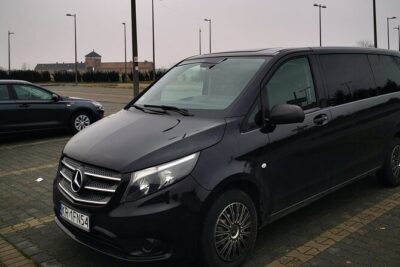
The tour starts in Krakow with either hotel pickup or a central meet-up at Floriana Straszewskiego 17 (31-101 Kraków). The driver team handles the transfer to Oswiecim, about 65 km, roughly 1 hour 15 minutes each way.
Here’s the part that affects your stress level: pickup times are tentative and can shift due to museum schedules and traffic. You get your exact pickup time confirmed the day before, and there can be changes. In the worst case, the pickup can move within a broad window (between 5:00 AM and 2:00 PM, depending on the schedule), but the usual adjustment is more like 30 to 60 minutes.
The upside is communication. Multiple guide and driver experiences highlighted smooth pickup coordination, with people reporting clear notifications. Even when things went wrong for a specific hotel drop-off, the bigger theme was that the staff tried to manage it quickly. Your best move is to be ready early on departure day and keep an eye on your message the day before, since that’s when the real pickup time lands.
The ride to Auschwitz: long enough to get oriented, not long enough to get numb
The transfer is straightforward: you leave Krakow and drive to Oswiecim. Along the way, you may get some context to help you understand what you are about to see. Some passengers specifically noted a documentary playing during the journey, which can be useful because Auschwitz-Birkenau is not a single story, it’s multiple systems of persecution operating across different spaces.
You’ll also have a short break on arrival. The plan is not to drop you into the gate and sprint. There’s time to grab coffee or look around the outdoor exhibits before your formal guided portion begins.
That orientation moment matters. It helps you shift from travel mode to memorial mode, which you will need quickly once you enter Auschwitz I.
Auschwitz I (Auschwitz-Birkenau Museum): gate, barracks, and 2 hours with headsets
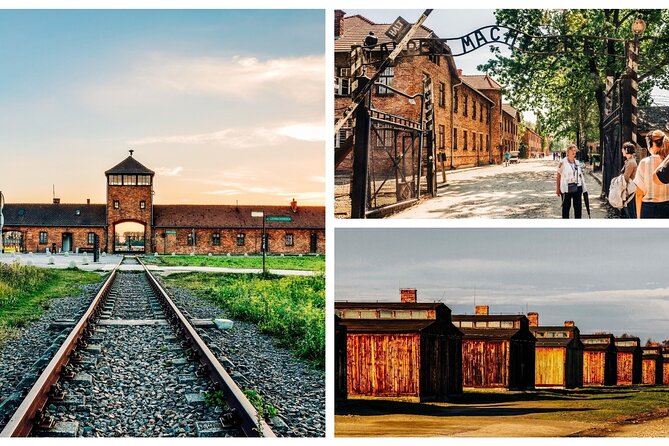
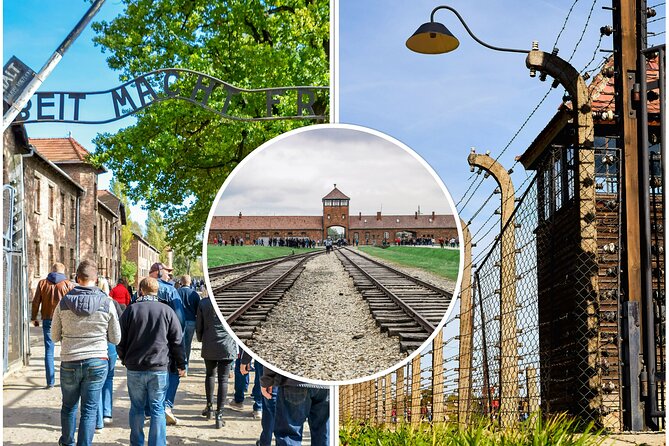
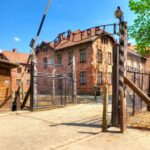
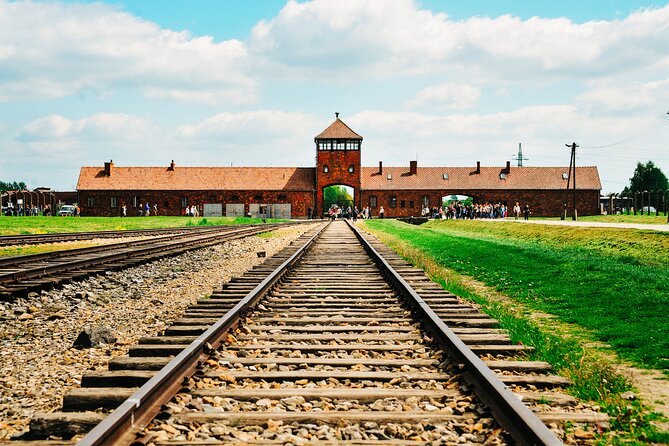
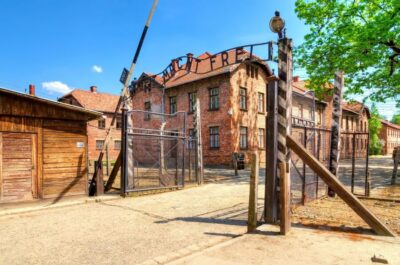
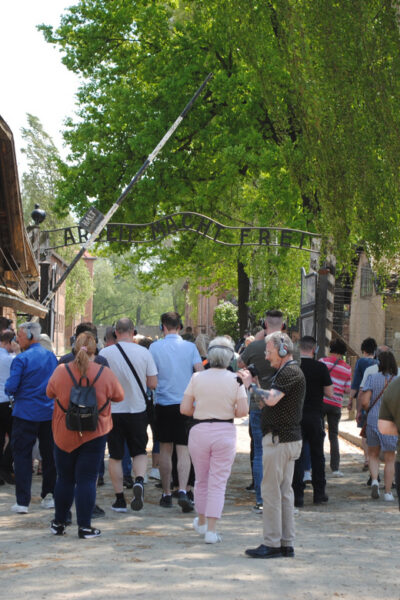
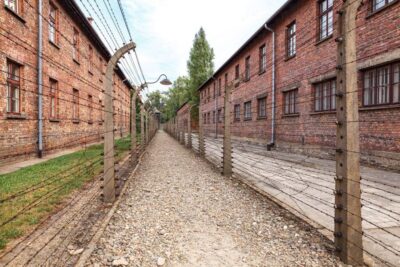
Auschwitz I is where you walk through the iconic entrance and start learning the system behind the site. You pass under the sign Arbeit Macht Frei and move through the camp grounds that began as a concentration camp for Polish citizens arrested after Germany annexed Poland in 1939.
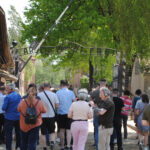
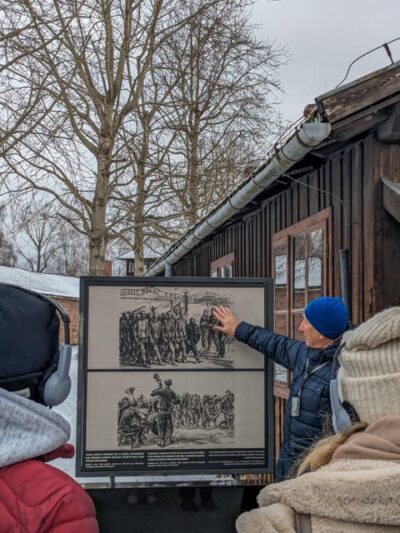
The tour here typically lasts about 2 hours, and you’ll use headsets so you can hear the English narration clearly. That setup is not a small detail. In a place with many visitors, headsets help you avoid the common frustration of standing in a crowd and only catching every third word.
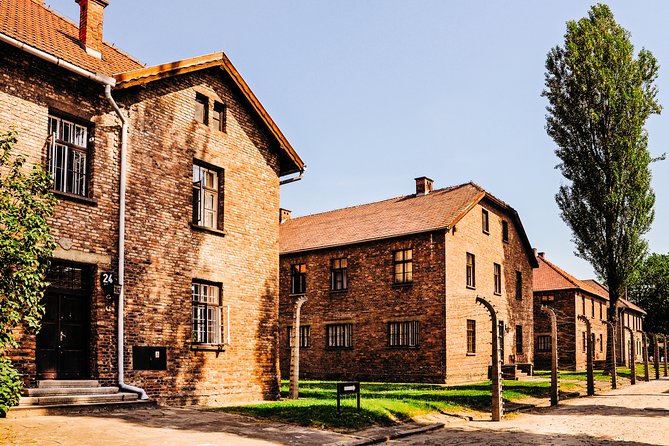
What you’ll see includes the original wooden barracks, fortified walls, barbed wire fences, and the facilities tied to mass killing, including gas chambers and crematoria. The site design is built to show scale, but the guide narrative is what turns that scale into understanding. You can expect a tight relationship between what you see on the ground and what you learn about how the Nazi camp system worked.
Two things I like about this section format:
- It’s timed to fit the memorial’s rules, so you spend time in the right places instead of wandering.
- The group size limit keeps you from feeling like you are being herded through doorways without a chance to absorb.
One caution from real-world experience: a subset of visitors have felt the pace can be too fast for reflection, especially if you want to stop and read more board text. If you know you need quiet time to process, come prepared for a guided visit that prioritizes movement. You can still pause, but you will need to do it strategically between stops, not every few minutes.
Birkenau (Auschwitz II) in Brzezinka: scale you feel in your body
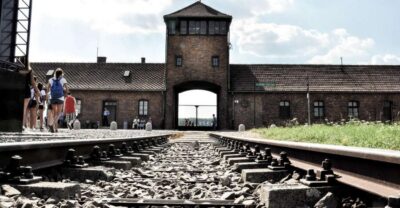
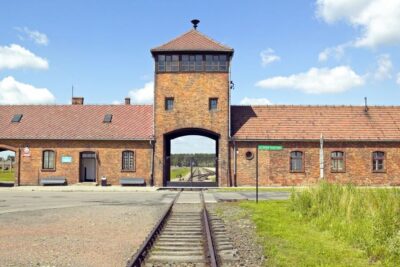
After Auschwitz I, you get a short break (up to 15 minutes), then you move to Birkenau, Auschwitz II, located just a few minutes away.
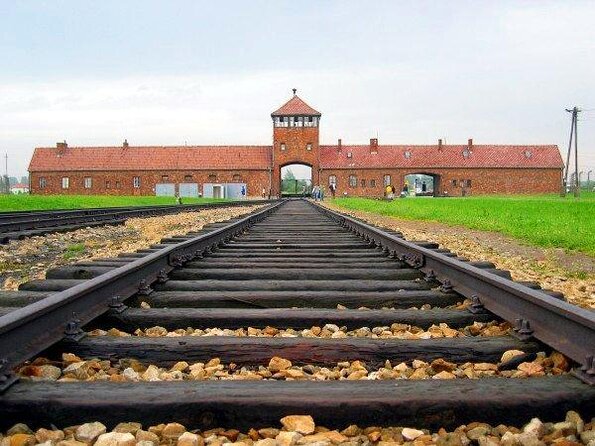
Birkenau is the larger camp, and the narrative centers on the brutal goal of eliminating Jewish people. You’ll hear context about how the camp was built and operated, including the fact that it was ordered during 1941 under SS commander Heinrich Himmler, and that the camp could hold around 90,000 prisoners.
This section runs about 1 hour 30 minutes. Expect the story to focus heavily on living conditions, the selection process, and the pseudo-scientific medical experiments conducted by Nazi doctors, with Josef Mengele specifically mentioned.
Here is why this part hits hard even when you try to stay objective: the physical scale can feel unreal. It makes the numbers you hear less like history facts and more like something your brain struggles to hold.
You will likely feel the day’s walking here too. Uneven ground, exposure to cold, and long stretches between key points mean your body will be part of the experience. If you’re sensitive to fatigue, bring the right gear (more on that below) and plan on taking short breaks when the tour schedule allows it.

Timing, pacing, and why breaks matter more than you think
The day is structured like this: you leave Krakow in the early morning for Oswiecim, do Auschwitz I for about 2 hours, then Birkenau for about 1 hour 30 minutes, then you return to Krakow after about another 1 hour 15 minutes of travel.
The tour duration is listed at about 7 hours, but the memorial controls how long things take. That means you should treat the timing as approximate, not a promise that you will be finished exactly on the dot.
In practical terms, this means:
- You might not have time for a full meal between Auschwitz I and Birkenau.
- You’ll be encouraged to use breaks for coffee, bathroom stops, or a quick reset.
- You should not expect lots of time to stand alone and read every sign at your own pace.
Now, let’s talk about what people say worked. Many passengers praised guides for keeping things organized and respectful, and they mentioned clear answers to questions. Some named guides include Michael, Anna, Łukasz, and drivers such as Jay, Bogdan, Peter, with one person also praising the coach coordination by Patryk.
But there were also honest notes about pacing. Some guests felt rushed through Auschwitz I, with not enough time to read boards or sit with what they were seeing. Others mentioned equipment interference with a microphone transmitter, which reduced clarity through the headsets. Those are not guaranteed issues, but they are useful expectations. If you are someone who needs slow, quiet, and frequent pauses, this format might feel demanding.
Practical tips that make the day easier: ID, snacks, clothing, and luggage
This tour is heavy in subject matter, so your job is to remove physical and logistical friction. Do that, and the experience stays focused on the memorial instead of your discomfort.
Bring ID or passport, no exceptions
Admission requires you to confirm personal details, and you must bring passport or ID to present at the entrance. If you forget it, you may be refused entry.
Pack for a cold, early departure and lots of walking
The day starts early for many schedules. Dress like you’re going to be outside for stretches, then moving through sites. One practical tip from a past visitor was to wrap up warm, which makes sense because early morning air plus open grounds can feel sharp.
Bring a snack, lunch is not included
Lunch is not included, and the itinerary does not leave time for a regular meal between Auschwitz I and Birkenau. Bring a snack. The plan also warns that you should not count on shops or restaurants being available on-site for a full lunch.
You might find small on-site facilities (people have mentioned toilets, and some have also referenced places to grab drinks), but do not build your day around getting a proper meal there. Your best bet is a simple grab-and-go plan you control.
Know your luggage limits
Carry-on size is capped at 30 x 20 x 10 cm. Larger luggage can be left in the car. This matters because you do not want bulky bags forcing you to negotiate tight spaces while moving through checkpoints and crowds.
Photos are allowed with exceptions
Photography is generally allowed with a few clearly indicated exceptions. You’ll know when to stop, just follow the signage and the guide’s instructions.
Age guidance
The tour recommends visitors be at least 13 years old, since the visit can be traumatic.
Who this tour is for, and who should think twice
This is a strong fit if you:
- Want a structured full-day visit from Krakow with admission handled.
- Prefer an English-speaking approach, with headsets for Auschwitz I.
- Appreciate a guide narrative that connects locations and events, instead of reading everything on your own.
It can be a tougher fit if you:
- Have limited mobility. The day includes a lot of walking, uneven ground, and stairs.
- Need a slower, more reflective pace. Some people have felt rushed and wanted more time to read and process.
If you fall into the “needs time to process” category, you’ll still learn a lot on this tour, but you should plan to pause at allowed moments and accept that the official routing will keep moving.
Should you book this Krakow to Auschwitz-Birkenau tour?
I’d book it if your priority is getting there smoothly, hearing the story clearly in English, and seeing both Auschwitz I and Birkenau without admin headaches. The included admission is a real value win, and the structure helps you spend your energy on the memorial instead of logistics.
I would hesitate if you’re trying to squeeze this visit into a flexible day with low tolerance for tight timing, or if you know you cannot handle long walking sessions and a controlled schedule. In those cases, you may want a different format that offers more individual time, because this one is built around guided pacing.
If you do book, go in with the right mindset and gear: ID in hand, snack packed, warm layers ready, and a willingness to follow the route. Then you’ll get the best version of this tour, a clear, organized path through one of Europe’s most difficult places to understand.
FAQ
Is admission included for Auschwitz-Birkenau?
Yes. Admission tickets are included for both Auschwitz I and Birkenau.
Do I need to bring a passport or ID?
Yes. You must bring passport or ID because personal details are confirmed at the entrance.
What is the meeting point in Krakow if I do not want hotel pickup?
The meeting point is Floriana Straszewskiego 17, 31-101 Kraków, Poland.
Is lunch included?
No. Lunch is not included, and there is no time for a regular meal between Auschwitz and Birkenau, so you should bring a snack.
How early can pickup start?
Pickup time can be between 5:00 AM and 2:00 PM, and it may change due to museum timing and traffic. The exact time is confirmed the day before.
How long is the full tour?
The tour duration is approximately 7 hours, though the memorial’s regulations and timing make the schedule an approximation.
More Guided Tours in Krakow
More Tours in Krakow
More Tour Reviews in Krakow
Not for you? Here's more nearby things to do in Krakow we have reviewed





More Auschwitz-Birkenau Memorial Tours to consider.
 ★ 4.5From Krakow: Auschwitz-Birkenau Guided Tour & Hotel PickupFrom $2133,358 reviews
★ 4.5From Krakow: Auschwitz-Birkenau Guided Tour & Hotel PickupFrom $2129,340 reviews
★ 4.5From Krakow: Auschwitz-Birkenau Guided Tour & Hotel PickupFrom $2133,358 reviews
★ 4.5From Krakow: Auschwitz-Birkenau Guided Tour & Hotel PickupFrom $2129,340 reviews
 ★ 4.5Auschwitz Guided Tour with Optional Hotel PickupFrom $6915,280 reviews
 ★ 4.5Auschwitz-Birkenau Guided Tour with Pickup & LunchFrom $219,800 reviews
 ★ 4.5Auschwitz-Birkenau Guided Tour Pickup/Lunch OptionsFrom $2009,057 reviews
 ★ 4.7Auschwitz-Birkenau and Salt Mine Guided TourFrom $549,020 reviews
 ★ 5.0Krakow to Auschwitz Birkenau Guided Tour with Transfer and TicketFrom $368,197 reviews
 ★ 4.0From Krakow: Auschwitz Birkenau Tour with TransferFrom $216,134 reviews
Other ways to explore Krakow