
Review · KRAKOW PRIVATE TOURS
Nikiszowiec Industrial District Private Tour
Industrial stories start in Nikiszowiec.
This Nikiszowiec tour turns a compact mining district into a story of real everyday life, not just buildings, and I love how the guide connects the urban layout to daily routines. I also love the art-focused stops that bring Silesian legends into murals and paintings. One thing to consider, the route is mostly on foot and depends on good weather, so bring a rain plan.
For me, the best part is the small-group feel. This is a private tour, so it’s just your group, in English, and you get a mobile ticket with admission tickets free for most stops (the museum ticket is included).
The walk is about 2 hours 45 minutes at an easy pace, with short stops that help you reset your eyes and read the district instead of rushing through it. If you like places where work, politics, and art share the same streets, this is a great fit.
Key highlights to expect
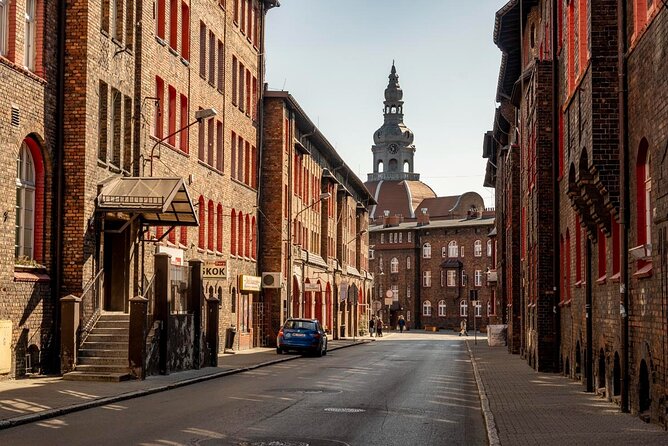
- Urban planning that makes sense on the ground, including how Nikiszowiec is divided into quarters and why that matters.
- Silesian history told through places, with World War I and the Silesian Uprisings worked into the walk.
- Interwar and wartime shifts in Silesia, tied to the interwar Autonomous Region of Silesia, plus World War II and communism changes.
- Industrial Katowice at Pułaski Shaft Complex, including a look at the historic railway used to move people and materials.
- Art that feels local, from the Janów Group murals to museum interiors showing daily and festive life.
- A museum stop with included admission, so you get more than just street views.
Why this Nikiszowiec tour feels different from the big Polish cities
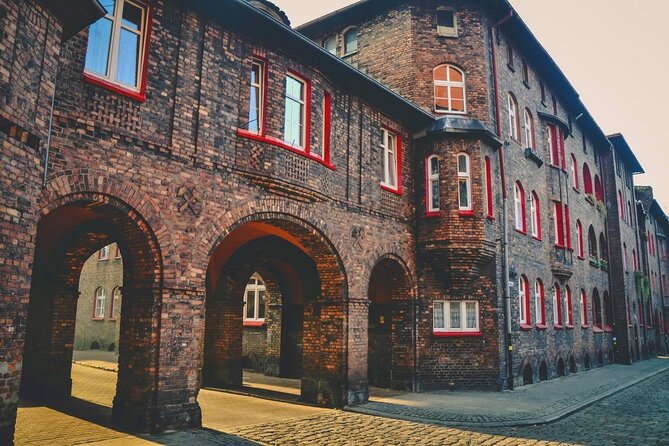
Nikiszowiec is the kind of place that makes you question first impressions. In a country where many visitors shape their plans around Krakow or Warsaw, this district is a sharp contrast, with its mining roots and working-class design language still visible in the streetscape.
What makes the experience click is the way the walk is structured around human scale. You are not staring at a single monument for hours. Instead, you keep moving between “why this exists” and “what it looked like for residents,” from portals and quarters to gardens tucked inside the residential fabric. That mix turns a district into a living map.
And then the tour pivots to art and memory. You see how local creators interpret Silesia, including legends and even surreal takes on the region’s identity. That balance is part of the value, because you leave with both context and images you can remember long after the walk ends.
You can also read our reviews of more private tours in Krakow


Starting at Kościół pw. św. Anny, then getting your bearings
The tour begins at Kościół pw. św. Anny w Katowicach, right by plac Wyzwolenia 21. It’s a short intro stop, just a few minutes, but it sets the tone. Churches like this often act as visual anchors in Central European neighborhoods, so it helps to start with something that feels rooted and familiar before the mining district storytelling starts.
Even in a brief visit, you get oriented. The guide uses the immediate area to frame what you are about to see, so you are not walking into Nikiszowiec as a blank slate.
Zillmann Square: architects first, district second
Next comes skwer Emila i Georga Zillmannów, the Square of Zillmanns. This is where you start learning the logic behind the district, not just the look of it.
You will hear about the general idea, purpose, and architectural plan of Nikiszowiec and the nearby areas. In practice, that changes how you read everything that follows. After this, the quarters and building divisions stop feeling random. They feel intentional.
If you tend to ignore the “why” of architecture and only notice the “what,” this stop is your quick correction. It makes the later stops easier to follow.
Walking Nikiszowiec’s Liberation Square portals and quarters
As you pass through Nikiszowiec near Liberation Square, the focus becomes the district layout itself. This is one of the core strengths of the tour: you do not just observe from the sidewalk. You learn how the space is organized, including the division into quarters and what each area is meant to do.
The guide also frames how people moved through the district day to day. That matters because Nikiszowiec is not only about exterior design. It is also about how residents used shared entrances, common spaces, and the rhythm of neighborhood life.
One practical note: because you are learning the plan while walking, keep an eye out for where the guide wants you to look. If you drift ahead or stop to take photos without checking back in, you can miss the point that ties the street view to the explanation.
Historic Mining District: World War I and the Silesian Uprisings in context
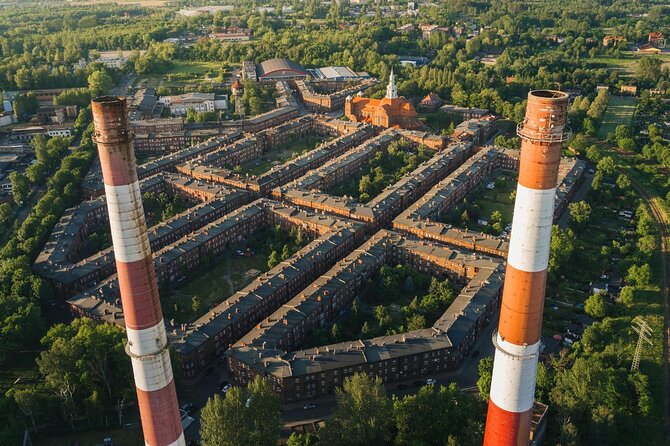
The middle of the walk slows down in a good way at the Nikiszowiec Historic Mining District. This is where you shift from “how it was designed” to “how it lived through major shocks.”
You are led through the residential parts, with explanation of daily life in earlier times and how things look today. The mention of interior gardens and multiple quarters is key. Those spaces help you understand how a working neighborhood created small pockets of relief and community.
This is also where the guide brings in major events, including World War I and the Silesian Uprisings. The value here is that the history is not floating in time. It is connected back to places you can see, like the residential zones and how they relate to the district’s industrial purpose.
If you love history but hate long lectures, this works because it is tied to what is right in front of you.

The Silesian embassy stop: interwar autonomy, WWII, and communism changes
Then you pass by Łukasz Kohut – Ślōnsko Ambasada, often described as the Silesian Embassy. This part of the tour helps you make sense of the interwar period and Silesian identity.
You will learn about the Autonomous Region of Silesia, and how the situation in World War II and later changes brought by communism affected Nikiszowiec. Even though you are only passing by, the explanation gives you a map in your head for why the district’s story changes across political eras.
This stop is especially useful if you have seen other parts of Poland but never spent time in Silesia. The region’s identity is shaped by shifting borders and governance, and that shows up in the built environment you are walking through.
Pułaski Shaft Complex: coal mining work made visible
One of the most memorable industrial stops is Pułaski Shaft Complex. This is the former coal mine area where Nikiszowiec residents worked.
The tour ties the district to its industrial engine, including a look at the historic railway that used to transport industrial materials and people between industrial estates of Silesia. That detail is a big deal for understanding the district. It explains why these neighborhoods looked the way they did, and why “work” was not a separate world.
If you are the type who enjoys industrial photography or you like to see how labor shaped daily movement, this is the moment where the tour delivers most.
Because this is an active-feeling industrial zone, dress for uneven ground and plan to slow down for foot traffic. Even if the stop is not long, you will want a steady pace.
Art stop strategy: watercolors, murals, and a surreal museum moment
After the mine, the tour turns to contemporary and local art interpretations.
At Grzegorz Chudy – Atelier z akwarelami, you see paintings of Nikiszowiec, Katowice, and the Silesia region. The guide also connects the art to Silesian legends and mythical creatures, which is a great way to understand how folklore becomes modern imagery.
Next, you pass Szkoła Podstawowa im. S. Żeromskiego 53, a quick exterior stop. It’s only a couple minutes, but it reinforces that this district was built for everyday life, not only for work.
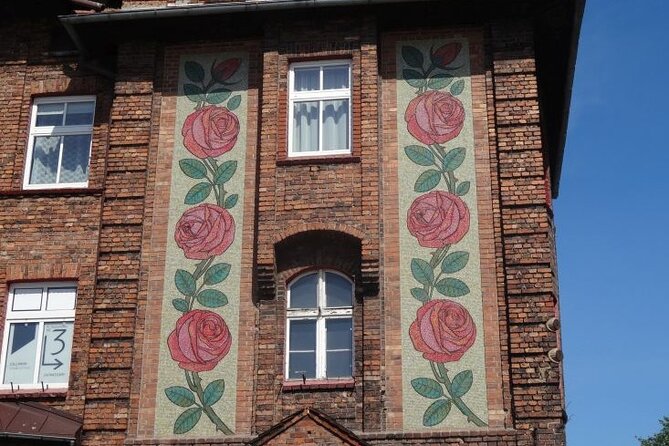
Then comes Skwer Artystów Grupy Janowskiej, the Square of Janów District Artists. Here you get colourful murals, described as reproductions of artworks by top artists from Nikiszowiec. This is where the tour starts feeling like a visual guidebook.
Finally, you reach the Museum of Katowice History, City Ethnology Department. Admission is included, and the stop is about half an hour. You will see interiors of typical flats in Nikiszowiec and artwork tied to daily and festive life. There is also a surrealistic artwork described as Silesian Slavador Dali, which helps the district story feel playful without losing its grounding.
If you like tours that give you both facts and images, this art run is the payoff. It turns information into something your eyes can remember.
The guide experience matters, and names like Malwina show why
A major reason this tour scores so high is the delivery. The guide style is often described as clear, cheerful, and well paced, with strong knowledge and a presentation that makes the history feel usable, not heavy.
One guide name that stands out in the tour feedback is Ms. Malwina. Her guidance is noted for making the tour enjoyable and for creating synergy between what you see and what you learn. That is exactly what you want on a place like Nikiszowiec, where the details could otherwise blur together.
For you, the practical takeaway is simple: pay attention at the moments when the guide tells you what to notice. This tour works best when you treat it like a guided reading session, not just a photo walk.
How long is enough time, and how the pacing works
The full experience runs about 2 hours 45 minutes. Most stops are short passes, often around a few to a few dozen minutes each. That structure keeps the tour from dragging, but it also means you need to stay mentally switched on.
There is enough time to understand:
- the district plan and quarters,
- the industrial context around coal work,
- the historical shifts from World War I to later upheavals,
- and the art interpretations that put a human face on it.
If you prefer long museum time and minimal walking, you might find it brisk. If you like a route that gives you variety without fatigue, this duration is a strong match.
Getting there and moving around without hassle
The meeting point is Kościół pw. św. Anny w Katowicach, plac Wyzwolenia 21, 40-423 Katowice, Poland, and it ends back at the start.
The route is marked as near public transportation, so you should have workable options for arriving and leaving. Service animals are allowed, and the tour is described as suitable for most travelers.
Because so much of the value comes from seeing the district up close, plan on walking between spots and keeping a comfortable pace. If you bring comfortable shoes, you will enjoy the details more.
Price and value: what $93.45 gets you in real terms
At $93.45 per person for roughly 2 hours 45 minutes, the key value isn’t just the guide. It is the mix of included and free elements.
For most stops, admission tickets are listed as free. The one notable paid component is the Museum of Katowice History admission, which is included in the tour.
So your money goes into:
- a private, English-speaking explanation,
- multiple stops connected into one coherent district story,
- and an actual museum interior time block rather than only exterior views.
Also, the tour offers group discounts, which can make it even smarter if you are traveling with friends or family.
If you are deciding between a self-walk and a guided route, this is the kind of place where guidance helps. The district’s organization and history need a translator, not only a map.
Who should book this Nikiszowiec tour
This is a strong choice if you want:
- a focused introduction to Silesian culture beyond Poland’s biggest tourist circuits,
- industrial history explained through real places,
- and art that connects to local identity.
It also looks family-friendly in spirit, since the stops are short and varied, and the district features like gardens and school exteriors give kids and adults visual breaks.
If you dislike walking, hate outdoor dependence, or only want one major site, you might prefer a slower, single-location museum day. But for most people, this is a well-balanced way to see Nikiszowiec without getting lost in information overload.
Should you book this Nikiszowiec Industrial District Private Tour?
I think this is worth booking if you like districts with a story, not just a postcard view. The biggest strengths are the combination of industrial context, history tied to place, and art that keeps the experience human. The included museum stop is also a practical win.
Book it if you are comfortable walking for a few hours and you can align with a day that has decent weather. Pass if you want a totally indoor schedule or you are looking for one famous landmark rather than a guided route through an entire neighborhood.
If you do book, show up early enough to settle in. Then follow the guide’s cues. This tour rewards attention, and it pays you back with a Nikiszowiec you can actually picture.
FAQ
How long is the Nikiszowiec Industrial District Private Tour?
It lasts about 2 hours 45 minutes.
Is the tour offered in English?
Yes, it is offered in English.
Is this a private tour?
Yes. It is a private tour/activity, so only your group participates.
Is the museum admission included?
Yes. Admission to the Museum of Katowice History, City Ethnology Department is included.
Do I need good weather?
Yes. The experience requires good weather, and if it is canceled due to poor weather, you will be offered a different date or a full refund.
When will I receive confirmation after booking?
Confirmation is received within 48 hours of booking, subject to availability.
What is the cancellation policy if I need to change plans?
You can cancel for a full refund if you cancel at least 24 hours before the experience starts. If you cancel less than 24 hours before, the amount you paid is not refunded.
More Private Tours in Krakow

More Tours in Krakow

More Tour Reviews in Krakow
Not for you? Here's more nearby things to do in Krakow we have reviewed









More Krakow Private Tours to consider.
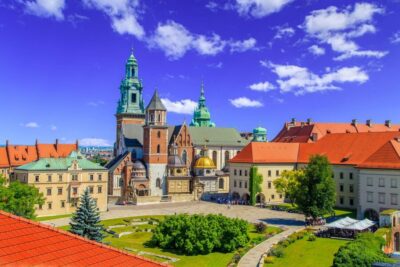 ★ 4.7Skip-the-Line Wawel Castle Chambers Private TourFrom $154262 reviews
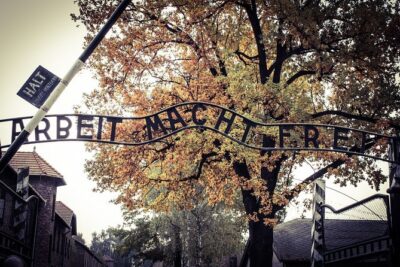 ★ 5.0Auschwitz Private TourFrom $387124 reviews
 ★ 4.9Old Town Highlights Private Walking TourFrom $12679 reviews
 ★ 4.5Auschwitz Birkenau: Complete Private TourFrom $11551 reviews
 ★ 5.0Krakow Private Walking TourFrom $17944 reviews
 ★ 4.7Skip-the-line Oskar Schindler’s Museum Private TourFrom $12534 reviews
 ★ 5.0Krakow Jewish District Private Tour. Kazimierz and Jewish GhettoFrom $9634 reviews
 ★ 4.5Zakopane & Tatra Mountains Private Full-Day Tour from KrakowFrom $16933 reviews
Other ways to explore Krakow