
Review · AUSCHWITZ-BIRKENAU MEMORIAL TOURS
Auschwitz Birkenau Transfer and Guide with Salt Mine Combo Option
Two UNESCO sites, one long day.
You visit Auschwitz-Birkenau and, if you choose the combo, Wieliczka Salt Mine, with a live guide plus shared transport from Krakow.
I love how smoothly the day is run, with air-conditioned shared transfers and a tight schedule that keeps you moving without guesswork. I also like that you get interpretation with a live, in-person guide, and headsets for Auschwitz I in particular help you catch every key point.
My only concern is physical effort. Between the walking at Auschwitz and the mine’s 800 steps total (including about 350 down right at the start), this is best for people with moderate fitness and comfy shoes.
Key highlights worth planning around
- 7:00 am start from plac Jana Matejko 2 keeps you ahead of the crowds for Auschwitz.
- Live, in-person guidance for the camp visits, with headsets during Auschwitz I.
- Built-in breaks including a 20-minute reset at Auschwitz I and up to 20 minutes after Birkenau.
- Matejko Square lunch window (about 1 hour) if you pick the Salt Mine combo.
- Wieliczka underground route includes hundreds of steps down, then an elevator ride back up at the end.
- Strong driver communication is a recurring theme, including names like Kamil, Piotr, Oskar, Victor, Jacob, and Matthew.
Why this Auschwitz and Salt Mine combo actually works in one day
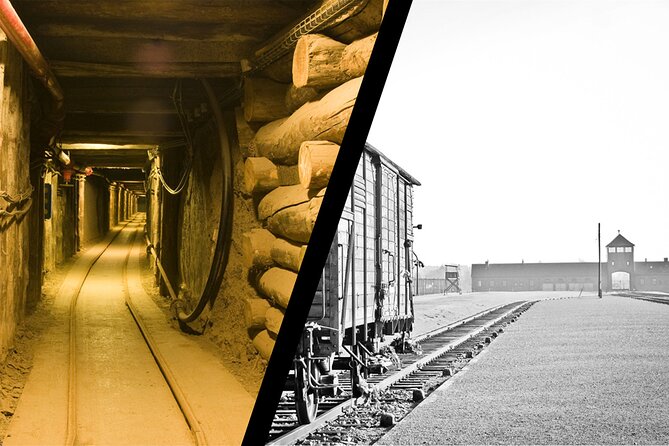
If you do only one “big” day trip from Krakow, this is the kind that gives you two UNESCO World Heritage stops in a single schedule. Auschwitz-Birkenau is heavy, historical, and unforgettable for all the right reasons, while Wieliczka Salt Mine offers a totally different tempo: underground craftsmanship, sculptures carved into salt, and a route that turns exercise into something you can physically measure.
What makes the combo feel workable is the structure. You start early, you have defined viewing blocks at Auschwitz I and Auschwitz II-Birkenau, and then you shift gears with lunch before heading to Wieliczka. It is not random, and it is not an “all day chaos” situation.
Just keep your expectations honest. Auschwitz is not entertainment. Even with a good guide and good organization, you will spend time absorbing details that are emotionally difficult. If you want a calm, leisure-style day, this is not that. If you want a meaningful, well-guided day that stays organized from the first transfer onward, this fits.
You can also read our reviews of more guided tours in Krakow
Getting to the start point without stress: transfers, timing, and group size
The tour meets at plac Jana Matejko 2 and starts at 7:00 am, with the day ending back at the same meeting point. There is no hotel pick-up, so you either come from your accommodation by public transport or you plan a short ride to that central spot.
The group size max is 30, which matters. Big groups can feel rushed, and small groups can feel lost. This size tends to land in the sweet spot for hearing a guide and moving as a unit.
You also get an air-conditioned vehicle, and the transfers are described as shared two-way. In practice, that usually means you are not paying for a private car for the whole day, but you are still riding in comfort for the long road loop between Krakow, Oswiecim, and Wieliczka. Many people mention drivers staying in touch, including WhatsApp-style updates and clear timing, with names like Kamil and Piotr popping up in the kind of praise you want to see when you worry about “Did we miss the meeting point?”
One small practical note: food and drinks are not included. Your schedule does include breaks, including lunch if you do the Salt Mine combo, so plan to buy something during the stops, or bring a snack of your own if that works for your day.
Auschwitz I: how the guided blocks and headsets shape what you notice
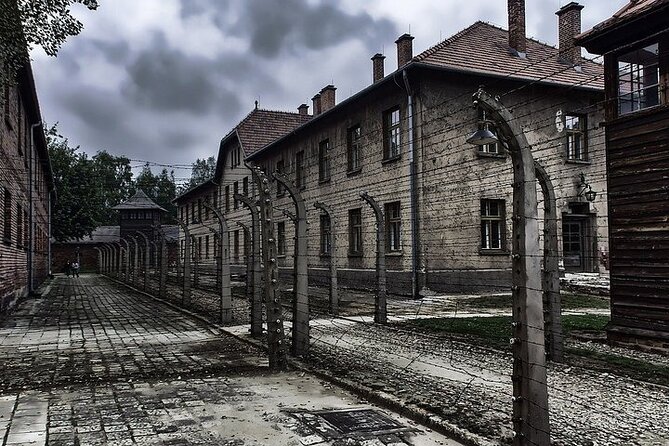
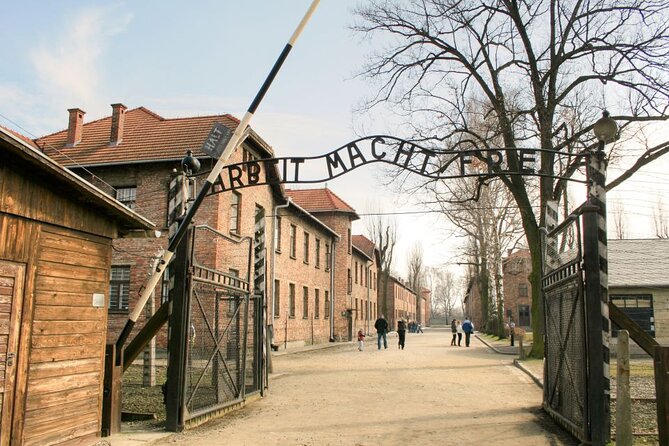
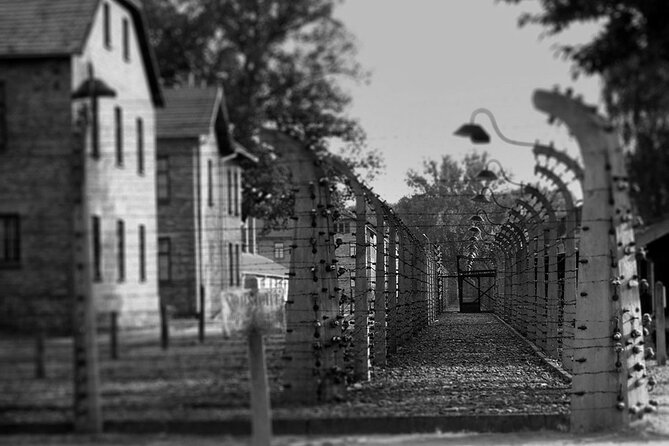
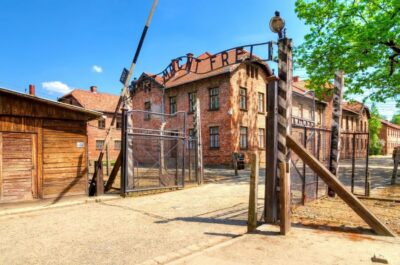
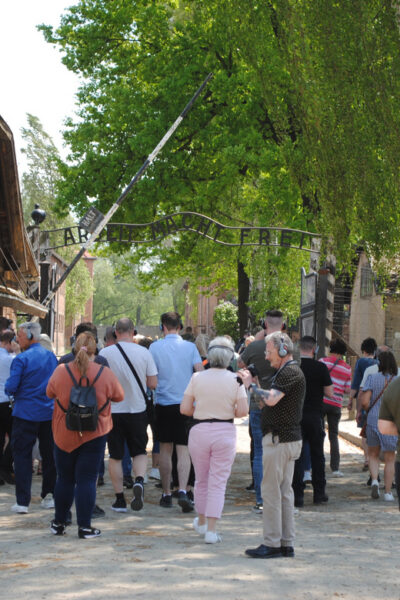
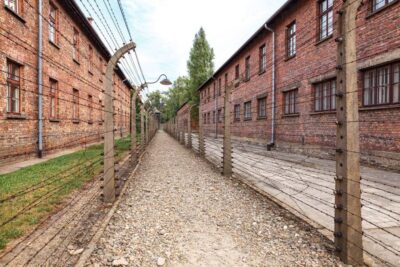
Auschwitz-Birkenau is presented here in two parts, and Auschwitz I is the anchor. You start at the Memorial and Museum Auschwitz-Birkenau with a 20-minute break first, then you move into the permanent exhibition housed in the former prisoner blocks of Auschwitz I, often called the mother camp.
This block is where the facts and locations help you understand the system. You are not just walking through empty spaces. With a live guide, the information gets connected to what you are standing in front of. That matters because Auschwitz can overwhelm you if you try to make sense of it on your own.
Here is one detail I appreciate from the format: headsets are included for part I of Auschwitz. If you have ever visited a museum where you struggle to hear commentary in a crowd, you know why this helps. It supports the core goal of the visit, which is to follow the guide’s explanation while you look at the exhibits.
The permanent exhibition visit is about 2 hours, which is a reasonable amount of time for Auschwitz I. You will likely need it, not because it is long, but because absorbing what you are seeing takes mental processing. If you are the type who wants to read everything slowly, you may feel the time pressure. If you want a guided narrative so you do not miss the major points, this length is a good fit.
Auschwitz II-Birkenau: seeing scale, not just symbols
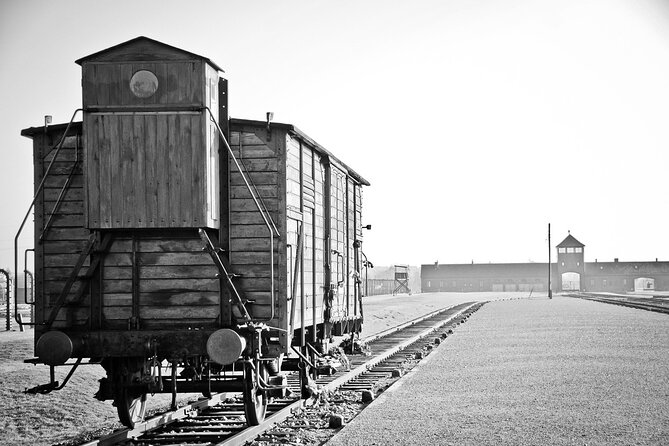
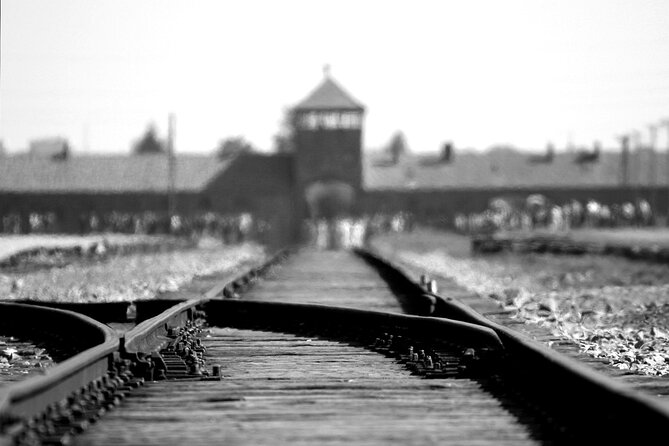
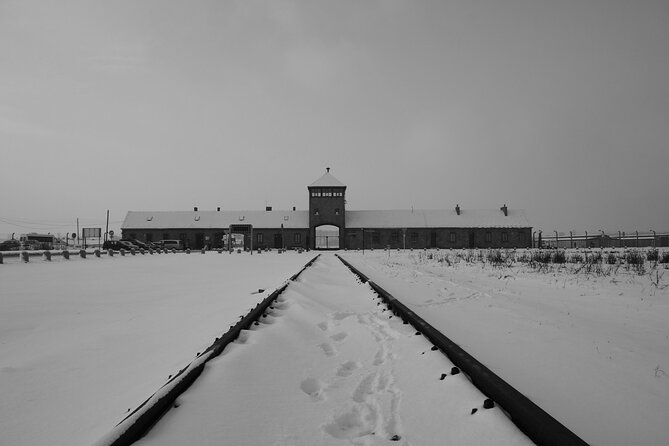
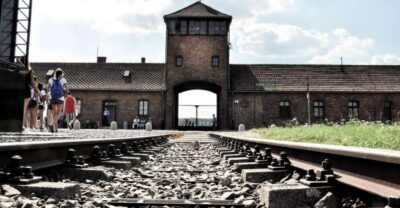
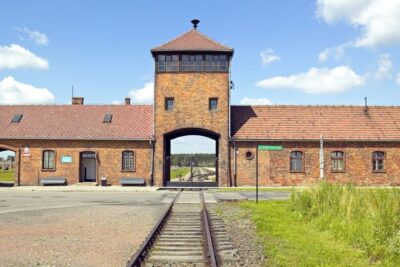
After your Auschwitz I portion, you move to Auschwitz II-Birkenau, the former extermination camp and the largest prisoner camp built by the Nazi regime in Europe. The tour includes up to 1 hour 30 minutes here, with a short break of up to 20 minutes after the visit.
This is where the trip becomes physically and emotionally different. Auschwitz I is about the museum blocks and documentation. Birkenau is about vast scale. The distances between structures and the openness of the site make it harder to ignore just how enormous the system was. The tour’s focus on the historical role of the area helps you connect the place to the wider story, especially with the context that the camp complex built by the Nazis in 1940 in the suburbs of Oswiecim led to an estimated over 1.1 million deaths, most of them Jewish, across 28 nationalities.
If you have sensory issues or you get overwhelmed in large open spaces, Birkenau can feel like a lot. The upside is that a guide helps you keep your bearings. You are not wandering while trying to decode what to look at. You get signposts for what is important, why it matters, and how each location fits into the larger picture.
Also, this stop is shorter than Auschwitz I. That can feel like a fair trade. Birkenau is expansive, and a longer visit might risk turning into “walk and hope.” The provided structure keeps the emotional and informational experience focused.
Matejko Square lunch reset: changing gears without losing time
If you choose the combination option with Wieliczka, you get an on-the-day lunch window at Matejko Square. Expect about 1 hour for lunch and a buffer before you depart for the second part of the day.
Even if you are emotionally stretched from Auschwitz, this break matters. It gives your body a reset and gives your mind a chance to come down from the intensity of camp touring. It also handles logistics. Many day trips fall apart during the handoff between major stops. Here, the schedule routes you through a defined meeting area again, so you do not end up hunting for your group.
Your day ends back at the meeting point either way. That is nice because you do not have to re-orient yourself later. When you are done, you are already close to where you started in Krakow.
More Krakow tours, salt mines, mountain days, and city experiences to compare


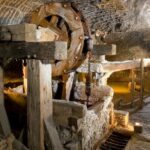


Wieliczka Salt Mine: the underground route, steps, and that elevator ride up
The Salt Mine portion is about 3 hours and is only included in the combo tour option. Wieliczka is about 20 km from Krakow Old Town, and it is one of those places where the underground feels like a living exhibit rather than just a tunnel with walls.
You go in with a guide, then you travel underground following the planned route. The key physical detail: the route involves hundreds of steps. You climb 800 steps total, with about 350 steps down at the beginning. There is a lift or elevator that takes you back up at the end, which is a huge relief when your legs are already tired.
What you are seeing is not just “ancient mining.” The miners left dozens of sculptures and bas-reliefs cut into the salt, and that is what keeps the mine feeling like human work, not just geology. The mine draws over one million visitors yearly, which tells you it is built for regular visits and route management, even though it still feels special once you are underground.
Practical advice: plan for a cooler, enclosed feel. Underground spaces tend to change how your body experiences cold and humidity. You will likely be fine, but pack for comfort. And because food and drinks are not included on this tour, eat during the Matejko Square window if you can, then bring water if that is your style.
Also, if you are sensitive to confined spaces or you hate stairs, this is the part that may test you. The tour specifically says moderate physical fitness is recommended, and the step count in the mine is the clearest reason why.
Price and value: what you get for about $80
At $80.24 per person, the value comes from bundling three expensive pieces into one coordinated day: guided Auschwitz admission, guided Birkenau admission, and (if you choose the combo) Wieliczka Salt Mine admission. Transport is also included via a shared air-conditioned vehicle, plus the headsets for part I of Auschwitz.
This is the kind of price that tends to make sense when you want to avoid the “patchwork day” problem. Buying sites separately plus arranging your own transport can quickly turn into extra time and extra stress. Here, you are paying for organization and interpretation, and the reviews you will see tend to emphasize drivers who stay on schedule and communicate clearly, including Kamil, Piotr, Oskar, Victor, Jacob, and Matthew.
The biggest thing to watch is that food is not included, and the day is long. That is not a dealbreaker, but it means you should budget for at least one paid meal and some snacks.
The day feels long because it has a purpose, not because it drags
Duration is listed as 8 to 12 hours depending on the option and timing. That’s not a short nap-and-sightseeing day. It is a full itinerary.
But when it works, it feels like momentum. People consistently mention that drivers handled road issues or managed timing smoothly, and that your group is kept moving from one stop to the next. That is the practical side of respect for your time. Auschwitz and Birkenau demand attention, and a well-run schedule helps you use that attention instead of losing energy to confusion.
Here is who I think this fits best:
- You want clear guidance at Auschwitz, not just a self-guided walk through exhibits.
- You want the Salt Mine contrast without doing another separate day trip.
- You are comfortable with stairs, since the mine route is step-heavy, even if there is an elevator at the end.
And here is who may struggle:
- If you are worried about stamina, the mine’s step count is the main reason to think twice.
- If you get overwhelmed in emotionally intense settings, you should plan quiet recovery after.
Should you book this Auschwitz-Birkenau and Salt Mine combo?
I would book it if you want a structured day that hits both Auschwitz-Birkenau and Wieliczka Salt Mine with live guidance and included admissions. The best part is not the checklist. It is the way the day is organized so you can focus on what matters at Auschwitz, then switch to the salt mine without losing your bearings.
Skip it, or at least reconsider, if stairs and long days are hard for you. The mine involves a lot of steps early on, even with a lift back up at the end.
If you do decide to go, wear comfortable shoes, plan to eat during the included breaks, and treat the Auschwitz time as the main event. The schedule is built to support that, not to rush it.
FAQ
What time does the tour start in Krakow?
It starts at 7:00 am at plac Jana Matejko 2, 31-157 Kraków.
Where does the tour end?
The tour ends back at the same meeting point.
Is hotel pick-up included?
No. Hotel pick-up is not included. You’ll meet at the meeting point near public transportation.
How long is the tour?
The duration is listed as 8 to 12 hours (approx.).
Do I get a guide during Auschwitz and Birkenau?
Yes, you get a live in-person guide for the Auschwitz-Birkenau visit.
Are headsets included?
Headsets are included for part I of Auschwitz.
Which Auschwitz sites are visited?
You visit Auschwitz I (permanent exhibition in the former prisoner blocks) and Auschwitz II-Birkenau (the extermination camp and largest prisoner camp).
Is the Wieliczka Salt Mine included on every option?
No. Wieliczka Salt Mine is included only in the combo tour option.
How many steps are involved in the Salt Mine?
The mine route includes 800 steps total, with 350 steps down at the beginning, and a lift/elevator at the end.
What is the cancellation policy?
This experience is non-refundable and cannot be changed for any reason. If you cancel or request an amendment, the amount paid is not refunded.
More Private Drivers in Krakow
More Guided Tours in Krakow

More Tour Reviews in Krakow

Not for you? Here's more nearby things to do in Krakow we have reviewed








More Auschwitz-Birkenau Memorial Tours to consider.
 ★ 4.5From Krakow: Auschwitz-Birkenau Guided Tour & Hotel PickupFrom $2133,358 reviews
★ 4.5From Krakow: Auschwitz-Birkenau Guided Tour & Hotel PickupFrom $2129,340 reviews
 ★ 4.5Auschwitz Guided Tour with Optional Hotel PickupFrom $6915,280 reviews
 ★ 4.5Auschwitz-Birkenau Guided Tour with Pickup & LunchFrom $219,800 reviews
 ★ 4.5Auschwitz-Birkenau Guided Tour Pickup/Lunch OptionsFrom $2009,057 reviews
 ★ 4.7Auschwitz-Birkenau and Salt Mine Guided TourFrom $549,020 reviews
 ★ 5.0Krakow to Auschwitz Birkenau Guided Tour with Transfer and TicketFrom $368,197 reviews
 ★ 4.0From Krakow: Auschwitz Birkenau Tour with TransferFrom $216,134 reviews
Other ways to explore Krakow