
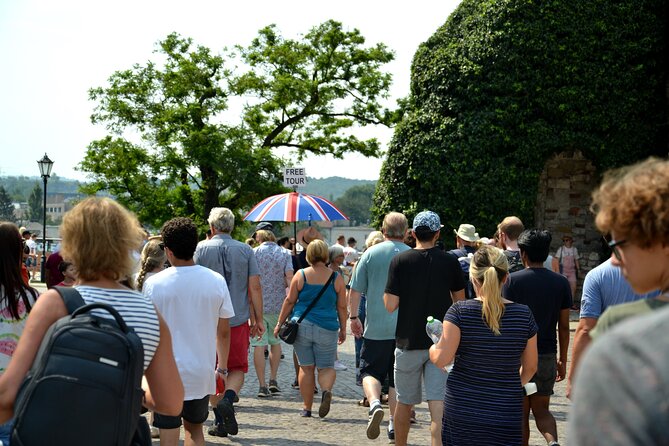
Review · OLD TOWN & MAIN SQUARE TOURS
Krakow’s Essential Tour of the Old Town and Wawel Castle
Krakow’s stories ring from church towers. This 2.5-hour guided walk is a fast way to get your bearings in the Old Town, then end at Wawel Castle, with a licensed guide who links each landmark to how Krakow lived, fought, and survived. What I like most is how the tour pairs famous spots like St. Mary’s Basilica and Krakow’s central square with the small, human details that make the city feel lived-in, not staged.
One consideration: most museum entries are not included, so you should expect to pay separate ticket fees for several stops.
Key Highlights You Will Actually Feel
- Hourly trumpeter at St. Mary’s Basilica: learn the why, not just the what
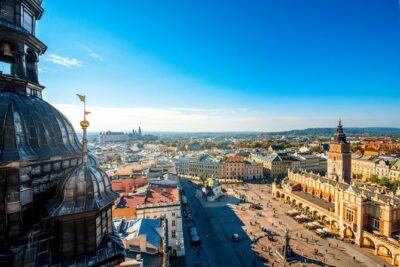
- Rynek Główny Central Square: see Europe’s biggest medieval square and understand what you’re looking at
- Old Town gateway moment: pass the 500-year-old entrance into medieval Krakow
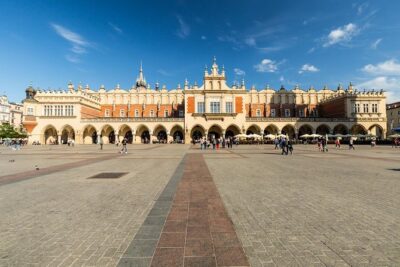
- Cloth Hall under-the-surface stories: Sukiennice is more than a pretty facade
- WWII threading through Krakow: stories connected to Collegium Novum and beyond
- Bishop’s Palace window history: a famous window tied to Poland’s modern struggle
Why This 2.5-Hour Old Town and Wawel Walk Works
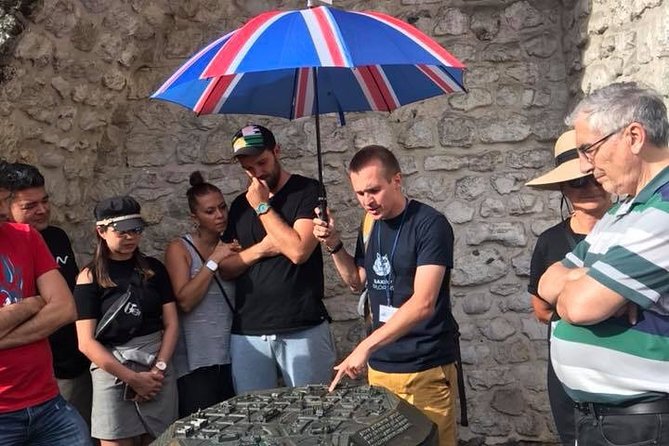
Krakow is the kind of city where you can wander for hours and still feel like you missed the plot. This tour is built for that exact problem. You get a guided route that hits the big icons plus the connecting stories, so the streets start to make sense fast. It is also a relief to have navigation taken care of. Krakow’s Old Town is compact, but the tiny streets can trick you into walking circles.
You also get a very usable mix of time indoors and outdoors. The stops are short, so you are not dragged through one long lecture. Instead, you keep moving, stopping just long enough to reset your eyes and learn what to notice next. With a maximum group size of 30 and a steady pace, it tends to work well for a wide range of visitors.
And the best part for value-minded travelers: it is donation-based. The listed price is mainly a booking fee, and the tour itself runs on what you feel it was worth. That makes it easier to match price to your budget, as long as you plan to tip at the end.
You can also read our reviews of more tours and experiences in Krakow.
Starting at Rynek Główny: The Best Place to Orient
Your tour starts at Rynek Główny 4, right in the middle of Krakow’s most famous square. This matters because the square is the city’s anchor. When you start here, everything you see later feels connected, not random.
From there, you work outward through the Old Town and then uphill toward Wawel. You end at the Wawel Royal Castle-State Art Collection at Wawel 5, about 10 minutes from Main Market Square. That is a smart finish point because you can keep exploring on your own after the tour, instead of being dropped somewhere awkward.
St. Mary’s Basilica: Unequal Towers and the Hourly Trumpet
St. Mary’s Basilica is one of those places where you think you already know what you will see. Then you learn the details. The tour focuses on why the towers are unequal and what is happening each hour from the highest point of the church. That hourly moment turns the building into a living clock, not just a photo spot.
What you will appreciate most is the way the guide turns architecture into story. Instead of memorizing facts, you learn how and why the city built and used its landmarks. If you are the kind of traveler who wants your sightseeing to have a plot, this stop delivers.
Rynek Główny Central Square: Krakow’s Medieval Center
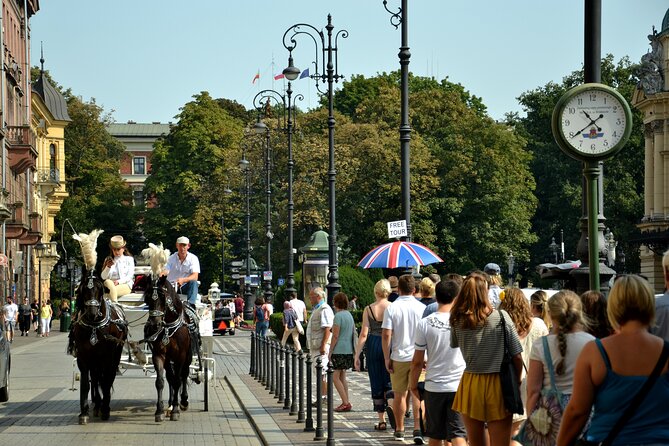
Next comes Krakow’s Rynek Główny Central Square. You will be standing in one of Europe’s biggest medieval public spaces, so you can expect a lot of visual material: merchant life, civic buildings, and the geometry of a square meant for crowds.
The tour time here is about 30 minutes, which is enough to see the main attractions and learn how the square functioned historically. This is also where you start understanding why certain streets and directions matter later when you move around the Old Town.
Slowacki Theatre and the Weirdly Serious Story Behind It
The stop at Slowacki Theatre is short, but it is memorable because the story is not the usual “who designed what” routine. You get the angle about how it was possible the theatre was not built in Poland and why, for the city, it was more important than clean water at the time.
Even if you do not care about theatre, this is a good lesson in priorities. Cities are always choosing what to spend money on. Krakow’s choices, and how those choices looked to residents, give you a stronger grasp of everyday life than another timeline alone.

Barbican and the Museum of Krakow: A Look at Martial Art History
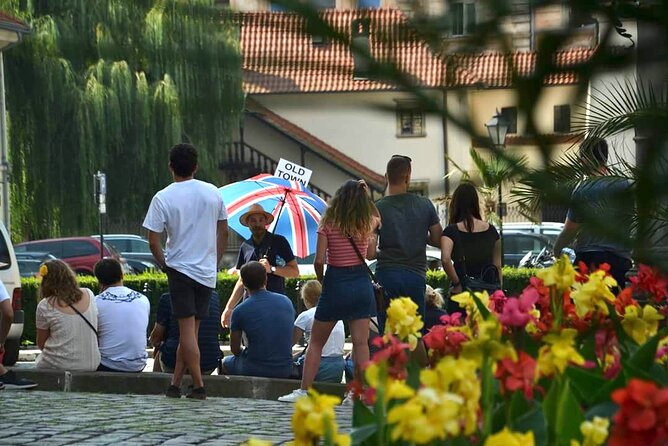
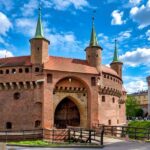
This is a quick stop around the Barbican and the Museum of Krakow area. The key detail you get is about a 15th-century masterpiece connected to martial art. It is a fascinating angle on Krakow because it shifts the focus from only kings and churches to skills, training, and survival.
If you like when history feels physical and real, this stop helps. You get a sense that medieval culture included tactics and weapon craft, not just pageantry.
Sukiennice Cloth Hall: The Medieval Shopping Mall With Secrets
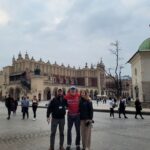
Sukiennice, the Cloth Hall, is one of Krakow’s signature buildings, and it can be easy to treat it like a backdrop for photos. The guide keeps it practical. You will learn the secrets of the medieval shopping mall and specifically what is underneath it.
This is the kind of stop where the building becomes a clue. A marketplace is never just selling. It tells you who had money, what goods mattered, and how the city connected local life to trade. Even in a short visit, you should leave with a better understanding of why Sukiennice is still important.
Town Hall Tower: What’s Left and Why It Matters
Another short stop takes you to the Museum of Krakow Town Hall Tower area. The main draw here is the story of why only part of the Town Hall remains. You also get the angle on what this place was famous for back in time.
This is a good reminder that historic cities are layered. What survives is not always what was most important originally. It is what was spared, rebuilt, or reshaped after real damage. That theme continues later as you move toward Wawel.
Jagiellonian University Stops: Collegium Iuridicum and Collegium Novum
The tour then heads into the orbit of Jagiellonian University, one of Poland’s most prestigious schools and among the oldest in the world. At Collegium Iuridicum, you get the chance to get inside one of the university’s important buildings.
Then you move to Collegium Novum, and the guide shifts the mood toward WWII. You will hear what happened to a professor connected to Krakow at the beginning of the war, and also whether Krakow was destroyed or not. This is where you start seeing WWII not as an abstract global event, but as something that affected names, institutions, and decisions made locally.
If you want one practical way to remember this city’s WWII story, it is the way the tour threads it through the places still standing today. That makes the past feel less distant.
Bishop’s Palace: The Famous Window and Poland Under Communism
At Bishop’s Palace, you get a longer, story-heavy stop. The highlight is the most famous window in the world, plus the dramatic history of Poland during communism.
This stop stands out because it connects art and religion to political reality. You are not just looking at a window, you are learning what it symbolized and why it mattered in that era. It is also a free stop, which is nice because not every included moment is tied to ticket costs.
If you are visiting with family or friends who think history sounds boring, this is the kind of stop where the story does the heavy lifting.
Wawel Cathedral and the Royal Story in Stone
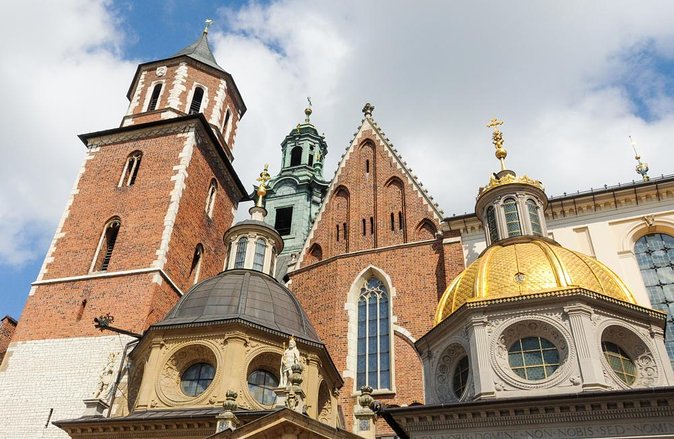
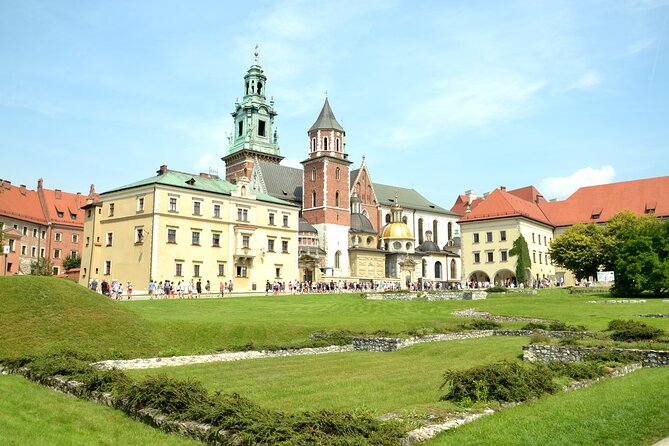
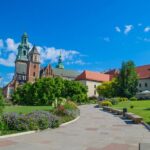
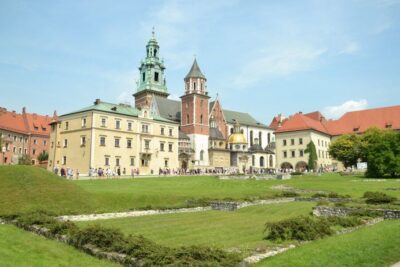
Then you reach Wawel. The tour visits Wawel Cathedral, including time to admire it as Poland’s national pantheon, with coronations and burials of Polish rulers. This is a big identity stop. Krakow’s Old Town stories are one track, and Wawel is another track that explains how power and belief were staged in public life.
After that, you get a second look within the cathedral area. This time the guide focuses on where Polish rulers used to live and why one part of the castle looks different compared to the rest. You should come away with a clearer sense of how Wawel worked as both a residence and a statement.
Even if you do not plan to buy extra interior tickets on your own later, the cathedral time is still one of the main payoffs of the tour. It sets the emotional tone for the rest of Wawel.
Walking, Timing, and How to Not Feel Rushed
This is a walking tour, about 2 hours 30 minutes total. The stops are frequent but not long, so it is designed to keep you moving without feeling like you are sprinting from one thing to the next.
Wear comfortable shoes. You will cover enough distance that you will feel it by the end, especially if you also plan to do extra sightseeing after the tour. The good news: you stop often, so you catch your breath and refocus.
One small practical note from the way schedules sometimes work: try to arrive a few minutes early at Rynek Główny. It is the kind of meeting spot where confusion can happen if your watch and the group timing are out of sync.
Price and Value: A Donation Tour That Makes Sense
On paper, the price can look oddly low. Here is the reality: the tour is based on donations, so the booking fee is not the real cost in the way a standard tour package is. You pay a small amount upfront, and then you decide what to tip based on the guide and the quality of the experience.
That can be excellent value if you care about good interpretation. The guide is the product here, and the itinerary is built for an efficient overview: major landmarks, a stack of stories, and a finish at Wawel so you can keep exploring.
Do budget for museum entries and admission fees at specific stops. Several parts explicitly do not include tickets, so you might pay extra if you want to go deeper once you’re there. Bishop’s Palace is listed as free on the tour, which helps offset some of those extra costs.
What You Get From the Guide (Not Just the Sights)
One thing I’d underline: this tour does not just point and move on. The guide brings the landmarks alive with details like the hourly trumpeter at St. Mary’s Basilica and the tension between public priorities at Slowacki Theatre. You also get more serious threads about WWII and Poland under communism.
The human touch matters too. Guides you may encounter, like Slavik, Bart, Fran, and Chris (Krzysztof), are repeatedly described as engaging, with humor and a steady flow. That kind of pacing helps when you have multiple stops packed into one afternoon.
And because the tour is capped at 30, you should feel like the guide can actually keep track of the group, not just read facts while everyone wanders.
Should You Book Krakow’s Old Town and Wawel Tour?
Book it if:
- You want a clear, efficient first visit to Krakow and want your bearings fast
- You like history told through places, not through textbooks
- You appreciate guides who connect big events like WWII and communism to everyday landmarks
Skip it or think twice if:
- You already plan to focus only on museum interiors and you hate ticket add-ons
- You dislike walking or you want a longer, slower deep dive into just one area
If your goal is to understand Krakow’s story in a single half-day, this is a very smart way to start. The donation-based structure also makes it easier to feel you got fair value, as long as you tip the guide at the end and plan for any extra admissions you want to add.
FAQ
How long is the tour?
The tour is about 2 hours 30 minutes.
Where does the tour start?
It starts at Rynek Główny 4, 33-332 Kraków, Poland.
Where does the tour end?
It ends at Wawel Royal Castle-State Art Collection, Wawel 5, 31-001 Kraków, Poland, about 10 minutes from Main Market Square.
Is the tour private, and what is the group size?
It’s described as a private guided tour, with a maximum of 30 travelers.
What is included in the price?
You get a licensed tour guide and sanitizers.
Are museum or admission tickets included?
No. Museum entrance fees and admission tickets are not included on the tour. Bishop’s Palace is listed as free.
How does payment work since the price is low?
The listed price is the booking fee, and the tour is based on donations, with pay-as-you-want after the tour.
What ticket type do I receive?
You get a mobile ticket.
What is the cancellation policy?
You can cancel for a full refund if you cancel up to 24 hours in advance of the experience start time. If you cancel less than 24 hours before, you do not get a refund.
Is the tour suitable for most people?
Most travelers can participate. It is near public transportation, and service animals are allowed.
More Tours in Krakow
More Tour Reviews in Krakow
Not for you? Here's more nearby things to do in Krakow we have reviewed







More Old Town & Main Square Tours to consider.
 ★ 5.0Old Town Krakow & Wawel Castle Walking TourFrom $261,508 reviews
 ★ 4.9Bike Tour of Old Town, Jewish Quarter and the GhettoFrom $371,155 reviews
 ★ 4.8The Old Town Walking TourFrom $19794 reviews
 ★ 4.7Old Town Guided Segway TourFrom $55756 reviews
 ★ 4.8Old Town & Wawel Castle Walking Tour in EnglishFrom $26532 reviews
 ★ 4.5Krakow Old Town Guided Walking TourFrom $33438 reviews
 ★ 5.0Full Bike Tour – the Old Town, Jewish Qtr & the Ghetto NEW BIKESFrom $35437 reviews
 ★ 5.0Krakow Old Town Segway Tour 2hr with Training, Safety Gear, GuideFrom $57435 reviews
Other ways to explore Krakow