
Review · KAZIMIERZ & JEWISH HERITAGE TOURS
Krakow: Kazimierz, Schindler’s Factory & Ghetto Guided Tour
WWII history hits you fast here. This tour strings together Kazimierz, the wartime ghetto, and Schindler’s Factory into one focused story.
I especially like the licensed local guide who connects street corners to real decisions people faced. I also like the skip-the-line museum entry, so you spend your time with the exhibits and the walk.
The trade-off is pace. You cover a lot on foot, and parts of Schindler’s Factory are in narrow, dim corridors, so plan for walking time and comfortable shoes.
Key points to know before you go
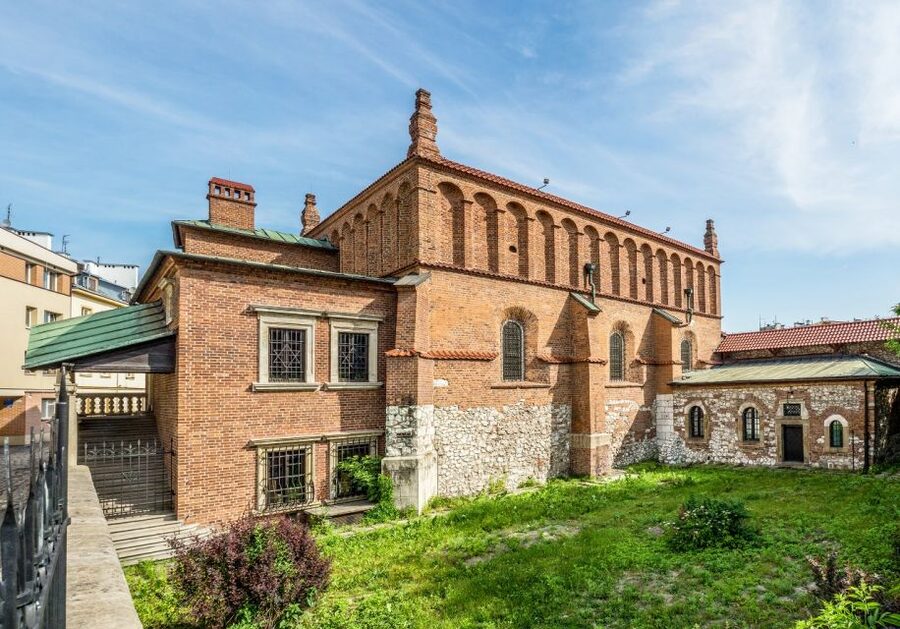
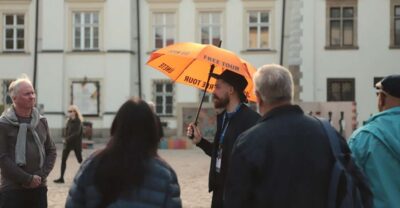
- Meet at the Old Synagogue steps with an excursions.city sign, so you can find the group quickly.
- Kazimierz first, ghetto next, which helps you understand what was lost, not just what happened.
- Schindler’s Factory guided visit with skip-the-line admission to the exhibition.
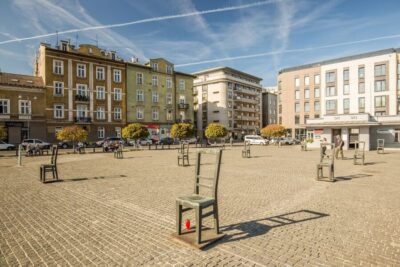
- Ghetto Heroes Square and the Chair Memorial, where each empty chair stands for a life lost.
- Under the Eagle Pharmacy, tied to Tadeusz Pankiewicz and everyday acts of courage.
- One language per group, so double-check your language choice when booking.
Kazimierz streets first: why starting in the Jewish Quarter matters
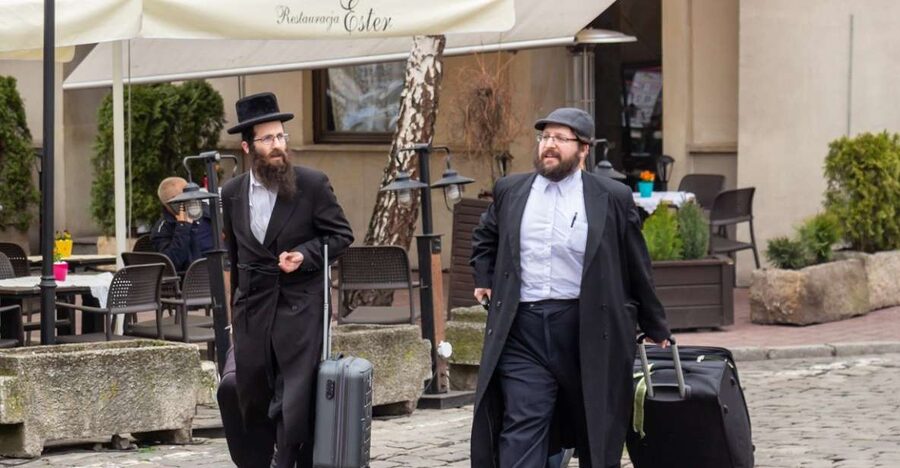
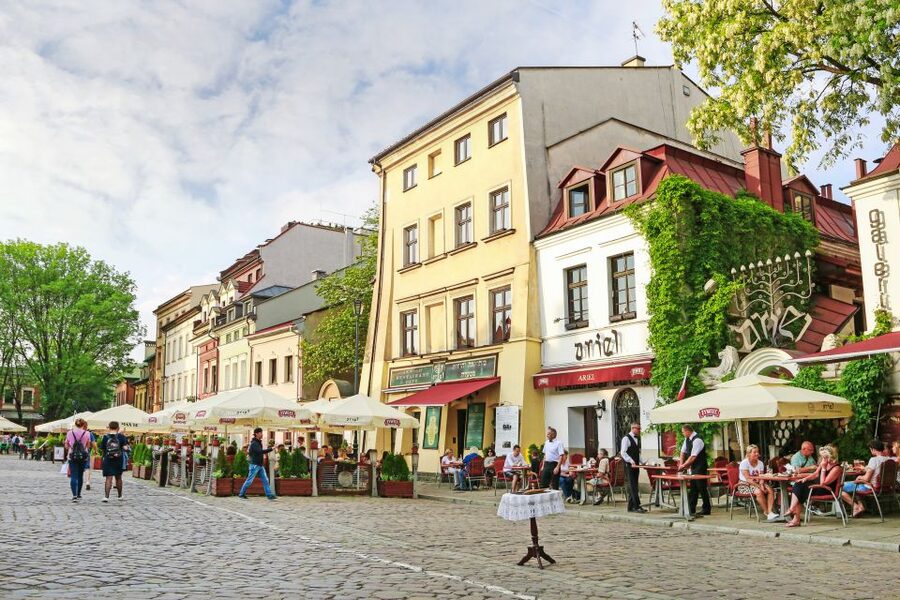
You start in Kazimierz, Krakow’s historic Jewish Quarter, at the steps of the Old Synagogue. Your guide brings the neighborhood to life by moving through narrow cobbled streets lined with older synagogues and prayer houses, plus traditional townhouses that still carry the feel of the district’s older rhythms.
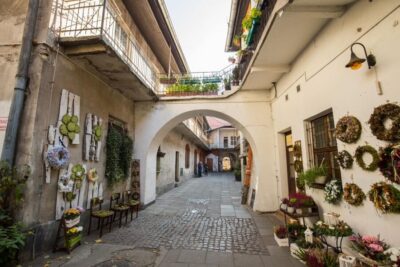
This order is smart. Going to the ghetto without first seeing Kazimierz can feel like you are dropping into tragedy with no context. Here, you get the prewar framing: Jewish faith, learning, community life, and everyday roles of rabbis, merchants, and families. As you walk, you’re guided toward quieter moments too, like hidden courtyards where the pace slows and the stories land better.
If you care about understanding how a place works before it breaks, you’ll enjoy this part a lot. I also like that the guide’s job is not just naming buildings. It is explaining how the community’s daily life shaped the neighborhood long before WWII.
You can also read our reviews of more guided tours in Krakow
The 5-hour rhythm: how the walking day actually feels
This is a half-day tour, listed at 5 hours. That sounds straightforward until you realize it is a walking tour that includes a major museum component. Even if you are used to exploring on foot, build in a little extra stamina.
A recurring theme in the guide praise is practical pacing. Some guides are reported to keep the group comfortable in heat, even stopping for shade when possible. Others are praised for keeping the pace moving without feeling rushed. That matters because the material is heavy, and you need time to absorb without the group feeling stuck.
Two practical notes to keep it pleasant:
- Wear grippy footwear, especially if rain turns the streets slick.
- Food and drinks are not included, so plan ahead if you want snacks and water during a long stretch.
If you are someone who gets restless when tours move quickly, this might still work, but pick a day when you can handle a full walking experience.
Schindler’s Factory Museum: the skip-the-line win
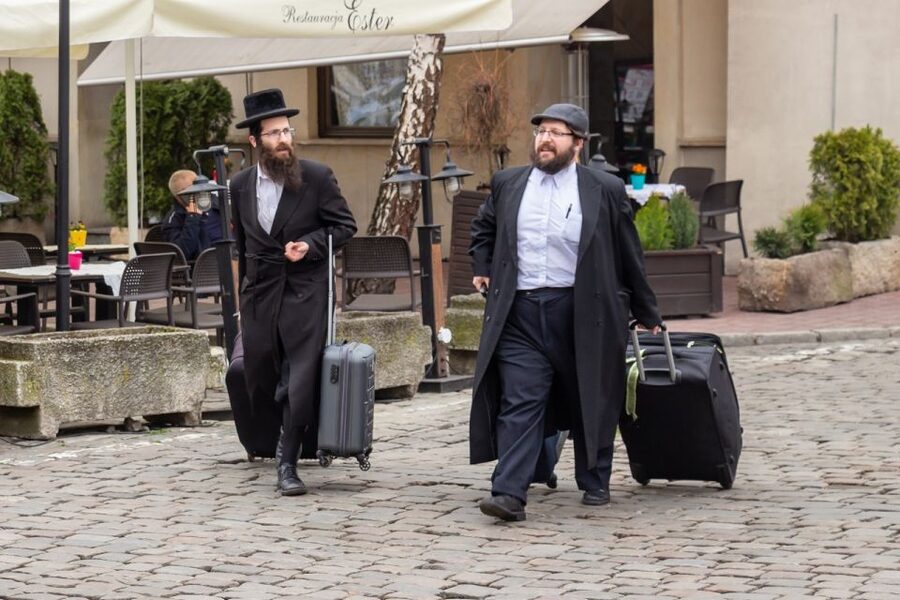
After Kazimierz, the day shifts to Schindler’s Factory Museum, also called Schindler’s Enamel Factory. You get skip-the-line entry, and that is not a small perk in Krakow. It helps you avoid the slow start that can eat the best part of a time-limited tour.
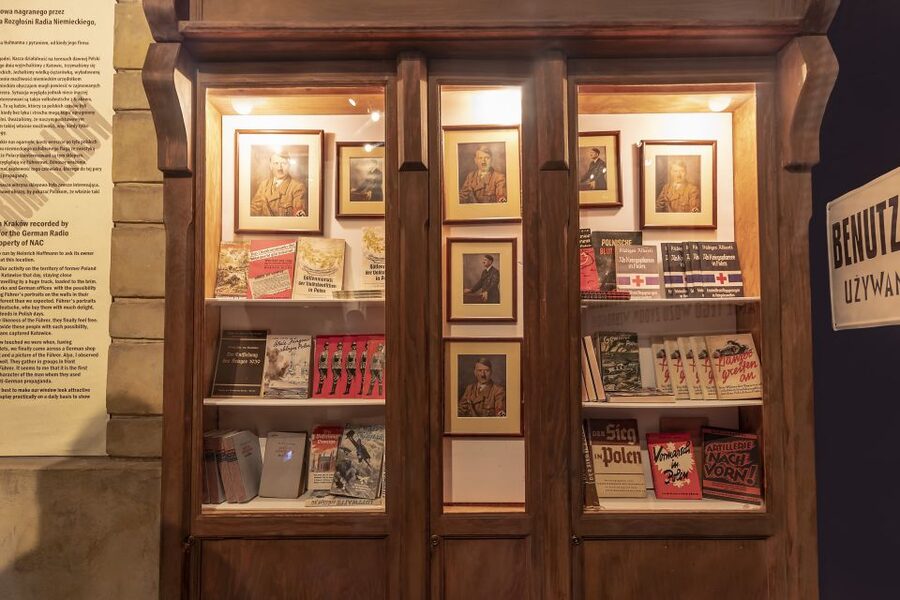
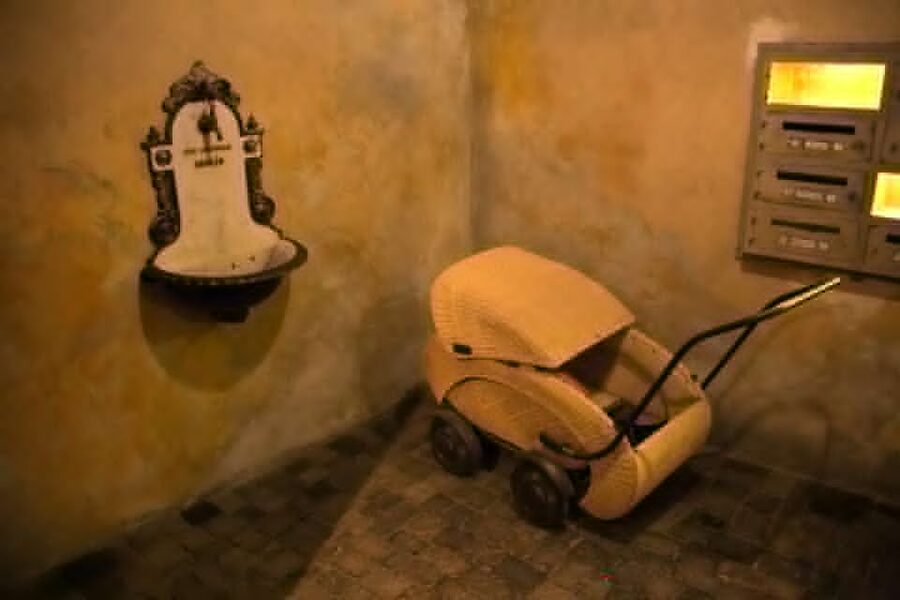
Your visit includes a guided tour inside the museum, led by an expert local guide. One detail worth knowing: the building once housed Schindler’s factory, but today it is a museum without the original machinery. That means you are not seeing a working factory floor. You are seeing a staged presentation of wartime Krakow through rooms built to recreate the atmosphere of occupation, with authentic photographs, artifacts, and soundscapes.
The design uses narrow, dim corridors. That is powerful for mood, but it is also physically tighter than a typical museum. If you dislike enclosed spaces or you get light-sensitive in dark areas, keep that in mind before you go.
Krakow under Nazi Occupation 1939-1945: what you learn inside
The core of the museum visit is the exhibition Kraków under Nazi Occupation 1939-1945. With your guide, you go room to room through an environment that emphasizes fear, chaos, and uncertainty rather than just dates on a timeline.
You also learn the story of Oskar Schindler and how he saved more than a thousand Jewish workers. But the tour stays broader than one man’s biography. You also hear how the city’s residents, both Jewish and non-Jewish, navigated the crushing pressures of occupation.
This is where a live guide pays off. You can read exhibit panels on your own, but a good guide gives you structure, connects locations to decisions, and translates what you are seeing into human meaning. Many of the standout guide reviews specifically praise compassion and the ability to explain the decisions people had to make under impossible conditions, not just the outcomes.
Expect this part of the day to be emotionally intense. It is not a quick history hit. It is designed as a moving encounter with the past.
The Kraków Ghetto walk: seeing what remains and why it matters
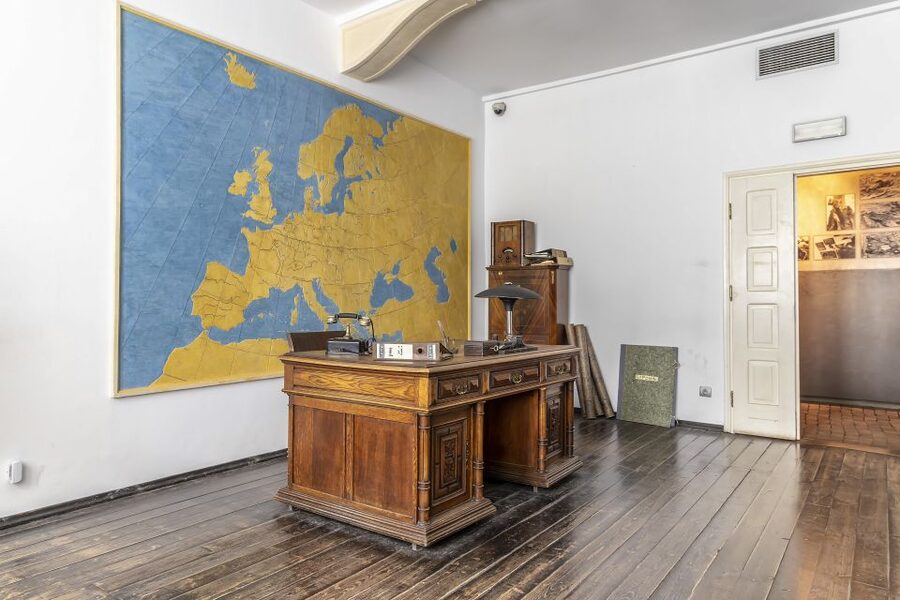
Once you leave the museum, you continue with the tour through Krakow’s ghetto area. You will see remnants of the original ghetto wall, which work as silent proof that the boundaries were real, physical, and close.
As you walk, your guide helps you read the streets differently. It is one thing to know the ghetto existed in theory. It is another to stand where the lines were drawn and understand what those lines did to daily survival.
You also get shown locations tied to mass deportations and commemoration. That prepares you for the most symbolic stop later in the route, because the tour does not treat the ghetto as a single point in time. It tracks the transformation from confinement to catastrophe, then to memory and recognition.
In terms of value, this ghetto portion is why the tour is more than museum tickets. A guided walk turns a set of sites into a connected story you can carry with you after you leave.

Ghetto Heroes Square and the Chair Memorial: symbolism you cannot ignore
At Ghetto Heroes Square, the tour pauses for one of Krakow’s most recognizable memorials, the Chair Memorial. This is a site connected to mass deportations, now marked by a line of chairs. Each empty chair represents a life lost.
I like this stop because it makes the tragedy feel immediate without turning it into spectacle. It also gives you a moment to slow down. Your guide is there to explain the meaning behind the memorial, not just point it out.
If you are taking photos, do it with care. This is remembrance space, not a scenic backdrop. Let the moment land first, then take pictures if you still want them.
Under the Eagle Pharmacy: a smaller place with big courage
The tour ends this WWII thread at the Under the Eagle Pharmacy. Here, you learn about Tadeusz Pankiewicz, a pharmacist who risked his life to provide medicine, shelter, and hope to ghetto residents.
This stop gives the day another angle. The story is not only about confinement and deportations. It is also about people making choices to help others when helping was dangerous.
That is why I think this part sticks with people. It connects history to human behavior, showing courage as action, not just emotion. You leave with a clearer sense of how moral decisions played out in real time.
Guide impact: why names like Helena, Eva, Alice, and Phil keep appearing
In a tour like this, the guide is the product. And the strongest praise across the guides used on this tour points to clarity, care, and the ability to hold attention for a long, heavy day.
Some of the guide names that show up in standout feedback include:
- Helena, praised for deep historian-level knowledge, clear answers, and compassion when discussing difficult material.
- Eva, praised for being thoughtful and kind, with explanations that added more than people could gather on their own.
- Alice, praised for explaining how decisions were made under devastating conditions.
- Phil, praised for practical pacing, including stopping for shade on hot days, and for highlighting Polish heroes alongside well-known figures.
- Other praised guides include Magdalena, Christopher, Dominika, Joanna, Barbara, and Felipe, with repeated mentions of strong pacing and strong Q and A.
One practical bonus is how some guides help after the tour ends. There are reports of a guide arranging a taxi when weather made getting a ride difficult. That is not guaranteed, but it hints at the overall professionalism you can expect.
If you want the day to feel less like a list of stops and more like a story you understand, choose a day and language where you feel comfortable with the group format. This tour runs in one selected language per group, and you should pick the one you will actually use comfortably for questions.
Price and value: is $81 worth a 5-hour history day
At about $81 per person for 5 hours, the price makes sense when you look at what is included.
You get:
- A licensed expert local guide
- Walking tour coverage across Kazimierz and the ghetto area
- Skip-the-line admission to Schindler’s Factory Museum
- A guided tour inside the museum
That combination is the real value. Without a guide, you could absolutely visit these places yourself, but you would likely lose the connecting tissue between them. The guide is the difference between seeing sites and understanding what they mean.
Two things can affect your personal value calculation:
- You must be okay with walking.
- The museum experience includes narrow, dim corridors with staged reenactment design, which can feel intense.
If you are the type who likes history with context and human stories, this is strong value. If you prefer short, light walking or you struggle with emotionally heavy topics, you might want a different format.
Practical matters that help you enjoy it more
A few logistics matter here because the day is scheduled tightly around museum entry.
- Meeting point: steps of the Old Synagogue, guide holding an excursions.city sign.
- Arrival time: plan to arrive about 10 minutes early. Once the group leaves, latecomers cannot join and tickets cannot be refunded.
- Language: tours are in one language, available options include English, French, Spanish, Italian, and German.
- Museum timing: from January 1, 2026, museum scheduling can shift exact times, even if you choose a preferred start time.
Also remember: Schindler’s Factory has personalized entry needs starting January 1, 2026. You will need to provide full names of all participants when reserving and bring a passport or ID for entry to the museum.
Should you book this Krakow Kazimierz, Schindler’s Factory, and Ghetto tour?
Book it if you want one organized day that explains the full arc: what Kazimierz was, what the ghetto became, and how Schindler’s Factory documents occupation-era reality. The guide-led flow is the selling point, and skip-the-line access to Schindler’s Factory is a real time saver.
Skip it, or consider a different style, if you dislike long walking, enclosed dim spaces, or you know you are not ready for emotionally intense WWII content. This tour is not shy about the subject.
If you do book, pack for comfort, arrive on time, and come prepared to listen. The best payoff here is not just what you see. It is what the guide helps you understand.
FAQ
Where does the tour meet?
Meet your guide on the steps of the Old Synagogue. They will hold an excursions.city sign.
How long is the tour?
The tour duration is 5 hours.
Is Schindler’s Factory admission included, and do you skip the ticket line?
Yes. You get skip-the-line admission to Schindler’s Factory Museum, plus a guided visit inside the museum.
Which languages are offered?
The tour is available in French, Spanish, English, Italian, and German.
What should I do about museum entry requirements starting in 2026?
From January 1, 2026, you must provide full names of all participants when reserving and bring a passport or ID for entry to Schindler’s Factory Museum.
How early should I arrive?
Please arrive 10 minutes before the tour begins. Latecomers cannot join once the group has departed.
Is food or drinks included?
No. Food and drinks are not included.
What is the cancellation policy?
You can cancel up to 24 hours in advance for a full refund.
More Guided Tours in Krakow
More Tours in Krakow
More Tour Reviews in Krakow
Not for you? Here's more nearby things to do in Krakow we have reviewed






More Kazimierz & Jewish Heritage Tours to consider.
 ★ 4.7Schindler’s Factory & Ghetto Guided TourFrom $571,694 reviews
 ★ 4.9Jewish Quarter and Former Ghetto TourFrom $191,441 reviews
 ★ 4.9Bike Tour of Old Town, Jewish Quarter and the GhettoFrom $371,155 reviews
 ★ 4.8Kazimierz Jewish Quarter Walking TourFrom $27571 reviews
 ★ 5.0Full Bike Tour – the Old Town, Jewish Qtr & the Ghetto NEW BIKESFrom $35437 reviews
 ★ 4.9Bike Tour of the Old Town, Kazimierz, and the GhettoFrom $26350 reviews
 ★ 4.6Jewish Ghetto Walking TourFrom $11349 reviews
 ★ 4.6Jewish Quarter and Ghetto Electric Golf Cart TourFrom $34348 reviews
Other ways to explore Krakow