
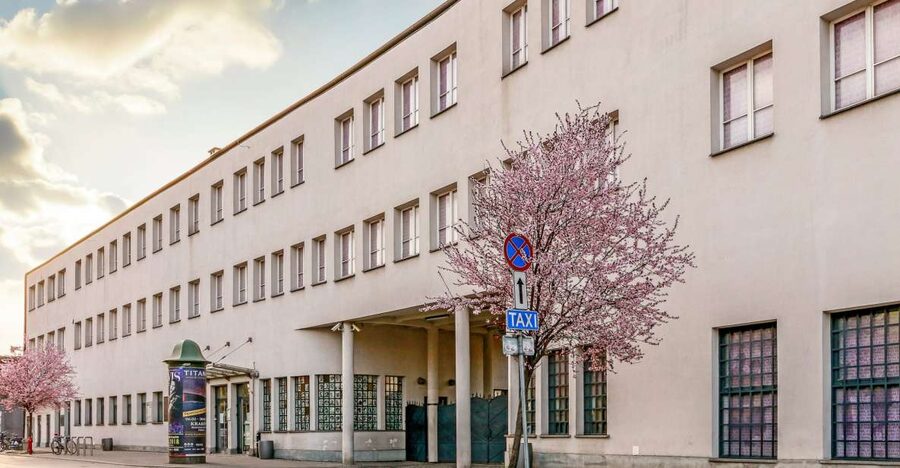
Review · SCHINDLER'S FACTORY & WWII TOURS
Krakow: Schindler’s Factory Guided Tour
Schindler’s Factory hits hard, fast. This guided tour strings together Nazi-occupied Krakow, multimedia rooms, and the story of Oskar Schindler into a tight 90-minute walkthrough.
What I like most is the live, English-speaking guide (and other languages too), who helps you connect artifacts to what daily life must have felt like. I also appreciate that your entrance ticket is included and you skip the ticket line, which matters because this museum stays very busy.
One thing to consider: the museum is huge in subject matter, and 90 minutes moves quickly. If you want slow looking, extra room time, or more detail on the factory itself, you may wish you had an extra hour.
Key takeaways before you go
- Room-by-room time travel through wartime Krakow, not a single static gallery
- Multimedia plus artifacts that keep the story grounded while still emotional
- A strong focus on Schindler’s role, including the office and secretariat
- Heavy subject matter, including spaces that resemble a concentration camp area
- Quick pacing, so listening carefully is part of the experience
Schindler’s Factory in 90 minutes: what you actually get
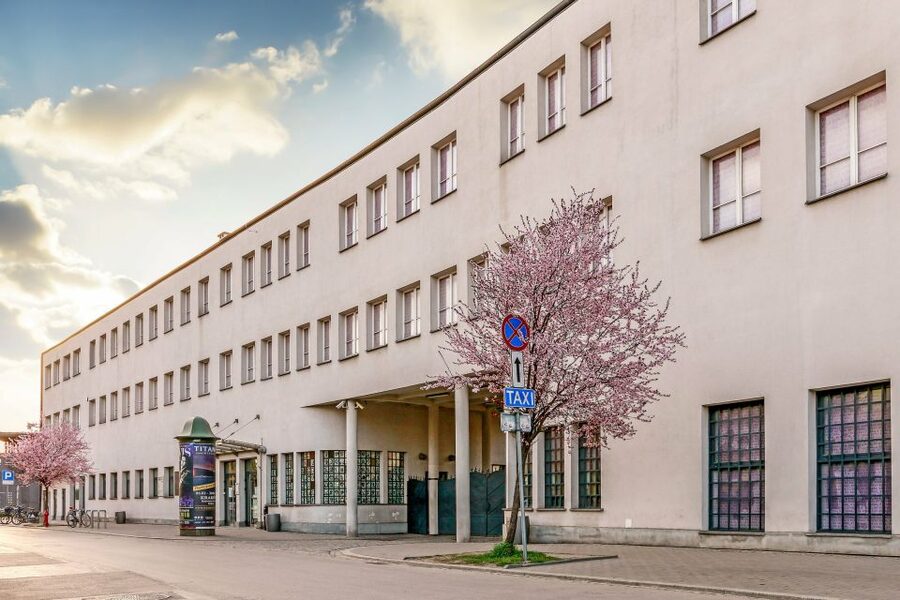
Schindler’s Factory Museum is a relatively young institution, but it has become one of Krakow’s most popular places to visit. This guided format is built for people who want the key story arc without spending half a day bouncing between rooms on your own.
You’re paying for three things: a museum entry ticket, a live guide, and a structured route that takes you through many themed spaces. At $50 per person, it’s not a budget add-on, but it’s also not just a “talk while you walk” experience. You get a guided way to understand what you’re seeing, and that’s where the value is.
The tour is designed around one core idea: start in the “present” museum setting and move backward through the period. Each room has its own setup, so the history changes as you move, from street scenes to stark prison-like spaces.
You can also read our reviews of more guided tours in Krakow
Meeting at Lipowa 4 with the excursion.city sign
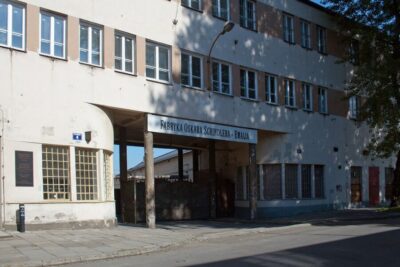
You’ll meet at Lipowa 4, 30-702 Krakow, near the main entrance to the Factory. Look for your guide holding an excursion.city sign, and plan to arrive a few minutes early so you are not standing around while the group is assembling.
This matters more than it sounds. The tour starts on time, and the museum schedule can affect the exact entry moment. If you’re trying to coordinate with other plans later, give yourself a little buffer after the 90 minutes so you are not rushed out the door.
How you go back in time inside the museum
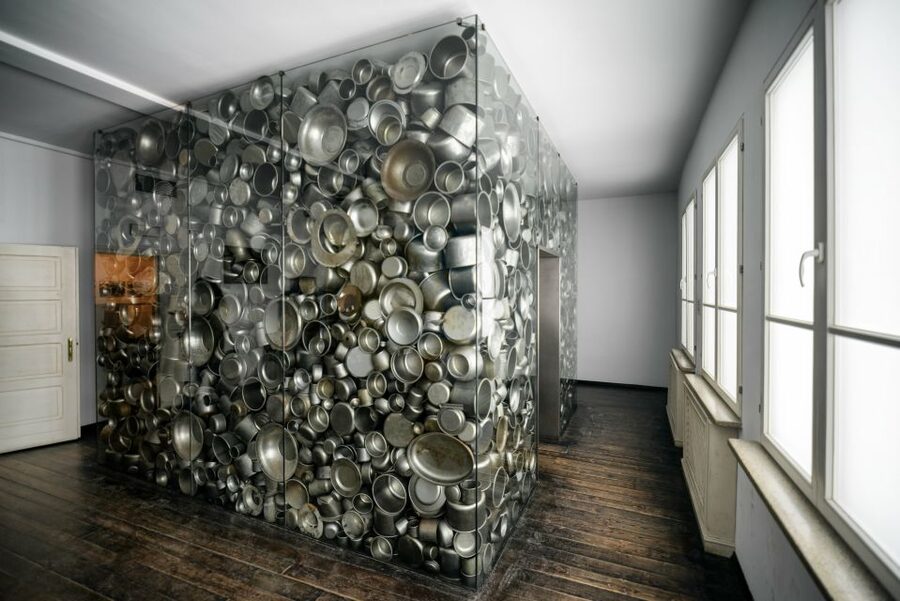
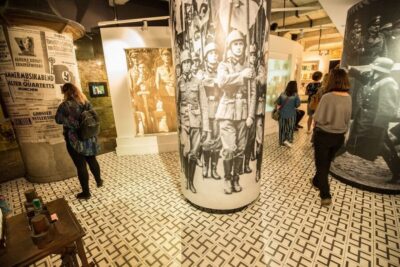
The exhibition is arranged as a sequence. You don’t just look at one topic, you move through spaces that feel like different moments in the wartime story. Expect multimedia elements and historical artifacts, with each room staged in a distinct way.
As you go, you’ll see environments meant to represent different parts of occupied Krakow. That “walk-through history” format is one of the reasons the museum is so popular. It helps you build a mental map fast, instead of trying to piece the timeline together from reading panels alone.
A good guide is crucial here. Without one, you can easily read labels and still miss the meaning of how the rooms relate. With a guide, the route becomes a storyline, including why certain places look the way they do and what that implies about control, fear, and everyday survival.
Photo salon and the streets of Krakow
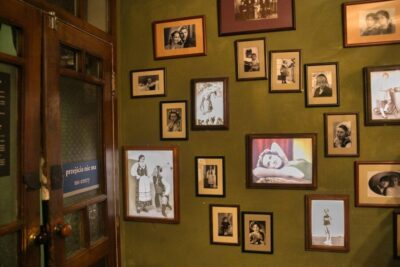
One of the early stops is the photo salon, which sets the tone. Photos in a museum can feel informational, but in this context they also work like evidence. Seeing them as part of the guided flow helps you understand how people documented life even under extreme constraints.
Next, you’ll move through spaces designed to resemble the streets of Krakow. These sections help you shift from individual items to social reality: where people went, what they saw, and how occupation shaped movement and routine.
What I like about this approach is that it avoids turning everything into pure abstraction. Even when the subject matter is grim, the museum tries to show how ordinary people experienced it. A good guide will point out those “everyday life” details without letting the story turn into trivia.
Swastika officer’s room and prison cell: the emotional logic
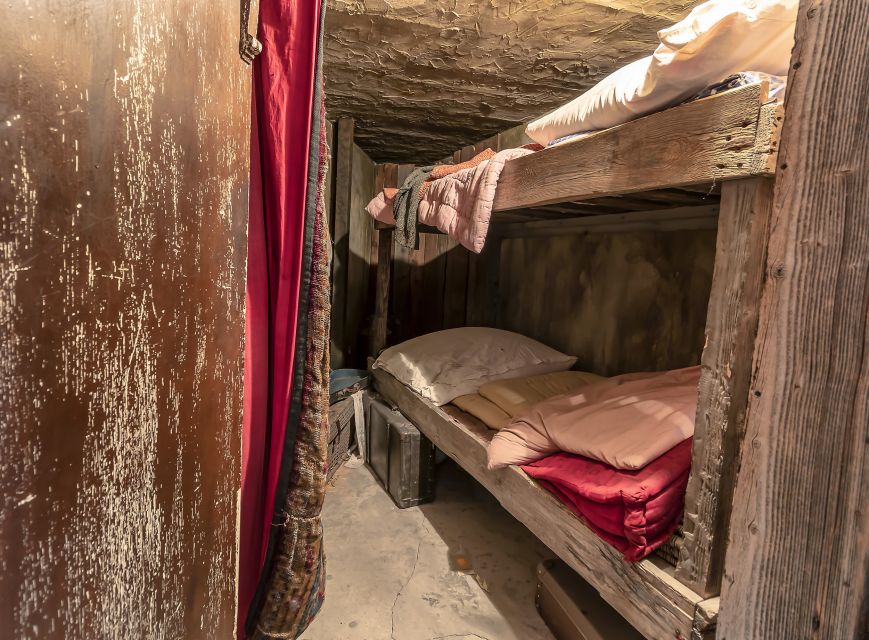
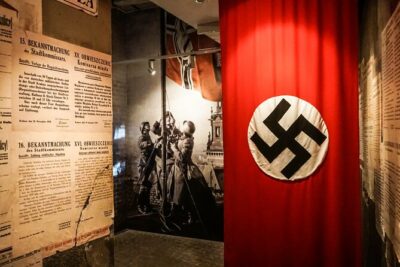
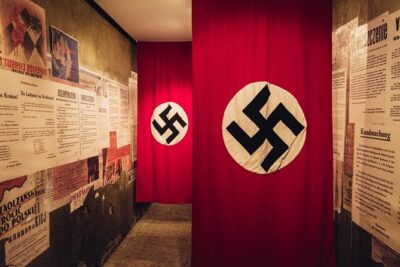
Then comes a room staged with swastika-patterned officer imagery. This is not subtle, and it’s not meant to be. The point is to make the power imbalance unmistakable, and to show how ideology was made visible through uniforms, symbols, and authority.
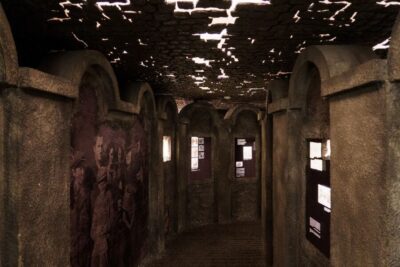
After that, you’ll reach a prison cell space. This is where the tone tightens. The prison environment tends to hit harder because it’s built around the idea of confinement, uncertainty, and the absence of choice.
In a guided tour, these rooms work best when you let the atmosphere do its job. You don’t need to rush past or switch off mentally. If you’re traveling with friends, you’ll likely appreciate the guide’s pacing and explanations here, because it can be hard to know what to focus on if you’re overwhelmed.

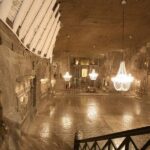
Tram, railway, and the station: moving people under control

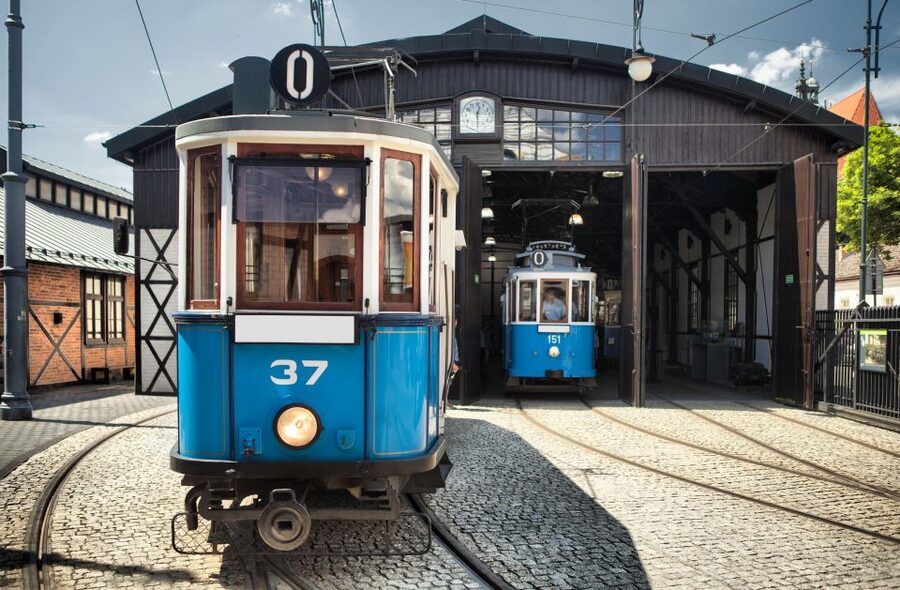
One of the most interesting sections is the cluster of transit-related rooms, including an old tram and railway area and a railway station space. Transport is a key part of how war and persecution operated, but it can be easy to miss if you’re only thinking about dates and names.
Seeing these spaces in sequence helps you connect the dots between occupation and logistics. You start to understand movement itself as part of the system, not just “background.” A guide can also help you interpret what you are looking at so you are not just seeing props or set dressing.
This is also a good moment to pay attention to the “curiosities of everyday life” side of the exhibition. The museum doesn’t only show official structures. It also points out how people continued to exist, work, and react within the machinery that was closing in.
Krakow Jewish Ghetto grounds and the Płaszów-style room
The tour moves on to the grounds of the Krakow Jewish Ghetto, which gives the story one of its central geographic anchors. Even if you’ve read about the ghetto, the guided presentation helps you understand how the museum recreates context through layout, staging, and the way it links rooms together.
Next is a room that resembles an area of Płaszów concentration camp. This is heavy content, and it can feel surreal because you are looking at a museum interpretation rather than a preserved outdoor site. That said, the guided explanation helps you understand what the staging is trying to communicate.
If you are sensitive to difficult historical material, you should plan your day accordingly. This tour does not “soften” the subject. It’s designed to be direct, and it can be emotionally demanding in a way that’s not fully captured by a simple description.
Oskar Schindler’s office and the secretariat stop
If you came for the name Oskar Schindler, you’ll be glad this tour includes space tied to him. The museum offers access to the office of the former factory director and the secretariat area.
This stop changes the pace and the focus. Instead of only seeing occupation structures, you start thinking about individual decision-making and responsibility. A good guide will use this moment to connect the broader wartime setup to Schindler’s role in the story, and to explain why his actions mattered in context.
I like this structure because it prevents a “black and white” experience. You still face the darkness of what happened, but you also get a clear reason the name Schindler keeps showing up in discussions. The guided format helps you hold both realities at once.
Group size, sound, and pacing: the 90-minute reality
The tour is 90 minutes long, and that time is the main constraint. The museum is packed with rooms, and the route aims to cover a lot without sending you into endless backtracking.
Sound quality and group size can strongly affect how well you follow. When the group is small, it’s easier to hear the guide and ask questions if time allows. When the group is larger, you may feel like you’re moving as a unit through space, with less personal room to absorb details.
You should also know that the tour may not feel like you are seeing everything at a museum-at-your-own-speed level. The format is efficient by design. If you want to linger, take photos slowly, or read every text panel, you may find yourself wanting more time after the guided route ends.
Price and value: is $50 worth it?
At $50 per person, this tour is priced like a premium museum experience, not a casual walking tour. The value comes from what’s included: entrance ticket, skip-the-line entry, and a live guide.
Skipping the ticket line is more than convenience. This museum draws big crowds, and saving time here helps you spend your energy inside the exhibits, not waiting outside. The guide also adds interpretive value. You’re not just paying for access, you’re paying for someone to help you understand what you are looking at and why it was staged that way.
Is it “worth it”? For many people, yes, especially if you want to leave with a clear timeline of Nazi-occupied Krakow and Schindler’s role. If you love reading slowly, building your own narrative from text, and taking long breaks inside museums, you might be happier with a self-guided plan instead of a tight guided route.
A practical compromise: treat the guided tour as your backbone. Afterward, return to your favorite rooms for more time on your own if you still have energy.
Who this tour fits best
This experience fits best if you:
- Want an English-speaking guide to connect the dots between rooms
- Prefer a structured route through a very busy museum
- Like the idea of learning through staged environments, not only through labels
- Are specifically interested in Oskar Schindler, but still want the broader Krakow context
It may be less ideal if you:
- Need a slow pace with lots of independent viewing time
- Struggle with emotionally intense topics
- Expect a deep, extended look at the factory history alone, without the wartime setting around it
For language support, the tour operates in Italian, Spanish, French, English, and German, so you can choose what works best for your group.
Planning for 2026 ID rules and start time changes
One important note for planning: from January 1, 2026, tickets are personalized. You must provide full names of all participants when reserving, and you should bring a passport or ID for entry to Schindler’s Factory Museum. Without that, entry may be denied.
Also, starting times are approximate and may change due to Schindler’s Factory Museum scheduling. You can choose a preferred time, but the exact time is not guaranteed. If your day includes timed tickets elsewhere, keep that flexibility in mind.
Final call: book this tour or pass
I’d book this tour if you want the best shot at understanding the story quickly and meaningfully in 90 minutes. It’s one of the better ways to handle a museum that is popular, emotionally intense, and visually staged. The guide component is where the experience becomes more than a list of rooms.
I’d pass or do it differently if you need slow museum time, or if you’re hoping for a long, factory-focused history session only. In that case, you might prefer self-guided time or pair a shorter visit with a separate reading plan so you can control the pace.
If you do book, go in mentally ready to listen. Keep your focus on the timeline as it moves backward through the period. That’s how the museum turns chaos into a story you can actually hold in your head.
FAQ
How long is the Krakow Schindler’s Factory guided tour?
The tour duration is 90 minutes.
Where do I meet the guide in Krakow?
Meet your guide at Lipowa 4, 30-702 Krakow, near the main entrance to the Factory. The guide will hold an excursion.city sign.
Does the tour include museum entry?
Yes. The entrance ticket is included, and the tour also skips the ticket line.
What languages are available for the live guide?
Live tour guides are available in Italian, Spanish, French, English, and German.
What documents do I need for entry, especially starting in 2026?
From January 1, 2026, you must provide full names of all participants when reserving and bring a passport or ID for entry. Without these, entry may be denied.
Are tour start times exact?
Times are approximate and may change due to the museum’s scheduling. You can choose a preferred time, but the exact start time is not guaranteed.
More Guided Tours in Krakow
More Tours in Krakow
More Tour Reviews in Krakow
Not for you? Here's more nearby things to do in Krakow we have reviewed








More Schindler's Factory & WWII Tours to consider.
 ★ 4.2Oskar Schindler’s Factory Entry Ticket & Guided TourFrom $353,793 reviews
 ★ 4.5Schindler’s Factory Tour with Entrance TicketFrom $493,182 reviews
 ★ 4.4Schindler’s Factory Skip-the-Line TicketFrom $253,105 reviews
★ 4.6Schindler’s Factory Tour with Entrance TicketFrom $401,737 reviews
★ 4.4Schindler’s Factory Skip-the-Line TicketFrom $253,105 reviews
★ 4.6Schindler’s Factory Tour with Entrance TicketFrom $401,737 reviews
 ★ 4.5Schindler’s Factory in Krakow: Guided Tour & Skip the Line TicketFrom $351,714 reviews
 ★ 4.7Schindler’s Factory & Ghetto Guided TourFrom $571,694 reviews
 ★ 4.3Schindler’s Factory Ticket with Guided Tour OptionFrom $421,485 reviews
 ★ 4.0Krakow Schindler’s Factory Guided Tour with Admission TicketFrom $351,156 reviews
Other ways to explore Krakow