
Review · WAWEL CASTLE & CATHEDRAL TOURS
Krakow: Wawel Castle & Cathedral Guided Tour
Wawel tells Krakow’s story in stone. I love how this tour pairs the Wawel Royal Castle museum rooms with the Wawel Cathedral coronation setting, and I love that admission is included so you avoid line-time. In two hours, you get a guided walk through royal art, faith, and national memory, all in one tight loop.
You should know the structure is tight. With only about 2 hours total, the guide has to keep a brisk museum pace, so if you need slower conversation or extra audio support, plan accordingly.
Meet at the street-level spot listed on your voucher, not up on the Wawel Hill, and mind the dress code for worship spaces. Cover knees and shoulders, no shorts or sleeveless tops, for both men and women, and show up about 10 minutes early.
Key things to know before you go
- Admission included for both Wawel Royal Castle and Wawel Cathedral, helping you skip ticket-line hassle
- Small group size capped at 30, which makes the walk feel more like a guided chat than a cattle drive
- Ottoman tents in Europe’s biggest set is part of the Eastern art collection you get to see in the castle museum
- Sigismund Bell tradition plus a look into the royal crypts, where Polish leaders are laid to rest
- Dress code matters (knees and shoulders covered), so pack a light layer even in warm weather
- Guides vary by style, so if you’re sensitive to fast pacing or quiet audio, consider asking what headset options exist
Wawel Royal Castle plus Wawel Cathedral, the one-two you should not miss
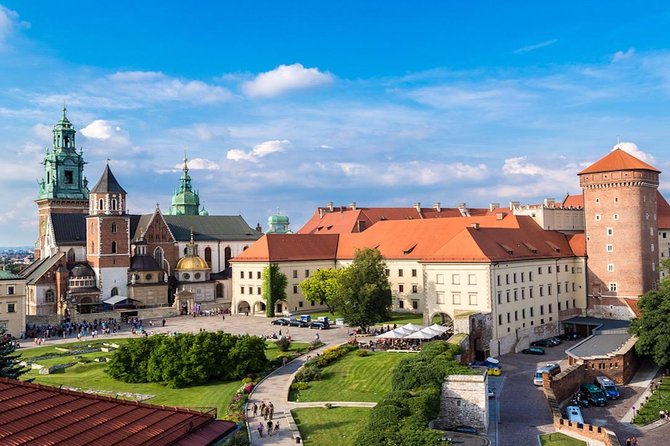
Krakow’s Wawel Hill can feel like a whole history textbook. This tour is smart because it gives you the two main chapters in one go: first the royal residence in Wawel Royal Castle, then the political and spiritual center in Wawel Cathedral. You do not just wander. You walk with context, so the rooms and the chapels make sense instead of feeling like random pretty rooms.
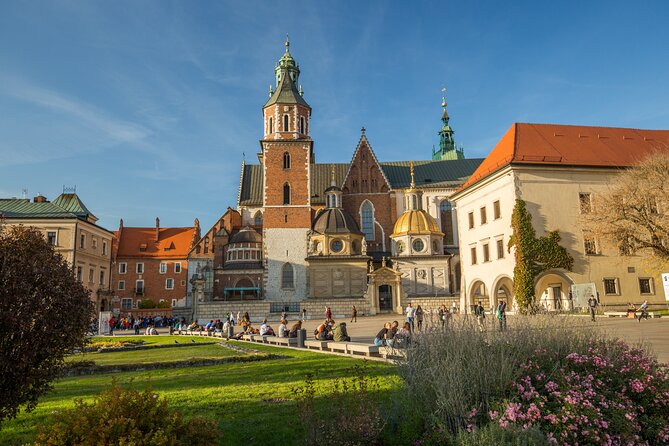
From the start, the castle portion is set up like a guided museum tour. You move through grand chambers and galleries where you can connect art to power, and faith to rule. Then the cathedral portion hits the emotional core, with the coronation and memorial traditions and the crypts under the church floor.
I also like that this is a small-group tour in English. Even if you do not know Polish history before you arrive, your guide gives you a crash course that turns names and dates into real people and real choices. You get a sense of how Polish monarchs used art, architecture, and religion to project authority.
One small tradeoff: the tour is around 2 hours total. That means it is not an endless, slow stroll where you can linger in every room for half an hour. You get a focused route, and you move on. If you like to take your time, do a return visit on your own schedule, but for a first trip, this guided sweep is efficient.
You can also read our reviews of more guided tours in Krakow
Price and timing: what you are really paying for
The price is $59.26 per person for about 2 hours. That sounds specific, so here is the value angle: this ticket price includes admission for the castle and the cathedral. In practice, that matters in Krakow because getting the right tickets at the right time can eat up your precious sightseeing energy.
Another detail I appreciate is the advance booking pace. On average, this tour gets booked about 27 days ahead, which is a strong sign it is a popular slot. If you are traveling in high season or you have a tight schedule, book earlier rather than playing the walk-up lottery.
Duration also impacts your expectations. You will likely spend about 1 hour in the castle museum and about 1 hour in the cathedral. The guide keeps you on route, so you cover the big set pieces: key rooms in the castle, then chapels and altars, the bell tower area, and finally the crypts.
Finally, this tour runs with maximum 30 participants. A group that size is usually the sweet spot for a guided experience. It feels structured, but you are not stuck in a crowd that never stops moving.
Meeting point on purpose: why the start is not on the hill
Your tour begins at Pomnik Piotra Skargiplac Świętej Marii Magdaleny, 31-044 Kraków, Poland, and it ends at Wawel Cathedral, Wawel, 31-001 Kraków, Poland. Two practical notes here.
First, the meeting point is not located on Wawel Hill. That surprises people who assume the action starts right at the hill entrance. It is still close enough to reach easily, and the tour notes say it is near public transportation, but do not arrive expecting to find the group right where the hill looks most dramatic.
Second, arrive about 10 minutes early. Once the group has departed, latecomers cannot join, and tickets are non-refundable. That policy is common for guided museum entries, but it is extra important here because you are being scheduled into timed admission flow.
If you want an easy win, locate your meeting point the day before (or at least on your phone map) and give yourself buffer time for sidewalks and crowds.
Inside Wawel Royal Castle: royal rooms, art, and power in one walk
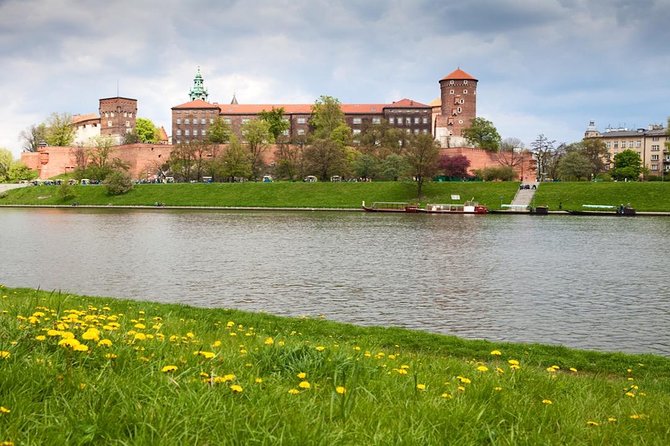
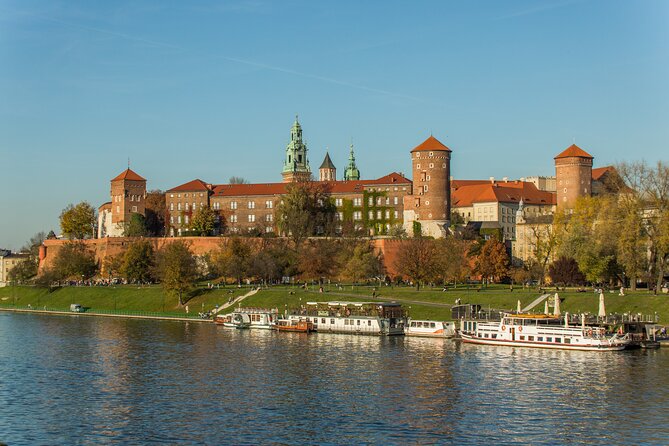
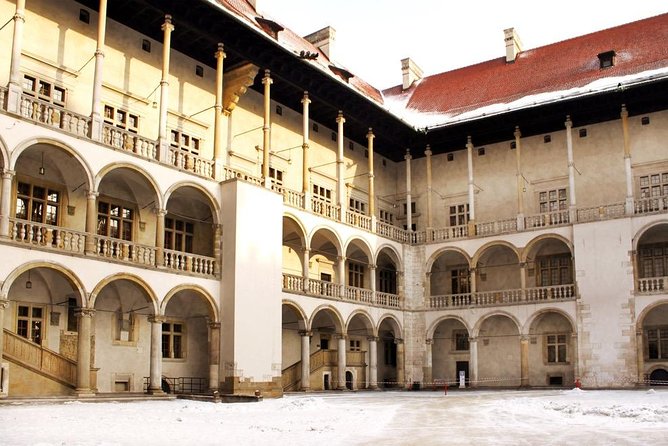
The castle stop is about 1 hour, and it starts with you stepping into the museum version of a former residence. This place has a long identity shift, and the tour framing explains it well: in 1930, the royal residence was transformed into one of Poland’s most important museums. That means you are not just looking at architecture, you are walking through curated history inside royal walls.
You will move through Renaissance and Baroque-leaning interiors and see collections that mix fine art with objects tied to state power. Expect a guided pass through paintings, sculptures, porcelain, and military artifacts. The effect is useful. The museum does not treat monarchy like a dusty portrait. It shows what rulers displayed to signal authority.
Two specific highlights that make the castle portion worth it:
- Flemish tapestries commissioned by King Sigismund II Augustus. Tapestries were expensive, high-status art, and they helped a court look wealthy and legitimate. Seeing them with a guide’s context helps you understand why a ruler would spend big on this kind of display.
- Italian Renaissance masterpieces from the Lanckoroński collection. This is where the art stops feeling generic. You get a sense of how collections moved and how tastes traveled into Poland’s royal setting.
Then there is the Eastern art angle, which is one of the most unusual parts of Wawel’s museum identity. You will see Eastern art, including the largest set of Ottoman tents in Europe. Even if tents do not sound like a museum highlight, they are a fascinating link between politics, diplomacy, and the material culture of contact.
The castle details that change how you look at everything
A lot of guided tours show you objects. The better ones help you understand why those objects matter. In the Wawel castle portion, your guide is essentially doing that translation work.
Here is what you will likely feel as you go room to room:
- You start noticing how state power was staged. Military artifacts and court art are not random. They connect to who ruled, how they wanted to be seen, and what the court valued.
- You start seeing European influence in more than one direction. Flemish and Italian works point to broad artistic connections. The Ottoman tent set adds another layer, reminding you that diplomacy and exposure were not one-way streets.
- You get a fast primer on monarchy and faith as joined forces. Even before you enter the cathedral, the castle gives you a sense of how rulers presented themselves as both political leaders and religious-aligned figures.
Because you only have about an hour, you should treat this as a guided orientation. If one room or collection really grabs you, return later on your own. But if you are trying to understand Wawel quickly and correctly the first time, this stop gives you the right lens.
One more practical tip: museums can be visually crowded. Wear shoes that handle indoor walking and keep your water nearby for later. Your route is timed, so you cannot stop to admire everything at length, but you can still take in the big moments your guide points out.

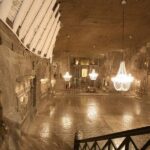
Wawel Cathedral: coronations, chapels, the bell tower, then the crypts
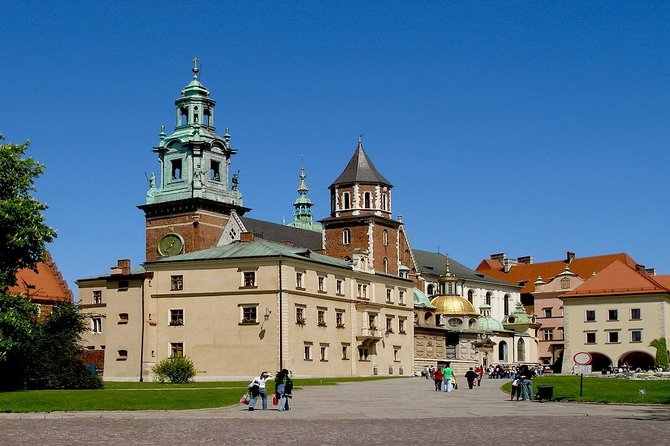
The cathedral stop is also about 1 hour, and it is the emotional center of the tour. Wawel Cathedral is Gothic, and it has witnessed major life events for Polish monarchs, including coronations, weddings, and funerals. That sentence becomes real as you move through the chapels and altars with your guide giving the political and personal context.
You will enter areas where the church functions as both a religious site and a historical archive. That is why the dress code is not just a rule. It is part of how the site stays respectful and usable.
The standout moment is the bell tower experience. You can climb the tower to see the Sigismund Bell. There is also a tradition tied to it: touching the bell is said to bring good luck. Whether you treat that as fun folklore or a serious tradition, it is a memorable, concrete moment in the middle of all the names and dates.
After the tower area, you descend to the crypts. This is where the guide stories land. The crypts are the resting place for kings, queens, poets, and national heroes. Instead of feeling like the end of the tour, the crypts make the tour feel grounded, because you see how Poland remembers its leaders and cultural figures in one place.
If you like sites that connect architecture to identity, you will probably leave the cathedral feeling like you gained more than sightseeing. You gained a framework for understanding what Wawel means in the Polish imagination.
Dress code, bell tower realities, and how to plan your comfort
The tour applies a dress code for places of worship and selected museums. No shorts or sleeveless tops. You need to cover knees and shoulders. This matters year-round, because even on warm Krakow days, you can end up with chilly cathedral air and constrained movement while you climb stairs.
Comfort tips that genuinely help:
- Bring a light layer that covers shoulders, even if you think you will not need it.
- Wear supportive shoes for stairs, especially because you may climb the tower.
- If you get tired easily, pace your photos. The guided flow moves on, and you want to enjoy the moment instead of scrambling for the next viewpoint.
There is also one bell tower logistics point worth knowing. The tour is structured with a guided route, and in at least one case, the guided portion ended in a way that required guests to re-enter or pay again to climb further after the guided end point. I would plan like this: if the tower climb is a must for you, treat it as part of the guided time and ask your guide what is included versus what would be extra on your own.
Finally, audio can be an issue on any museum tour because of group size and stair echoes. The overall plan is guided in English for one language. If you are sensitive to fast pacing or you have hearing needs, consider asking the provider in advance what headset options are used. In one case, a guest reported a problem with hearing assistance, so it is worth checking rather than guessing.
Guide energy makes a real difference, and it shows here
Wawel is a site where the guide matters. The castle rooms and the cathedral spaces are full of detail, and you need someone to pick the right threads so you do not feel like you are drowning in facts.
The good news is that this tour clearly attracts strong guides. I saw examples of guides like Helena, described as an academic historian type who tied politics and personal stories together. I also saw Ana, praised for engagement and for keeping the group pace so people did not feel rushed.
What should you take from that as a traveler? Two things:
- Expect variation in speaking style. Some guides may talk faster or more quietly than others, so if that is your personal weak spot, arrive early and get as close as you can to the guide without blocking movement.
- If you have a question, ask it when there is a natural pause. The route is timed, and the guide has to keep the group moving, so quick questions work better than holding the group for too long.
If you want the best chance at a great experience, be ready to listen, not just look. Wawel rewards active attention.
Who this tour is best for, and who should pass
This is a smart fit if you:
- Want a first-timer overview of Krakow’s most important monuments
- Like guided context, especially for Polish monarchy and the cathedral’s role as a national site
- Prefer a small group, capped at 30 people, over a large bus-style crowd
- Appreciate that admission is included, which reduces planning friction
You might think twice if you:
- Want lots of free time in every room. This is timed and focused.
- Struggle with stair climbs or long indoor walking. The cathedral includes a tower climb, and the group keeps moving.
- Need special audio accommodation and do not want to risk unclear headset availability. Ask ahead if that applies to you.
Also, if you love history but only want the highlights, you will still get enough background to connect the dots. But because the site is fundamentally about monarchy, some of the stories will be politically focused.
Should you book the Krakow Wawel Castle and Cathedral Guided Tour?
If you are going to Krakow for a few days and want your Wawel visit to make sense, I think this is a book-worthy tour. You get two major sites in one morning-like chunk, admission included, and a guide who helps you connect art, faith, and power.
I would book it especially if you are the kind of traveler who hates losing time to ticket lines. The meeting point is specific, the group size is controlled, and the route is built to get you the key moments: the castle museum highlights, the Sigismund Bell tradition, and the crypts.
If you are picky about pace, audio, or tower logistics, do a quick check before you go. Ask about headset options if you need help hearing, and make sure you understand the tower entry expectations. Then go in ready to listen, and you will come out with Wawel not just photographed, but understood.
FAQ
How long is the Wawel Castle and Cathedral guided tour?
The tour lasts about 2 hours, with roughly 1 hour at Wawel Royal Castle and roughly 1 hour at Wawel Cathedral.
What is the meeting point for the tour?
The start is at Pomnik Piotra Skargi at plac Świętej Marii Magdaleny, 31-044 Kraków, Poland, and the tour ends at Wawel Cathedral, Wawel, 31-001 Kraków.
Is admission included?
Yes. Admission tickets are included for both the castle and the cathedral portions of the tour.
What language is the tour offered in?
The tour is offered in English, and it runs in one language chosen at booking.
How many people are in the group?
The tour has a maximum of 30 participants.
What is the dress code?
For places of worship and selected museums, shorts and sleeveless tops are not allowed. Both men and women must cover knees and shoulders.
What time should I arrive?
Arrive about 10 minutes before the tour begins. Once the group has departed, latecomers cannot join and tickets are non-refundable.
Where will the tour end?
The tour ends at Wawel Cathedral, Wawel, 31-001 Kraków, Poland.
What is the cancellation window for a full refund?
You can cancel up to 24 hours before the experience start time for a full refund. If you cancel less than 24 hours before, the amount paid is not refunded.
More Guided Tours in Krakow


More Tours in Krakow
More Tour Reviews in Krakow
Not for you? Here's more nearby things to do in Krakow we have reviewed







More Wawel Castle & Cathedral Tours to consider.
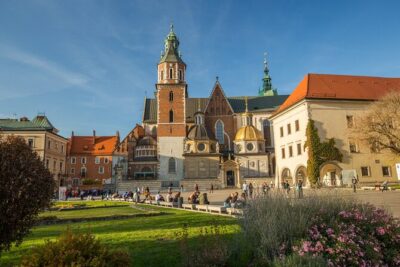 ★ 4.7Wawel Castle & Cathedral Guided TourFrom $572,111 reviews
 ★ 5.0Old Town Krakow & Wawel Castle Walking TourFrom $261,508 reviews
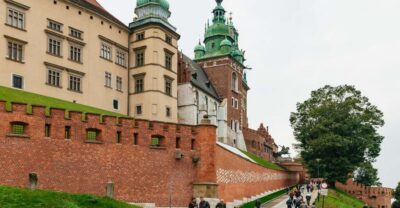 ★ 4.2Wawel Royal Hill with Optional Castle and CathedralFrom $191,220 reviews
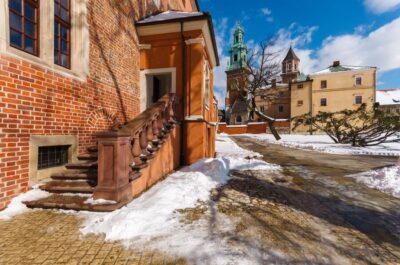 ★ 4.6Wawel Castle and Cathedral Guided TourFrom $57595 reviews
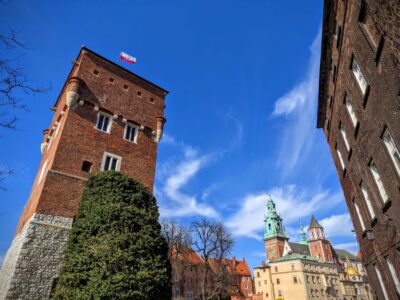 ★ 4.8Old Town & Wawel Castle Walking Tour in EnglishFrom $26532 reviews
 ★ 4.2Wawel Hill Audioguide TourFrom $8512 reviews
 ★ 4.4Wawel Castle Guided Tour with Entry TicketsFrom $35381 reviews
 ★ 5.0Krakow’s Essential Tour of the Old Town and Wawel CastleFrom $3340 reviews
Other ways to explore Krakow