
Review · SCHINDLER'S FACTORY & WWII TOURS
Kraków: Wieliczka Salt Mine & Schindler’s Factory + Lunch
Salt underground and wartime history, in one day.
This tour strings together two of Krakow’s biggest “how did this even happen?” sites, starting with the Wieliczka Salt Mine and finishing at Schindler’s Enamel Factory. I like that you get certified guidance underground, then a licensed expert guide in the museum, so you’re not just looking at displays. The day also includes a real lunch break, which matters when you’re stacking major sights.
The best parts for me are the St. Kinga’s Chapel experience in salt, and the way Schindler’s story is told through the factory setting. One possible drawback: it’s a long day with significant walking and lots of stairs, and the mine runs at 14 to 16°C, so you’ll want warm layers.
Key highlights to look for
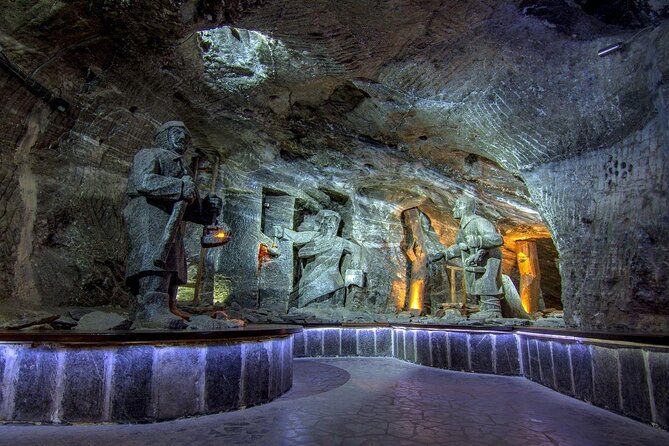
- St. Kinga’s Chapel, fully carved from salt by generations of miners
- Certified mine guide plus a lift ride up after the underground route
- Fast-track access to Schindler’s Factory with a licensed museum guide
- Lunch provided so you’re not racing for food between big stops
- Max 30 travelers, but museum and mine spaces can still feel tight
A 7-hour Krakow combo: salt underground and wartime industry above
This is the kind of day that makes you feel like you packed in two separate trips, even though it’s just one outing. You’re moving between places that couldn’t be more different: one is all quiet work carved into salt underground, the other is a former factory space used to tell the story of Nazi occupation and moral courage.
I also like the structure. You get comfortable transfers in air-conditioned transport from Krakow to Wieliczka and back, then you switch gears into walking-heavy sightseeing. The timing matters here because both sites are popular, and the tour keeps you on a sensible flow instead of forcing you to plan connections yourself.
Your total time on the calendar is about 7 hours, with the mine taking roughly 2 hours 30 minutes and Schindler’s Factory about 1 hour 30 minutes. That’s a good pace for first-timers who want the highlights without trying to see everything in Krakow in a single day.
More Krakow tours, salt mines, mountain days, and city experiences to compare
Getting to Wieliczka: comfort on the road, stairs once you arrive
The day starts with a pick-up at Przystanek Turystyczny Kiss&RideWielopole 2, 31-072 Kraków. From there, you ride to Wieliczka in a comfortable, air-conditioned vehicle. This is not just convenience. It also reduces the amount of time you spend figuring out public transport and connections, which is exactly what you want when you’re heading to a single, fixed-date attraction.
Once you reach the mine, the tone changes. The tour includes a trip underground with a certified mine guide, but you should know the physical setup. You descend by stairs (no elevator down), and you’ll be walking a lot as you follow the route through chambers, chapels, and underground spaces. After your underground visit ends, you do get a lift ride up to the surface.
Two practical tips help a lot:
- Wear comfortable, grippy shoes. Salt sites can be slick and uneven.
- Plan for a slower pace if you’re sensitive to stairs. Even if you’re fit, the number of steps adds up.
Inside the Wieliczka Salt Mine: St. Kinga’s Chapel and the cool air
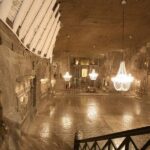
Wieliczka is one of those places where “wow” hits fast, and it keeps returning. You’re taken deep underground to explore vast chambers and underground lakes, with shimmering reflections under crystal chandeliers. That combination of scale and lighting is what makes the mine feel theatrical, even though the whole place is built from salt and human effort.
The real star is St. Kinga’s Chapel, carved entirely from salt by generations of miners. It’s the kind of stop where it helps to have a guide because you learn what you’re looking at, not just that it’s impressive. The chapel is part sculpture, part memorial, part engineering feat, and the craftsmanship is hard to fully appreciate without context.
You also spend time seeing intricately carved salt sculptures and chapels beyond St. Kinga’s. Even if some chambers blur together in photos, the guided pacing helps keep each section distinct. Your mine guide is the key. They’re the person connecting the route to the story behind it.
One important comfort detail: the mine maintains a constant temperature of 14 to 16°C. That’s cool, not freezing, but it’s enough to make you feel it. Bring warm layers and keep your outer clothing easy to move in. I’d rather be slightly overdressed than suddenly cold halfway through.
Lunch in Krakow: a real pause before Schindler’s Factory
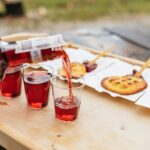
After the mine, you head back to Krakow for lunch at a nearby local bistro. You get a 2-hour lunch break, which is a big deal on a day like this. When tours jam everything back-to-back, you end up eating quickly, stressing about timing, and feeling rushed.
Here, the break gives you room to reset. You can eat without staring at a clock, use the restroom comfortably, and mentally switch from salt chapels to WWII history. If you’re the type who likes to regroup, this part of the day is genuinely useful.
Also, since the schedule is fixed around two major guided sites, lunch is your one predictable downtime. I’d treat it like that, not like a moment to sprint across town. If you want to add anything on your own, do it after lunch, when you have your bearings again.
Schindler’s Enamel Factory: how the exhibits make the story personal
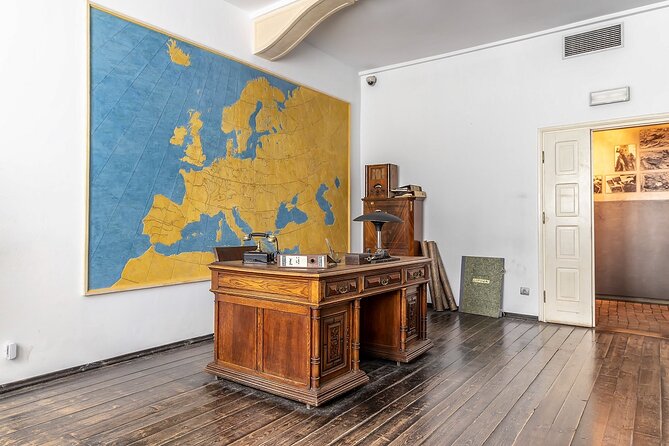
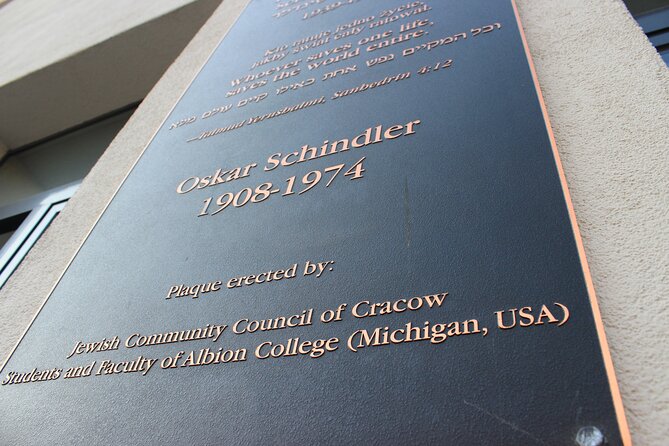
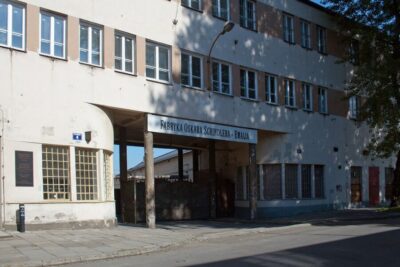
Next comes Schindler’s Enamel Factory (Fabryka Emalia Oskara Schindlera). This stop is guided by a licensed expert, and you get fast-track access, which helps you avoid that first-stare scramble right when the museum doors open.
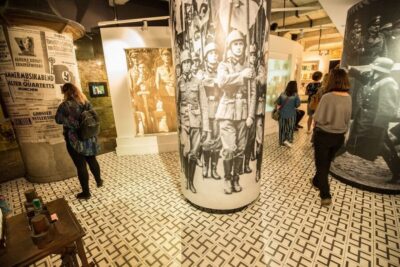
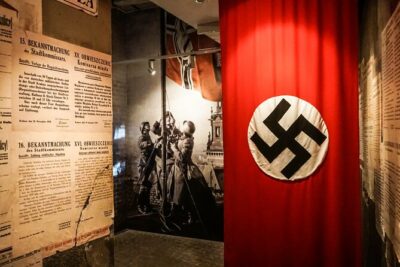
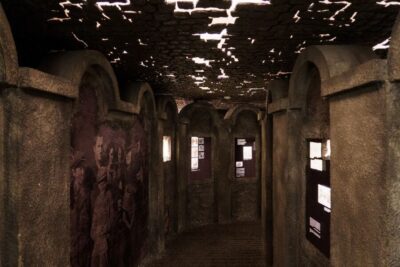
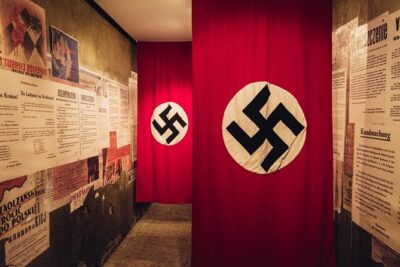
Inside the former factory, you’ll explore the exhibition on Kraków under Nazi Occupation 1939 to 1945. The structure uses the story of Oskar Schindler to show what daily life felt like and what it meant to exploit position and resources to protect people from deportation. The museum’s approach is effective because it links moral action to a real workplace, not just to abstract facts.
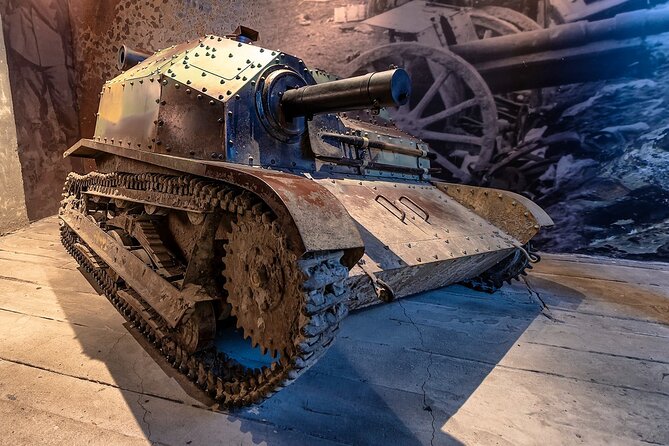
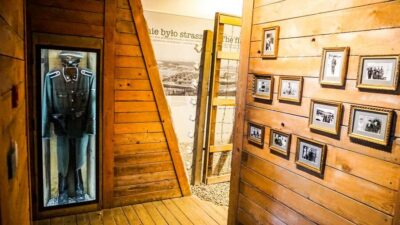
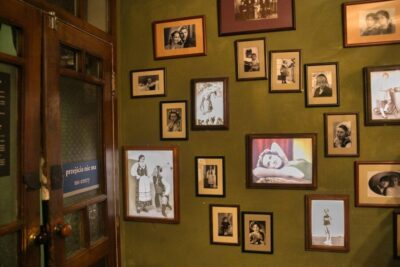
What I find most compelling is the way the displays are built from tangible items: original photographs, personal belongings, and reconstructed city scenes. You’re not only learning what happened, you’re seeing evidence of what people saw and lived through. That matters in a museum like this, because it turns a “history topic” into something your brain can actually hold.
You’ll spend about 1 hour 30 minutes here, which is enough to understand the main narrative without feeling like you have to read every caption word-for-word. Still, one consideration: the factory rooms can be small. Even with headsets, if your group is pushed into tighter spaces, you might not get a perfect sightline for every detail the guide references. In that case, trust the guide. They’re pointing you to what matters.
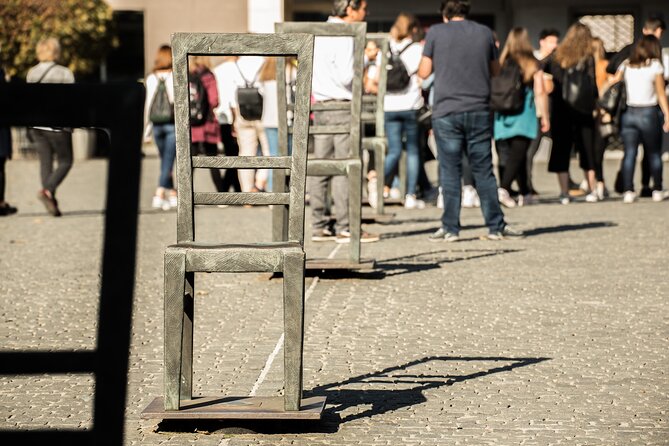
If your schedule includes a short walk segment ending at Heroes Square, it can add a bit of city context after the museum. Just know that the primary anchor of this day is the factory itself.
Time, group size, and pacing: the honest reality of a popular day
On paper, this is a maximum of 30 travelers, which is a good size for a guided day. And the tour is conducted in a single language chosen during booking, with pickup and return transfers set up so you’re not chasing logistics all day.
Still, there are two real-world factors that can change how the day feels:
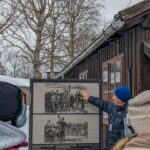
- Museum layout and visitor volume. Even with a small-group format, narrow rooms in Schindler’s Factory can feel crowded. One person had trouble seeing the guide because each room was tight, and the group couldn’t all fit smoothly around the instruction spots.
- Walking from meeting areas. At the mine, there can be a short block walk to get from the parking area to the entrance. I recommend staying close to the group and paying attention to the exact route, because exiting the mine puts you in a different spot than the entrance area.
My practical advice: go in with a flexible mindset. This is a high-demand itinerary, and the best results come when you accept that the physical spaces are part of the experience. The upside is that your guides do a lot of the heavy lifting, and you get fast access where it counts.
Who should book this tour, and who should skip it
This day tour is a strong fit if you:
- Want top Krakow highlights without planning
- Like guided storytelling, especially for WWII topics
- Are comfortable with a full, structured day that includes walking and stairs
You should think twice if you:
- Have limited mobility or struggle with stairs. The mine descent is by stairs, and the overall route involves significant walking.
- Feel uneasy underground. The mine is fully underground and the tour notes it may not be suitable for claustrophobia.
- Get cold easily. The mine is 14 to 16°C, and you’ll want warm clothing.
If you’re an independent traveler who loves reading at your own pace, you might still enjoy this tour, but I’d recommend treating it as guided highlights rather than an exhaustive museum study. The time is well-used, not endless.
Should you book this tour? My practical verdict
I’d book this if you want one efficient, guided day that hits the big emotional and visual markers of Krakow: Wieliczka Salt Mine (especially St. Kinga’s Chapel) and Schindler’s Enamel Factory with its focused wartime narrative. The value is strongest when you consider the combination of guided access plus transport plus lunch, especially at $152.50 per person for a roughly 7-hour day.
Where I’d hesitate is if your main priority is lots of breathing space inside museums. Crowding can happen in small rooms, and the mine requires stair climbing. If that’s a deal-breaker, you may prefer a more paced, custom plan.
If you’re comfortable with stairs, bring warm layers for the mine, and you’ll treat this as a structured highlights tour, you’ll likely feel like you got two memorable Krakow experiences in a single, well-organized day.
FAQ
How long is the Krakow Wieliczka Salt Mine and Schindler’s Factory tour?
It runs about 7 hours. The mine visit is about 2.5 hours, the factory visit is about 1.5 hours, and lunch is included with a 2-hour break.
Is the tour offered in English?
Yes. Group tours run in the single language you select during booking, and this one is offered in English.
Does the tour include entry tickets and guided visits?
Yes. Entry to the Wieliczka Salt Mine is included with a certified mine guide, and Schindler’s Factory includes fast-track access plus a licensed expert guide.
Do I need to bring warm clothes for the mine?
Yes. The mine stays at a constant 14 to 16°C. Warm clothing and comfortable footwear are recommended.
How do you get to and from the mine level?
You descend to the mine by stairs. When you finish the underground tour, you take a lift ride back to the surface.
Is lunch included?
Yes. Lunch is provided during a 2-hour break at a nearby local bistro.
Where is the meeting point and where do we end?
The start is at Przystanek Turystyczny Kiss&RideWielopole 2, 31-072 Kraków. The end point is Lipowa 4, 32-051 Kraków.
More Lunch Experiences in Krakow

More Tour Reviews in Krakow
Not for you? Here's more nearby things to do in Krakow we have reviewed







More Schindler's Factory & WWII Tours to consider.
 ★ 4.2Oskar Schindler’s Factory Entry Ticket & Guided TourFrom $353,793 reviews
 ★ 4.5Schindler’s Factory Tour with Entrance TicketFrom $493,182 reviews
 ★ 4.4Schindler’s Factory Skip-the-Line TicketFrom $253,105 reviews
★ 4.6Schindler’s Factory Tour with Entrance TicketFrom $401,737 reviews
★ 4.4Schindler’s Factory Skip-the-Line TicketFrom $253,105 reviews
★ 4.6Schindler’s Factory Tour with Entrance TicketFrom $401,737 reviews
 ★ 4.5Schindler’s Factory in Krakow: Guided Tour & Skip the Line TicketFrom $351,714 reviews
 ★ 4.7Schindler’s Factory & Ghetto Guided TourFrom $571,694 reviews
 ★ 4.3Schindler’s Factory Ticket with Guided Tour OptionFrom $421,485 reviews
 ★ 4.0Krakow Schindler’s Factory Guided Tour with Admission TicketFrom $351,156 reviews
Other ways to explore Krakow