
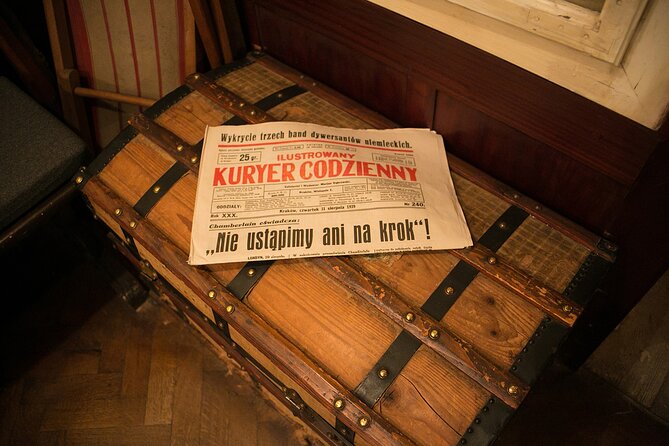
Review · SCHINDLER'S FACTORY & WWII TOURS
Schindler’s Factory Small-Group Guided Tour
Schindler’s Factory is not just a museum stop, it’s a story machine for WWII Krakow, and the guided format helps you read it correctly. What I love most is the way the exhibition uses multimedia scenes to connect everyday spaces, like a hairdresser or photographer, to the bigger machinery of occupation. I also like the small-group pacing, which makes it easier to ask questions and get your bearings inside a large, room-by-room experience. One consideration: the focus is mainly on the occupation and city life under Nazi rule, so if you’re expecting a hands-on, machine-heavy factory tour or a deep, biography-style Schindler rundown, you may feel slightly misaligned.
For a set price, you get entry included and a guide to help you connect the dots as you move from reenacted street scenes into the ghetto and then toward the camp in Płaszów. It’s intense material, but the structure is clear, and the time window is short enough that you don’t feel dragged through it. Best of all, you do not have to worry about coordinating separate tickets or matching up with other groups at the start.
Key highlights you will feel right away
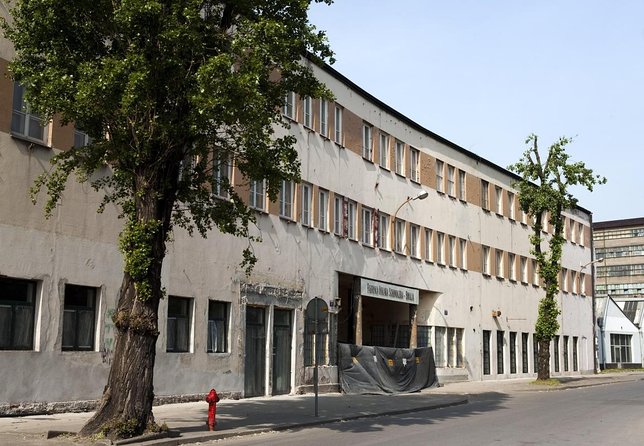
- Schindler’s Enamel Factory setting for the exhibition, located in the former administrative building at Lipowa 4
- A guided reading of Kraków under Nazi Occupation 1939-1945, not a generic audio-walk
- Room-by-room realism, from period shop settings to a photoplasticon experience
- A tram-and-film segment that shows the city through the windows, as part of the narrative flow
- The ghetto labyrinth and a Jewish apartment scene, designed to humanize what happened
- The story’s endpoint toward Płaszów, keeping the human scale present as events escalate
Schindler’s Factory at Lipowa 4: what this tour actually is
If you’re in Krakow and you only have limited time, this is the kind of experience that can give you a lot of meaning quickly. Schindler’s Enamel Factory is one of the most visited World War II sites in Poland for a reason, and this guided version tightens the experience so you spend less time wandering and more time understanding.
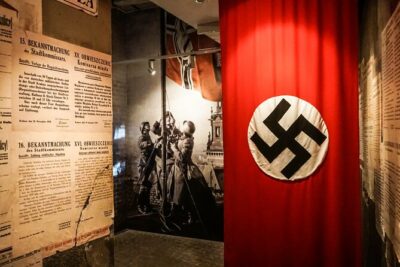
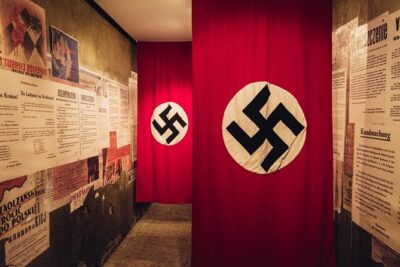
The big thing to know up front: the museum here is centered on occupied Krakow from 1939 to 1945. It is not built like a simple life story of Oskar Schindler. Yes, Schindler’s role is part of the story, and the museum’s framing connects back to what later generations learned through film. But the exhibition’s core job is to explain how occupation shaped daily life, who suffered, who controlled, and how the system moved people from neighborhood reality to mass imprisonment.
That focus matters for two groups of visitors. If you want context for the city and the people inside it, you will likely feel satisfied. If you came specifically for industrial machinery details, worker accounts centered on factory production, or a mostly factory-operations tour, you might find the content leaning more toward wartime life than the workshop side of Schindler’s story.
You can also read our reviews of more guided tours in Krakow
1.5 hours, small group size, and the “keep it moving” advantage
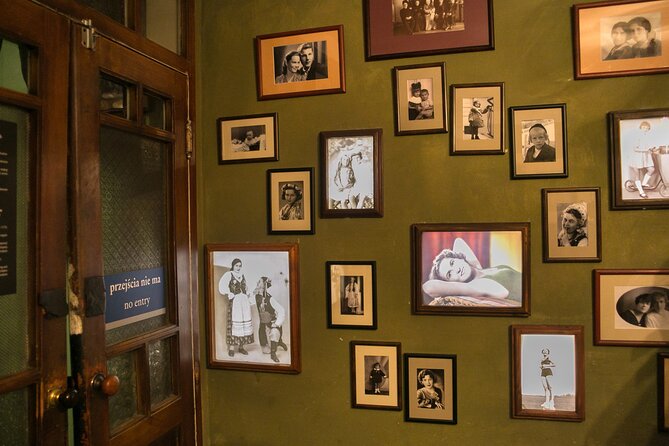
This tour runs about 1 hour 30 minutes. That is a sweet spot. Long enough for the exhibition to land emotionally and logically, short enough that the end does not feel like a relief but more like a natural stop.
The group maximum is 25 people. That number matters. In a museum like this, too-large groups can turn a visit into a traffic jam. Here, you are likely to keep a bit of space and still hear what your guide is pointing out. It also helps that the guide can pause, explain, and let you ask questions without constantly breaking the flow.
You also start and end at the same place, at Lipowa 4. That’s more than convenience. In Krakow, streets can get busy, and WWII sites often attract clusters of visitors. A single meeting point means you don’t lose energy figuring out logistics while your brain is already preparing for heavy content.
Entering the former administrative building: how the museum rooms do the work
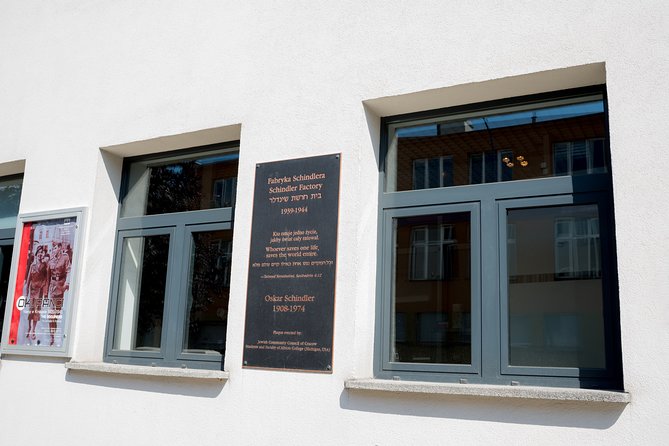
The exhibition you are visiting is called Kraków under Nazi Occupation 1939-1945, and it sits in the former administrative building of Schindler’s Enamel Factory. That location helps shape what you see. This is not a generic WWII hall. It is a site with an industrial identity, and the exhibition uses that setting to keep the story anchored in real geography, real streets, and real infrastructure.
You will move through a curated sequence of scenes that act like a guided script. The guide’s job is to help you interpret what the scenes mean and how they connect. Without that framing, it is easy to treat each room as separate impressions. With the guide, it tends to feel more like one continuous story about how occupation changed daily life step by step.
I appreciated that the guide does not treat the exhibit like a list of dates. Instead, the explanations helped tie the environments to lived experience: ordinary routines, forced changes, fear, and the way the city itself became part of the system.
The “not biographical” part, and why it can still be worth your time
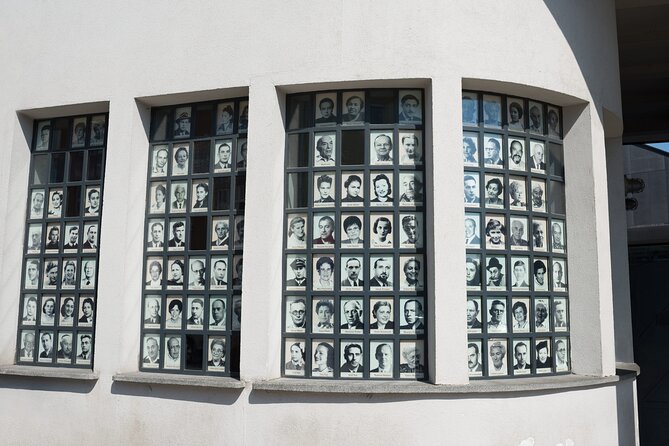
One of the strongest takeaways before you go is this: the museum exposition is dedicated to occupied Krakow, with multiple aspects of life under Nazi rule. Schindler shows up as a part of the larger narrative, not as the sole main character.
So if you expected the guide to spend most of the time talking about Schindler personally, the experience may feel different from that mental picture. In fact, the best way to prepare is to think of this as a guided look at occupied city life, where Schindler’s connection is present in the background and in the framing.
For many visitors, that shift is exactly what makes it powerful. It moves you away from a single-hero story into a wider view of how the city functioned under occupation and what choices, systems, and pressures did to real people. If you like context and cause-and-effect, you should feel at home here.
Occupied Krakow in scenes: shops, photo life, and the photoplasticon
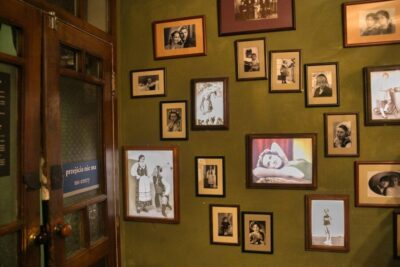
A major reason people choose a guided format here is that the exhibition is built like a walk through occupied spaces, not only a set of wall labels. You go from cobblestones and street-like passages into recreated interior settings, including a hairdresser and a photographer space. These scenes are small in scale compared with outdoor city landmarks, but that is the point.
They let you see how war reached into everyday life. The guide helps you notice what is being communicated by the setting choices, not just what the captions say. When the room feels like the kind of place a person might have visited, the information hits harder, because it stops being abstract.
One of the more unusual elements is the authentic photoplasticon experience. Even if you have never heard the term before, it’s the kind of WWII-era visual device that helps explain how surveillance and documentation worked. You do not need to be a museum expert for it to make sense. The guide’s explanation turns it into something you can actually connect to the rest of the story.
If you care about photography and visual history, you’ll likely find the story’s media angle especially interesting. It’s one of those exhibits where the “how they looked at people” theme becomes part of the emotional tone.

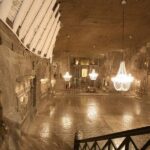
The tram-and-film segment: why it works inside the museum
A standout feature is that you get on a tram as part of the experience. Through the windows, you see a film about the life of the city. This is not just a random multimedia break. It’s a transition device that helps you shift from still scenes to moving, city-wide consequences.
The tram format is effective because it mimics a real way people experienced the city: seeing it from within a moving public transport view. That creates a strange kind of familiarity. Then the film and the guide’s commentary steer you back toward occupation reality.
This is also where having a guide matters. If you go through it only as a show, you might miss what the sequence is trying to tell you about movement, control, and the way the city’s public life was altered.
The ghetto labyrinth and the Jewish apartment scene
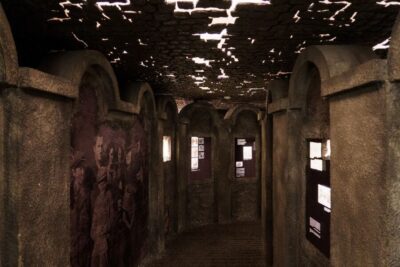
This is the part of the exhibit that many visitors remember most, and it’s easy to see why. You move into a narrow labyrinth that represents the ghetto, and you encounter a Jewish apartment scene with inhabitants.
The point here is not to shock you with spectacle. It’s to shrink distance between you and the people the city once held. When you are in a space designed like an apartment, you start reacting like a visitor in the home, not like an outside observer at a memorial.
The guide’s role is crucial in this section. They help you interpret what you’re seeing, how the layout signals pressure and confinement, and how the story’s emotional weight builds without losing coherence. You are not just watching a grim segment. You are learning the sequence that led from neighborhood life to forced isolation.
From ghetto to Płaszów: following the story without losing the human scale
After the ghetto scenes, the narrative continues toward the camp in Płaszów. You move from the tight scale of apartments and corridors into the larger scale of forced confinement.
This transition can feel heavy. That is normal. The museum handles it through modern multimedia, designed to keep you oriented while the story escalates. You can expect the emotional tempo to rise as the content shifts from daily spaces to the machinery of incarceration and mass violence.
In practice, this is where guided framing helps you avoid getting lost in the intensity. A good guide helps you hold two things in your mind at once: what happened, and what it meant to the people experiencing it.
What I liked about the guide style and your chance to ask questions
One recurring theme from people who do this tour is the guide’s approach. Expect a guide who sets the scene clearly and keeps you oriented as you move room to room. In particular, a guide can make the difference between reading information and actually understanding the structure of the exhibit.
In the experience, I would plan on active participation. The flow is not purely lecture-style. You will have chances to ask questions and take pictures during appropriate moments. This matters because museums can be one-way communication. Here, the guided element gives you a bridge between what you see and what you may still be wondering.
If your goal is to leave with a sense of how all the scenes connect, the guide’s role is your multiplier.
Tickets included and the value math
At $45.38 per person, the price can look steep until you compare it to what is included and how your time is used. Here, admission is included in the price. You also get the guided component during the full time window. That means you are not paying extra for entry on top of a guide.
The value comes down to your travel style. If you like self-guided museum time, you might be able to do this on your own. But if you want meaning, you will use the guide’s context to get more out of each room than you likely would with labels alone.
Also consider that this is one of Krakow’s top WWII experiences. Popular sites can be chaotic without a plan. A small-group guided format helps you arrive with momentum, not stress.
What to expect if you wanted more factory machinery
Let’s be honest. Some people come to Schindler’s Factory hoping for the factory side: machines, production details, and a stronger “work floor” perspective. This museum is not built as a factory-operations tour, and it is not biographical in the way a Schindler-life museum might be.
So if you expected the workshop to be the main event, you may leave thinking you wanted more of that angle. The tradeoff is that the exhibition gives you something different: a guided walk through occupied city life, where the factory location grounds the broader story.
If you want industrial details, you might need to pair this with other stops in Krakow or related museum content elsewhere. But if you want the “why and how this happened in Krakow” answer, this works well.
Who should book this guided visit
This is a great fit for you if:
- You want a guided explanation while you walk through a multimedia-heavy WWII exhibition
- You are interested in how occupation changed ordinary city life, not only one person’s biography
- You like seeing history through a sequence of spaces, street-like scenes, and narrative transitions
- You appreciate a small-group format where questions are practical
You might reconsider if:
- You want a strongly industrial factory-machine tour as the main focus
- You need a strictly biographical Schindler story with minimal occupation context
- You find immersive WWII multimedia difficult to process, even with a guide to help you pace mentally
Practical tips before you go (so the visit feels smoother)
- Plan for heavy emotional content. Even though it is structured, the subject is difficult, and you will absorb it faster if you pace yourself.
- Bring a curious mindset. The scenes work best when you accept that each room has a job in the story.
- If you care about photography, keep your camera ready but also respectful. The tour flow includes moments where photos and questions are possible.
- Wear comfortable shoes. The route includes walking through exhibition spaces that can feel like changing corridors more than open galleries.
- If you already watched the Spielberg film and read basic background, treat this as a chance to understand how Krakow itself fits into the story.
Should you book Schindler’s Factory with a guide?
For most visitors, yes, I think this is worth booking. The combination of ticket included, small-group pacing, and a guide to interpret the exhibition turns the visit from a collection of rooms into a coherent story. If you want the occupation-era context and the human scale of the ghetto and Płaszów transition, the guided format helps you make sense of what you’re seeing.
The only strong “maybe” is if your main goal is Schindler as a biography or factory machinery details. In that case, you may feel the exhibit is steering you toward wartime city life more than industrial production. If that’s your expectation, adjust it before you go, and you’ll likely get more satisfaction.
FAQ
How long is Schindler’s Factory Small-Group Guided Tour?
It lasts about 1 hour 30 minutes.
What is the price per person?
The price is $45.38 per person.
Is the admission ticket included?
Yes, the admission ticket is included.
Where does the tour start?
The meeting point is Lipowa 4, 32-051 Kraków, Poland.
How big is the group?
The tour has a maximum of 25 travelers.
Is it suitable for children?
Children must be accompanied by an adult.
Is public transportation nearby?
Yes, the meeting point is near public transportation.
Is there free cancellation?
Yes. You can cancel for a full refund up to 24 hours in advance of the experience start time.
More Guided Tours in Krakow


More Tours in Krakow
More Tour Reviews in Krakow
Not for you? Here's more nearby things to do in Krakow we have reviewed








More Schindler's Factory & WWII Tours to consider.
 ★ 4.2Oskar Schindler’s Factory Entry Ticket & Guided TourFrom $353,793 reviews
 ★ 4.5Schindler’s Factory Tour with Entrance TicketFrom $493,182 reviews
 ★ 4.4Schindler’s Factory Skip-the-Line TicketFrom $253,105 reviews
★ 4.6Schindler’s Factory Tour with Entrance TicketFrom $401,737 reviews
★ 4.4Schindler’s Factory Skip-the-Line TicketFrom $253,105 reviews
★ 4.6Schindler’s Factory Tour with Entrance TicketFrom $401,737 reviews
 ★ 4.5Schindler’s Factory in Krakow: Guided Tour & Skip the Line TicketFrom $351,714 reviews
 ★ 4.7Schindler’s Factory & Ghetto Guided TourFrom $571,694 reviews
 ★ 4.3Schindler’s Factory Ticket with Guided Tour OptionFrom $421,485 reviews
 ★ 4.0Krakow Schindler’s Factory Guided Tour with Admission TicketFrom $351,156 reviews
Other ways to explore Krakow