
Review · KAZIMIERZ & JEWISH HERITAGE TOURS
Galicja Jewish Museum
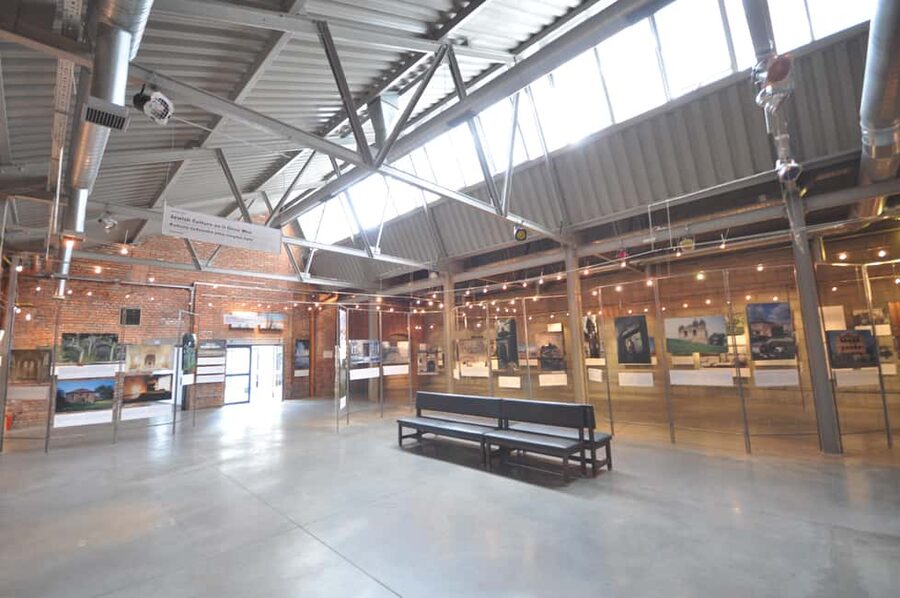
Step into a photo-driven story of survival. The Galicia Jewish Museum honors Holocaust victims while celebrating the Jewish culture that once shaped Polish Galicia, using a permanent show called Traces of Memory. I especially like the way the museum turns history into something you can slow down for, and the WWII section that uses moving visuals to explain what was lost.
Two more things I come back to are the museum’s clear focus and the built-in reflection time it encourages. At the same time, one drawback to know up front is that it is more photographs-first than artifact-heavy, so if you expect lots of objects, you may want to adjust your expectations.
You also get a fuller stop than just galleries. There’s a cafe, a bookshop with titles in Polish, English, and German, and the museum sometimes adds temporary exhibitions, concerts, author meetings, lectures, and workshops.
Key things to know before you go
- Traces of Memory is the permanent exhibition, built from 12 years of artistic work
- 140 photographs by Chris Schwarz map remnants of Jewish life across southern Poland
- WWII moving pictures help show both people’s lives and the destruction that followed
- Plan for a calm, slow pace and start early if you can
- There’s more than exhibits, including a cafe, bookshop, and events on site
A museum that remembers 800 years, not just WWII
The Galicia Jewish Museum is designed for two jobs at once: to honor Holocaust victims and to keep Jewish heritage from Polish Galicia visible. That dual purpose matters, because it prevents the visit from feeling like a single, grim chapter with no context.
I like that the museum frames the story across time, not only at the end. You end up understanding how long this community was part of the region’s life, and how deliberate the Nazis were about erasing it.
The overall approach is reflective and curated around one main theme, not a scatter of unrelated displays. That makes it easier for you to follow even if your background knowledge is limited, and it also helps you decide where to spend more time.
You can also read our reviews of more museum experiences in Krakow
Traces of Memory, 140 photos, and the 12-year artistic plan
The heart of the museum is the permanent exhibition called Traces of Memory. It was the result of twelve years of artistic work, and it’s presented as a reminder of roughly 800 years of Jewish culture in Poland.
What you’ll notice first is the structure: over 140 photographs, made by the museum’s founder, Chris Schwarz. These images focus on remnants of Jewish presence in southern Poland, the area historically known as Galicia. Instead of trying to recreate vanished streets with props, the museum uses the evidence it can show, and it asks you to connect the dots through place, faces, and documentation.
This photo-based approach is not a weakness, it’s the point. When you spend time reading captions and looking closely, you start to see how photography can act like a bridge between a past you cannot physically touch and a present where memory still needs work.
At the same time, you should know what kind of visit this is. One practical reality is that the museum can feel heavier on images than on physical artifacts. If you love object collections, you may wish you had more to examine beyond the photographs, but if you like learning through visuals and documentation, you’ll likely enjoy the format.
The WWII moving pictures, and how the story turns darker
Beyond the photo galleries, the museum includes moving pictures showing Jews during World War II. This is where the emotional tone shifts, and where you start to see the exhibition transition from remembrance toward documented destruction.
The information is presented as a record of the process of destruction of Jewish culture by the Nazis during WWII. That wording is important because it points to something beyond individual tragedies: it describes systematic, calculated erasure, and it explains why preservation of records matters.
I found this section most effective when you give it your full attention instead of treating it like a quick add-on. You’ll get more out of it if you slow down, sit for a moment, and let the visuals do what they’re designed to do.
How long to plan, and why starting early helps you reflect
Your ticket is valid for 1 to 2 days, and the key practical detail is that timing depends on your starting time availability. Since the museum is meant for reflection, I suggest thinking of it as a half-day to light day stop, not a rushed museum hop.
A good target is around two hours for the main permanent exhibition, plus any extra rooms you want to add. Many people seem to enjoy arriving near opening time because the museum can feel easier to take in at a slower pace. If you like reading and not just scanning, earlier tends to be your friend.
Also keep this timing rule in mind: last entrance is 90 minutes before closing. That means you should not plan to arrive late and still expect a full, unhurried visit through every section.
If you have more time, the museum can stretch into a second loop. You can re-check favorite photographs, read more carefully the second time, and then consider the temporary exhibitions if they’re running during your visit.
Cafés, books, concerts, and the stuff you can do between galleries
The museum isn’t only about the permanent show. It also has an exhibition space for temporary exhibitions, plus a cafe where you can take a breath and reset your energy.
That sounds small, but it helps in a museum like this. If you’re spending time absorbing heavy topics, having a place to pause can keep the visit from turning into one long strain.
There’s also a bookshop with titles in Polish, English, and German, focused on Jewish life and culture, the Holocaust, Jewish thought, identity, and literature. If you want to go home with something that supports what you just saw, this is the easiest place to do it without hunting around the rest of Kraków.
Depending on the day, you might also be able to catch concerts, meetings with authors, lectures, or workshops. The museum’s schedule changes, but the important thing for you is that the building acts like a cultural center as well as a museum, which makes it easier to turn one visit into a longer learning experience.

Chris Schwarz’s legacy, and why it shapes what you see
The museum was established by Chris Schwarz, a British photographer whose work relates to Jewish culture in Poland. He served as the museum’s director before he died in 2007, and his influence is visible in how the exhibitions are constructed.
That matters because the museum’s visuals do not feel generic. The photographs are tied to a specific founder and a specific mission: document what remains, preserve memory, and help you understand the scale of what was lost.
When you connect his role to the exhibition design, the museum becomes less like a random archive and more like a carefully built narrative. Even if your attention span is short, you’ll still feel the internal logic because the displays all feed the same theme.
Second biggest Jewish history museum, and what that means for value
One line in the museum’s profile says it’s the second biggest museum about Jewish History. Whether or not you care about rankings, this is still useful for you, because it signals there’s enough material here for a real visit, not just a quick room or two.
In practice, that shows up as a clear storyline across photos and moving images, plus room for temporary exhibitions and events. You’re not forced to choose between learning and comfort, because the cafe and bookshop make it easier to pace yourself.
Price and ticket value, plus the Kraków City Pass shortcut
The ticket price is listed at $4.33 per person, which is unusually good value for a museum stop in a major city. Even if you only spend the time it takes to see the permanent exhibition, the cost is still low compared to many paid attractions.
It’s also worth checking whether your Kraków plan includes the Kraków City Pass. The info you have here says that with the Kraków City Pass, you get access to 36 of Kraków’s best museums and landmarks for 1 to 3 days. It also notes that for Krakow City Card holders, entry is free of charge. If you’re planning a museum-heavy itinerary, that can turn this stop into a free add-on.
If you’re using the City Pass, you might also be interested in some of the other sites listed alongside it, like Schindler’s Factory, Rynek Underground Museum, and the Archaeological Museum. This helps you build a thoughtful day that connects different kinds of history across the city, rather than repeating the same theme over and over.
Quick ticket tips you will actually use
You’ll receive a separate ticket by email after booking, and only a printed version is accepted. If you can’t print at home, the info says you can do so at Plac Szczepański 8. The last entrance is 90 minutes before closing, so plan arrival earlier than you think you need.
The meeting point may vary depending on the option booked, and the activity ends back at the meeting point. So, treat this as a self-paced museum visit once you’re on site.
Who should visit, and who may want a different style of museum
This museum is a strong fit if you want history told through real documentation and visuals. You’ll probably enjoy the photo approach if you like reading captions, studying faces, and imagining the communities those images represent.
It’s also a good match for anyone who wants a Holocaust-focused stop but still wants context. The museum’s whole point is that you remember both what existed and what was destroyed.
On the flip side, if your favorite museums are artifact-heavy, you may find yourself wishing for more objects and fewer photos. The upside is that the museum still provides moving WWII pictures and a strong framework for understanding what happened, but it is not trying to be a hands-on experience.
If you’re short on time, you can still make it work because the museum is designed around the permanent exhibition. You can choose to focus on Traces of Memory first, then decide on temporary exhibitions and the rest only if you have the energy.
Should you book the Galicia Jewish Museum ticket?
Book it if you want a low-cost, focused museum visit that balances remembrance with cultural context. The Traces of Memory exhibition, the 140 photographs by Chris Schwarz, and the WWII moving pictures make this a meaningful stop, especially if you like to take your time and reflect as you go.
Skip or swap to something else if you mainly want artifact displays and hands-on exhibits. This museum’s strength is its visual documentation and the way it connects Jewish Galicia to what was lost, not the number of objects behind glass.
If your Kraków trip already includes other history stops, this one fits naturally because it adds a specific regional Jewish story and gives you a strong, grounded perspective. And at $4.33 per person, it’s the kind of ticket that feels easy to justify, even when your schedule is tight.
FAQ
How much does the Galicia Jewish Museum ticket cost?
The price is listed as $4.33 per person.
How long is the ticket valid?
The ticket is valid for 1 to 2 days. You’ll need to check availability to see starting times.
Do I need to print the ticket?
Yes. A separate ticket is sent via email after booking, and only a printed version is accepted. If you cannot print it, you may print it at Plac Szczepański 8.
What time can I enter the museum?
Last entrance is 90 minutes before closing.
Is entry free with a Kraków City Pass?
The info says that with the Krakow City Pass, you get access to many Kraków museums and landmarks, and it also states that for Krakow City Card holders, entrance is free of charge.
Are there any rules inside the museum?
Smoking is not allowed.
More Museum Experiences in Krakow


More Tour Reviews in Krakow
Not for you? Here's more nearby things to do in Krakow we have reviewed







More Kazimierz & Jewish Heritage Tours to consider.
 ★ 4.7Schindler’s Factory & Ghetto Guided TourFrom $571,694 reviews
 ★ 4.9Jewish Quarter and Former Ghetto TourFrom $191,441 reviews
 ★ 4.9Bike Tour of Old Town, Jewish Quarter and the GhettoFrom $371,155 reviews
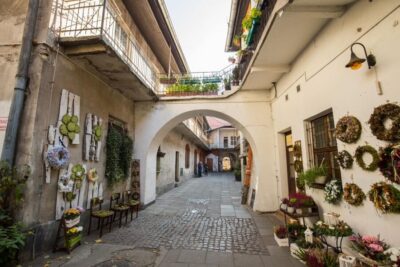 ★ 4.8Kazimierz Jewish Quarter Walking TourFrom $27571 reviews
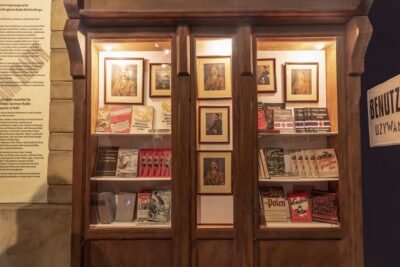 ★ 4.8Kazimierz, Schindler’s Factory & Ghetto Guided TourFrom $81460 reviews
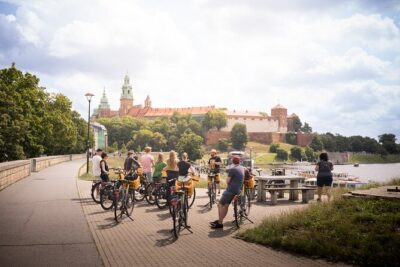 ★ 5.0Full Bike Tour – the Old Town, Jewish Qtr & the Ghetto NEW BIKESFrom $35437 reviews
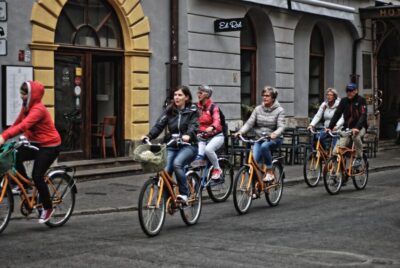 ★ 4.9Bike Tour of the Old Town, Kazimierz, and the GhettoFrom $26350 reviews
 ★ 4.6Jewish Ghetto Walking TourFrom $11349 reviews
Other ways to explore Krakow