
Review · KAZIMIERZ & JEWISH HERITAGE TOURS
Krakow Jewish District and Ghetto Guided Tour in a Small Group
Krakow’s Jewish Quarter makes instant sense with a guide. In about 2 hours, a small group (max 10) traces key places tied to the Jewish community, then continues into major ghetto landmarks, all with English commentary that keeps the story straight. You are not wandering by guesswork, and you still get lots of stops.
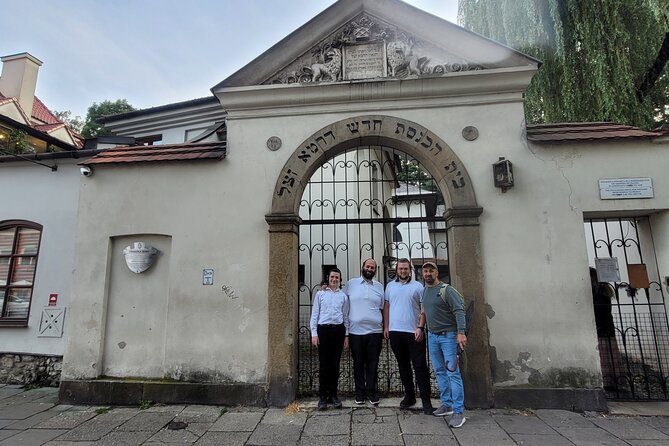
I really liked two things. First, I like Szeroka Street because it sets the tone right away, as the oldest part of Krakow’s Jewish Quarter. Second, I like the pacing, with short but meaningful moments at places like the Jan Karski statue and the main ghetto square, so you can absorb what you see without feeling rushed.
One drawback to plan for: some of the sites connected to synagogues and exhibits can have long queues when they are open. Even if this route includes many exterior views, it is worth arriving a few minutes early to avoid adding stress.
Key things I found most useful on this tour
- Max 10 people keeps the walk personal, so questions feel easy.
- A tight 2-hour route links Jewish Quarter sites to ghetto memorial points in one go.
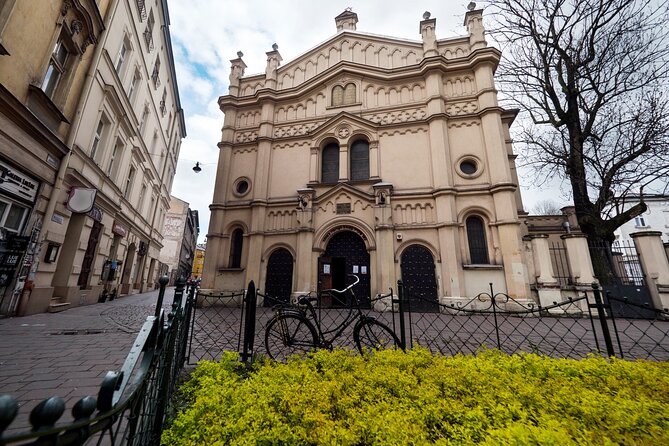
- Historic synagogue stops from the outside help you recognize the neighborhood fast (Remuh, Old, Wolf Popper, High, and Izzak).
- Jan Karski stop adds a human perspective, not just stone and street names.
- Plac Nowy and JCC Krakow show daily community life, not only memorial sites.
- Ghetto wall fragment at the end gives you a clear visual bookend to the route.
Why this Jewish Quarter and ghetto walk works so fast
This tour is built for people who want a clear route and solid context, without spending your whole day on one neighborhood. You get a concentrated path through Krakow’s Jewish District, then into the ghetto area, which is helpful because this part of the city can feel confusing if you are going on your own.
The biggest win is that the guide keeps you oriented. You start on Szeroka 6, then you move from one anchor location to the next, with stops that are mostly short. That matters because when you have only about two hours, you need smart stop density. Here, the route hits a “greatest hits” set of places connected to Jewish community life, synagogue landmarks, trade and public squares, and finally the ghetto memorial core.
Also, the group size matters. With a cap of 10, the tour is small enough that you are not just listening from the back row. You can ask practical questions and actually track what the guide is pointing out.
You can also read our reviews of more guided tours in Krakow
Price and what you really get for $60.21
At $60.21 per person for roughly 2 hours, this is not a bargain in the ultra-cheap sense. But it is also not trying to be a half-day charter. For what you get, the value is in the structure: an organized walk, a guide who connects the dots, and a small group size that avoids the crowding that can drain your attention.
The tour is also in English, and you get a mobile ticket, which makes it easier than printing papers or figuring out last-minute confirmations. In addition, the itinerary is paced in a way that is realistic for most people who can handle a couple of hours of walking and standing in outdoor spots.
One more value angle: many of the listed stops are marked admission ticket free. Even when the tour is not focused on paying entry fees, you still get guided interpretation that helps you understand what you are looking at. That is where a guided format pays off, because reading plaques alone rarely gives you the same connections.
Meeting at Szeroka 6, then finishing at Plac Bohaterów Getta
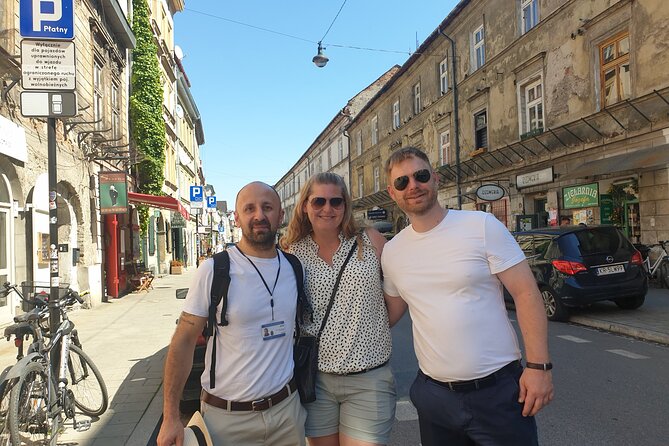
The tour starts at Szeroka 6, 31-053 Kraków and ends at Plac Bohaterów Getta (Square of Ghettos Heroes), 30-527 Kraków. That end point is important because it lands you right where the ghetto story becomes very concrete in the city layout.
It is also noted as being near public transportation, which helps when you are building the rest of your day. Since the walk ends in a memorial area, you can plan for a straightforward return to wherever you are staying without needing to backtrack across the city.
For your planning: since confirmation is received at booking time and the tour uses a mobile ticket, you can keep your day simple. The one thing I would do is show up a touch early at Szeroka 6 so you are not rushing at the start.
Szeroka Street and the synagogue exteriors that set the story
You begin on Szeroka Street, described as the oldest part of Krakow’s Jewish Quarter. Starting here is smart, because it gives you a baseline. Before the tour moves into specific synagogue landmarks and memorial points, you get the sense of place, not just a list of sites.
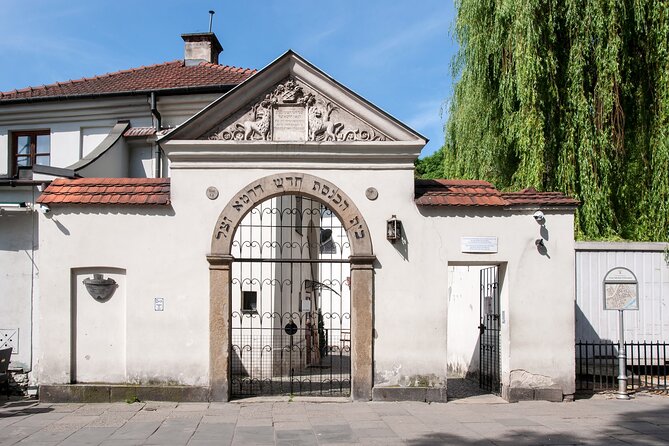
Next come multiple synagogue stops, many of them from the outside, which keeps the walk flowing and prevents you from losing time to ticketing or long indoor transitions. You will see the Remuh Synagogue from outside (listed as 16th century) and the Old Synagogue from outside. Even from the sidewalk, a guide can help you understand why these buildings mattered to the community, and how they reflect the long continuity of Jewish life in Krakow.
Then you move to Wolf Popper Synagogue from outside (listed as 16th century). This stop is quick, but it still works because you are already primed by the earlier synagogue exterior views. By the time you reach Wolf Popper, you are not just spotting a random historic facade. You are seeing a pattern: this neighborhood was shaped by institutions that were both religious and communal.
A useful detail in this part of the route is that you also get another 19th-century synagogue exterior stop. That short segment helps you avoid a common mistake, which is to think everything in the district is only one era. Krakow’s Jewish Quarter changed over time, and these different synagogue dates hint at that evolution.
From Wolf Popper to Jan Karski: buildings plus a human thread
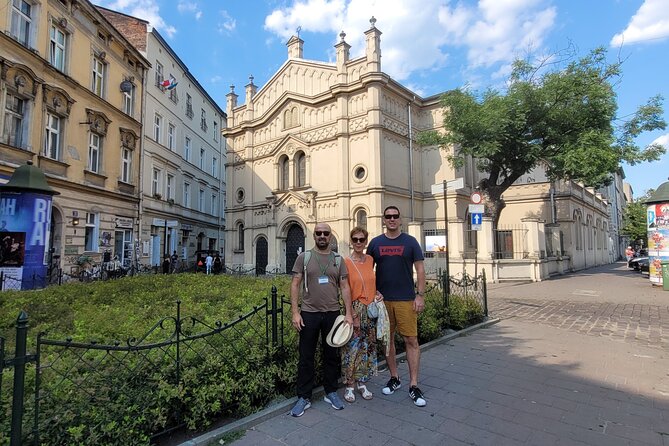
After Wolf Popper, you reach the Statue of Jan Karski, described as the man who tried to stop the Holocaust. This is a short stop, but it has weight. When a tour includes a figure like Jan Karski, it shifts the focus from architecture to the human effort around survival, warning, and action.
You then continue through more exterior synagogue views, including the High Synagogue from outside. The tour keeps moving, which can feel intense if you are expecting a slow, museum-style pace. But for many people, that intensity is exactly the point. The route is designed to keep you connected to the idea that the community was not only buildings and dates, it was people living, praying, trading, studying, and showing up to public spaces.
If you are someone who likes to connect names to places, this is a strong moment to take a pause and ask questions. I would use that time to figure out how the guide connects Jan Karski’s story to the places you saw earlier and the memorial points ahead.

Plac Nowy, JCC Krakow, and the everyday community spaces
One of the smartest transitions on this tour happens when you reach Market Square, Plac Nowy. It is described as the center for trade for the Krakow Jewish Community in past centuries. That context matters because trade changes the story. It turns the neighborhood from a set of sacred sites into a place where everyday life happened, money moved, goods were exchanged, and people met.
From there, you reach JCC Krakow, the Krakow Jewish Community Center. Even though this stop is brief, it is valuable because it grounds you in the idea of community continuity. A community center is not a museum. It is a living space, which helps balance the heavy ghetto and memorial content coming later.
Then you see the Izzak Synagogue exterior from outside (listed as 17th century). This is a quick stop, but it reinforces the idea that the district contains multiple layers. You are not just walking one street with one kind of structure. You are moving through a neighborhood where different eras and institutions overlap.
Eagle Pharmacy to the main ghetto square: the route gets heavier
The tour continues to the Eagle Pharmacy in Krakow Ghetto, viewed from outside. It is a longer stop than some of the synagogue exterior moments, which suggests the guide wants you to pay attention. Since this is presented as a ghetto-related landmark, the emotional weight builds even if you are not entering a building.
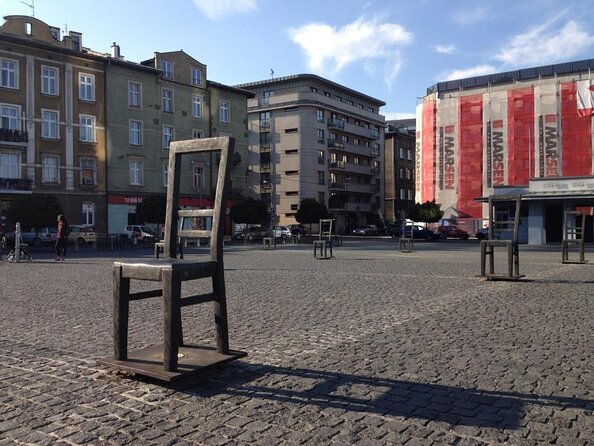
After that, you reach Plac Bohaterów Getta, described as the main place of Krakow Ghetto. This is one of the route’s key turning points. It is where the story stops being primarily about the Jewish Quarter’s institutions and starts becoming directly about the ghetto experience and its memorial significance in the city.
Then the tour ends with a Ghetto Wall Fragment, remnants of Krakow’s ghetto walls. Ending with a physical remnant is a good way to close the loop. It helps your brain connect the earlier “community and landmarks” portion to the idea of confinement, barriers, and how space was controlled.
If you want a small practical tip: take a moment at the wall fragment to just look, not only listen. In a guided walk like this, it is easy to keep your eyes on the guide and lose the quiet impact of the setting.
Pacing, group size, and how to make the most of your guide
The whole route is about 2 hours, which means the guide’s job is to compress a lot of context into short, digestible pieces. This is where a small group cap at 10 people becomes more than a number. It affects how often you can raise your hand, ask a clarifying question, or ask the guide to point out something you missed.
This kind of tour also tends to work best when you show up ready to listen. Don’t plan to treat it like a casual stroll with a podcast. Think of it as a guided lesson in how to read the neighborhood.
A helpful review-style takeaway I would apply to your planning: booking ahead matters if you want to avoid waiting around at stops that can have queues when open. Even when this route is set up with exterior views, some sites in the area can be crowded. Getting on a scheduled path reduces the feeling that your time is at the mercy of lines.
Also, bring comfortable shoes. You will spend time standing at multiple locations, and the itinerary includes several short stops back to back.
Who this tour is best for (and who might want more)
This guided walk is ideal if you want:
- A fast, guided orientation to Krakow Jewish District and Krakow ghetto landmarks
- English commentary and a route that prevents you from wandering
- A small group experience that feels manageable
It is also a good fit if you are pairing this tour with other Krakow highlights. The two-hour length is convenient, and the ending point at Plac Bohaterów Getta helps you keep the next part of your day logical.
On the other hand, you might want something longer or additional on your own if you want deeper museum-style time inside buildings. Since multiple stops are listed as from outside, this tour is more about guided recognition and context, not prolonged interior visits.
Should you book this guided tour?
I think this is a smart book for most people who are serious about understanding Krakow’s Jewish District and the ghetto landmarks without getting lost. The value is in the structure: a clear route, a small group cap, and guided commentary that keeps the story coherent across a lot of stops.
Book it if you:
- want a 2-hour plan that hits key points fast
- prefer a guide to connect the dots between streets, synagogues, squares, and memorial spaces
- like the idea of exterior synagogue recognition paired with stronger memorial moments like Plac Bohaterów Getta and the ghetto wall fragment
Skip it or add something else if you are looking for long indoor time. This is a walk-and-learn format, not a slow, sit-down museum marathon.
FAQ
What is the duration of the Krakow Jewish District and Ghetto guided tour?
It runs for approximately 2 hours.
How much does the tour cost?
The price is $60.21 per person.
Is the tour offered in English?
Yes, the tour is offered in English.
How many people are in the group?
The group is capped at a maximum of 10 travelers.
Where does the tour start and end?
It starts at Szeroka 6, 31-053 Kraków, Poland, and ends at Plac Bohaterów Getta (Square of Ghettos Heroes), 30-527 Kraków, Poland.
What is included in the price?
The included part is the tour guide service, with the tour in a small group up to 10 persons.
Do I need to purchase tickets for the stops?
The tour notes show admission ticket free for the listed stops.
Do I get a mobile ticket?
Yes, the tour includes a mobile ticket.
What is the cancellation policy?
Free cancellation is available if you cancel up to 24 hours in advance for a full refund. If it is canceled because a minimum number of travelers is not met, you will be offered a different date or a full refund.
How far in advance is this tour typically booked?
On average, it is booked 33 days in advance.
More Guided Tours in Krakow
More Tours in Krakow
More Tour Reviews in Krakow
Not for you? Here's more nearby things to do in Krakow we have reviewed






More Kazimierz & Jewish Heritage Tours to consider.
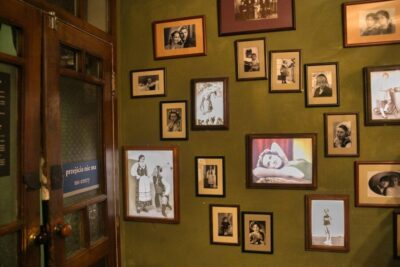 ★ 4.7Schindler’s Factory & Ghetto Guided TourFrom $571,694 reviews
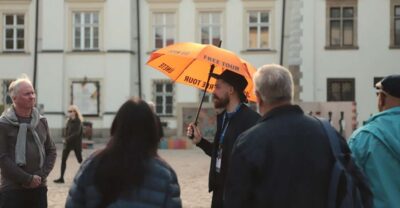 ★ 4.9Jewish Quarter and Former Ghetto TourFrom $191,441 reviews
 ★ 4.9Bike Tour of Old Town, Jewish Quarter and the GhettoFrom $371,155 reviews
 ★ 4.8Kazimierz Jewish Quarter Walking TourFrom $27571 reviews
 ★ 4.8Kazimierz, Schindler’s Factory & Ghetto Guided TourFrom $81460 reviews
 ★ 5.0Full Bike Tour – the Old Town, Jewish Qtr & the Ghetto NEW BIKESFrom $35437 reviews
 ★ 4.9Bike Tour of the Old Town, Kazimierz, and the GhettoFrom $26350 reviews
 ★ 4.6Jewish Ghetto Walking TourFrom $11349 reviews
Other ways to explore Krakow