
Review · KAZIMIERZ & JEWISH HERITAGE TOURS
Krakow Jewish Quarter and Ghetto Tour by Electric Golf Cart
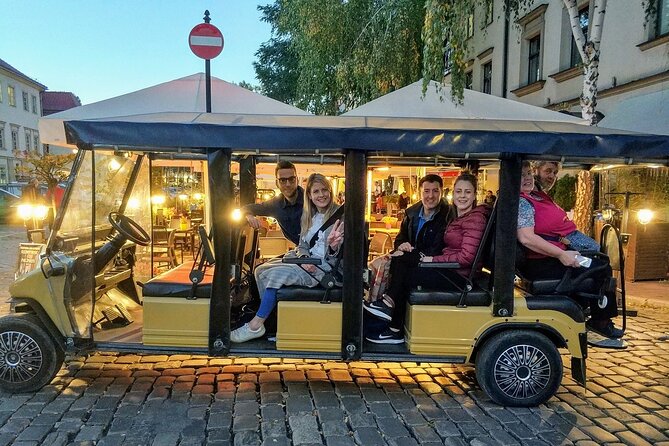
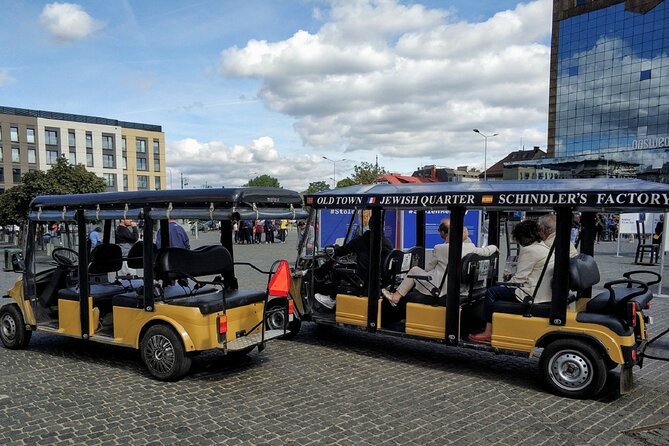
Kazimierz history moves fast when you have wheels. This electric golf cart tour connects key Jewish landmarks and ghetto sites with English commentary and audio support, so you can cover more ground in 1 hour 30 minutes without feeling rushed. I like that it focuses on the places you actually need to understand, from Szeroka Street to Plac Zgody, while the cart keeps you comfortable in heat or cold. One consideration: several stops can feel heavier on church interiors than on Jewish building access, so if your heart is set on synagogue time, plan to do a little extra exploring on your own afterward.
You also get a clear, practical route with mobile tickets and a group size capped at 50, which keeps things from turning into chaos. If you prefer photo pauses, this style is good, since the driver can pull over for short visits and quick in-and-out moments.
Key Highlights You Will Feel Right Away
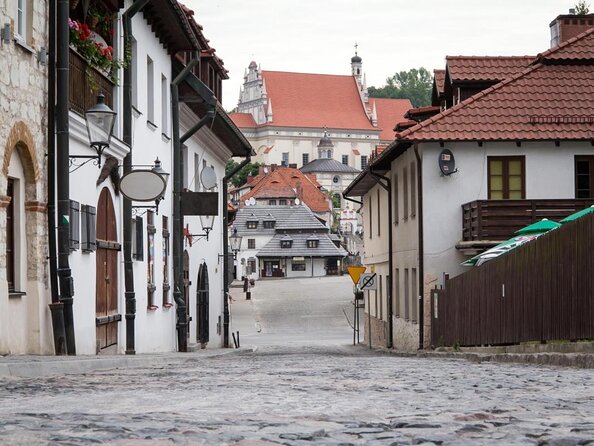
- Electric golf cart comfort for covering more of Kazimierz than you would on foot in the same time
- English-speaking guide support plus an audio guide to keep the story consistent
- Szeroka Street’s unusual synagogue concentration, with multiple synagogues once lining the same street
- A well-chosen ghetto sequence, including a preserved wall fragment and a plaque marking what happened
- Plac Zgody and Umschlagplatz context, where Jews were forced to assemble for deportation
- The pharmacy’s role as refuge, sheltering people and carrying messages or packages
Kazimierz by Electric Cart: Why This Format Works
Kazimierz, the area south of Wawel, was the hub of Jewish life in Krakow for centuries, and today it is one of the city’s strongest tourist zones. What makes this tour practical is the way it links that long timeline to specific streets and buildings. Instead of hopping between far-flung points on your own, you get a guided route that keeps you oriented.
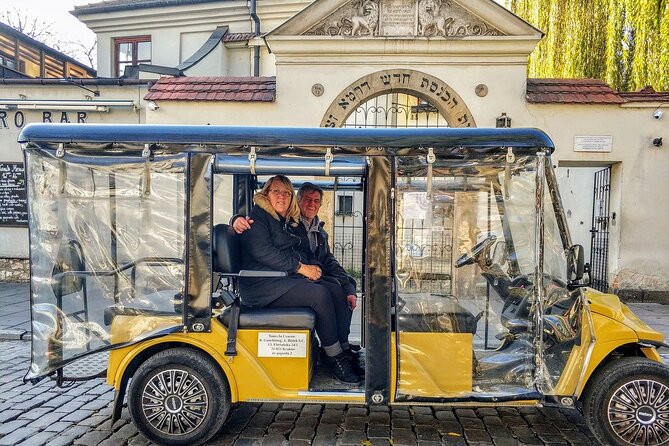
The electric golf cart matters more than you might think. You are still walking a little, but you are not doing a full marathon through cobblestones. That is a real advantage if you want context and stops, but your energy is limited. One common theme from the experience is that it feels relaxing, especially on hot days, cold winter days, or when the weather turns.
The other strength is pacing. You cover over 20 important cultural monuments in Kazimierz, with a mix of viewpoints and short entry moments. That balance gives you two things at once: a big-picture overview and enough detail to know where you will want to return later.
You can also read our reviews of more tours and experiences in Krakow.
Getting Oriented at the Start: Where the Tour Begins and Ends
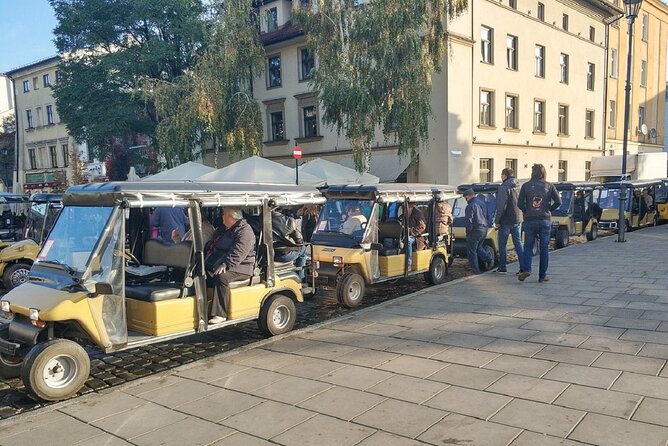
You meet at Mikołaja Zyblikiewicza 2, 31-029 Kraków. The tour ends at Mikołaja Kopernika 3, 31-034 Kraków. Both spots are in the central city zone, so you are not stuck with long transit at the end.
If you like to plan your day tightly, this format helps. It runs about 1 hour 30 minutes, which is perfect when you want a meaningful history hit but you still need time to wander markets, cafés, or a second neighborhood. Also, the tour uses a mobile ticket, which cuts down on time spent hunting for papers.
One small detail to watch: seating can affect your comfort. A person noted being placed toward the back with seats facing backward, so if you are picky about direction for photos, it helps to ask at the moment you board.
Szeroka Street: The Heartbeat of Kazimierz
Szeroka Street is framed as the center of Jewish Kazimierz, and the tour gives you a reason for that. It highlights that four synagogues once stood on the street, a setup described as unheard of elsewhere in Europe. Even if you only glance at the buildings from the cart, it helps you read the area as more than a scenic walk.
Then the tour narrows in on the street as a living stage for culture. One stop calls out that the same area is the stage of the final concert of the Jewish Culture Festival. That connection is useful because it shows continuity. This is not only about what was lost. It is also about what remains in community memory and public life.
What I like about this part is that it ties density to meaning. If you walk Kazimierz without guidance, it is easy to see streets and architecture. With this tour, you start to understand why certain streets carried such weight.
One of Poland’s Oldest Preserved Synagogues
From Szeroka Street, the tour points you toward one of the oldest synagogues in Poland that is preserved in such good condition. The key idea here is survival through time. The city did not preserve everything, but this one stands as a physical reminder of Jewish religious life that stretches far back.
This stop is also where the tour’s “short entry” style becomes clear. You may get a brief visit window rather than a long, slow sit. That can be a drawback if you want extended time to look at details, but it also keeps the schedule moving so you see more of the neighborhood in one go.
If you love architecture and religious spaces, this stop is one of the better reasons to choose the cart format over a quick photo walk. You get the chance to see inside at least some sites, and you get enough context to know what you are looking at.
St Joseph Church in Podgórze Market Square: A Landmark You Cannot Miss
The tour shifts to Podgórze with the parish church of St Joseph. This is described as a distinctive, widely recognizable site of devotion and something that dominates Podgórze Market Square. That square is identified as a central point that was only incorporated into Krakow in the 20th century.
Why include a church in a Jewish quarter tour? Because the story of Kazimierz is not isolated. The neighborhood today sits inside a broader city geography with major landmarks that shape how people orient themselves. St Joseph also gives you a visual anchor, especially if you later return to the area on foot.
Here is the practical caution: if your top goal is Jewish interiors and you want maximum time in synagogues or Jewish spaces, you might feel torn by church time. One disappointment noted that several pop-ins were Christian churches rather than Jewish buildings. That does not make the church stop wrong, but it does mean the tour may not match your expectations if you wanted purely Jewish-site access.

The Ghetto Wall Fragment and Plaque: When the Route Turns Serious
Then the tone changes, and the tour handles that shift with a specific stop. You see a small fragment of the original wall around the former ghetto, preserved to the present, with a plaque commemorating the fate of the inhabitants.
This is the kind of moment that makes a guided route feel worth it. A cart ride could easily become a sightseeing loop. But a physical remnant, plus the plaque, forces the story to land. You are not only hearing about tragedy in abstract terms. You are standing near something made to outlast forgetting.
For many people, this becomes the emotional core of the trip. One person described the tour as a poignant reminder of difficult times. Another described it as very emotional and touching, with the experience turning serious quickly once they reached these preserved elements.
If you prefer gentle pacing through heavy topics, you should mentally prepare for this being a turning point rather than a casual stop.
Plac Zgody and Umschlagplatz: Understanding the Forced Assembly Point
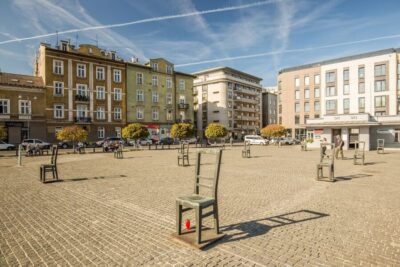
Next comes Podgórze in 1941, when the district was turned into the Krakow Ghetto. The tour then takes you to the former Plac Zgody, described as being designated Umschlagplatz under Nazi occupation. This is identified as the place where Jews had to congregate to be deported.
This stop is powerful because it connects geography to policy, and policy to human experience. You can think of it as the transformation of a public space into an instrument of control. You are learning what changed and what people were forced to do, not just what buildings looked like.
The tour also emphasizes the contrast between the scale of tragedy and the small, surviving details that remain readable in the modern city. That perspective helps you interpret what you see after you step away from the cart.
The Pharmacy as Refuge: A Small Bright Spot on a Tragic Map
Right after the deportation context, the tour points to a symbolic bright spot: a Polish pharmacy that acted as an asylum or embassy. It is described as providing shelter during deportation and helping deliver messages or packages inside and outside the ghetto.
This is one of the most human parts of the story, because it gives you a concrete example of risk and care. It also prevents the tour from becoming only a list of horrors. Instead, it shows how people tried to help even when everything around them was designed to harm.
If you want one takeaway that stays with you, it is this contrast. You walk from a place of forced assembly to a place where a small system of support operated. That shift is not a distraction. It is part of what makes the story complete.
Comfort, Headsets, and How to Get the Best Experience
This tour uses an audio guide, paired with transport by golf cart and an English-speaking driver. One important note: the audio is headset style rather than loudspeaker style, according to one disappointment. If you like easy conversation with your group while still listening, headset audio can feel isolating.
Still, the audio approach can be helpful in another way. It keeps the same story details clear for everyone, even when the cart moves between stops. And the tour length is short enough that you are not stuck with hours of narration.
Weather also seems to influence comfort. People mention the cart being toasty in winter months, and the overall benefit of not having to walk everything in heat. If you are planning mid-summer, this is the kind of tour that lets you see a lot without melting.
If you are sensitive to seating orientation, ask where you will sit before you roll away. Small choices can make a big difference when your goal is photos and clear views.
Guides You Might Get and What They Tend to Bring
The tour includes an English-speaking driver, and many experiences praised the guide style. Names that came up include Matt, Natalie, Olivia, Martina, Michael, and Phillips. The common thread across those praised moments is that the guide was friendly, engaging, and respectful, with strong command of the story.
That matters because Kazimierz and the ghetto sites require a careful tone. A guide who can explain without turning it into a lecture makes the route easier to absorb. You do not only want facts. You want a path through complicated emotions, and a guide can help you pace your attention.
Even if the audio guide is doing part of the work, your driver is still the one guiding your sense of what to look at and when to step inside buildings.
Price and Value: Does $34.75 Make Sense?
At $34.75 per person for about 1 hour 30 minutes, you are paying for a focused slice of Krakow’s most important neighborhood story. The price includes the audio guide, the golf cart transport, and an English-speaking driver. It does not include hotel pickup or drop-off.
So where is the value? The cart saves you time and energy, which is critical in a dense area where stops are spread across multiple streets and districts. The audio and guide combo also means you are not piecing together history from signage alone.
Is it worth it if you have plenty of time and you love walking? Maybe not. One practical regret was that someone felt it might be better on foot for more personal pacing and deeper interior time. But if you are short on time, want structure, and still want to see key ghetto and Kazimierz moments, the price can feel fair.
One more value angle comes from comparison. A person noted the tour felt cheaper than options quoted in the city. Even without knowing exact pricing of other operators, that tells you the cart-and-guiding package is priced in a way that aims to be accessible.
Should You Book the Krakow Kazimierz and Ghetto Golf Cart Tour?
Book it if you want an efficient, English-supported route through Kazimierz and the ghetto sites, and you value comfort over long walking. This is especially a good match if you want a first pass that helps you decide what to revisit later on foot.
I would also book it if you enjoy a structured sequence, because the tour moves from Kazimierz origins to Szeroka Street landmarks, then into the preserved wall and the Umschlagplatz narrative, then finishes with the pharmacy refuge story. That flow is easy to follow and hard to forget.
Skip or adjust expectations if your top priority is spending lots of time inside Jewish buildings. The tour includes some interior moments, but there are reported frustrations about how much time gets allocated to Christian churches. If Jewish interiors are your main goal, treat this as orientation and context, then plan extra time for targeted synagogue visits afterward.
FAQ
How long is the Krakow Jewish Quarter and Ghetto tour?
It is approximately 1 hour 30 minutes.
What is the price per person?
The price is $34.75 per person.
Is the tour offered in English?
Yes, the tour is offered in English.
Will I get an audio guide?
Yes. An audio guide is included.
Does the price include transportation?
Yes. Transport by golf cart is included during the tour.
Is hotel pickup included?
No. Hotel pickup and drop-off are not included.
Where do I meet for the tour?
You start at Mikołaja Zyblikiewicza 2, 31-029 Kraków, Poland.
Where does the tour end?
The tour ends at Mikołaja Kopernika 3, 31-034 Kraków, Poland.
What is the maximum group size?
The tour has a maximum of 50 travelers.
What is the cancellation policy?
You can cancel for a full refund if you cancel at least 24 hours before the experience’s start time. If you cancel less than 24 hours before, the amount paid is not refunded.
More Tours in Krakow
More Tour Reviews in Krakow
Not for you? Here's more nearby things to do in Krakow we have reviewed





More Kazimierz & Jewish Heritage Tours to consider.
 ★ 4.7Schindler’s Factory & Ghetto Guided TourFrom $571,694 reviews
 ★ 4.9Jewish Quarter and Former Ghetto TourFrom $191,441 reviews
 ★ 4.9Bike Tour of Old Town, Jewish Quarter and the GhettoFrom $371,155 reviews
 ★ 4.8Kazimierz Jewish Quarter Walking TourFrom $27571 reviews
 ★ 4.8Kazimierz, Schindler’s Factory & Ghetto Guided TourFrom $81460 reviews
 ★ 5.0Full Bike Tour – the Old Town, Jewish Qtr & the Ghetto NEW BIKESFrom $35437 reviews
 ★ 4.9Bike Tour of the Old Town, Kazimierz, and the GhettoFrom $26350 reviews
 ★ 4.6Jewish Ghetto Walking TourFrom $11349 reviews
Other ways to explore Krakow