
Review · KAZIMIERZ & JEWISH HERITAGE TOURS
Krakow Kazimierz and Jewish Ghetto Tour with Synagogues
A ghetto tour lives or dies by the guide. In Krakow’s Kazimierz and former Jewish Ghetto, a Jewish History Expert Guide connects synagogues, street corners, and WWII facts into one clear story. You get more than dates, you get how people lived here, and what was lost.
I love the way this tour brings the past to street level, especially along Szeroka Street and into Podgórze, where the ghetto was established. I also like that the longer options include real synagogue time, with ticketed visits to the Tempel Synagogue or the Old Synagogue, plus the Remuh Synagogue and the Old Jewish Cemetery on the 4-hour route.
One consideration: the exact sites depend on which time slot you book, and Jewish heritage sites close on Saturdays, Jewish holidays, and during prayer time. Also, if you expect an inside visit to Oskar Schindler’s enamel factory, double-check what’s included, since some guests were disappointed it was only viewed from outside.
Key things you’ll notice on this tour
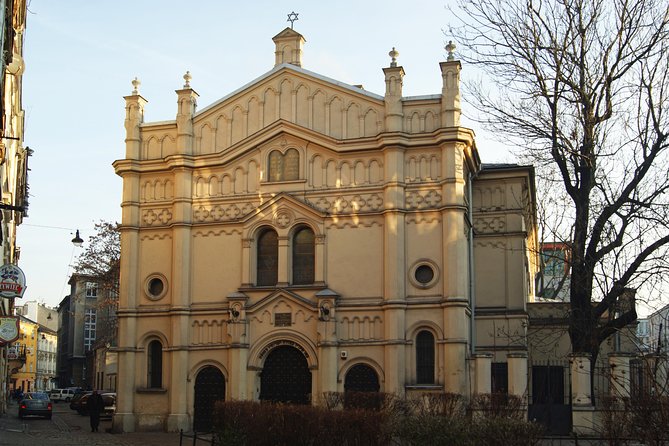
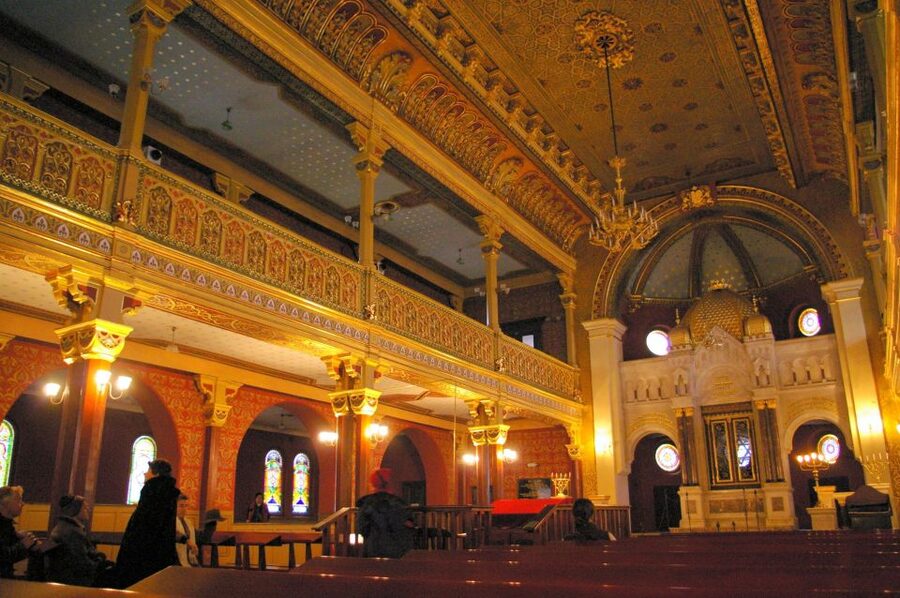
- Your synagogue choice matters: Tempel Synagogue (Moorish-style interior) or the Old Synagogue (15th-century, now tied to Krakow Jewish culture and history).
- WWII history is part of the route, not a side note, including the ghetto before forced deportations to Auschwitz-Birkenau and other camps.
- Schindler List links are built into key stops, including places tied to Oskar Schindler and his enamel factory.
- 4-hour option adds the cemetery and an active synagogue, including Remuh Synagogue and the Old Jewish Cemetery with famous rabbis.
- Route structure keeps it chronological and human, with room for context about everyday Jewish life before and after the war.
- Guide quality is a standout, with guests praising Artur for clear, respectful storytelling and Renata for an engaging, information-packed walk.
Kazimierz and the Jewish Ghetto in Krakow, what this tour covers
Kazimierz is where Krakow’s Jewish story has visible roots, and it’s also where you can feel the contrast between older, lived-in neighborhood life and the brutal rupture of WWII. This tour focuses on the Jewish heritage sites in Kazimierz and the former Jewish Ghetto, giving you the through-line from the Middle Ages to the Holocaust and into today.
What makes it especially useful is that it’s not just “buildings and bullets.” Your guide ties together why these places mattered, how the community functioned, and what changed once the German occupation took hold. You walk, you listen, and you get a sequence you can actually hold onto.
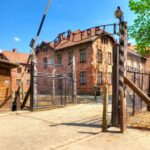
You’ll see major landmarks tied to the ghetto era, including Ghetto Heroes Square, and you’ll hear how people were forced out from here toward Auschwitz-Birkenau and other concentration camps. That WWII portion is heavy, so the best value of a private guide is context. You’re not stuck trying to interpret plaques on your own.
You can also read our reviews of more tours and experiences in Krakow.
Getting oriented fast, the Kazimierz Hotel meeting point and pacing
The tour meets in front of the Kazimierz Hotel, Miodowa 16, Krakow. You don’t need to go inside, it’s simply a clear landmark to start from.
From there, you’ll do a walking route that typically starts in Kazimierz, then heads toward Podgórze for the ghetto-related sites. This matters because Kazimierz and Podgórze aren’t just “next street over” story lines. They reflect how the city rearranged Jewish life under occupation.
In terms of timing, you have 2 to 4 hours total, and that length controls which synagogue and cemetery sites you can realistically fit in. A shorter tour gives you the key geometry of the neighborhood story, while the 3- and 4-hour versions give you the kind of guided site time that helps the history stick.
Tip from how this tour is set up: if you want synagogue interiors to be part of the experience, don’t rely on the 2-hour option, since tickets to specific synagogues are not included there.
Tempel Synagogue or the Old Synagogue, choosing your 3-hour option
The 3-hour tour is where you start getting inside the Jewish story in a more direct way. You’ll visit one synagogue with a ticketed entry included, and which one you see depends on your preferences and opening hours.
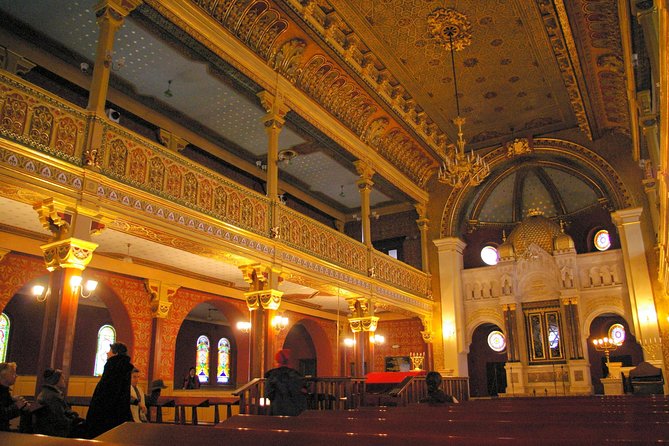
Tempel Synagogue, the Moorish-style interior visit
The Tempel Synagogue is the 19th-century site known for its Moorish-style interior. That design detail is more than decoration. When you’re listening to the guide explain Jewish customs and community life, it helps to see a space that was built as a statement of religious identity in a changing world.
Hours are also important here. The Tempel Synagogue is listed as open:
- Monday to Thursday and Sunday, 10:00 AM to 6:00 PM
- Fridays, 10:00 AM to 4:00 PM
In winter it shifts to earlier closing times, with Friday at 10:00 AM to 2:00 PM.
Old Synagogue, the 15th-century museum experience
The Old Synagogue is the 15th-century option, and it now ties into a museum of Krakow Jewish culture and history. This is a strong match if you want your synagogue visit to immediately connect architecture, memory, and curated learning.
Hours are listed as:
- Mondays, 10:00 AM to 2:00 PM
- Tuesday to Sunday, 10:00 AM to 5:00 PM

Skip-the-line helps, but timing still matters
This tour includes tickets for the Tempel or Old Synagogue on the 3-hour (and 4-hour) options, and it’s set up to skip the ticket line. Still, synagogue visits can be affected by closures for prayer times and holidays, so picking the right day of the week makes a real difference.
If you’re trying to decide between them, here’s the plain way to think about it:
- Choose Tempel if you’re drawn to a more visually dramatic, 19th-century space.
- Choose Old Synagogue if you want the older structure plus the museum-style context.
Remuh Synagogue and the Old Jewish Cemetery, why the 4-hour tour feels complete
The 4-hour tour is the one I’d pick if you want the most grounded sense of place. It adds both the Remuh Synagogue and the Old Jewish Cemetery, plus it includes tickets to two synagogues total: Remuh and either Tempel or Old.
Remuh Synagogue, an active house of worship
Remuh Synagogue is an active place of worship and plays an important role in protecting Polish Jewish heritage. Practically, this changes the tone. You’re not only looking at history behind glass. You’re visiting a living religious site, and your guide can help you understand why that continuity matters.
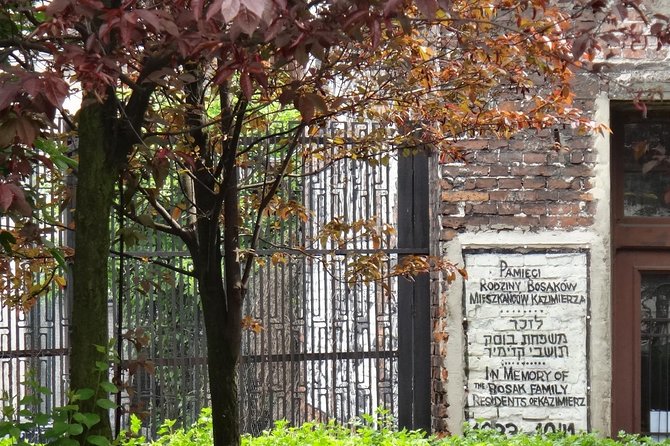
One detail that stands out: the courtyard walls carry inscriptions in memory of local Jews who perished in the Holocaust. That’s the kind of moment where context from the guide helps you read what you’re seeing without rushing.
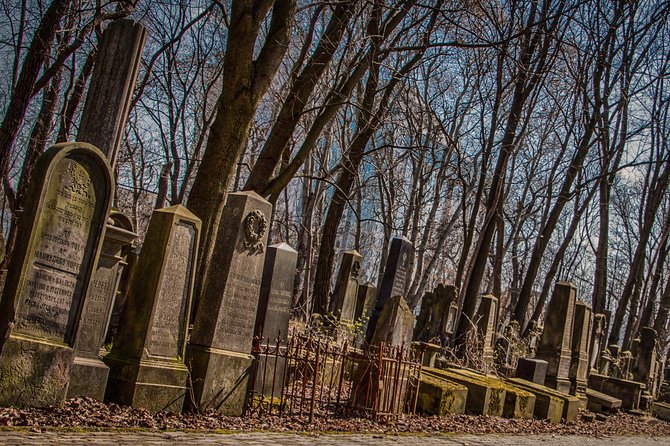
Old Jewish Cemetery, famous names and direct memory
At the Old Jewish Cemetery, you’ll find graves of notable Polish Jews, including Rabbi Moses Isserles, Avraham Yehoshua Heschel, and Yossele the Holy Miser. Seeing names like these is meaningful, but what makes the stop powerful is the way it connects religious leadership and community life to the people affected by persecution.
If you’re the type who likes history that has names, dates, and human scale, the cemetery time is worth the extra hour. The 2-hour tour can point you in the right direction, but the 4-hour tour gives you more time to process.
Szeroka Street to Ghetto Heroes Square, turning a walk into a timeline
The walking route is built around the way Kazimierz functioned over time. Your guide explains centuries of coexistence and intermingling between Polish and Jewish cultures, and then explains how German occupation changed daily life.
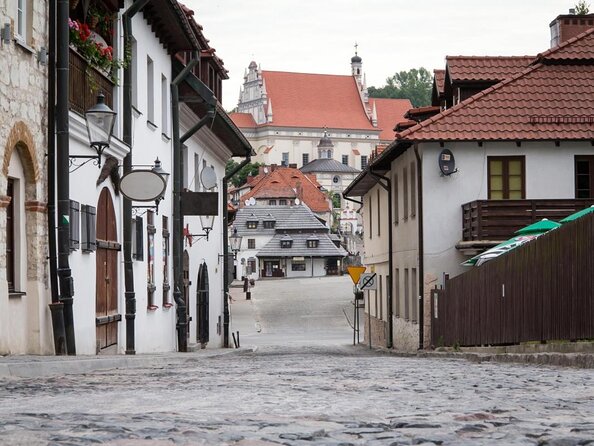
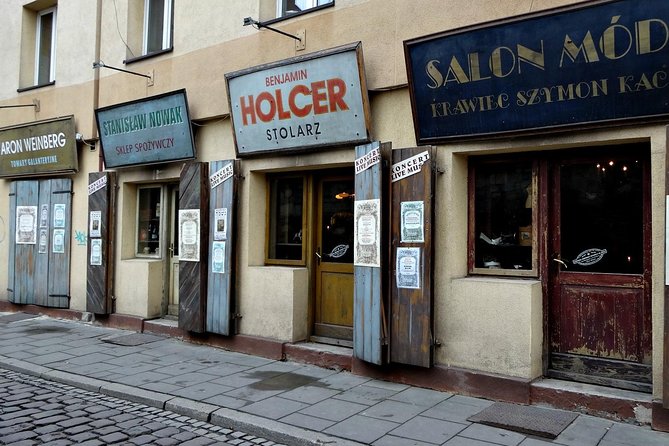
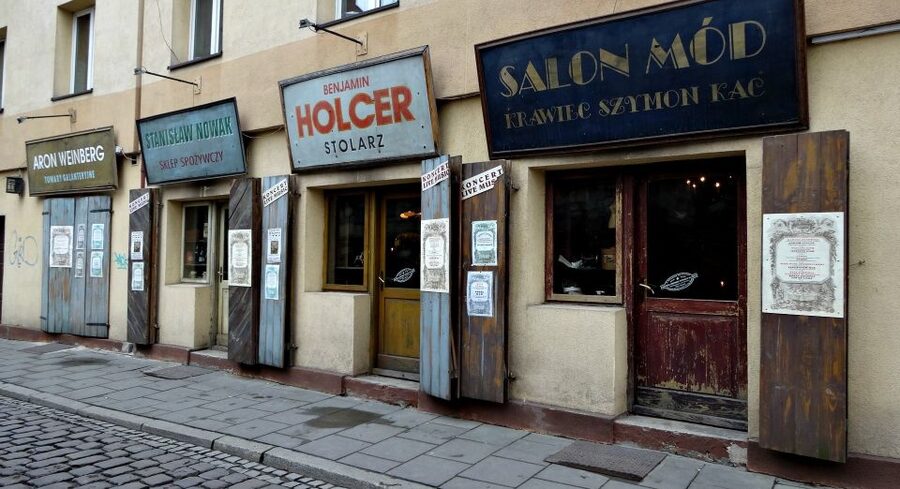
You’ll follow Szeroka Street, known for old Jewish houses, restaurants, and other establishments. That’s an important stop because it shows you how the neighborhood still carries cultural traces, even as history gets darker nearby. If you only focused on the WWII sites, you’d lose the point that Jewish life here existed long before the ghetto walls.
From there you head toward Podgórze for ghetto-related history. The tour includes:
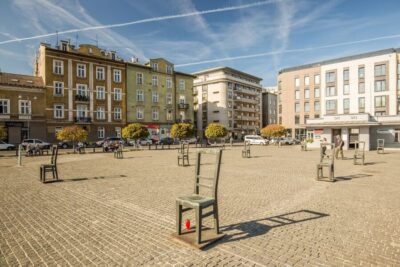
- The monument at Ghetto Heroes Square
- Oskar Schindler’s Enamel Factory as a key reference point
- The story of how the ghetto functioned and the deportations that followed
This is where a private guide earns their fee. Without context, it’s easy to treat each site like a separate stop. With a guide, it becomes one connected chain.
Schindler’s List connections, what you should expect at Schindler’s factory
Schindler’s List is a cultural shortcut. This tour uses it carefully, connecting places linked to Oskar Schindler with the real events and people behind the film. You’ll hear the true story that inspired the movie, and you’ll see the area associated with Oskar Schindler’s Enamel Factory.
Here’s the consideration you should keep in mind: the tour description says you’ll see the factory, but it does not explicitly promise you’ll go inside a museum or factory exhibition. One guest was upset because they were hoping to enter. So if your priority is an inside visit, confirm what is included before you book.
The good news: even when you view the factory from outside, the guide can still frame why the location matters and how Schindler’s story intersects with the ghetto context. Just manage expectations on entry.
Jewish customs and everyday life, not only WWII
A common mistake on history tours is making everything about tragedy. This one still covers the Holocaust and WWII, but it also works to show Jewish life and customs in a way that feels tied to real routine.
Depending on the option, you’ll see synagogues like Tempel or the Old Synagogue and learn about Jewish customs. On the longer tours, visiting two synagogues plus the cemetery adds more emotional range. The goal is understanding, not shock.
That approach is reflected in guide feedback. Guests specifically praised guides like Artur for explaining historical connections clearly and respectfully, while also sharing lively insights into Jewish life before and today. Renata was also described as exceptional, taking people through the quarter and ghetto area with both history and customs.
If your travel style is “help me understand what I’m looking at,” this tour direction tends to click.
Price and value, $100 for 2 to 4 hours with a licensed Jewish history guide
At about $100 per person for 2 to 4 hours, the value comes from two things: private guiding and synagogue access on the longer routes.
On the 2-hour option, the tour still gives you a walking foundation through Kazimierz and the former Jewish Ghetto, but synagogue tickets are not included. That makes the 2-hour format a good choice if you want the main geography and history story first.
On the 3-hour and 4-hour options, ticketed synagogue visits are included, and the 4-hour option adds Remuh Synagogue and the Old Jewish Cemetery. That shifts the math. You’re not only paying for narration, you’re paying for structured time at specific, meaningful sites, plus a licensed guide fluent in your chosen language.
It also helps that the tour includes a “skip the ticket line” setup. Even when lines are short, saving waiting time keeps the experience moving.
If you’re deciding between tours in Krakow, I’d compare value like this:
- If you want maximum guided context plus indoor heritage sites, choose the 3- or 4-hour option.
- If you want an efficient overview and plan to return later on your own, the 2-hour tour can work.
Who this tour suits best, and who might want a different fit
This tour is ideal if you:
- Want a private guide with a Jewish history focus
- Like walking tours that connect neighborhood details to major events
- Are planning to visit multiple Jewish sites in Krakow and want a strong backbone first
It also suits solo travelers, couples, and small groups, since private group availability is offered. Plus, it lists multiple tour languages, including English, French, German, Italian, Polish, Russian, and Spanish.
Who might want to think twice:
- If you mainly want a quick photo sprint, the history content and synagogue visits are going to require attention.
- If you expect Schindler’s factory to be an inside museum stop every time, confirm the scope for your exact date and option.
Should you book this Krakow Jewish heritage tour?
I’d book this tour if your goal is to understand Krakow’s Jewish history in a guided, respectful way, with real synagogue access and WWII context that isn’t skimmed. The strongest reason to choose it is the balance: Kazimierz life before the catastrophe, the ghetto period with key monuments, and then synagogue and cemetery stops that give the story a human scale.
If you can swing only one time slot, my vote leans toward the 4-hour option for the cemetery and the Remuh Synagogue, especially if you want the tour to feel complete. If you’re short on time, pick the 3-hour option so you still get at least one synagogue ticketed visit.
Finally, when you book, pay attention to closures on Saturdays, Jewish holidays, and prayer times, and check synagogue opening hours based on your travel date. That small planning step saves you from missing the very part you came for.
FAQ
How long is the Krakow Kazimierz and Jewish Ghetto tour?
The tour duration is 2 to 4 hours, depending on which option you choose.
Where do I meet the guide?
Meet your guide in front of the Kazimierz Hotel, Miodowa 16, Krakow. Please do not enter the hotel, it is only a meeting place.
What’s the difference between the 2-hour, 3-hour, and 4-hour options?
The 2-hour option focuses on a walking tour of Kazimierz and the former Jewish Ghetto, and it does not include synagogue tickets.
The 3-hour option includes tickets to 1 synagogue (either the Tempel Synagogue or the Old Synagogue) plus guided time in Kazimierz and the ghetto area.
The 4-hour option includes tickets to the Remuh Synagogue and the Old Jewish Cemetery, plus tickets to 2 synagogues total (Remuh plus either Tempel or Old).
Which synagogues can I visit on this tour?
On the 3-hour option, you visit either the Tempel Synagogue or the Old Synagogue.
On the 4-hour option, you visit the Remuh Synagogue and the Old Jewish Cemetery, plus either the Tempel or the Old Synagogue.
Are synagogue tickets included?
Yes, tickets to the Tempel or Old Synagogue are included for the 3-hour and 4-hour options. Tickets to the Remuh Synagogue and the Old Jewish Cemetery are included for the 4-hour option only.
What languages are available for the live guide?
The tour offers live guidance in English, French, German, Italian, Polish, Russian, and Spanish.
Are there days or times when synagogues are closed?
Jewish heritage sites and synagogues are closed on Saturdays, Jewish holidays, and during prayer time.
Can I cancel for a full refund?
Free cancellation is available up to 24 hours in advance for a full refund.
More Tours in Krakow
More Tour Reviews in Krakow
Not for you? Here's more nearby things to do in Krakow we have reviewed








More Kazimierz & Jewish Heritage Tours to consider.
 ★ 4.7Schindler’s Factory & Ghetto Guided TourFrom $571,694 reviews
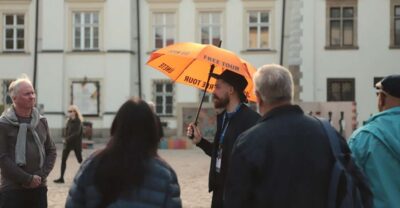 ★ 4.9Jewish Quarter and Former Ghetto TourFrom $191,441 reviews
 ★ 4.9Bike Tour of Old Town, Jewish Quarter and the GhettoFrom $371,155 reviews
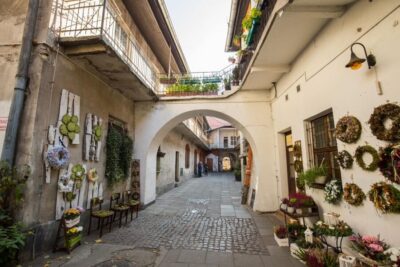 ★ 4.8Kazimierz Jewish Quarter Walking TourFrom $27571 reviews
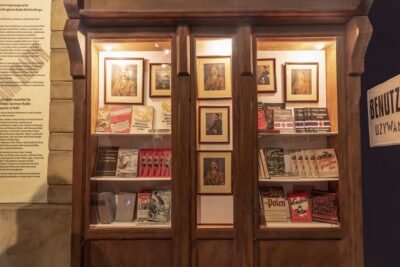 ★ 4.8Kazimierz, Schindler’s Factory & Ghetto Guided TourFrom $81460 reviews
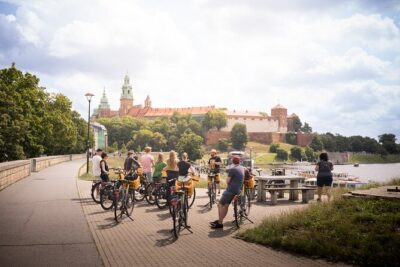 ★ 5.0Full Bike Tour – the Old Town, Jewish Qtr & the Ghetto NEW BIKESFrom $35437 reviews
 ★ 4.9Bike Tour of the Old Town, Kazimierz, and the GhettoFrom $26350 reviews
 ★ 4.6Jewish Ghetto Walking TourFrom $11349 reviews
Other ways to explore Krakow