
Review · SCHINDLER'S FACTORY & WWII TOURS
Krakow: Plaszow Concentration Camp Walking Tour
A quiet walk with heavy answers. Krakow-Plaszow concentration camp is hard to read on your own, so a licensed guide really changes how the site lands, especially when you connect the history to Oskar Schindler and Schindler’s List.
I like that this tour focuses on what you can see and what it meant, from the camp’s early forced-labor days to the 1942 deportations tied to the Krakow ghetto.
What I appreciate most is the way the guide turns scattered remains into a clear story. I also love the built-in time to remember victims at the memorials, and then the switch in perspective when you trace Schindler’s story and the Spielberg film connection.
One catch: the tour is outdoors and the site is not as intact as you might expect, so weather can affect comfort and you really do want a guide to keep your bearings.
Quick hits
- Licensed guide who explains what you’re looking at, not just dates and names
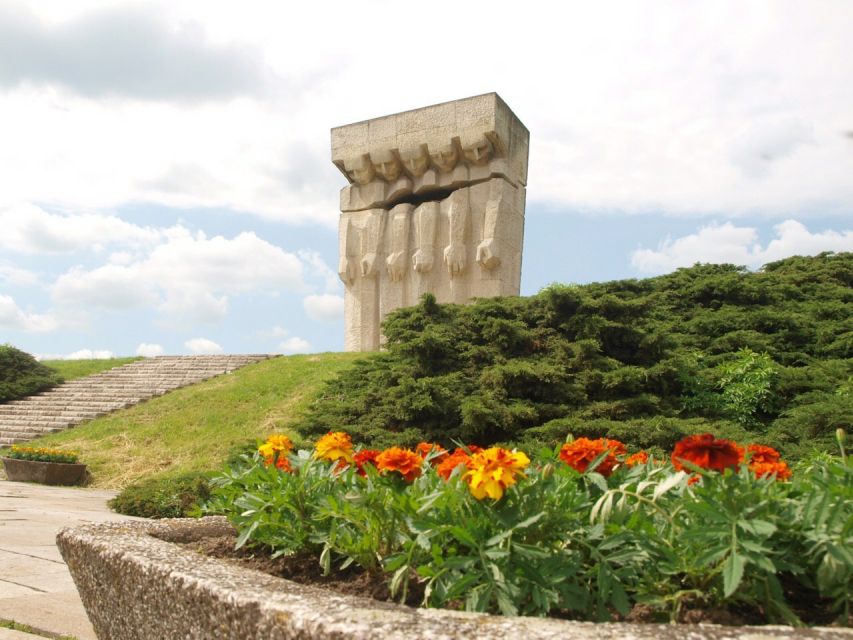
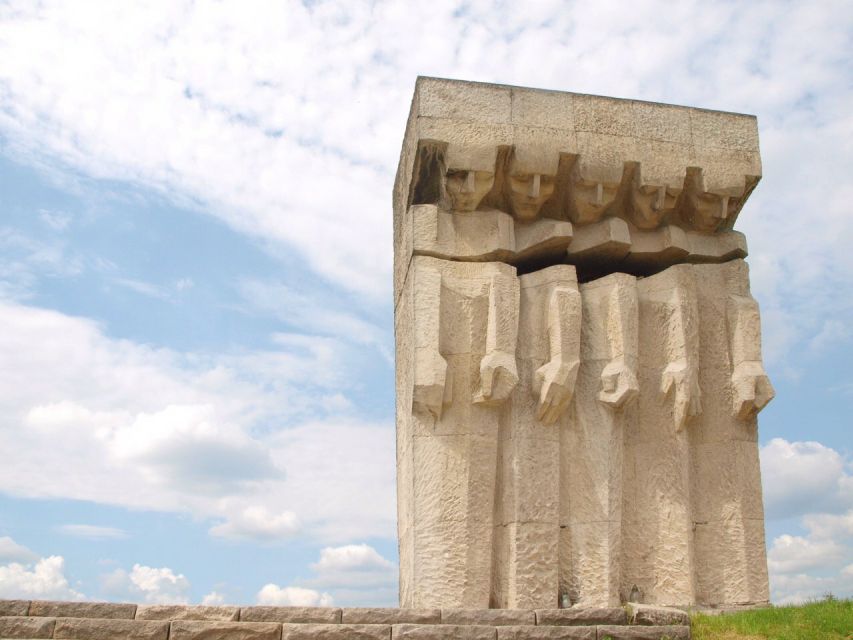
- Memorials built to remember victims, with moments to pause and reflect
- Camp details beyond headlines, including quarry and military-factory labor
- Krakow ghetto deportations starting in 1942, tied to what happened on the ground
- Oskar Schindler and Schindler’s List connections, including where filming relates to the area
- Replica site at Liban Quarry, a short distance from the main camp area
Plaszow in Krakow, and why this walking tour matters
Plaszow Concentration Camp is one of those places where you quickly realize you need context. The ground is not going to explain itself, and the history spans forced labor, mass persecution, and Nazi control of everyday life in the region.
This tour keeps things practical. You’re walking a defined route for about two hours, and your guide helps you understand what each part of the former camp was used for, what conditions meant, and how victims were targeted. That matters because Plaszow also connects to the broader Krakow story: deportations from the Krakow ghetto beginning in 1942 were not a separate event, they were part of the same machinery.
And then there is the film thread. You’ll hear about Oskar Schindler and how the area appears in Schindler’s List, including the replica built under Steven Spielberg’s direction. That doesn’t replace the real history, but it can help your brain anchor details while you learn.
You can also read our reviews of more walking tours in Krakow
The 2-hour rhythm and what to expect on the route
This is a short, focused tour at roughly two hours. That makes it a great fit if you’re already in Krakow and want something more than a quick photo stop, without turning your day into a marathon.
Because it’s a walking tour, you’ll be outside most of the time. The site also has fewer obvious structures left than many people assume, so you might feel like you’re just looking at empty ground until the guide points out what mattered there. That’s exactly the value of going with a licensed guide, the route becomes readable.
Based on past experiences with guides like Krysztof, Phil, Anna, and Barbara, the explanations tend to be organized and easy to follow. One tour experience even described the group as small, which can help you ask questions and keep the pace comfortable.
From forced labor camp to concentration camp, the story your guide connects
The tour covers the key timeline you need to understand Plaszow. It opened in 1940 as a forced labor camp, then in 1941 it was converted into a concentration camp. Those two changes are not just administrative labels, they signal how the Nazis intensified control and violence.
Your guide will explain how the camp developed in stages. You’ll connect what happened to real locations along the route, so the history doesn’t stay abstract. Instead, you start to see why certain areas were used, why labor was organized the way it was, and why the camp grew into a system that consumed human lives.
This is also where a good guide matters. A site like Plaszow can make you feel overwhelmed, because so much suffering happened here. A clear guide helps you keep a grip on cause and effect, which makes your visit steadier and more meaningful.
Memorial stops: how you pause to remember victims of the Holocaust
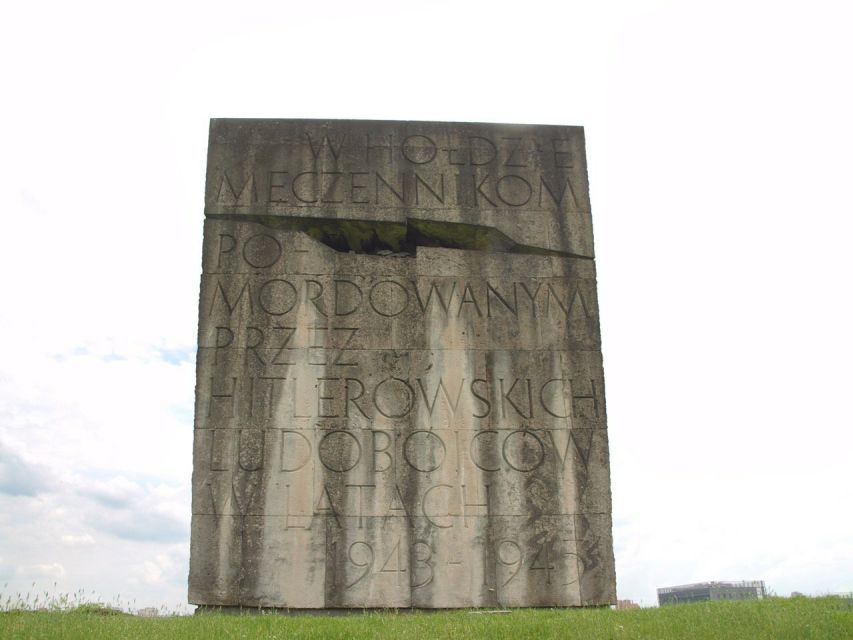
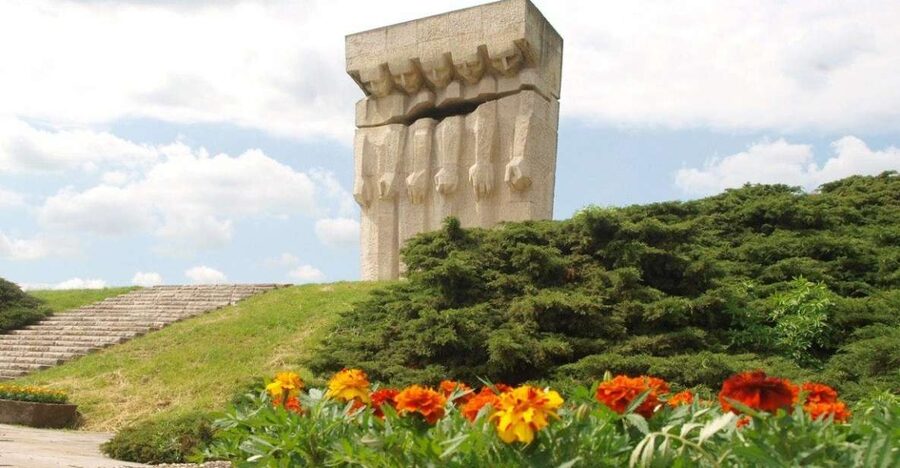
One of the strongest parts of this tour is the attention to remembrance. You’ll visit several memorials dedicated to remembering the victims, and the experience is built around paying respect rather than rushing through.
This is important because memorials are different from museum displays. Here you’re in the physical space, with fewer barriers between your thoughts and what happened. When the guide frames each stop, you’re more likely to understand why the memorial is located where it is, and what it is trying to keep in view.
I also like that the tour doesn’t treat remembrance as a quick checkbox. You get time to reflect at multiple memorial points, which makes the visit feel grounded. That pacing is especially useful if you want the emotional weight of the site handled with care, not turned into a sightseeing sprint.
Quarry and military factories: seeing where intensive labor happened
Plaszow wasn’t just a prison space. It was built to extract work, and your guide walks you through the parts of the camp tied to intensive labor.
The quarry is a key element of what you’ll see and learn. Expect the guide to explain how labor was organized there and what the quarry setting meant for the prisoners’ daily reality. The tour also covers labor carried out at military factories, which shifts the story from raw physical extraction to industrial output under Nazi rule.
When you can connect the function of a place to what victims faced, the site becomes more than a location name. It becomes an explanation of how persecution was integrated into the Nazi economy and war effort. That’s a heavy idea, but it’s precisely why the tour is worth doing with a guide.

Krakow ghetto deportations beginning in 1942, and what they meant nearby
A crucial part of the Plaszow story is the deportation of Jews from the Krakow ghetto beginning in 1942. This tour doesn’t keep the ghetto in the past tense. It ties what you’re learning to what was happening in Krakow and why Plaszow was positioned to receive victims.
Your guide will describe the impact of Nazi rule in the area and how those deportations fed into the camp system. That connection helps you understand the camp as part of a wider network, not a distant event. It also makes the memorials hit differently, because you can see the pipeline of decisions that led to those deaths.
I find that when a tour includes this thread, the visit feels more complete. You’re not only seeing where people suffered, you’re learning how the Nazis expanded, transported, and processed human beings.
Oskar Schindler and the Schindler’s List connection you’ll trace
You’ll learn about Oskar Schindler during the tour. The guide explains his life in relation to the camp and why his story is still widely discussed today.
Then you’ll connect that biography to the 1993 film Schindler’s List. It’s not a movie tour, but the guide uses the film portrayal as a bridge to help you orient yourself. That can be surprisingly helpful, because many visitors already know the title and scenes, even if they do not know the real locations and timeline as clearly.
One specific detail you’ll cover is where the film relates to the area. You’ll hear about filming connections and how the story is linked to what happened on the ground. The goal is to give you clarity, so you do not mix up cinematic framing with documented history.
The Spielberg replica at Liban Quarry, and how to view it responsibly
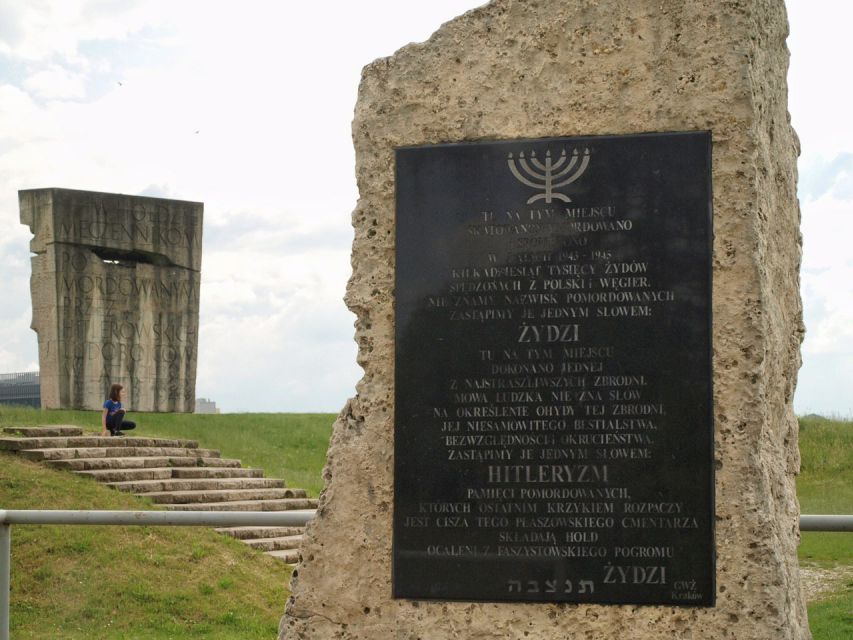
This tour includes a visit to a replica of the camp built under the direction of Steven Spielberg in the Liban Quarry area, a short distance from the main camp zone. It’s described as a place about a hundred meters away, so expect it to feel close and part of the same overall route.
You should approach this stop with a specific mindset. A replica can help people understand scale and placement, but it’s still a reconstruction. Your guide’s job here is to keep the focus on the real suffering tied to the real location, not on the film effect.
I appreciate that this tour includes it, because it gives you a way to see how the film translated history into visible form. But it also gives you a chance to step back and recognize what cinema can and cannot do. If you take the stop as a learning point about representation, it becomes more useful rather than distracting.
Licensed guides in multiple languages, and why named guides matter
This experience is led by a licensed guide. Tours like this rise or fall on interpretation, and the guide is the tool that makes Plaszow understandable.
The tour is offered in multiple languages, including English, German, French, Russian, Italian, and Spanish. That’s a real advantage if you want to take in every detail instead of catching only parts of the story.
From past guide experiences, I’ve seen names like Krysztof, Phil, Anna, and Barbara come up with strong praise. People describe guides as friendly and kind, and especially good at explaining the site clearly. One helpful comment highlights that there is not much left on the former site, so without a guide you might feel lost. That matches the basic reality of Plaszow, and it’s why I think the licensed-guide format is non-negotiable.
Price and value: what $23 buys you in a 2-hour, high-impact visit
At about $23 per person, this is priced in a way that feels reasonable for a guided, high-impact site visit. You’re paying for a licensed guide and a structured two-hour route focused on interpretation, memorials, and key historical connections.
What’s not included is a tram ticket. That means you may need to budget a small extra amount if you’re coming by public transit, depending on your route in Krakow. Still, this tour is not expensive in the context of what you’re learning and how hard it would be to piece together the site correctly on your own.
I also like that it works well as an add-on to another major Holocaust-related visit. If you’re doing a bigger day trip to Auschwitz, Plaszow can feel like a complementary, Krakow-based lens that stays local to the story.
What to bring and how to pace yourself in an outdoor memorial setting
Because you’ll be outdoors, pack like it’s a regular walking day. Comfortable shoes matter more than you think, because you’ll want steady footing while you listen and reflect.
Also plan your mindset. This is not a light sightseeing stop, even if the tour is only two hours. You’ll hear about forced labor, concentration camp conversion, deportations from the Krakow ghetto starting in 1942, and the Holocaust more broadly. A short duration helps you stay focused, but it doesn’t reduce emotional weight.
If you’re visiting multiple sights in one day, consider how this one fits. I recommend leaving some space afterwards, not cramming it between fast-paced tours. The memorial component benefits from a little quiet time after you finish the walk.
Who this tour suits best, and who might want a different format
This is a good fit if you want an explanation-led walk. If you like to know what you’re looking at, and you value memorial time over photo stops, you’ll likely find this format right for you.
It’s also a smart choice if you want the Schindler thread handled in a way that connects film and real events. The Spielberg replica and Schindler’s List discussion can be either distracting or useful, depending entirely on how a guide frames it. With a licensed guide leading the route, it’s more likely to be useful than confusing.
If you prefer self-guided touring, you might find Plaszow frustrating because so much is not visually obvious. The tour directly addresses that issue by turning the site into a sequence you can follow. For some people, that guidance is what makes the difference between a confusing walk and a meaningful one.
Should you book this Krakow-Plaszow concentration camp walking tour?
Yes, if you want a structured, two-hour guided walk that respects memorials and connects Plaszow to the wider Krakow story. The $23 price feels like strong value for what you get: a licensed guide, multi-language support, memorial stops, and key context on forced labor, the 1941 conversion, deportations from the Krakow ghetto starting in 1942, and the Schindler and Schindler’s List connections.
Book it especially if you care about clarity. The site has limits in what remains visible, and that’s exactly why a guide matters here. Just come prepared for an outdoor walk and for a visit that is emotionally serious, even when it is paced gently over a couple of hours.
FAQ
How long is the Krakow Plaszow Concentration Camp walking tour?
The tour lasts about 2 hours. You’ll need to check availability to see the starting times.
What is the price per person?
The price is listed as $23 per person.
Where do I meet the guide?
Meet at the start point by looking for the guide with the excursions.city sign. The tour ends back at the meeting point.
What languages are available for the live guide?
The live guide is available in English, German, French, Russian, Italian, and Spanish.
Is the tour wheelchair accessible?
Yes, the activity is listed as wheelchair accessible.
What’s included, and do I need anything extra like transport tickets?
Included is a licensed guide. A tram ticket is not included.
Do we visit the Spielberg replica at Liban Quarry?
Yes. The tour includes visiting the replica of the camp built under the direction of Steven Spielberg in the Liban Quarry area.
What is the cancellation policy?
You can cancel up to 24 hours in advance for a full refund.
More Walking Tours in Krakow
More Tours in Krakow
More Tour Reviews in Krakow
Not for you? Here's more nearby things to do in Krakow we have reviewed





More Schindler's Factory & WWII Tours to consider.
 ★ 4.2Oskar Schindler’s Factory Entry Ticket & Guided TourFrom $353,793 reviews
 ★ 4.5Schindler’s Factory Tour with Entrance TicketFrom $493,182 reviews
 ★ 4.4Schindler’s Factory Skip-the-Line TicketFrom $253,105 reviews
★ 4.6Schindler’s Factory Tour with Entrance TicketFrom $401,737 reviews
★ 4.4Schindler’s Factory Skip-the-Line TicketFrom $253,105 reviews
★ 4.6Schindler’s Factory Tour with Entrance TicketFrom $401,737 reviews
 ★ 4.5Schindler’s Factory in Krakow: Guided Tour & Skip the Line TicketFrom $351,714 reviews
 ★ 4.7Schindler’s Factory & Ghetto Guided TourFrom $571,694 reviews
 ★ 4.3Schindler’s Factory Ticket with Guided Tour OptionFrom $421,485 reviews
 ★ 4.0Krakow Schindler’s Factory Guided Tour with Admission TicketFrom $351,156 reviews
Other ways to explore Krakow