
Review · KAZIMIERZ & JEWISH HERITAGE TOURS
Krakow: Schindler’s Factory & Ghetto Guided Tour
Auschwitz gets most of the attention, but Krakow has its own scars. This guided tour pairs Schindler’s Factory with a walking look at the Podgórze district, where the Jewish ghetto once stood, so you get the story and the street-level evidence in one go.
I like two things here: you get a professional museum guide plus a structured walking route, and the stops focus on specific, place-based details like the ghetto wall remnants and the Empty Chair Monument. One thing to consider is the subject matter is heavy, so give yourself some emotional space and don’t treat it like a quick sightseeing loop.
The biggest wins start before you even move outdoors: you’ll begin at the main entrance of Schindler’s Factory with a guide, and the tour stays on a tight schedule. If you prefer asking lots of questions, you’ll likely appreciate the energy of guides like Eva, who handled questions in a very full, thoughtful way. The main drawback is practical, Schindler’s Factory does not accept late arrivals for this group format, so arriving a few minutes late can cost you the tour.
Key points to know before you go
- Skip the ticket line at Schindler’s Factory, with tickets included in the price
- Live guided storytelling through the museum and the streets of Podgórze
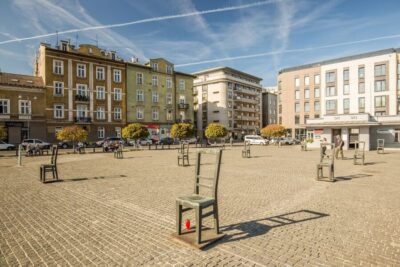
- Specific Podgórze landmarks, including ghetto wall remnants and the Empty Chair Monument
- A guided walk that turns buildings into evidence, not just names on a sign
- Real Q&A energy, like the passionate guidance noted from Eva
- Personalized museum entry requirements, so have your ID and full participant names ready
Entering Schindler’s Factory, where the story is already organized
Your tour starts at the main entrance to Schindler’s Factory Museum, and that matters. This is not a vague “walk around and read plaques” kind of experience. A guide leads you through the museum with a clear thread, so you know what you are looking at and why it matters.
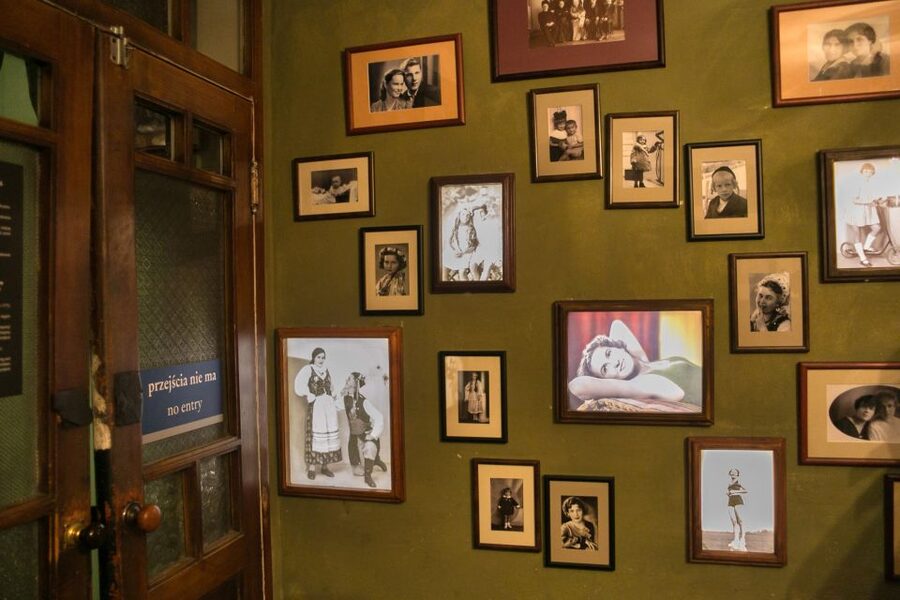
Schindler’s Factory is famously important for Holocaust history connected to Krakow. Here, you are guided through the exhibition connected to the theme of Krakow under Nazi occupation, plus the story of a German entrepreneur who helped many Jews throughout the war. Even if you think you already know the basics, the guided approach helps you connect the human choices to the crushing machinery of occupation.
I also like that the tour isn’t only about one person. It frames the broader conditions of Nazi-occupied Krakow, which helps you see how daily life was shaped by fear, forced movement, and systematic persecution. The museum is often where people come for facts, but the guide helps you absorb the emotional logic behind those facts.
You can also read our reviews of more guided tours in Krakow
The exhibition focus: daily life under Nazi occupation, not just dates
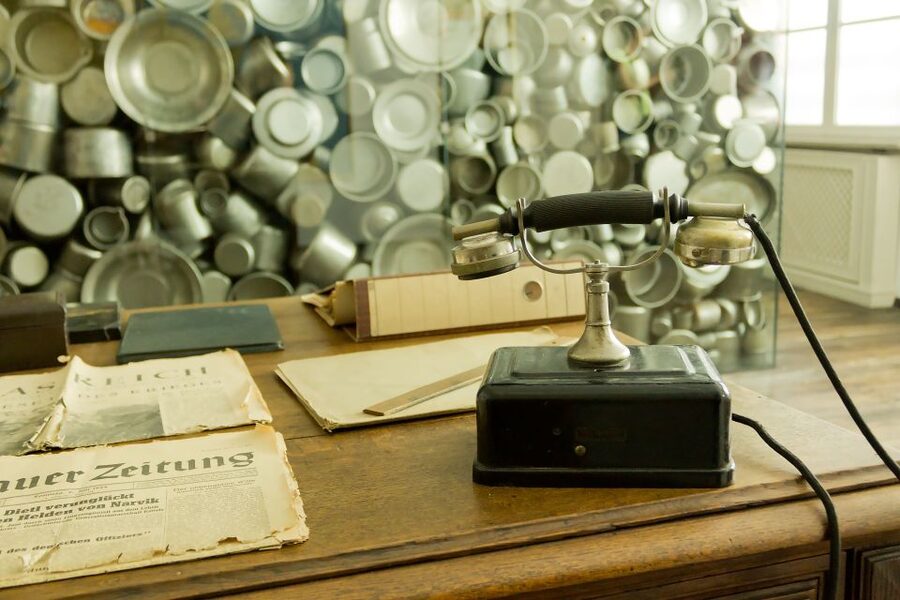
One risk with history tours is getting stuck in a timeline mindset. This one tries to avoid that by centering daily life in Nazi-occupied Krakow, then using specific exhibits to show how routine became something else entirely.
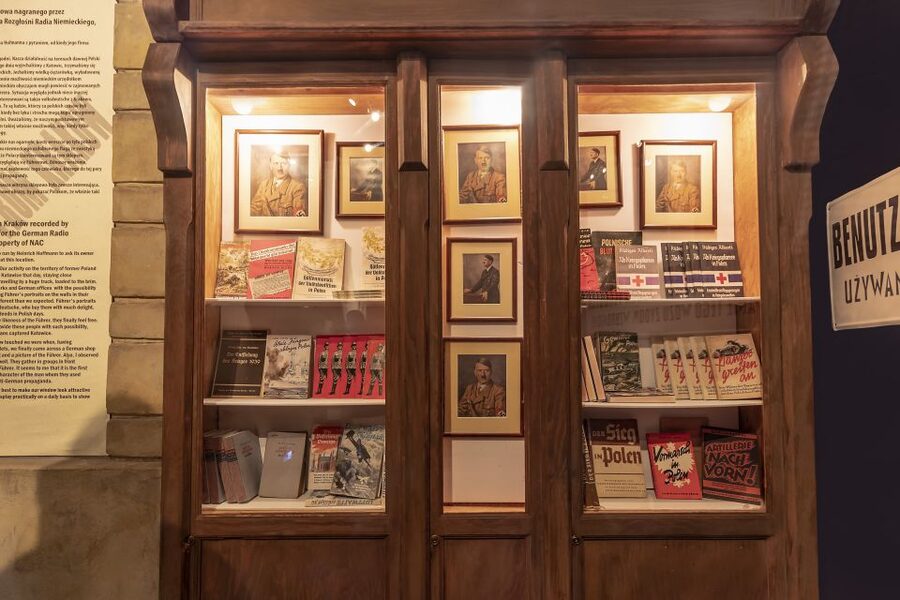
In the museum portion, you’ll learn about a German entrepreneur whose actions helped many Jews during the war. You’ll also get context from the Krakow Under Nazi Occupation exhibition, which is where the tour’s theme really clicks. Instead of just naming events, you start to understand what occupation did to work, movement, housing, and safety.
A good guide helps you translate difficult material into clear mental images. The reviews you’ll find around this tour consistently highlight the enthusiasm and depth of the guides. If you land with a guide in the style of Eva, you can expect more than a monotone lecture, including time for questions.
Podgórze walking tour: seeing the ghetto through the streets
After the museum, the tour shifts into walking mode, and that’s where the experience becomes very grounded. You move into Podgórze, the district where the Jewish ghetto was located during the war. This is not just a change of scenery. It’s a change of scale, from exhibit objects to street layout and surviving remnants.
Guided walking helps because the ghetto story is not something you can always read instantly off the street today. Modern Krakow still has layers, and the guide helps you spot them. You’ll learn how people lived in constrained areas, how displacement played out in housing, and how occupation policies shaped where people could go and how they could survive.
The undestroyed ghetto wall: what survives tells its own story
One of the most striking parts of the walking segment is seeing a portion of the undestroyed wall around the ghetto. When something physical remains, it changes the way your brain processes the past. A photograph can feel distant, but a wall you can stand next to gives you a scale you cannot unsee.
Your guide will point out what this wall represents and what it implies about confinement. You also get to connect it to the places you see nearby, including housing where thousands of displaced Jews used to live. If you have ever wondered how to make history feel real without losing respect for its tragedy, this is one of the best ways to do it.
Housing and displacement: why the “where” is as important as the “what”
The tour includes a walk past houses where thousands of displaced Jews lived. This is a hard concept to take in, and you’ll likely feel the weight of it most when you stop and picture families trying to live in limited space.
For me, that’s the value of guided street history. Without a guide, you might notice the buildings and then move on. With a guide, you keep your attention on what those buildings meant during the occupation, including the difference between living space and forced, overcrowded residence.
If you are sensitive to graphic historical themes, it helps to know that this part of the itinerary is built to show evidence of terrible events. It isn’t sugarcoated, and it is not trying to entertain. It is trying to remember accurately, and to help you understand the human impact.

Pod Orłem pharmacy: a small stop that adds sharp detail
The walking tour also includes the Pod Orłem pharmacy. That might sound like a random local detail, but the best guides use places like this as anchors. Pharmacies, markets, and everyday businesses are part of how people tried to maintain normal life, even under extraordinary pressure.
This stop gives the tour texture. It reminds you that the ghetto was not only a perimeter and a system, it also included the struggle to get by day to day. In a story about persecution, these everyday anchors can help you keep the focus on lived experience.
Heroes’ Square and the Empty Chair Monument with 68 chairs
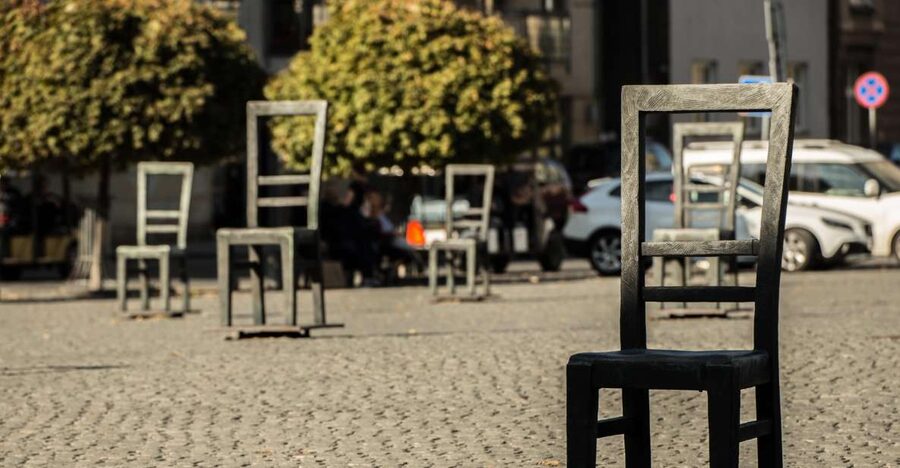
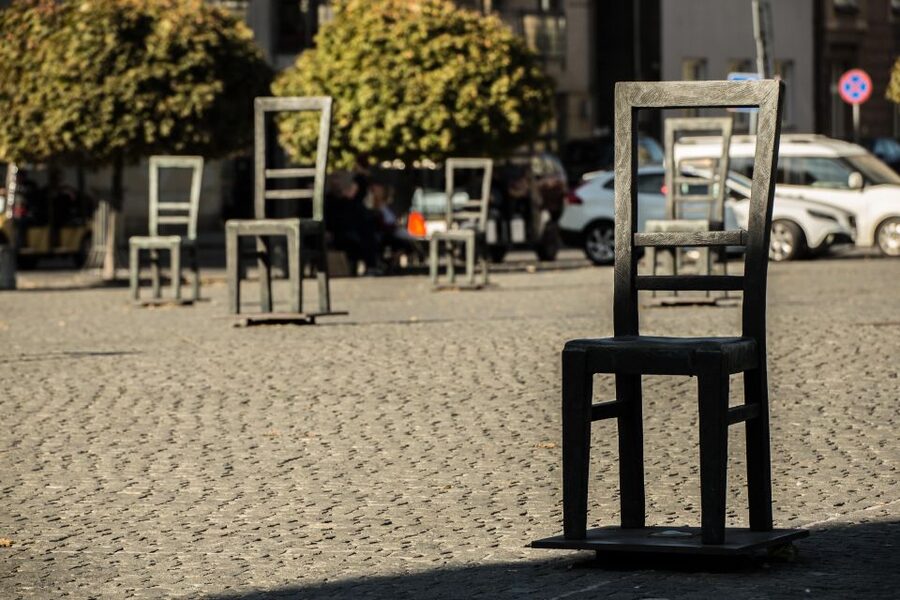
In Heroes’ Square, you’ll visit the Empty Chair Monument, which uses symbolic 68 chairs. You do not just look at it and move on. You’re guided to understand what the monument represents within the larger story of Krakow and the fate of individuals who were taken away.
Monuments can feel abstract until you connect them to context. Here, the connection comes from everything you saw earlier in the museum and on the walk in Podgórze. By the time you reach this square, you’ve already seen physical evidence of confinement and displacement, so the chairs land with more meaning.
One of the nice things about this tour’s layout is that it doesn’t end on a museum-only note. You finish with a public, reflective stop. That helps you process what you learned rather than just closing the museum door and moving on to dinner.
Who this tour fits best, and who might want a different pace
This is a great choice if you want an organized 3 hour visit that covers both museum learning and neighborhood walking. It works especially well if it’s your first time in Krakow and you want one of the city’s most central, emotionally important historical routes.
You’ll get more out of it if you enjoy asking questions or if you like your guides to provide clear explanations. Reviews highlight guides who are enthusiastic and ready to answer questions in depth, including a guide named Eva, which is a strong sign you won’t be stuck with vague commentary.
I’d be cautious about booking if you prefer light, upbeat sightseeing or if you know you need lots of breathing room around difficult topics. This tour deals directly with Nazi occupation and the Jewish ghetto, so it deserves your full attention.
Value check: what you pay, and what you really get
At $58 per person, this tour sits in the midrange for Krakow history tours, but the value is in the pairing. You get museum tickets, a professional guide, and a walking tour, all bundled into a single time block.
The skip the ticket line detail also helps. In popular museum visits, time spent waiting can drain your energy, and here your schedule is structured. That’s especially important because the museum does not accept late arrivals for this group format. You are paying not only for access, but for a smooth, guided flow that keeps the visit efficient.
Another value point is the specificity of the route. You are not just told generic history. You are taken to identifiable sites, like the preserved section of ghetto wall, the Pod Orłem pharmacy, and the Empty Chair Monument with its symbolic 68 chairs. That kind of place-based focus is what turns a museum visit into something you can remember on a map.
Timing, meeting point, and the no-late-arrivals reality
This is a group tour with a strictly defined schedule, so treat it like an appointment. You meet your guide in front of the main entrance to Schindler’s Factory Museum. Look for a guide with the inscription excursions.city.
Because entry is punctual, build in a safety margin. The museum definitely does not accept late arrivals, and you may not be admitted to the tour without a refund option. In practice, that means you should plan to arrive early enough that you are relaxed, not rushing.
Also note that the tour includes personalized museum tickets. You must provide full names of all participants when reserving and bring a passport or ID for entry. Without that, entry may be denied, so don’t assume you can fix it on the spot.
Languages and guide style: why the live element matters
The tour runs with live guides in French, German, Italian, and English. If you’re choosing based on language, pick what lets you follow details comfortably. In a subject this complex, small misunderstandings can build fast, so clarity counts.
The reviews strongly suggest that the guides take questions seriously. One standout example is a guide named Eva, who impressed with enthusiasm and detailed answers. That kind of interaction changes the experience from “facts delivered” to “facts understood,” and you’ll likely leave with clearer mental connections.
What you should bring, and what you can skip
Food and drinks are not included, so plan for a stop before or after. Since the itinerary is around 3 hours with walking, you’ll feel more comfortable with water and a snack if you need one.
Comfort matters, too. You’ll spend time on sidewalks around Podgórze and in squares, so wear shoes you trust. This is not a “stand still and read” route, even if you do pause often.
For entry, keep your ID ready. The personalized tickets requirement means you should have your passport or ID available right when you arrive at Schindler’s Factory.
Should you book this Schindler’s Factory and Podgórze tour?
If you want one focused Krakow experience that connects museum learning to the real streets of Podgórze, this tour is an easy yes. The combination of Schindler’s Factory, the guided walk, and specific stops like the ghetto wall remnants and the Empty Chair Monument makes it more than a quick highlights circuit.
Book it if you value a structured route, clear explanations, and a guide who can handle questions with care. Skip it if you prefer lighter topics, or if you hate tight schedules and punctual entry rules. If you do book, arrive early with your ID ready, and give yourself permission to take the story seriously. That’s when this tour delivers its best kind of impact.
FAQ
How long is the Krakow Schindler’s Factory and Ghetto guided tour?
The tour duration is 3 hours.
What is the price per person?
The price is $58 per person.
What is included in the tour price?
Included are tickets to the Schindler’s Factory Museum, a professional tour guide, and a walking tour.
Is food or drinks included?
No, food and drinks are not included.
Where do I meet the guide?
Meet your guide in front of the main entrance to the Schindler’s Factory Museum. Look for a guide with the inscription excursions.city.
Does the tour include a skip the ticket line benefit?
Yes, it includes skip the ticket line.
What languages are available for the live guide?
The tour offers live guides in French, German, Italian, and English.
Do I need to bring an ID for entry?
Yes. For personalized museum tickets, you must bring a passport or ID for entry to Schindler’s Factory Museum.
Can I cancel for a refund?
You can cancel up to 24 hours in advance for a full refund.
What if I arrive late at Schindler’s Factory?
Schindler’s Factory Museum does not accept late arrivals for this group tour, and late persons will not be admitted to the tour without the possibility of returning the money.
More Guided Tours in Krakow
More Tours in Krakow
More Tour Reviews in Krakow
Not for you? Here's more nearby things to do in Krakow we have reviewed






More Kazimierz & Jewish Heritage Tours to consider.
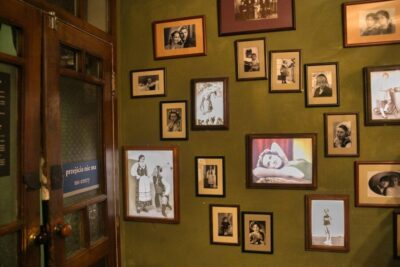 ★ 4.7Schindler’s Factory & Ghetto Guided TourFrom $571,694 reviews
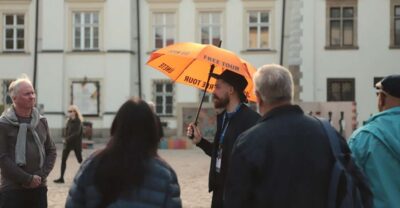 ★ 4.9Jewish Quarter and Former Ghetto TourFrom $191,441 reviews
 ★ 4.9Bike Tour of Old Town, Jewish Quarter and the GhettoFrom $371,155 reviews
 ★ 4.8Kazimierz Jewish Quarter Walking TourFrom $27571 reviews
 ★ 4.8Kazimierz, Schindler’s Factory & Ghetto Guided TourFrom $81460 reviews
 ★ 5.0Full Bike Tour – the Old Town, Jewish Qtr & the Ghetto NEW BIKESFrom $35437 reviews
 ★ 4.9Bike Tour of the Old Town, Kazimierz, and the GhettoFrom $26350 reviews
 ★ 4.6Jewish Ghetto Walking TourFrom $11349 reviews
Other ways to explore Krakow