
Review · KAZIMIERZ & JEWISH HERITAGE TOURS
Tour via Kazimierz Quarter by Golf Cart with Schindler’s Museum in Krakow
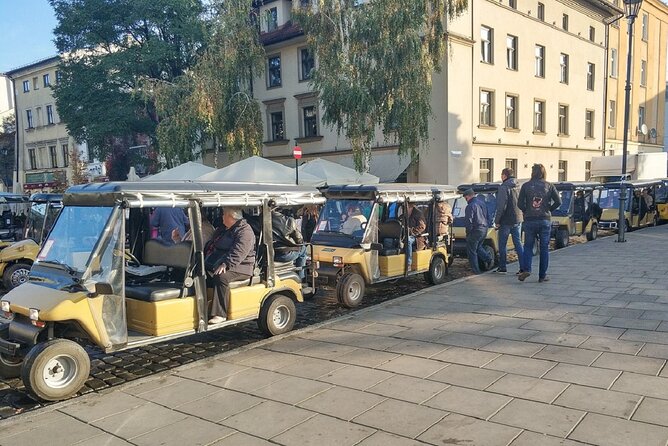
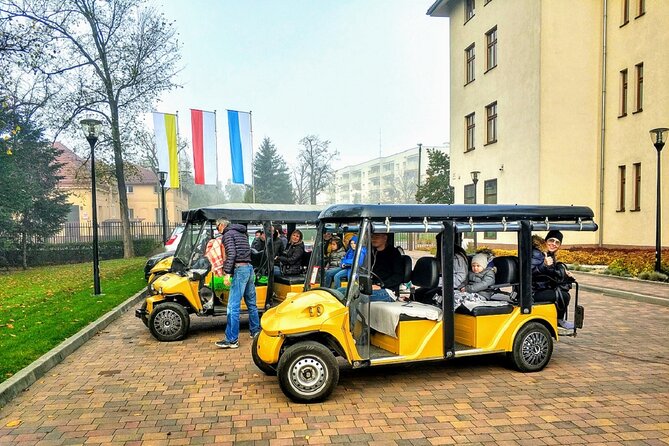
Jewish Krakow glides by on a golf cart. This 3-hour tour links Kazimierz streets with Schindler’s Factory Museum, using an audio guide as you roll and a live guide once you’re inside. I love the low-stress pace of the golf cart, it lets you cover more ground without feeling rushed.
I also like how Schindler’s Factory Museum blends stories of everyday life with multimedia moments, so the history feels real instead of distant. One thing to plan for, the tour ends at Lipowa 4, and the operator does not provide transport back to your hotel.
This is a group tour (maximum 24 people), offered in English, and it includes some walking inside the museum with the live guide.
Key highlights you should know
- Golf-cart ride through Kazimierz: comfortable transport, with an audio guide guiding your route.
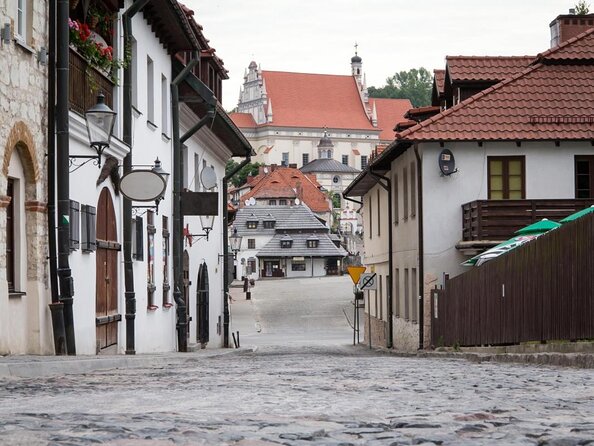
- Szeroka Street and the synagogue cluster area: four synagogues once lined this street, and you’ll stand on the older, preserved side of it.
- Plac Nowy’s changing uses over time: from a Jewish square with a pavilion and food stalls to today’s market days and cafe spillover.
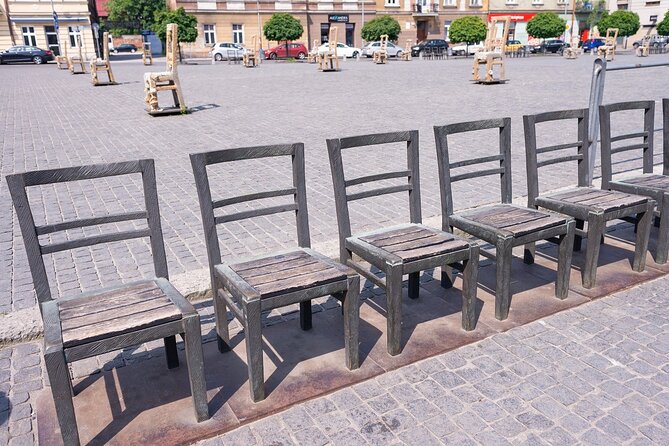
- Wartime Krakow mapped on real streets: you’ll visit a preserved fragment of the ghetto wall and the former Plac Zgody area tied to Umschlagplatz.
- Schindler’s Factory’s preserved office and the ark of survivors: thousands of pots, made as a symbol of survival and work.
- A guided multimedia path through period scenes: cobbled streets, an atelier, a hairdresser, a tram, a ghetto apartment, then Płaszów camp.
Kazimierz by golf cart: the smart way to see more, without sprinting
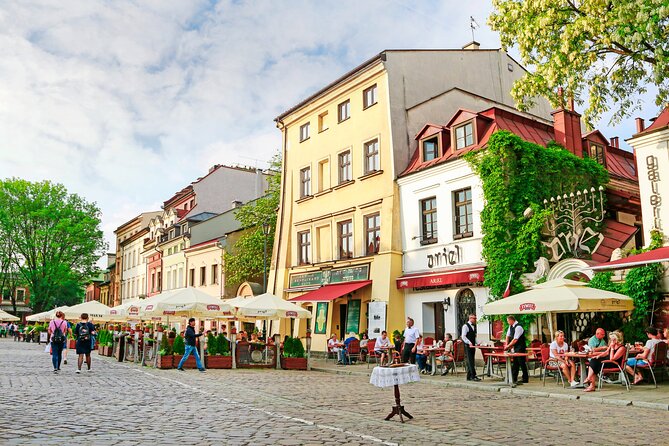
Kazimierz is best experienced at a human pace, not a speed-walk. The golf cart part matters because it does two jobs at once: it gets you from one key stop to the next, and it gives you enough time to actually look at what you’re seeing while the audio guide explains the context.
Expect your time to be split between seated movement and short walks. Part of the tour stays on wheels through the Kazimierz district, and the rest of your energy goes into the museum, where there’s a live-led section inside Schindler’s Factory Museum. If you prefer to keep your legs fresh for your own exploring later in Krakow, this format helps.
It’s also a small group experience, with a maximum of 24 travelers. That size is big enough to have a lively group feel, but small enough that you are not just one face in a crowd. If you’re traveling with a question or two, that matters.
One practical note that can make or break your comfort: no large bags or backpacks are allowed. So pack light, especially if you’re also doing other sights the same day. If you’re trying to juggle a daypack plus a camera bag, plan a quick storage strategy before you meet up.
You can also read our reviews of more museum experiences in Krakow
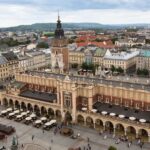
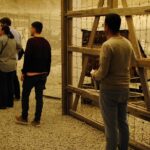
Szeroka Street and Plac Nowy: Jewish Krakow, mapped block by block
Stop 1 is where Kazimierz becomes specific. You’ll start in the former Jewish district area and spend about 1 hour 30 minutes absorbing the neighborhood through key street-level landmarks.
Szeroka Street, with four-synagogue context
Szeroka Street is described as the heart of Jewish Kazimierz, and you’ll feel that right away because it’s not treated like a random street on a map. The big detail here is the four synagogues that used to stand on Szeroka Street. That concentration was unusual for Europe, so when you stand there, you are seeing more than architecture, you’re seeing a pattern of community life.
You’ll also visit the area tied to one of the oldest synagogues in Poland preserved in very good condition. The stories around the synagogue site connect religion, community, and modern cultural events, so it’s not only about the past. You may also hear how the street is tied to the final concert of the Jewish Culture Festival, which helps you understand how the neighborhood life continues.
What I like about this portion is that it stays concrete. Instead of giving you a vague overview of Jewish Krakow, it points to exact street features, so your brain can build a mental map quickly.
Plac Nowy: from Jewish square to market square and beer garden
Next comes Plac Nowy. Today, it’s a popular meeting place and festival venue, but the tour guides your attention to what it used to be: Plac Żydowski, the Jewish Square.
In 1900, a circular pavilion was built in the center, with small grocery and butcher shops and a fast-food bar serving casseroles that are still famous in Krakow. That’s a detail worth holding onto because it shows food history as part of cultural history. You’re not only learning what happened in wars, you’re learning what everyday life looked like.
The square keeps changing with the week. On weekdays, you’ll see stalls with vegetables and antiques. On Sunday mornings, it becomes a clothing market. And around the square are cafes and pubs where, in warm summer nights, the seating spills out into a big beer garden vibe.
Why this matters for you: it helps you remember that the story of Kazimierz is not only tragedy. Even when the tour later turns toward wartime sites, it starts with daily rhythms.
The ghetto wall fragment and Umschlagplatz area: seeing the wartime geography
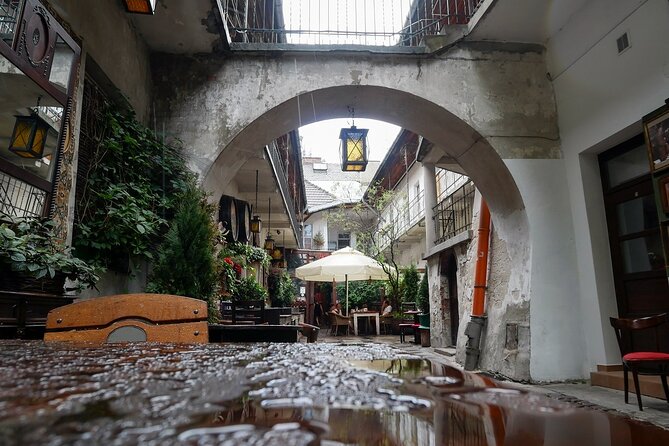
Kazimierz also includes memory sites tied directly to the Krakow Ghetto. This is the emotional shift of Stop 1, and the tour handles it by grounding you in where events happened.
You’ll visit a small fragment of the original wall around the former ghetto, preserved to our times, and you’ll see a plaque commemorating the fate of the inhabitants. This kind of stop is brief, but it hits hard. It’s a physical remnant, not an idea, and it helps you understand that confinement was built into the streets, not just into paperwork.
Then the tour moves to the Podgórze district area, tied to what happened in 1941. You’ll hear about the former Plac Zgody, which was designated Umschlagplatz under Nazi occupation, the place where Jews had to gather for deportation.
Even if you’ve read about Krakow during WWII, standing in the area and hearing the place name connects the timeline to real geography. That’s one of the reasons I like this tour structure: it doesn’t separate neighborhood charm from wartime reality. It gives you the full neighborhood picture.
A consideration for your mindset: this part can feel heavy. If you know you prefer to pace yourself emotionally, plan a short break after the tour. Krakow has easy ways to reset, but you’ll enjoy them more if you’re not still carrying the weight.
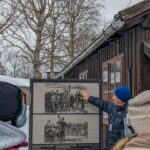
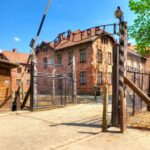

Inside Schindler’s Factory: Deutsche Emailwarenfabrik and the ark of survivors
After Kazimierz, you shift into Fabryka Emalia Oskara Schindlera, commonly called Schindler’s Factory Museum. This segment takes another about 1 hour 30 minutes and includes the museum entrance ticket. Here, you also get a live guide, which changes the feel from the earlier audio-led sections.
What you’re actually seeing
You’ll see the real headquarters of Deutsche Emailwarenfabrik. You’ll also learn about the owner, Oskar Schindler, including the fact that he was an entrepreneur known from the Oscar-winning Spielberg film. More importantly, you’ll connect him to the way he saved many of his employees from inevitable death.
Schindler’s heroic deed is tied directly to the preserved office in the factory administration building. It’s not a recreated room, it’s part of the site’s physical story, which makes the guide’s explanation easier to believe. And inside the same administration space is a symbolic ark of survivors. It’s made of thousands of pots, like the pots produced by his employees during the war. That detail works on two levels: it honors craft and it shows how everyday labor became part of survival.
Multimedia scenes that move like a guided timeline
The museum experience is not only walls and plaques. You’ll follow a path through a modern multimedia installation that takes you along cobbled streets, into a photographer’s atelier, past a hairdresser, onto a tram, and into a typical apartment in the Jewish ghetto. Then the museum transitions you to Płaszów camp.
Even if you’re not a museum person, these stops are designed to help your brain visualize daily life and the transformations that followed. It’s a strong approach because it reduces the distance between you and what’s being explained.
Bring your ID and exact names
This is one of the most important practical parts of the museum visit. The museum uses personalized tickets, so you must provide full names of all participants when reserving. You also need to bring a passport or ID for entry.
Make sure the name and surname on your ticket match your document exactly, and have your identification document with you for the staff checks. If you forget, entry can be denied, and that would be a frustrating start to an otherwise well-run day.
Timing, pace, and what to do once the tour ends
The tour is listed at about 3 hours total, split between Kazimierz (golf cart plus audio) and Schindler’s Factory (live guide plus the ticketed museum experience).
Two timing facts that help you plan:
- It’s a group tour that starts at the scheduled time. Being late can mean missing part of the guided flow.
- From January 1, 2026, times are approximate and may change based on Schindler’s Factory Museum scheduling. You can choose a preferred time, but the exact slot isn’t guaranteed.
Also, this tour ends at the museum address, Lipowa 4. The operator does not provide transport from the museum to your hotel or anywhere else. So build your day with that in mind.
If you want an easy next step after the tour, consider using the museum as your anchor point for lunch or a calm walk in the surrounding area. You’ll already be in the right part of Krakow, and you won’t have to backtrack.
The $81.88 price: what you’re paying for, and what makes it good value
At $81.88 per person, you’re not just buying a museum ticket. You’re getting a package built around guidance and transport.
Here’s what’s included:
- Golf-cart transportation through the Kazimierz district
- An audio guide during the cart portion
- A live guide at Schindler’s Factory Museum
- Entrance ticket to Schindler’s Factory Museum
That combination can feel like good value if you want both context and logistics handled for you. Kazimierz can be fun to wander on your own, but getting all the key place context in a short time is harder without someone guiding the route. Likewise, Schindler’s Factory is more meaningful with explanation, especially when the museum uses a multimedia timeline.
This tour is also booked out in a way that suggests demand, averaging bookings about 50 days in advance. If you’re traveling in high season or you have a specific day and time in mind, it’s smart to reserve early.
Who this tour is perfect for (and who might want a different style)
You’ll probably love this if you:
- Want a structured introduction to Kazimierz and its WWII connections
- Prefer a mix of seated comfort and guided walking
- Like museums that explain both big events and the feel of daily life
- Travel in English and want narration without stopping to research every corner
You might choose a different option if:
- You hate any walking at all, since there is walking inside the museum
- You need a tour that includes return transportation to your hotel, since this one ends at the museum
- You want to carry big backpacks, since large bags are not allowed
Should you book this Kazimierz and Schindler’s Factory tour?
Book it if you want one smooth plan that covers Kazimierz’s signature streets and then steps into Schindler’s Factory with a live guide and a multimedia route. The best reason to book is the way the tour connects place names to real geography, first through neighborhood landmarks like Szeroka Street and Plac Nowy, then through wartime memory points tied to the ghetto wall fragment and Umschlagplatz.
Skip it only if your day needs a hotel-to-hotel format, or if you prefer to explore WWII sites at your own pace with no guided structure. If that’s not your style, this is a strong way to make Krakow feel both personal and unforgettable in the right way.
FAQ
How long is the tour in Krakow?
The tour lasts about 3 hours.
What does the tour cost?
The price is $81.88 per person.
Is the tour offered in English?
Yes, the tour is offered in English.
What is included in the experience?
You get golf-cart transportation through Kazimierz, an audio guide in the cart, a live guide at Schindler’s Factory Museum, and the museum entrance ticket.
Is there walking during the tour?
Yes. Part of the tour involves walking inside the museum with the live guide, and you should have a moderate physical fitness level.
Do I need ID for Schindler’s Factory Museum?
Yes. You must provide full names when reserving and bring a passport or ID for entry. The name on your ticket must match your document.
Where does the tour start and end?
The meeting point is Mikołaja Zyblikiewicza 2, 31-029 Kraków. The tour ends at Lipowa 4, 32-051 Kraków, after the museum visit.
Will the tour bring me back to my hotel?
No. The operator does not provide transport from the museum to your hotel or other locations.
How big is the group?
The tour has a maximum of 24 travelers.
If you tell me your travel dates and whether you’re staying near central Krakow or farther out, I can suggest how to pair this with a good lunch and a post-museum stroll based on your timing.
More Museum Experiences in Krakow

More Tours in Krakow
More Tour Reviews in Krakow
Not for you? Here's more nearby things to do in Krakow we have reviewed






More Kazimierz & Jewish Heritage Tours to consider.
 ★ 4.7Schindler’s Factory & Ghetto Guided TourFrom $571,694 reviews
 ★ 4.9Jewish Quarter and Former Ghetto TourFrom $191,441 reviews
 ★ 4.9Bike Tour of Old Town, Jewish Quarter and the GhettoFrom $371,155 reviews
 ★ 4.8Kazimierz Jewish Quarter Walking TourFrom $27571 reviews
 ★ 4.8Kazimierz, Schindler’s Factory & Ghetto Guided TourFrom $81460 reviews
 ★ 5.0Full Bike Tour – the Old Town, Jewish Qtr & the Ghetto NEW BIKESFrom $35437 reviews
 ★ 4.9Bike Tour of the Old Town, Kazimierz, and the GhettoFrom $26350 reviews
 ★ 4.6Jewish Ghetto Walking TourFrom $11349 reviews