
Review · KAZIMIERZ & JEWISH HERITAGE TOURS
Discover the Jewish Quarter with a Bike Tour
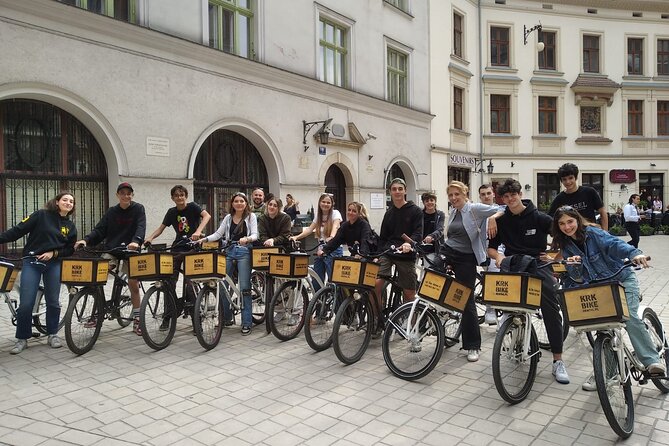
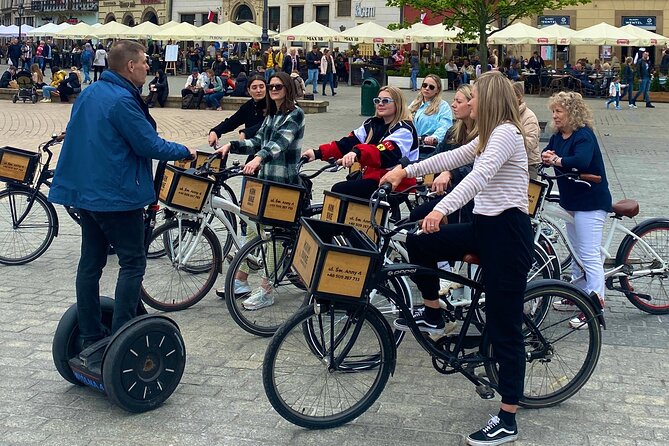
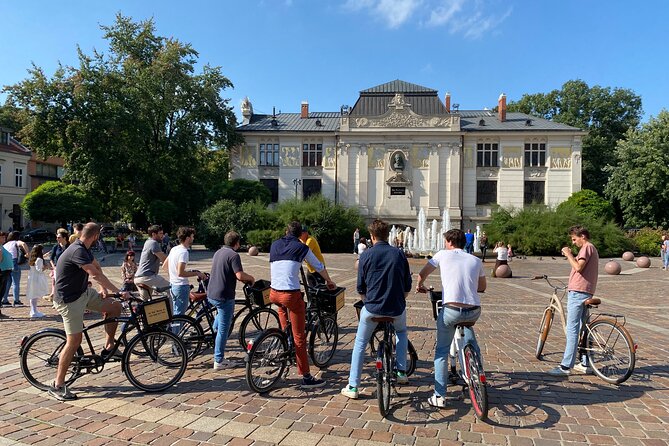
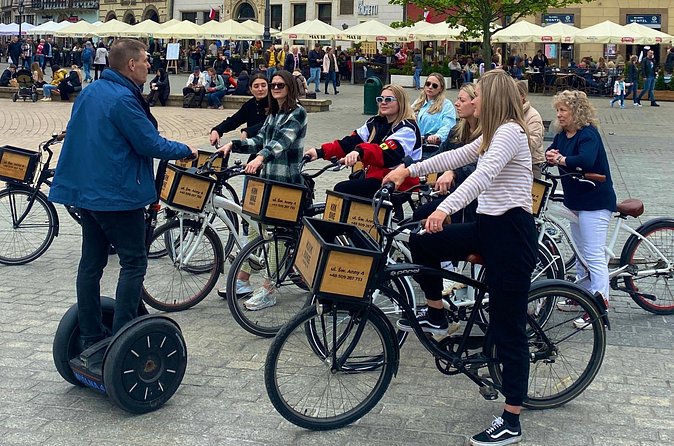
Pedal through Krakow’s Jewish Quarter fast. This 2-hour bike tour strings together the places that shaped Jewish life in Kazimierz, then walks you through what changed after the war. I especially love the efficient route and the way the stops happen often enough that you actually absorb details.
My other big win is the guide-led storytelling, with real energy in the delivery. In one group I saw, the host Arthur was engaging and sharp, and the tour worked great even if you had only a few hours before your next plan. One consideration: a handful of sights along the way have entry fees that are not included, so you may want to budget a little extra if you plan to go inside.
Key highlights you should care about
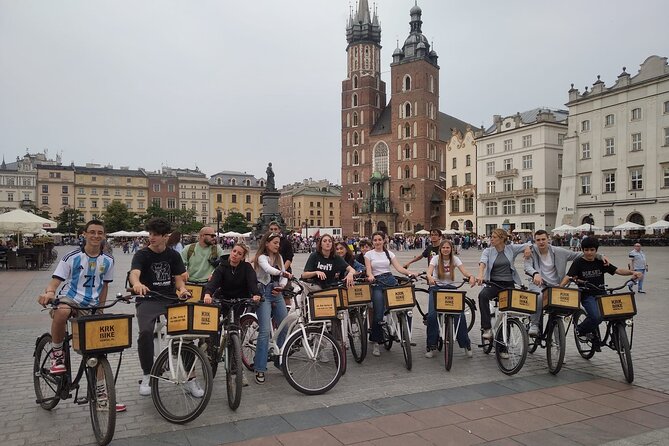
- A bike-first plan that saves time while still making frequent photo stops
- English-led interpretation focused on key landmarks around Kazimierz
- Free stops at most major points, with a few optional paid entries
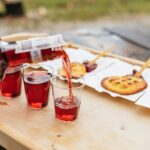
- Zapiekanki at Market Square as a practical local-food tip for your evening
- Schindler’s List context that ties film locations to documented accounts and facts
- Optional visits at Remuh Synagogue, including the cemetery if you want to slow down
Why a bike tour works so well in Kazimierz
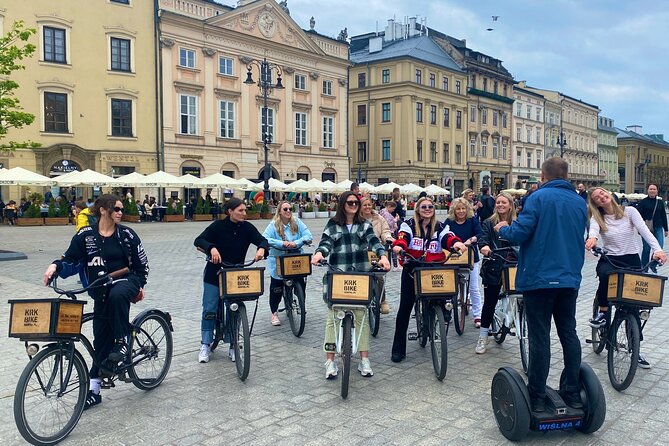
Kazimierz can feel like a maze if you’re trying to walk every corner. Bikes fix that. You get to cover more ground without turning the trip into a nonstop hike, and you can still pause often to take in streets, façades, and the general layout that shaped daily life.
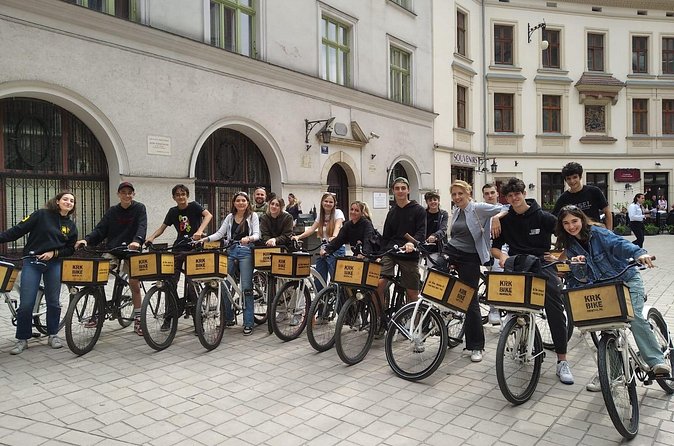
This tour also keeps group size reasonable, with a maximum of 30 travelers. That matters because a big crowd can stretch out the experience and make each stop feel rushed. Here, the pace is controlled enough that you can listen, look, and ask questions without shouting over everyone’s phone camera.
One more practical point: the route starts near public transportation. So if you’re juggling other Krakow plans, you can usually get there without a whole logistics project.
You can also read our reviews of more cycling tours in Krakow


Getting started at Wiślna 4 and meeting your guide
You meet at Wiślna 4, 33-332 Kraków, and the tour ends back at the same point. If you’re the type who likes your plans to feel tidy, that’s a plus.
Check your confirmation details when you book, because the tour uses a mobile ticket. It’s one less thing to print, and you can keep your phone out without flipping pages like it’s 2003.
Most departures are designed for people who can participate easily, and the tour runs in English. You’ll also want good weather. This is explicitly a good-weather experience, so if Krakow decides to rain, you may be offered a different date or a full refund.
Tempel Synagogue stop: seeing pre-war Jewish life in context
One of the first major learning stops is the Tempel Synagogue. You’ll hear the story of the synagogue and, more importantly, what the thriving Jewish community looked like before the war.
Why this matters: it helps you read the rest of Kazimierz with less guesswork. Instead of treating the neighborhood as just a list of memorial sites, you understand it as a living community that existed for decades with its own institutions, beliefs, and daily rhythm. That shift makes later stops hit harder in the right way.
Entry note: the admission ticket for this stop is not included. So if you want to go inside, plan for extra time and an extra ticket cost.
JCC Krakow and Prince Charles: why community centers matter
Next up is the Jewish Community Centre of Krakow, the JCC Krakow. This stop focuses on the center’s role in the Jewish community and the neighborhood, and it also connects it to Prince Charles, which adds a surprising angle to a place you might otherwise treat as just another local building.
Why I like this kind of stop: it grounds the tour in how communities rebuild and organize after disruption. Synagogues are central, but community centers are where activities, education, and support often happen in everyday life.
This one is listed as a free admission stop, so you can focus on the stories without worrying about ticket logistics.
Market Square, New Square, and your Zapiekanki move
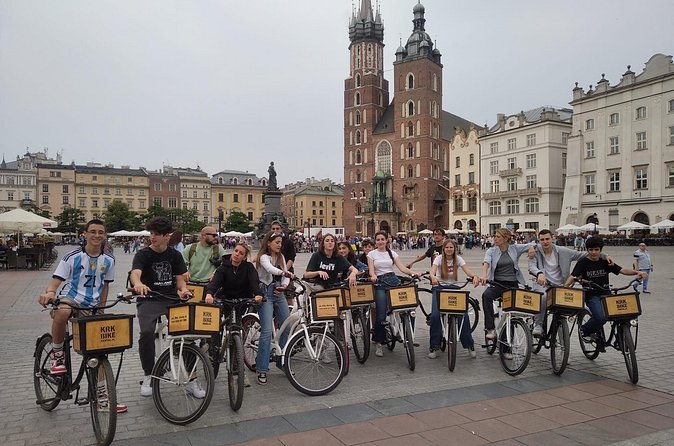
At the Market Square stop, the guide shares stories about the New Square and how locals move through Kazimierz. Then you get a practical, delicious tip: try Poland’s finest fast food, Zapiekanki.
Here’s the real value for you: after learning for the first hour or so, your brain needs a reset. A food stop suggestion like Zapiekanki gives you something concrete to do right after the tour, without needing to research a “where should I eat” list from scratch.
This is also a free admission stop, which keeps the flow smooth. If you time it well, you can grab food while the neighborhood is still fresh in your mind.
Schindler’s List Passage: film, documentaries, and facts
The tour then heads to the Schindler’s List Passage. You’ll get the story behind the Schindler’s List movie connection and hear about documentaries and facts tied to what that era meant for real people.
This is a sensitive topic, so the framing is important. A stop like this works best when it connects what you saw on screen to the broader historical reality on the ground. When you hear the context alongside the physical place, it stops being just movie tourism and turns into understanding.
This stop is free for admission, so you can spend your time listening rather than paying entry fees.
Singer bar stop: the meaning behind the name
Then you’ll reach Singer, the bar, with an explanation of what it is and why it has the name it does. The guide also shares the meaning of Singer and what the word points to in the local context.
Why this stop earns its place on the route: not every tour gives you a break from heavyweight history. But placing a bar stop with a name origin story keeps things human. It also helps you notice how Kazimierz reuses old meanings in modern settings, which is something you’d otherwise miss if you only focus on monuments.
This stop is free for admission.
Old Synagogue, Popper Synagogue, and Remuh optional choices
You’ll pass the Old Synagogue, with a story about it. Admission is not included here, so if you want to go inside, you may need to plan extra time and pay an entry fee separately.
After that comes Popper Synagogue. You’ll get an introduction to the synagogue and also hear about a bookshop next to it and about Wolf Popper. That detail about the bookshop matters more than it sounds. It signals how learning, memory, and daily culture can exist side-by-side with religious spaces.
Popper is a free admission stop.
Next is Remuh Synagogue (Synagoga Remuh). The tour includes a guide-led introduction to Remuh Synagogue’s history, and the guide can help you decide if you want to visit. The cemetery is also mentioned as an option if you want to go further.
Admission is not included for Remuh, so treat this stop as potentially the one with the extra cost. If you’re the type who wants one meaningful interior experience, Remuh is a strong candidate.
Kupa Synagogue and Corpus Christi Church: contrasts you can feel
The route continues to Kupa Synagogue (Synagoga Kupa), with a story about the building and its history. This stop is free for admission, so it adds meaning without increasing your ticket total.
Then you switch gears to Corpus Christi Church (Kosciol Bozego Ciala). The guide shares the origin of the church’s name and the detailed history of the place, and you can also visit the church.
This contrast is one of the reasons the bike format works. You get the quick architectural and cultural “read” of what religion looked like across the same streets. It’s not about comparing suffering and celebration like they are the same kind of thing. It’s about understanding how different communities used these spaces over time.
Corpus Christi is listed as free for admission.
Plac Wolnica 1 and how the tour ends back at your start
At the end, you’ll reach plac Wolnica 1. The guide covers facts and local legends tied to the square, and that’s a good final note because it shifts you from formal history into the way people tell stories about their neighborhood.
At tour end, you ride back to the meeting point at Wiślna 4. If you want more, the structure makes it easy to keep exploring on your own rather than feeling stuck because your day is over.
In at least one case I saw, the pace felt so manageable that people rented bikes again and kept going. That’s not required, but it tells you the route design leaves you with energy, not exhaustion.
Price and what you really get for $30.23
The price is $30.23 per person for about 2 hours. That’s a fair deal when you consider three things you’d otherwise pay in time and effort.
First, you’re getting an organized route through multiple key points around Kazimierz. Second, you get English interpretation that ties each place to a story, not just a random location list. Third, many stops are free for admission, which keeps the tour from turning into a constant ticket line.
Your main possible extra expense is entry to specific synagogues where admission is not included. Tempel Synagogue, Old Synagogue, and Remuh are the ones called out as not included. If you want to go inside these, budget for that. If you’re fine with exterior viewing plus guide explanation, you can keep costs close to the advertised price.
Also factor in weather. Since the tour is explicitly good-weather dependent, you should treat it like an outdoor plan and not your backup option for a day that might be miserable. If weather forces a change, the offer is a different date or a full refund.
Tips for getting the most out of this bike tour
A bike tour can be great, but it only works if you ride smart.
- Arrive a few minutes early at Wiślna 4 so you don’t feel rushed when you’re trying to match faces to names.
- Bring something light for a quick stop, because frequent pauses mean you’ll step in and out of wind and sun.
- If you’re interested in interior visits, decide ahead of time which non-included sites matter most for you. Remuh is the one that includes an optional cemetery element, which can turn a brief visit into a reflective one.
- If food is on your mind, keep Zapiekanki in your plan for after Market Square. The guide’s tip is timed well because it gives you immediate direction.
Who should book this, and who should skip it
This tour is best for you if you:
- want a quick and organized way to see the Jewish Quarter highlights in a short window
- like learning while moving, with frequent stops for stories and photo moments
- prefer English guidance and a route designed for first-time orientation
- want a plan that includes both major memorial-linked sites and daily-life details like community institutions and local food suggestions
I’d think twice if you:
- strongly prefer slow, deep museum-style visits where you stay inside most of the time
- do not want any extra ticket costs for interior synagogue visits
- are likely to be uncomfortable riding in uneven street conditions or during less-than-ideal weather
Should you book this Krakow Jewish Quarter bike tour?
I think it’s a smart booking if you want an efficient, story-led introduction to Kazimierz without turning your day into a checklist. The combination of frequent stops, English hosting, and a route that connects institutions, memorial context, and everyday life is what makes it work.
Pay attention to the admission-not-included synagogues if you care about going inside. If that’s your priority, you can plan around the extra tickets and make those stops the heart of your visit.
If you’re trying to choose between a walking tour and this bike version, pick the bike one when you want coverage and momentum. Pick walking when you want slow reflection at fewer sites. For most first-timers, this bike tour hits the right balance.
FAQ
How long is the bike tour in Krakow?
It lasts about 2 hours.
Is the tour offered in English?
Yes, it is offered in English.
Where does the tour start?
The meeting point is Wiślna 4, 33-332 Kraków, Poland.
Do I need an admission ticket for every stop?
No. Many stops are free, but some synagogues have admission tickets not included (Tempel Synagogue, Old Synagogue, Remuh Synagogue).
Does the tour use a mobile ticket?
Yes, the tour includes a mobile ticket.
Is there a limit on group size?
Yes, the maximum group size is 30 travelers.
What if the weather is bad?
The tour requires good weather. If it is canceled due to poor weather, you’ll be offered a different date or a full refund.
Can I cancel for free?
Yes. Free cancellation is available up to 24 hours in advance for a full refund.
More Cycling Tours in Krakow
More Tours in Krakow
More Tour Reviews in Krakow
Not for you? Here's more nearby things to do in Krakow we have reviewed






More Kazimierz & Jewish Heritage Tours to consider.
 ★ 4.7Schindler’s Factory & Ghetto Guided TourFrom $571,694 reviews
 ★ 4.9Jewish Quarter and Former Ghetto TourFrom $191,441 reviews
 ★ 4.9Bike Tour of Old Town, Jewish Quarter and the GhettoFrom $371,155 reviews
 ★ 4.8Kazimierz Jewish Quarter Walking TourFrom $27571 reviews
 ★ 4.8Kazimierz, Schindler’s Factory & Ghetto Guided TourFrom $81460 reviews
 ★ 5.0Full Bike Tour – the Old Town, Jewish Qtr & the Ghetto NEW BIKESFrom $35437 reviews
 ★ 4.9Bike Tour of the Old Town, Kazimierz, and the GhettoFrom $26350 reviews
 ★ 4.6Jewish Ghetto Walking TourFrom $11349 reviews
Other ways to explore Krakow