
Review · KAZIMIERZ & JEWISH HERITAGE TOURS
Jewish Krakow Walking Tour
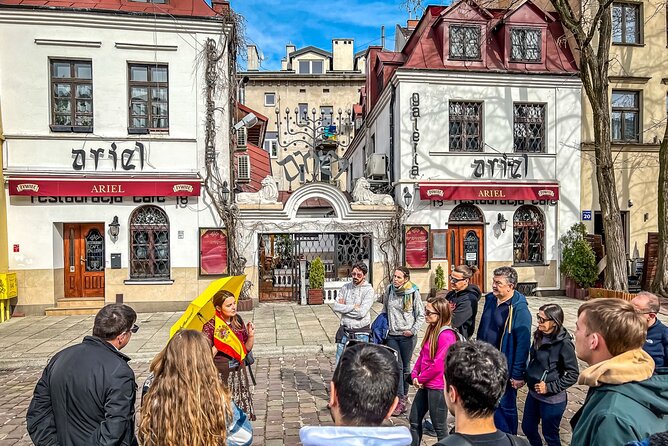
A walk through Krakow’s Jewish Quarter hits hard. This Jewish Krakow walking tour threads centuries together, from synagogue architecture to the WWII ghetto center, all in one 2.5 hour route. Even if you only have a morning or an afternoon, the pace gives you context fast, then slows down where it matters.
I especially love the local expert guide and the tightly built story-driven narrative. The guide is there to connect the street layout, the religious landmarks, and the war geography, instead of tossing dates at you. I also like that the tour runs with a smallish group cap of 35 people, so questions and reactions feel manageable.
One consideration: you may spend a lot of time standing and listening at certain stops, and not every site admission is covered, so it helps to expect a bit of extra ticketing and weather comfort needs.
Key things to know before you go
- Old Synagogue first: a short start that frames what you are about to see.
- Szeroka Street, Remuh Synagogue, Market Square: quick hits that map daily Jewish life and later revival.
- Schindler’s List courtyard stop: the movie location plus the real human context around it.
- Plac Bohaterów Getta gets the long stop: most of the emotional weight happens here.
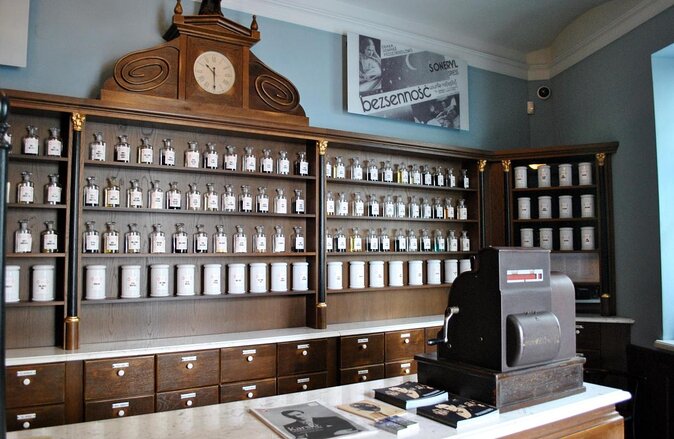
- Eagle Pharmacy viewpoint at the end stretch: a rare outside perspective from within the Nazi crime story.
- English tour with a mobile ticket: easier planning, especially if you are coordinating transport.
Why this Jewish Krakow walk works so well in 2.5 hours
This tour is built for travelers who want more than a photo stop. In about 2 hours 30 minutes, you cover both the Jewish Quarter’s older religious landmarks and the WWII ghetto’s key geography. That blend is the whole point. You see how community life was organized, then you see how Nazis forcibly broke that structure.
The route also makes practical sense. You begin at the Old Synagogue area, then walk outward along the streets that feel like the quarter’s backbone. The later stops shift from buildings to space and scale, especially when you reach Plac Bohaterów Getta. That shift helps your brain. Religious sites tell one story. Ghetto geography tells another.
I also like the pacing logic in the schedule. Some stops are quick orientation moments, around 10 to 15 minutes. Then one stop is long, about 50 minutes, which gives the guide time to explain the why behind what you are looking at, not just the what.
You can also read our reviews of more walking tours in Krakow
Step by step: Old Synagogue framing your whole walk
You start at the Old Synagogue on Szeroka Street, and you spend about 15 minutes here. The tour focuses on what makes it significant, including its status as the oldest synagogue in Poland and the architectural details that still communicate meaning even from outside. That start matters, because it teaches you how to look.
Instead of treating the synagogue as a single landmark, the guide helps you understand it as a symbol of continuity for the community. You get a quick grounding in what these spaces meant, so later stops do not feel random. They feel connected.
Good to know: the stop notes admission ticket free for this portion, which is a value plus. Still, since the emphasis is on the site’s meaning and features outside, even if you end up needing your own ticket for other locations later, you should feel like you got a solid start either way.
Szeroka Street and Remuh Synagogue: reading the quarter like a map

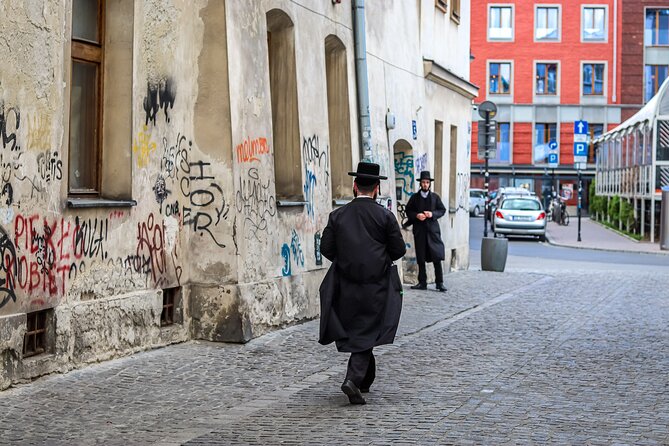
From the Old Synagogue area, you head to Szeroka Street, with about 10 minutes there. This street is described as the main street of the Jewish Quarter, and that is exactly how you should treat it: as a corridor where important people came and where life concentrated. Even on a short stop, the goal is to help you “see the quarter’s rhythm.” Shops, entrances, and street angles help explain how communities moved through space.
Next comes Remuh Synagogue, spending about 10 minutes. The tour highlights it as a private praying house built for one of Krakow’s most significant rabbis. This part is useful because it adds a layer beyond famous history. It tells you that the quarter was not only about buildings, it was also about leadership, learning, and daily worship.
Admission for Remuh is not listed as included, so plan for the possibility of extra costs if you want to go inside. The stop itself is still worthwhile even if you only get exterior context, because the guide’s focus is on what the synagogue represents in community structure.
Market Square: from memory to modern life
You also spend about 10 minutes at Market Square, specifically tied to the Jewish Quarter’s revival and nightlife today. This is not “just” a break in tone. It is a reminder that Krakow’s Jewish history is not stuck in the past. When you visit the war sites later, you will be better able to feel what was lost. When you return to this present-day square, you can also see what is rebuilt.
The practical benefit: Market Square is a change of pace without being a random detour. The guide uses it to frame a shift from community institutions to public space and social life. In other words, you are learning how the neighborhood breathes now.
That said, this is one of the stops that can feel shorter than you expected, depending on your interests. If you want more time for photos or simply to wander, you can always add extra minutes on your own after the tour ends.
Mrs. Dresner courtyard and the Schindler’s List connection
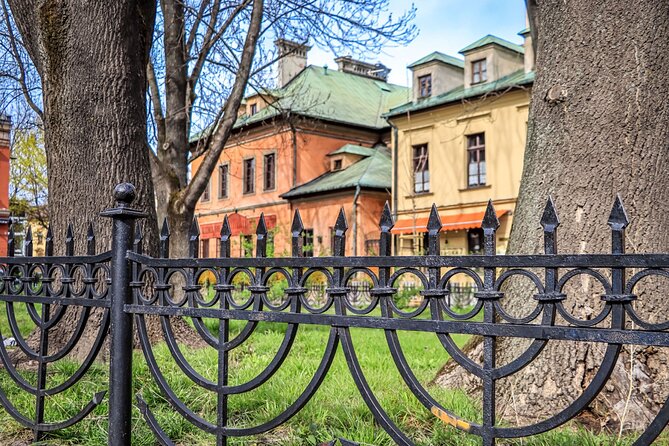
One of the most talked about parts is the Mrs. Dresner courtyard and stairs stop, tied to Schindler’s List. You spend about 10 minutes here, with an emphasis on a hidden courtyard and the real story behind what the movie helped popularize.
This is the kind of stop where a guide makes or breaks the experience. Without context, the location can feel like a set. With context, it becomes human. The tour description signals that the guide will connect the movie site to what actually happened and why people ended up there, which is the difference between watching history and understanding it.
Because this stop is short, go in ready to take it in quickly. If you are a slow photographer, you may feel rushed. But if you are there to understand, this is often one of the most meaningful segments of the entire walk.

Plac Bohaterów Getta: the longest stop and the hardest part
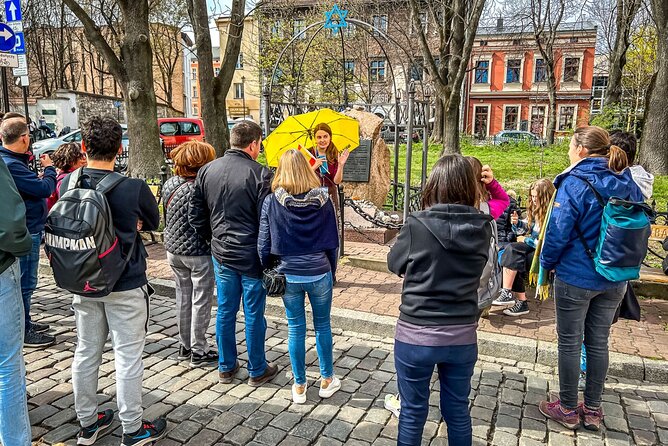
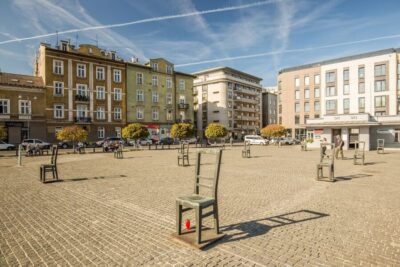
After the earlier orientation moments, the tour spends about 50 minutes at Plac Bohaterów Getta. This is the main square of the WWII ghetto, plus the surrounding area that Nazis created for the district. This is the emotional center of the itinerary.
What I like about giving this stop the longest time is simple: it respects scale. The war story here is not a quick point. It is about forced confinement, organized cruelty, and the way geography itself became part of the punishment. When a guide has enough minutes, you can understand the why behind the sights instead of just absorbing tragedy on a surface level.
One practical tip: wear shoes that do not punish your feet. Fifty minutes is a long standing stretch, and even if you are comfortable, emotional intensity makes you notice every discomfort. Also, take your time with your breathing right here. It is okay to step back and let your brain settle. You will retain more when you are not rushing.
Eagle Pharmacy viewpoint: the one non-Jewish resident perspective
The tour finishes with the Eagle Pharmacy, linked to the Museum of Krakow. You spend about 15 minutes, and the stop is described as outside. The focus here is on the apartment living story of the only non-Jewish ghetto inhabitant who became an eyewitness of Nazi crimes.
This perspective is valuable because it complicates the story in a useful way. It is not offered as a shortcut to understanding, it is offered to show how testimony and witness work. When you have already listened to the ghetto narrative at Plac Bohaterów Getta, this stop adds a different angle on how the world documented and reacted to what was happening.
As a traveler, you can use this moment to ask yourself what you think witness means, what safety looked like for different people, and why records matter. You are not just learning geography. You are learning how truth gets carried forward.
Price and value: where $26.60 really goes
At $26.60 per person for about 2.5 hours, this is not just a low-cost walk. The value comes from three things: a local guide, a structured narrative, and a sensible stopping plan. You are paying for interpretation, not only distance.
Admission is mixed. Old Synagogue is marked as free for the stop, while other locations list admission tickets as not included. That means your true cost depends on whether you choose to enter or just observe where the tour allows. If you are someone who likes interiors, budget for that.
One more value detail that affects how you should decide: the tour is described as joining a general pay as you wish format. Your booking amount covers a reservation fee and the guide’s payment. If you feel the guide did a great job, you can choose an extra contribution. That structure is worth knowing because it changes what “good value” means for you. You can absolutely treat the base price as a fair pay, then reward excellent guiding at the end.
Tips that make this walk easier (and more rewarding)
Here are the things that will help you enjoy it more on the day:
- Dress for all weather conditions. The tour runs in rain or cold, and the guide can shorten or end it if conditions threaten health and safety.
- Bring comfortable shoes. The route is a walking tour with a moderate fitness level requirement, and some of the stops are long enough that standing matters.
- If you care about synagogues and interiors, plan for the fact that not all admission is included.
- Use the mobile ticket. It reduces stress at the start, especially when you are finding the meeting place in busy streets.
- If you are traveling with kids, plan on staying engaged. The tour is about two and a half hours, and children must be accompanied by an adult.
One last note from guide reputation in the experience details: names like Big Tom, Jakob, Lucy, Matt, and Natalia appear in feedback. Different guides, same idea. You want a guide who can keep facts clear and still make the emotional weight understandable.
Should you book this Jewish Krakow walking tour?
Book it if you want Krakow to make sense through people and place, not just through landmarks. This tour is especially strong for first-timers to the Jewish Quarter, because it gives you a guided “map” of how the community worked before WWII, then how Nazis reshaped daily life through ghetto geography. The long stop at Plac Bohaterów Getta is also a major reason to choose a guided format instead of trying to piece it together alone.
Skip it or think twice if you dislike standing for explanations, or if you want a tour that is mostly sightseeing with minimal tone. This one is heavy. The upside is that it is also guided with narrative structure, which helps you process what you are seeing rather than feeling lost.
If your goal is understanding, not just checking boxes, this tour is a good use of time. You get key sites, the emotional center is treated with enough time, and the guide helps you connect the past to the street you are walking on today.
FAQ
Where does the tour start and where does it end?
The tour starts at Old Synagogue, Szeroka 24, 31-053 Kraków, Poland. It ends at Plac Bohaterów Getta, Kraków, Poland.
How long is the Jewish Krakow walking tour?
The duration is about 2 hours 30 minutes.
Is the tour offered in English?
Yes, it is offered in English.
What is included in the price?
The price includes a local expert guide and a thoroughly constructed narrative.
What is not included?
Hotel pickup and drop-off are not included, and food and drinks are not included.
Is admission included for the stops?
Old Synagogue is listed as free for the stop. Admission for other places on the route is listed as not included.
Does the tour run in bad weather?
It operates in all weather conditions. The guide has the right to shorten or end the tour if outdoor weather conditions may pose a threat to life or health.
Can I cancel for a full refund?
Yes. You can cancel up to 24 hours in advance for a full refund. If you cancel less than 24 hours before the start time, the amount you paid is not refunded.
Are service animals allowed?
Yes, service animals are allowed.
More Walking Tours in Krakow
More Tours in Krakow
More Tour Reviews in Krakow
Not for you? Here's more nearby things to do in Krakow we have reviewed







More Kazimierz & Jewish Heritage Tours to consider.
 ★ 4.7Schindler’s Factory & Ghetto Guided TourFrom $571,694 reviews
 ★ 4.9Jewish Quarter and Former Ghetto TourFrom $191,441 reviews
 ★ 4.9Bike Tour of Old Town, Jewish Quarter and the GhettoFrom $371,155 reviews
 ★ 4.8Kazimierz Jewish Quarter Walking TourFrom $27571 reviews
 ★ 4.8Kazimierz, Schindler’s Factory & Ghetto Guided TourFrom $81460 reviews
 ★ 5.0Full Bike Tour – the Old Town, Jewish Qtr & the Ghetto NEW BIKESFrom $35437 reviews
 ★ 4.9Bike Tour of the Old Town, Kazimierz, and the GhettoFrom $26350 reviews
 ★ 4.6Jewish Ghetto Walking TourFrom $11349 reviews
Other ways to explore Krakow