
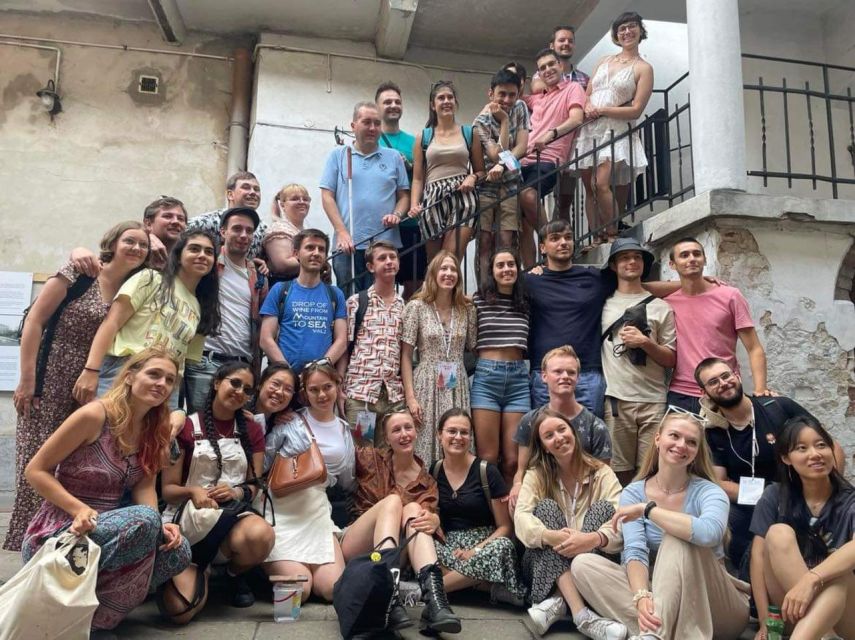
Review · KAZIMIERZ & JEWISH HERITAGE TOURS
The Jewish Quarter – Walking Tour
Kazimierz can feel like two stories in one street, and this walking tour keeps both in focus. I like that it connects Jewish life in Krakow to Christian life nearby, so the neighborhood reads as a shared landscape, not a side note. I also like the practical pace, you get real landmarks, from the Tempel Synagogue area to the Remuh Synagogue and Jewish Cemetery zone, without turning the whole experience into a lecture marathon.
One consideration: this topic runs through multiple centuries and the worst of WW2 history, so if you prefer lighter sightseeing, you might find the emotional weight takes time to process even though the tour is only 2 hours.
Key things you’ll notice on the walk
- Kazimierz history you can place on a map, starting from early settlement clues as far back as the 11th century
- Synagogues and streets with names that still carry meaning, including Tempel, Kupa, Izaak’s, and Popper’s
- Mikveh stop with 16th-century context, including how ritual cleansing fit daily life
- WW2 context built into the route, plus multiple Schindler’s List filming locations
- Memorials and symbolic moments you pause for, including Helena Rubinstein connections
- Licensed, English-speaking guides (ZeeTour), so you’re not piecing history together on your own
Why Kazimierz matters, and why the story is never only one culture
Krakow’s old Jewish Quarter, Kazimierz, is famous today because it survived, restored itself, and became readable again. But what makes it powerful is how it lived alongside the wider city. For long stretches of history, you did not get one culture behind a wall and another culture far away. You got overlap. Streets, commerce, worship, and everyday routines all shared the same geography.
This tour leans into that reality. You start with Kazimierz as a place where Jewish and Christian lives were impossible to separate in everyday terms. The guide explains how Jewish settlement became a major part of Krakow’s identity, including why Poland was so significant to the Jewish story. If you remember one number, make it this one: in the 16th century, around 75% of the world’s Jewish population lived in Poland. That’s not trivia. It explains why you see such strong continuity in places like synagogues, ritual buildings, and community landmarks.
Then the tour brings you to the next, harsher turn: WW2. The neighborhood’s physical layout helps you understand how catastrophe could unfold in real streets, not in a textbook paragraph. You also get Schindler’s List filming locations along the way, which can be jarring. That movie footage helped many people visualize Krakow under Nazi occupation, and here you’re looking at the real corners that likely looked similar in that era.
You can also read our reviews of more walking tours in Krakow
Finding Restaurant No7 and getting oriented in 2 hours
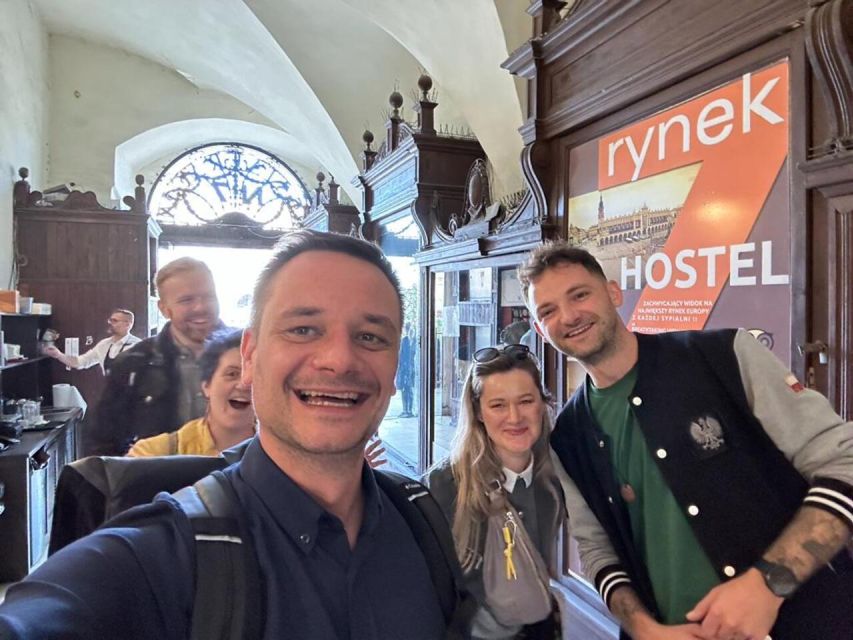
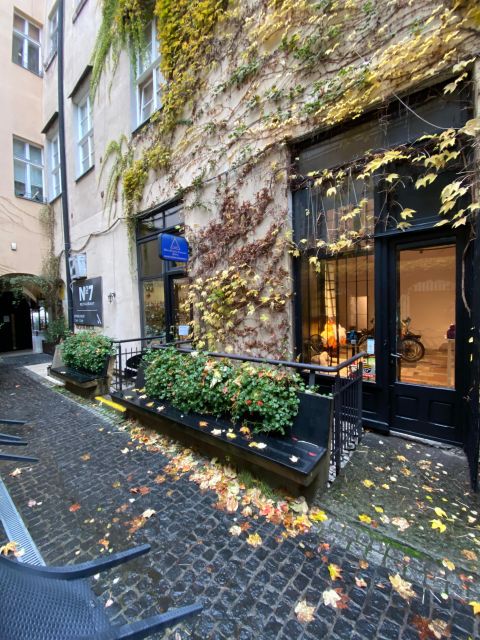
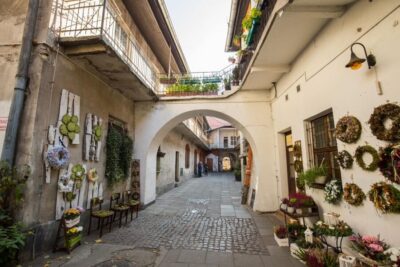
You meet by Restaurant No7. Go into the building, and look for ZeeTour’s office in the courtyard of the building where Restaurant No7 is. It’s the second shop on the left in that courtyard. It’s a simple setup, but do give yourself a minute extra so you’re not rushing when the tour starts.
From there, plan to walk a compact route across Kazimierz. Two hours sounds short until you realize the stops are not random. The guide moves you from squares to synagogue fronts, then into smaller streets where you can see how the district functioned. This is the kind of walking tour where your feet do the work, and your brain keeps catching up.
You should also know what the tour sets you up for. It’s designed to give you the framework first, then the details. So if you’ve never thought much about Jewish history in Poland, you’ll get a clean starting point. If you know the basics already, you’ll still appreciate the focus on specific buildings and names, because it makes the story stick to real places.
Kazimierz Main Square, Miodowa Street, and the district’s street logic
The tour begins at Kazimierz’s Main Square. This matters because squares are how communities gather. They’re where announcements happen, where people move through the neighborhood, and where you can orient yourself before the route starts turning into smaller lanes.
Next you head to Miodowa Street, described as part of Kazimierz’s city walls. Even if you cannot see every defensive element at a glance, the idea is clear: these streets were shaped by the need to define the district and its boundaries. That boundary concept helps when the guide later shifts to coexistence. You start to understand why people could live close together, yet have distinct institutions. The neighborhood was not accidental. It was organized.
If you’re the type who likes to photograph streets, this part is good. You get wide sight lines from the square and enough street presence to set the scene before you start looking at smaller religious and memorial sites.
A small consideration: because this is a walking tour, you’ll be doing street time, not museum time. If you strongly prefer indoor pacing, you might want to follow up after the walk with independent visits when things are open.
Tempel, Kupa, Izaak, and the synagogues you can actually read
From the early street context, the tour turns to the heart of Kazimierz’s religious geography. You visit a series of synagogues, including the Tempel Synagogue, Kupa Synagogue, and Izaak’s Synagogue.
Here’s why this part works so well. Synagogues are not only religious buildings. They’re landmarks of community life, and they carry the weight of changing history. Standing near these sites, you can see how different institutions fit into the district. The guide explains roles and timelines so the buildings feel connected, not like isolated stops on a list.
One of the most interesting stops is the oldest building inside the Jewish Quarter area, dating to the 1400s. When a place like this still exists, it gives you a literal timeline. You stop thinking of history as distant centuries and start thinking of it as layers you can stand on.
The tour then moves into ritual and daily life with the Mikveh, a ritual cleansing and bath house. The version described here is for females from the 16th century. That detail is important because it shifts the narrative away from only public worship. You’re seeing how spiritual practice shaped routines, how cleanliness and ritual were tied to community life, not only religious holidays.
Then you walk Szeroka Street, which is one of those “main drag” feel corridors where you can sense neighborhood movement. Street names and layout are part of what makes Kazimierz feel real. Even the pauses for memorials and facts break up the walk in a way that helps you keep your mental map.
Helena Rubinstein’s birthplace and memorial stops that slow you down
Kazimierz isn’t only old religious buildings. You also get names and memorials that connect the district to wider history.
A highlight on this route is Helena Rubinstein’s birth place. It’s a reminder that the neighborhood produced people whose stories traveled far beyond Krakow. That kind of point can change how you see a district like this. It stops you from treating it purely as a historical setting and pushes you toward thinking of it as a lived home.
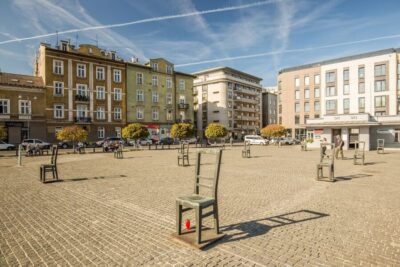
Next comes the Nissenbaum Family Foundation monument. The presence of family memorials matters because it gives you scale. The Holocaust history is enormous, but monuments like this bring it back down to human units and family names. The guide’s framing helps you read the street as a place where memory is literally built into public space.
You also see a statue of a man who tried to stop the Holocaust. That moment can feel like a gut punch, but it’s also grounding. It shows that even during catastrophe, individuals acted, and those choices left traces that are still visible today. I like including moral and human responses in a historical walk, because otherwise WW2 sites can feel like only tragedy with no thread of agency.

Remuh, Popper, and the cemetery side of the story
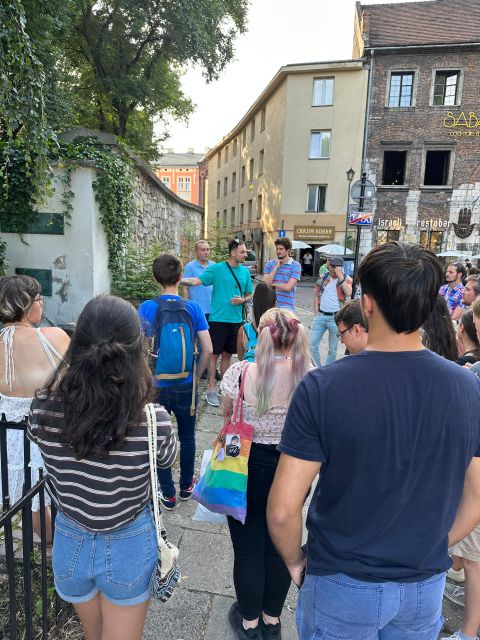
After the streets and memorial points, you reach the zone around the Remuh Synagogue and the Jewish Cemetery. This is one of those stops that changes your pace. Cemeteries are not places you sprint through, even on a tour schedule.
The Remuh area gives you a direct look at how community memory continues. Synagogues are active symbols of faith, while cemeteries are active symbols of remembrance. Put together, the two help you understand that community identity was meant to last longer than individual lifetimes.
Then the tour continues to Popper’s Synagogue and the Old Synagogue. Visiting several synagogues back to back can feel intense, but it’s also useful. It shows how many institutions existed within the same district and how they collectively represent different parts of community life and continuity.
If you’re wondering what to do with your camera here: take a photo if you want, but slow down first. Let your eyes adjust to the scale and details, then decide. This is one of those walks where a quick snapshot can miss the real impact.
Schindler’s List filming locations, and how the WW2 story gets personal
One reason this tour has strong appeal is that it includes numerous filming locations from Schindler’s List. It’s not a movie-themed detour. It’s a bridge between screen memory and street reality.
The guide ties these spots into the WW2 history in a way that helps you understand the neighborhood under occupation. When you recognize a location associated with a film, you remember faces, scenes, and emotions. Then the guide grounds it again in place, with context you can carry beyond the movie.
This combination is valuable for first-timers. If you know the film but not the Krakow setting, the walking format builds a mental map fast. If you already know some history, the filming stops help you anchor dates and events to a physical route you can picture later.
Also, emotionally, it’s easier to absorb the WW2 story when it’s threaded through ordinary streets and real community buildings. It reinforces that this history happened in daily life, not in an abstract location.
Price and value: is $33 worth a 2-hour guided walk?
At $33 per person for a 2-hour licensed English tour, this is the kind of pricing that tends to work well if you care about context more than checklists. You’re paying for two things that are hard to recreate alone: a guided explanation with focus on specific sites, and access to a guide who can connect Jewish life, coexistence history, and WW2 into one route.
The tour includes guiding services with licensed guides. That matters because the information is the value. If you try to do Kazimierz on your own, you can certainly read signs, but you’ll miss the “why” behind many stops, like how the Mikveh fits into ritual practice or why the district’s historical significance to Jewish settlement became so central.
What’s not included is admission tickets and public transportation. So if your plan involves extra museum time or using trams and buses, budget for that separately.
In short: $33 feels fair when you want a structured introduction to Kazimierz that you can later build on with independent visits.
Who this Jewish Quarter tour suits best
This walk is best for you if:
- you want a clear starting point for Jewish history in Krakow and Poland
- you care about seeing multiple synagogues and memorial sites in a single route
- you want WW2 context without having to stitch it together from five sources
- you appreciate a guide who can explain the story in English with enough detail to make the places meaningful
It might be less ideal if:
- you prefer strictly light, entertainment-based sightseeing
- you want lots of indoor time, since this is built around walking and stopping outdoors
- you’re easily overwhelmed by heavy history, because the route includes WW2 and remembrance moments
Should you book the Jewish Quarter walking tour?
If you want to understand Krakow as a place with layered stories, I’d say yes. This tour is built for understanding, not just sightseeing. You’ll come away with a route you can point to later, plus a sense of why Kazimierz mattered, why Poland became central to Jewish settlement, and how WW2 transformed everything.
The biggest practical reason to book is the licensed guide factor. With ZeeTour and a guide like Zee, you get names, timelines, and connections that make the buildings worth your attention, even when you only see them from the street.
If you’re in Krakow for a short visit and want one high-impact introduction to Kazimierz, this is a strong pick.
FAQ
How long is the Jewish Quarter walking tour?
The tour lasts 2 hours.
What language is the live tour guide?
The tour is guided in English.
Are admission tickets included?
No. Admission tickets are not included.
Is public transportation included?
No. Public transportation is not included.
Where do I meet for the tour?
Meet at Restaurant No7. Go into the building, then find ZeeTour’s office in the courtyard, the second shop on the left.
Are the guides licensed?
Yes. The tour includes licensed guides.
Is the tour wheelchair accessible, and is cancellation flexible?
Yes, the tour is wheelchair accessible. It also offers free cancellation up to 24 hours in advance for a full refund, and you can reserve now and pay later.
More Walking Tours in Krakow
More Tours in Krakow
More Tour Reviews in Krakow
Not for you? Here's more nearby things to do in Krakow we have reviewed






More Kazimierz & Jewish Heritage Tours to consider.
 ★ 4.7Schindler’s Factory & Ghetto Guided TourFrom $571,694 reviews
 ★ 4.9Jewish Quarter and Former Ghetto TourFrom $191,441 reviews
 ★ 4.9Bike Tour of Old Town, Jewish Quarter and the GhettoFrom $371,155 reviews
 ★ 4.8Kazimierz Jewish Quarter Walking TourFrom $27571 reviews
 ★ 4.8Kazimierz, Schindler’s Factory & Ghetto Guided TourFrom $81460 reviews
 ★ 5.0Full Bike Tour – the Old Town, Jewish Qtr & the Ghetto NEW BIKESFrom $35437 reviews
 ★ 4.9Bike Tour of the Old Town, Kazimierz, and the GhettoFrom $26350 reviews
 ★ 4.6Jewish Ghetto Walking TourFrom $11349 reviews
Other ways to explore Krakow